×
Request Free Sample ×

Kindly complete the form below to receive a free sample of this Report

* Please use a valid business email

Leading companies partner with us for data-driven Insights

clients tt-cursor
Hero Background

South America Dental Sleep Medicine Market

ID: MRFR/HC/54817-HCR
200 Pages
Rahul Gotadki
October 2025

South America Dental Sleep Medicine Market Research Report By Treatment & Diagnostics (Positive Airway Pressure (PAP) Therapy, Oral and Nasal Devices, Airway Systems, Other Devices, Drugs, Surgery, Polysomnography and Polygraphy, Oximetry, Actigraph), By End User (Home, Sleep Laboratories, Hospitals) and By Regional (Brazil, Mexico, Argentina, Rest of South America)- Forecast to 2035

Share:
Download PDF ×

We do not share your information with anyone. However, we may send you emails based on your report interest from time to time. You may contact us at any time to opt-out.

South America Dental Sleep Medicine Market Infographic
Purchase Options

South America Dental Sleep Medicine Market Summary

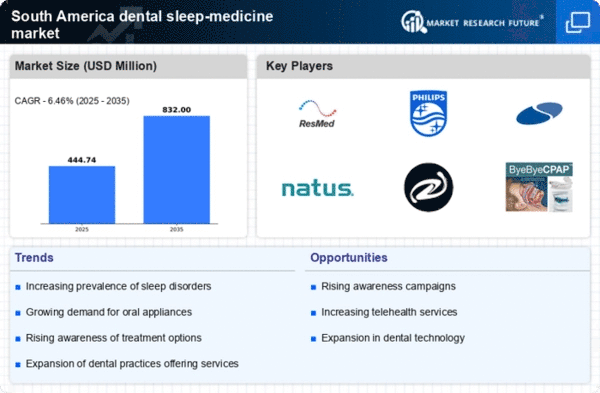
As per MRFR analysis, the South America dental sleep-medicine market size was estimated at 417.75 USD Million in 2024. The South America dental sleep-medicine market is projected to grow from 444.74 USD Million in 2025 to 832.0 USD Million by 2035, exhibiting a compound annual growth rate (CAGR) of 6.46% during the forecast period 2025 - 2035.

Key Market Trends & Highlights

The South America dental sleep-medicine market is experiencing notable growth driven by increasing awareness and technological advancements.

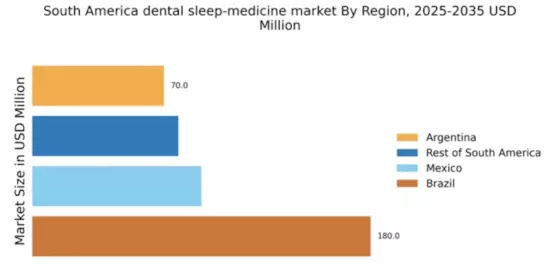
  • Brazil remains the largest market for dental sleep-medicine, reflecting a growing recognition of sleep disorders.
  • Mexico is emerging as the fastest-growing region, indicating a rising demand for effective sleep treatment solutions.
  • Technological advancements in treatment options are enhancing patient outcomes and driving market expansion.
  • The increasing prevalence of sleep apnea and rising consumer demand for non-invasive treatments are key drivers of market growth.

Market Size & Forecast

2024 Market Size 417.75 (USD Million)
2035 Market Size 832.0 (USD Million)
CAGR (2025 - 2035) 6.46%

Major Players

ResMed (AU), Philips (NL), SomnoMed (AU), Natus Medical (US), Zyppah (US), Oral Appliance Therapy (US), Sleep Group Solutions (US), Breathe Technologies (US)

South America Dental Sleep Medicine Market Trends

The dental sleep-medicine market in South America is currently experiencing notable growth, driven by an increasing awareness of sleep disorders and their impact on overall health. As more individuals recognize the importance of addressing conditions such as obstructive sleep apnea, the demand for dental interventions is rising. This trend is further supported by advancements in technology, which have led to the development of innovative oral appliances that are both effective and comfortable for patients. Additionally, healthcare professionals are increasingly collaborating to provide comprehensive treatment options, enhancing patient outcomes and satisfaction. Moreover, the regulatory environment in South America is evolving, with governments placing greater emphasis on sleep health. This shift is likely to encourage more dental practitioners to incorporate sleep medicine into their practices. Educational initiatives aimed at both healthcare providers and the public are also gaining traction, fostering a better understanding of dental sleep-medicine. As a result, the market appears poised for continued expansion, with potential for new entrants and increased investment in research and development. Overall, the dental sleep-medicine market is set to play a crucial role in improving the quality of life for many individuals across the region.

Rising Awareness of Sleep Disorders

There is a growing recognition of sleep disorders among the population in South America. This awareness is leading to increased consultations with dental professionals for sleep-related issues, thereby driving demand for dental sleep-medicine solutions.

Technological Advancements in Treatment

Innovations in dental appliances and treatment methodologies are emerging, enhancing the effectiveness of interventions for sleep disorders. These advancements are likely to attract more patients seeking effective solutions.

Regulatory Support and Education

Government initiatives aimed at promoting sleep health are becoming more prevalent. This regulatory support, coupled with educational campaigns, is expected to encourage dental practitioners to adopt sleep-medicine practices.

South America Dental Sleep Medicine Market Drivers

Increasing Prevalence of Sleep Apnea

The rising incidence of sleep apnea in South America is a crucial driver for the dental sleep-medicine market. Studies indicate that approximately 30% of the adult population in this region may suffer from some form of sleep-disordered breathing. This alarming statistic highlights the urgent need for effective treatment options, including oral appliances provided by dental sleep-medicine practitioners. As awareness grows, more patients are seeking diagnosis and treatment, thereby expanding the market. The dental sleep-medicine market is likely to see a surge in demand for custom-fitted oral devices, which are often preferred due to their non-invasive nature compared to CPAP machines. This trend suggests a significant opportunity for dental professionals to engage in sleep medicine, potentially increasing their patient base and revenue streams.

Enhanced Training and Certification Programs

The establishment of enhanced training and certification programs for dental professionals is a significant driver for the dental sleep-medicine market. As the field of dental sleep medicine evolves, there is a growing recognition of the need for specialized education. Programs that focus on the diagnosis and treatment of sleep disorders are being developed, equipping dentists with the necessary skills to provide effective care. This trend is likely to increase the number of qualified practitioners in South America, thereby expanding the dental sleep-medicine market. With more professionals entering the field, patients will have greater access to knowledgeable providers, which may lead to improved treatment outcomes and higher patient satisfaction. Furthermore, as dentists become more adept in this area, they may also contribute to raising awareness about sleep disorders within their communities.

Growing Investment in Healthcare Infrastructure

Investment in healthcare infrastructure across South America is another pivotal driver for the dental sleep-medicine market. Governments and private entities are increasingly allocating funds to enhance healthcare facilities, which includes the integration of sleep medicine into dental practices. This investment is expected to improve access to diagnostic tools and treatment options for sleep disorders. For instance, the establishment of specialized sleep clinics within dental offices can facilitate comprehensive care for patients suffering from sleep apnea. The dental sleep-medicine market stands to benefit from this trend, as improved infrastructure may lead to better patient outcomes and increased referrals. Furthermore, as healthcare systems evolve, there is a potential for collaborative efforts between dental and medical professionals, fostering a multidisciplinary approach to sleep medicine.

Rising Consumer Demand for Non-Invasive Treatments

Consumer preferences are shifting towards non-invasive treatment options for sleep disorders, significantly impacting the dental sleep-medicine market. Many patients are increasingly reluctant to use traditional CPAP machines due to discomfort and lifestyle limitations. As a result, there is a growing demand for oral appliances that are less intrusive and easier to use. The dental sleep-medicine market is responding to this trend by developing innovative and comfortable oral devices that cater to patient needs. Market data suggests that sales of these devices have increased by approximately 25% in recent years, reflecting a broader acceptance among patients. This shift in consumer behavior indicates a promising future for dental sleep-medicine practitioners who can offer tailored solutions that align with patient preferences.

Collaboration Between Dental and Medical Professionals

Collaboration between dental and medical professionals is emerging as a vital driver for the dental sleep-medicine market. As the understanding of sleep disorders deepens, there is a growing recognition of the role that dental practitioners can play in the management of these conditions. Interdisciplinary partnerships can facilitate comprehensive patient care, where dentists work alongside physicians to develop integrated treatment plans. This collaborative approach is likely to enhance the effectiveness of interventions and improve patient outcomes. The dental sleep-medicine market may experience growth as more healthcare providers recognize the importance of teamwork in addressing sleep-related issues. Such collaborations could also lead to increased referrals and a broader patient base, ultimately benefiting both dental and medical practices.


Market Segment Insights

By Treatment: Positive Airway Pressure (PAP) Therapy (Largest) vs. Oral and Nasal Devices (Fastest-Growing)

The market share distribution for the treatment segment reveals that Positive Airway Pressure (PAP) Therapy dominates the landscape, holding a significant share among the various treatment options. Oral and Nasal Devices, although currently smaller in share, are rapidly gaining traction, driven by increased awareness and the prevalence of sleep disorders that necessitate their use. The other segment values such as Airway Systems, Other Devices, Drugs, and Surgery contribute to the overall market but do not match the prominence observed in PAP Therapy and Oral Devices. Growth trends in this segment are influenced by several factors including rising incidences of obstructive sleep apnea and other related conditions, pushing demand for effective treatments. Innovations in device technology, such as improved comfort and efficiency of PAP devices, are boosting market adoption. The growing acceptance of oral devices as alternative solutions for patients preferring non-invasive options also adds to the dynamic growth of the market. Regulatory support and advancements in healthcare facilitate expansion in treatment options, tailoring responses to patient needs and preferences.

PAP Therapy (Dominant) vs. Oral and Nasal Devices (Emerging)

Positive Airway Pressure (PAP) Therapy represents the dominant treatment approach in managing sleep disturbances, characterized by its effectiveness in reducing apnea episodes and improving sleep quality. With a strong established user base, PAP devices are widely prescribed and embraced by both healthcare professionals and patients. Conversely, Oral and Nasal Devices are emerging rapidly, recognized for their non-invasive nature and ease of use. These devices are increasingly preferred by patients who seek alternatives to traditional therapies. The innovations in design and functionality of oral appliances are capturing significant market attention, appealing to individuals hesitant about PAP therapy, thereby contributing to dynamic growth in this segment.

By Diagnostics: Polysomnography and Respiratory Polygraphy (Largest) vs. Home Oximetry (Fastest-Growing)

In the South America dental sleep-medicine market, Polysomnography and Respiratory Polygraphy commands the largest market share due to its comprehensive capabilities in diagnosing sleep disorders. This segment is crucial for sleep apnea detection and management, resulting in strong demand from healthcare providers. Home Oximetry, while smaller, is rapidly gaining traction as more patients seek convenient, at-home testing options, highlighting a shift in consumer preference towards remote monitoring solutions. Growth trends in this segment are influenced by increasing awareness of sleep disorders and advancements in diagnostic technologies. The adoption of telehealth services during the pandemic has accelerated the use of remote monitoring tools such as Home Oximetry. Furthermore, ongoing research into sleep-related issues and the rising incidence of lifestyle-related conditions contribute to the expansion of the diagnostics segment, encouraging innovative product development and market entry strategies.

Polysomnography and Respiratory Polygraphy (Dominant) vs. Actigraphy (Emerging)

Polysomnography and Respiratory Polygraphy stands out as the dominant force in the diagnostics segment, offering detailed insights into sleep patterns and disorders. Its ability to accurately diagnose conditions like sleep apnea makes it a preferred choice among healthcare professionals. In contrast, Actigraphy is emerging as a viable alternative, particularly for those seeking cost-effective and less intrusive monitoring options. Actigraphy captures data on movement patterns to infer sleep quality, catering to a growing demographic interested in at-home solutions. As both technologies evolve, they complement each other, catering to diverse patient needs while enhancing diagnostic accuracy in sleep medicine.

By End-Users: Hospitals (Largest) vs. Sleep Labs (Fastest-Growing)

In the market, hospitals represent the largest share among end-users, benefiting from their established infrastructure and comprehensive healthcare services. The reliance on hospitals for diagnosing and treating sleep disorders has led to a significant portion of the market being captured by this sector. Conversely, sleep labs are experiencing rapid growth as more individuals seek specialized diagnostic services tailored to sleep apnea treatments, positioning themselves as a crucial segment contributing to the market dynamics. Growth trends indicate an increasing awareness of sleep disorders, significantly influencing the demand across all end-user segments. Hospitals are investing in advanced technologies to improve patient outcomes, driving their market dominance. Meanwhile, sleep labs are capitalizing on the surge in sleep disorder diagnoses and personalized treatment plans, making them the fastest-growing segment as patients look for more specialized, accessible care options at their convenience.

Hospitals: Dominant vs. Sleep Labs: Emerging

Hospitals dominate the end-users segment owing to their vast resources and capacity for handling complex cases related to dental sleep medicine. They offer comprehensive services, including diagnosis, treatment, and follow-up care, which enhances patient confidence and satisfaction. On the other hand, sleep labs, although emerging, are rapidly becoming essential in the landscape of sleep medicine. Their focus on specialized diagnosis enables personalized treatment plans, attracting patients who prefer more targeted approaches to their issues. The growth of sleep labs signifies a shift toward convenience and specialized care, representing a significant trend within the sector.

Get more detailed insights about South America Dental Sleep Medicine Market

Regional Insights

Brazil : Brazil's Expanding Dental Sleep Sector

Key markets include São Paulo, Rio de Janeiro, and Brasília, where the concentration of healthcare facilities is high. The competitive landscape features major players like ResMed and Philips, which dominate the market with innovative products. Local dynamics are characterized by a growing acceptance of dental sleep medicine, driven by increased patient education and outreach programs. The sector is also supported by collaborations between dental professionals and sleep specialists, enhancing treatment options.

Mexico : Mexico's Evolving Sleep Medicine Landscape

Key markets include Mexico City, Guadalajara, and Monterrey, where healthcare infrastructure is rapidly developing. The competitive landscape features players like SomnoMed and Natus Medical, which are gaining traction in the market. Local dynamics are influenced by a mix of traditional and modern healthcare practices, with increasing collaboration among dental and medical professionals. The sector is seeing a rise in the adoption of oral appliance therapy as a preferred treatment option.

Argentina : Argentina's Focus on Sleep Health

Key markets include Buenos Aires, Córdoba, and Rosario, where healthcare facilities are increasingly adopting dental sleep medicine practices. The competitive landscape features players like Philips and Oral Appliance Therapy, which are establishing a strong presence. Local market dynamics are shaped by a combination of public and private healthcare initiatives, promoting better patient outcomes. The sector is also witnessing a rise in telemedicine applications, enhancing access to sleep health services.

Rest of South America : Varied Dynamics in Sleep Medicine

Key markets include countries like Chile, Colombia, and Peru, each with distinct healthcare landscapes. The competitive environment features local and international players, including Breathe Technologies and Sleep Group Solutions, which are adapting to regional needs. Local dynamics are influenced by varying levels of healthcare access and public health initiatives. The sector is also seeing increased collaboration between dental and medical professionals to address sleep health issues.

South America Dental Sleep Medicine Market Regional Image

Key Players and Competitive Insights

The dental sleep-medicine market in South America is characterized by a competitive landscape that is increasingly shaped by innovation, strategic partnerships, and regional expansion. Key players such as ResMed (AU), Philips (NL), and SomnoMed (AU) are actively pursuing strategies that emphasize technological advancements and market penetration. ResMed (AU), for instance, focuses on enhancing its product offerings through continuous innovation in sleep apnea devices, while Philips (NL) is leveraging its strong brand presence to expand its digital health solutions. SomnoMed (AU) is also notable for its commitment to developing oral appliances that cater to diverse patient needs, thereby enhancing its competitive positioning. Collectively, these strategies contribute to a dynamic environment where companies are not only competing on product efficacy but also on the ability to deliver comprehensive sleep solutions.

In terms of business tactics, companies are increasingly localizing manufacturing and optimizing supply chains to better serve the South American market. The competitive structure appears moderately fragmented, with several players vying for market share. However, the influence of major companies is significant, as they set industry standards and drive innovation. This competitive interplay fosters an environment where smaller firms may struggle to keep pace, yet also encourages collaboration and partnerships that can enhance overall market growth.

In October 2025, ResMed (AU) announced a strategic partnership with a local healthcare provider to enhance access to its sleep apnea solutions across Brazil. This move is particularly important as it not only broadens ResMed's distribution channels but also aligns with the growing demand for accessible healthcare solutions in the region. By collaborating with local entities, ResMed is likely to improve its market penetration and brand loyalty among Brazilian consumers.

In September 2025, Philips (NL) launched a new line of connected sleep therapy devices tailored specifically for the South American market. This initiative underscores Philips' commitment to integrating digital health technologies into its product offerings, which may enhance patient engagement and adherence to therapy. The introduction of these devices could potentially position Philips as a leader in the digital transformation of sleep medicine in the region, appealing to a tech-savvy consumer base.

In August 2025, SomnoMed (AU) expanded its manufacturing capabilities by establishing a new facility in Argentina. This strategic move is indicative of SomnoMed's focus on local production to meet the rising demand for oral appliances in South America. By reducing lead times and transportation costs, SomnoMed may enhance its competitive edge while also contributing to the local economy.

As of November 2025, current trends in the dental sleep-medicine market are increasingly defined by digitalization, sustainability, and the integration of artificial intelligence (AI) into product development. Strategic alliances are becoming more prevalent, as companies recognize the value of collaboration in navigating complex market dynamics. Looking ahead, competitive differentiation is likely to evolve from traditional price-based competition to a focus on innovation, technology, and supply chain reliability. This shift suggests that companies that prioritize these aspects may gain a substantial advantage in the rapidly changing landscape.

Key Companies in the South America Dental Sleep Medicine Market market include

Industry Developments

Recent developments in the South America Dental Sleep Medicine Market indicate a growing focus on improving sleep apnea diagnosis and treatment. Companies like Philips Respironics and ResMed Inc are actively expanding their product offerings to include advanced oral appliance therapies and CPAP devices that cater to the specific needs of the South American population. In the first quarter of 2023, Sleep Group Solutions announced a series of training sessions aimed at dental professionals to enhance awareness and application of dental sleep medicine in Brazil.

Significant financial growth has been noted, with a reported increase in market valuation attributed to rising prevalence rates of sleep disorders, particularly in urban areas.

Moreover, in August 2023, SomnoMed Limited successfully acquired a local Brazilian dental practice to bolster its market presence, while Medtronic has been investing in Research and Development initiatives that focus on innovative sleep solutions across South America. The Brazilian government has also been promoting health awareness campaigns to educate the public on the importance of sleep health, which is further driving demand for dental sleep medicine products. Overall, the market is experiencing dynamic changes, reflecting heightened attention and investments in sleep health solutions across the region.

Future Outlook

South America Dental Sleep Medicine Market Future Outlook

The Dental Sleep Medicine Market is projected to grow at a 6.46% CAGR from 2024 to 2035, driven by increasing awareness and technological advancements.

New opportunities lie in:

  • Development of telehealth platforms for remote consultations
  • Integration of AI-driven diagnostics in dental practices
  • Expansion of dental sleep medicine training programs for practitioners

By 2035, the market is expected to achieve substantial growth and innovation.

Market Segmentation

South America Dental Sleep Medicine Market End-Users Outlook

  • Hospitals
  • Sleep Labs
  • Homes

South America Dental Sleep Medicine Market Treatment Outlook

  • Positive Airway Pressure (PAP) Therapy
  • Oral and Nasal Devices
  • Airway Systems
  • Other Devices
  • Drugs
  • Surgery

South America Dental Sleep Medicine Market Diagnostics Outlook

  • Polysomnography and Respiratory Polygraphy
  • Home Oximetry
  • Actigraphy

Report Scope

MARKET SIZE 2024417.75(USD Million)
MARKET SIZE 2025444.74(USD Million)
MARKET SIZE 2035832.0(USD Million)
COMPOUND ANNUAL GROWTH RATE (CAGR)6.46% (2024 - 2035)
REPORT COVERAGERevenue Forecast, Competitive Landscape, Growth Factors, and Trends
BASE YEAR2024
Market Forecast Period2025 - 2035
Historical Data2019 - 2024
Market Forecast UnitsUSD Million
Key Companies Profiled["ResMed (AU)", "Philips (NL)", "SomnoMed (AU)", "Natus Medical (US)", "Zyppah (US)", "Oral Appliance Therapy (US)", "Sleep Group Solutions (US)", "Breathe Technologies (US)"]
Segments CoveredTreatment, Diagnostics, End-Users
Key Market OpportunitiesEmerging technologies in dental sleep-medicine enhance treatment options and patient compliance in South America.
Key Market DynamicsRising consumer awareness drives demand for dental sleep-medicine solutions amid evolving regulatory frameworks in South America.
Countries CoveredBrazil, Mexico, Argentina, Rest of South America

Leave a Comment

FAQs

What is the estimated market size of the South America Dental Sleep Medicine Market in 2024?

The South America Dental Sleep Medicine Market is expected to be valued at 520.0 USD Million in 2024.

What is the projected market size for the South America Dental Sleep Medicine Market by 2035?

By 2035, the market is projected to reach a value of 1127.34 USD Million.

What is the expected CAGR for the South America Dental Sleep Medicine Market from 2025 to 2035?

The market is expected to grow at a CAGR of 7.288% from 2025 to 2035.

Which region holds the largest share of the South America Dental Sleep Medicine Market in 2024?

In 2024, Brazil is anticipated to hold the largest market share at 210.0 USD Million.

What will be the market size of Oral and Nasal Devices segment in 2035?

The Oral and Nasal Devices segment is expected to reach a valuation of 190.0 USD Million by 2035.

Who are the key players in the South America Dental Sleep Medicine Market?

Some major players include Philips Respironics, ResMed Inc, and Medtronic among others.

What will be the market value of Positive Airway Pressure (PAP) Therapy in 2024?

The Positive Airway Pressure (PAP) Therapy segment is valued at 120.0 USD Million in 2024.

How much is the market for Drugs expected to grow by 2035?

The market for Drugs is projected to grow to 407.34 USD Million by 2035.

What is the predicted market size for Mexico in 2035?

Mexico's dental sleep medicine market is expected to grow to 284.37 USD Million by 2035.

What are some emerging trends in the South America Dental Sleep Medicine Market?

Emerging trends include increased adoption of innovative devices and heightened patient awareness about sleep disorders.

Download Free Sample

Kindly complete the form below to receive a free sample of this Report

Compare Licence

×
Features License Type
Single User Multiuser License Enterprise User
Price $4,950 $5,950 $7,250
Maximum User Access Limit 1 User Upto 10 Users Unrestricted Access Throughout the Organization
Free Customization
Direct Access to Analyst
Deliverable Format
Platform Access
Discount on Next Purchase 10% 15% 15%
Printable Versions