South America Mitochondrial Myopathy Diagnosis Treatment Market
South America Mitochondrial Myopathy Diagnosis Treatment Market Summary
As per Market Research Future analysis, the South America mitochondrial myopathy-diagnosis-treatment market size was estimated at 1500.0 USD Million in 2024. The South America mitochondrial myopathy-diagnosis-treatment market is projected to grow from 1620.15 USD Million in 2025 to 3500.0 USD Million by 2035, exhibiting a compound annual growth rate (CAGR) of 8.0% during the forecast period 2025 - 2035
Key Market Trends & Highlights
The South America mitochondrial myopathy-diagnosis-treatment market is experiencing significant growth driven by various factors.
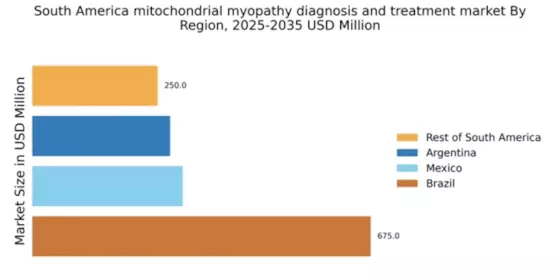
- Brazil remains the largest market for mitochondrial myopathy diagnosis and treatment, reflecting a robust healthcare infrastructure.
- Mexico is emerging as the fastest-growing region, with increasing investments in healthcare and research.
- There is a notable trend towards personalized medicine, as healthcare providers seek tailored treatment options for patients.
- The rising prevalence of mitochondrial disorders and advancements in genetic testing technologies are key drivers propelling market growth.
Market Size & Forecast
| 2024 Market Size | 1500.0 (USD Million) |
| 2035 Market Size | 3500.0 (USD Million) |
| CAGR (2025 - 2035) | 8.01% |
Major Players
Genzyme Corporation (US), Sarepta Therapeutics (US), Astellas Pharma Inc. (JP), Pfizer Inc. (US), Bristol-Myers Squibb Company (US), Novartis AG (CH), Roche Holding AG (CH), Eli Lilly and Company (US)
South America Mitochondrial Myopathy Diagnosis Treatment Market Trends
the mitochondrial myopathy-diagnosis-treatment market is experiencing notable developments, particularly in South America. The region has seen an increase in awareness regarding mitochondrial disorders, which has led to a growing demand for accurate diagnostic tools and effective treatment options. Healthcare providers are increasingly focusing on specialized training to enhance their understanding of these complex conditions. This shift is likely to improve patient outcomes and foster a more informed patient population. Furthermore, collaboration between healthcare institutions and research organizations appears to be strengthening, potentially leading to innovative therapies and improved diagnostic methodologies. In addition, the regulatory landscape in South America is evolving, with governments prioritizing the approval of new treatments and diagnostic technologies. This trend may facilitate faster access to essential therapies for patients suffering from mitochondrial myopathy. The emphasis on personalized medicine is also gaining traction, as healthcare professionals seek to tailor treatments to individual patient needs. Overall, the mitochondrial myopathy-diagnosis-treatment market in South America is poised for growth, driven by increased awareness, regulatory support, and advancements in medical research.
Rising Awareness and Education
There is a growing recognition of mitochondrial disorders among healthcare professionals and the general public in South America. This trend is fostering a demand for better diagnostic tools and treatment options, as more individuals seek medical advice and support.
Regulatory Advancements
Governments in South America are enhancing their regulatory frameworks to expedite the approval process for new treatments and diagnostic technologies. This shift is likely to improve patient access to innovative therapies, thereby positively impacting the market.
Focus on Personalized Medicine
Healthcare providers are increasingly adopting personalized medicine approaches in the treatment of mitochondrial myopathy. This trend emphasizes tailoring therapies to individual patient profiles, which may lead to improved treatment outcomes and patient satisfaction.
South America Mitochondrial Myopathy Diagnosis Treatment Market Drivers
Government Initiatives and Funding
Government initiatives aimed at improving healthcare infrastructure in South America are driving the mitochondrial myopathy-diagnosis-treatment market. Increased funding for rare disease research and the establishment of national health programs are pivotal in enhancing diagnostic capabilities and treatment accessibility. For instance, several South American countries have allocated substantial budgets to support research on mitochondrial disorders, which is expected to yield new therapeutic options. Additionally, public health campaigns aimed at raising awareness about mitochondrial diseases are likely to lead to earlier diagnoses and better patient management. These initiatives not only foster collaboration between public and private sectors but also encourage the development of innovative solutions within the mitochondrial myopathy-diagnosis-treatment market, ultimately benefiting patients and healthcare providers alike.
Growing Patient Advocacy and Support Groups
The emergence of patient advocacy and support groups in South America plays a vital role in the mitochondrial myopathy-diagnosis-treatment market. These organizations are instrumental in raising awareness about mitochondrial disorders, providing resources for patients and families, and advocating for better healthcare policies. By fostering a community of support, these groups empower patients to seek timely diagnoses and appropriate treatments. Their efforts often lead to increased funding for research and development, as well as improved access to clinical trials. The influence of patient advocacy groups can also drive pharmaceutical companies to invest in the development of new therapies, thereby expanding the treatment landscape for mitochondrial myopathy. This growing network of support is likely to enhance the overall market dynamics, creating a more favorable environment for innovation and patient care.
Advancements in Genetic Testing Technologies
Technological innovations in genetic testing are significantly impacting the mitochondrial myopathy-diagnosis-treatment market in South America. The introduction of next-generation sequencing (NGS) has revolutionized the ability to diagnose mitochondrial disorders with greater accuracy and speed. This advancement allows for the identification of specific genetic mutations associated with mitochondrial myopathy, facilitating personalized treatment approaches. As the cost of genetic testing continues to decrease, more patients are likely to access these services, thereby expanding the market. Furthermore, the integration of genetic counseling into clinical practice enhances patient understanding and management of their conditions. The growing reliance on genetic testing underscores its pivotal role in shaping the future of the mitochondrial myopathy-diagnosis-treatment market, as it aligns with the broader trend towards precision medicine.
Emerging Therapeutic Options and Clinical Trials
The ongoing research and development of new therapeutic options for mitochondrial myopathy are significantly influencing the market in South America. Numerous clinical trials are currently underway, exploring various treatment modalities, including gene therapy and mitochondrial replacement techniques. These emerging therapies hold the potential to address the underlying causes of mitochondrial disorders, rather than merely managing symptoms. As clinical trial results become available, they are expected to reshape treatment paradigms and expand the available options for patients. The increasing participation of South American institutions in international research collaborations further enhances the region's role in the global landscape of mitochondrial myopathy-diagnosis-treatment market. This focus on innovative therapies not only promises to improve patient outcomes but also stimulates market growth by attracting investment and interest from pharmaceutical companies.
Increasing Prevalence of Mitochondrial Disorders
The rising incidence of mitochondrial disorders in South America is a crucial driver for the mitochondrial myopathy-diagnosis-treatment market. Recent studies indicate that mitochondrial myopathy affects approximately 1 in 5,000 individuals in the region, leading to a growing demand for effective diagnostic and therapeutic solutions. As awareness of these disorders increases, healthcare providers are more likely to seek advanced diagnostic tools and treatment options. This trend is further supported by the establishment of specialized clinics and research institutions focused on mitochondrial diseases, which enhances the overall landscape of the mitochondrial myopathy-diagnosis-treatment market. The increasing prevalence not only highlights the need for better healthcare resources but also encourages investment in research and development, potentially leading to innovative therapies and improved patient outcomes.
Market Segment Insights
By Type: Mitochondrial Encephalomyopathy (Largest) vs. Lactic Acidosis and Stroke-like Episodes (Fastest-Growing)
The market share for mitochondrial myopathy diagnosis and treatment segment values showcases a varied landscape. Mitochondrial Encephalomyopathy holds the largest share due to its widespread recognition and established diagnostic criteria. Other segment values like Lactic Acidosis and Stroke-like Episodes are gaining attention due to increasing awareness among healthcare professionals and patients, but they currently represent a smaller fraction of the overall market. As more healthcare facilities adopt advanced diagnostic technologies, the market distribution is likely to exhibit shifts in favor of lesser-known conditions. Growth trends within this segment are primarily driven by advancements in genetic testing and increased prevalence of mitochondrial disorders. Emerging research linking mitochondrial dysfunction to other diseases is propelling interest and investment in diagnosis and treatment methods. Furthermore, rising healthcare expenditures and the growing focus on personalized medicine enhance the attractiveness of diagnosing these conditions, suggesting a robust growth trajectory, particularly for emerging segment values like Lactic Acidosis and Stroke-like Episodes.
Mitochondrial Encephalomyopathy (Dominant) vs. Lactic Acidosis and Stroke-like Episodes (Emerging)
Mitochondrial Encephalomyopathy is recognized as the dominant segment due to its established presence in clinical practices and greater awareness. It often presents with neurological and muscular symptoms, making it a priority for diagnosis. In contrast, Lactic Acidosis and Stroke-like Episodes are emerging as significant concerns in the arena of mitochondrial myopathy due to their complex pathophysiology. As healthcare systems adapt to identify and treat these rarer conditions, there is a notable increase in case reports and clinical studies aimed at understanding their mechanisms. Both segments reflect diverse clinical challenges and highlight the necessity for continued research and development in diagnostic methodologies.
By Diagnostic Test: Genetic Tests (Largest) vs. Muscle Biopsy (Fastest-Growing)
In the South America mitochondrial myopathy-diagnosis-treatment market, the diagnostic test segment is predominantly led by genetic tests, which hold a significant share due to their crucial role in identifying the genetic mutations responsible for mitochondrial myopathy. Muscle biopsy, while smaller, is gaining attention as it provides a direct assessment of muscle tissue, complementing genetic tests in diagnosis. The biochemical test represents a vital but less dominant segment, often used in conjunction with other tests to confirm diagnoses. Growth trends indicate a rising demand for non-invasive diagnostic options, with genetic tests expected to maintain their lead in market share. However, muscle biopsy is emerging as the fastest-growing diagnostic option, driven by advancements in techniques that enhance its accessibility and accuracy. The increasing prevalence of mitochondrial disorders is also propelling the growth of all diagnostic methods in this sector, as healthcare providers seek reliable and comprehensive approaches to diagnosis.
Genetic Tests (Dominant) vs. Muscle Biopsy (Emerging)
Genetic tests are the dominant method in diagnosing mitochondrial myopathy, predominantly due to their ability to pinpoint specific genetic mutations, which is key to accurate diagnosis and treatment planning. They are widely regarded as a standard diagnostic tool that facilitates targeted therapies. On the other hand, muscle biopsy, while traditionally less favored, is gaining traction as an emerging diagnostic method. It allows for direct visualization of muscle fibers and helps in assessing muscle morphology and biochemical activity. The improved techniques and skill sets associated with muscle biopsy are driving its acceptance among healthcare professionals, making it a crucial complementary tool in the overall diagnostic landscape.
By Therapy: Supportive Therapy (Largest) vs. Targeted Therapy (Fastest-Growing)
In the therapy segment, supportive therapy holds a significant market share, primarily due to its established role in enhancing patient quality of life and symptom management. This approach caters to the diverse needs of patients and has been a staple for treatment, ensuring its dominate presence in the South America market. In contrast, targeted therapy, while currently smaller in share, is gaining traction rapidly as innovative treatment options emerge, attracting investment and interest from healthcare professionals. The growth trends in this segment are notably driven by advancements in medical research and the increasing understanding of mitochondrial myopathies. Targeted therapy is poised for remarkable expansion, fueled by the rising number of clinical trials and the potential for personalized medicine. The ongoing collaboration among biotech firms and research institutions is unlocking new possibilities for effective treatments, thereby enhancing the market dynamics in this sector.
Supportive Therapy (Dominant) vs. Targeted Therapy (Emerging)
Supportive therapy is characterized by its comprehensive approach to patient care, focusing on symptom relief and overall well-being. It encompasses various methods, including physical therapy and nutritional support, making it indispensable for ongoing management. As the dominant therapy, it enjoys wide acceptance among patients and healthcare providers, establishing a strong foothold in the market. On the other hand, targeted therapy is an emerging approach characterized by its precision and ability to address specific genetic mutations associated with mitochondrial myopathy. Although it currently holds a smaller market share, the rapid development of targeted therapies indicates significant market potential, appealing to patients seeking more effective and tailored treatment options.
Regional Insights
Brazil : Strong Demand and Infrastructure Growth
Key markets within Brazil include São Paulo, Rio de Janeiro, and Minas Gerais, where healthcare facilities are well-equipped to handle mitochondrial myopathy cases. The competitive landscape features major players like Genzyme Corporation and Novartis AG, which have established a strong presence through partnerships and local manufacturing. The business environment is characterized by a growing demand for innovative therapies, driven by an increase in patient diagnoses and a focus on personalized medicine. The pharmaceutical sector is witnessing a surge in investments, particularly in biotechnology and rare disease treatments.
Mexico : Increasing Awareness and Treatment Access
Key markets in Mexico include Mexico City, Guadalajara, and Monterrey, where healthcare facilities are increasingly equipped to diagnose and treat mitochondrial myopathy. The competitive landscape features key players such as Pfizer Inc. and Roche Holding AG, which are actively involved in research and development. The local market dynamics are influenced by a growing patient population and a shift towards more personalized treatment approaches. The pharmaceutical industry is expanding, with a focus on rare diseases, creating opportunities for new entrants and established companies alike.
Argentina : Focus on Patient-Centric Solutions
Key markets in Argentina include Buenos Aires, Córdoba, and Mendoza, where healthcare facilities are improving their capabilities to address mitochondrial myopathy. The competitive landscape includes major players like Astellas Pharma Inc. and Eli Lilly and Company, which are focusing on patient-centric solutions and innovative therapies. The local market dynamics are characterized by a growing emphasis on personalized medicine and a collaborative approach between healthcare providers and pharmaceutical companies. The industry is witnessing a shift towards more comprehensive care models, enhancing treatment outcomes for patients.
Rest of South America : Varied Demand Across Countries
Key markets in the Rest of South America include Santiago, Bogotá, and Lima, where healthcare systems are gradually improving. The competitive landscape is less concentrated, with local and international players like Bristol-Myers Squibb Company and Novartis AG making inroads. The business environment is characterized by diverse healthcare policies and varying levels of access to treatments. The pharmaceutical sector is evolving, with a focus on addressing unmet medical needs and enhancing patient access to innovative therapies.
Key Players and Competitive Insights
Key Companies in the South America Mitochondrial Myopathy Diagnosis Treatment Market include
Industry Developments
The South America Mitochondrial Myopathy Diagnosis and Treatment Market has seen significant activity recently, particularly with advancements in genetic therapies and diagnostic tools, with a focus on various companies such as Ionis Pharmaceuticals, AstraZeneca, and Amgen. In March 2023, AstraZeneca announced an expansion of their Research and Development efforts targeting rare diseases, including mitochondrial disorders. Mergers and acquisitions have shaped the market landscape, notably with GSK's acquisition of a biotechnology firm focused on neuromuscular diseases in July 2022, which bolstered its portfolio in mitochondrial research.
Furthermore, Roche has introduced new diagnostic platforms designed for early detection of mitochondrial myopathies, enhancing patient outcomes in the region. The increasing prevalence of mitochondrial diseases in South America, combined with rising awareness and improved healthcare infrastructure, has led to a growth in the market valuation for treatment options. As of September 2023, investment activities in this field have surged, with several companies announcing collaborations aimed at advancing therapeutic developments in mitochondrial disorders.
In recent years, heightened focus on precision medicine and regulatory support has also played a vital role in shaping the dynamics of the South American market for mitochondrial myopathy diagnosis and treatment.
Future Outlook
South America Mitochondrial Myopathy Diagnosis Treatment Market Future Outlook
The mitochondrial myopathy-diagnosis-treatment market is projected to grow at an 8.01% CAGR from 2025 to 2035, driven by advancements in genetic testing and personalized therapies.
New opportunities lie in:
- Development of telehealth platforms for remote patient monitoring
- Investment in AI-driven diagnostic tools for early detection
- Expansion of specialized rehabilitation programs for mitochondrial patients
By 2035, the market is expected to achieve substantial growth and innovation.
Market Segmentation
South America Mitochondrial Myopathy Diagnosis Treatment Market Type Outlook
- Mitochondrial Encephalomyopathy
- Lactic Acidosis and Stroke-like Episodes
- Progressive External Ophthalmoplegia
- Myoclonic Epilepsy with Ragged Red Fibers
- Mitochondrial Neurogastrointestinal Encephalopathy Syndrome
- Kearns–Sayre Syndrome
- Mitochondrial DNA Depletion Syndrome
- Pearson Syndrome
- Leigh Syndrome
- Neuropathy
- Ataxia
- and Retinitis Pigmentosa
South America Mitochondrial Myopathy Diagnosis Treatment Market Therapy Outlook
- Supportive Therapy
- Targeted Therapy
South America Mitochondrial Myopathy Diagnosis Treatment Market Diagnostic Test Outlook
- Genetic Tests
- Muscle Biopsy
- Biochemical Test
Report Scope
| MARKET SIZE 2024 | 1500.0(USD Million) |
| MARKET SIZE 2025 | 1620.15(USD Million) |
| MARKET SIZE 2035 | 3500.0(USD Million) |
| COMPOUND ANNUAL GROWTH RATE (CAGR) | 8.01% (2025 - 2035) |
| REPORT COVERAGE | Revenue Forecast, Competitive Landscape, Growth Factors, and Trends |
| BASE YEAR | 2024 |
| Market Forecast Period | 2025 - 2035 |
| Historical Data | 2019 - 2024 |
| Market Forecast Units | USD Million |
| Key Companies Profiled | Genzyme Corporation (US), Sarepta Therapeutics (US), Astellas Pharma Inc. (JP), Pfizer Inc. (US), Bristol-Myers Squibb Company (US), Novartis AG (CH), Roche Holding AG (CH), Eli Lilly and Company (US) |
| Segments Covered | Type, Diagnostic Test, Therapy |
| Key Market Opportunities | Advancements in genetic testing and personalized therapies enhance prospects in the mitochondrial myopathy-diagnosis-treatment market. |
| Key Market Dynamics | Rising demand for innovative therapies drives competition in the mitochondrial myopathy diagnosis and treatment market. |
| Countries Covered | Brazil, Mexico, Argentina, Rest of South America |
FAQs
What is the projected market valuation for the mitochondrial myopathy-diagnosis-treatment market in 2035?
The projected market valuation for 2035 is $3500.0 Million.
What was the overall market valuation in 2024?
The overall market valuation was $1500.0 Million in 2024.
What is the expected CAGR for the market during the forecast period 2025 - 2035?
The expected CAGR for the market during the forecast period 2025 - 2035 is 8.01%.
Which diagnostic test segment had the highest valuation in 2024?
The Muscle Biopsy segment had the highest valuation at $600.0 Million to $1300.0 Million in 2024.
What are the key players in the mitochondrial myopathy-diagnosis-treatment market?
Key players include Genzyme Corporation, Sarepta Therapeutics, Astellas Pharma Inc., Pfizer Inc., Bristol-Myers Squibb Company, Novartis AG, Roche Holding AG, and Eli Lilly and Company.
What is the valuation range for the Genetic Tests segment in 2024?
The valuation range for the Genetic Tests segment was $300.0 Million to $800.0 Million in 2024.
Which therapy segment is expected to show significant growth during the forecast period?
The Targeted Therapy segment is expected to show significant growth, with a valuation range of $900.0 Million to $2100.0 Million.
What was the valuation range for Mitochondrial Encephalomyopathy in 2024?
The valuation range for Mitochondrial Encephalomyopathy was $300.0 Million to $700.0 Million in 2024.
How does the projected market growth from 2024 to 2035 reflect on treatment advancements?
The projected growth from $1500.0 Million in 2024 to $3500.0 Million in 2035 suggests advancements in treatment options and increased demand.
What is the valuation range for the Myoclonic Epilepsy with Ragged Red Fibers segment?
The valuation range for the Myoclonic Epilepsy with Ragged Red Fibers segment was $150.0 Million to $350.0 Million in 2024.
Kindly complete the form below to receive a free sample of this Report
Customer Stories
“This is really good guys. Excellent work on a tight deadline. I will continue to use you going forward and recommend you to others. Nice job”
“Thanks. It’s been a pleasure working with you, please use me as reference with any other Intel employees.”
“Thanks for sending the report it gives us a good global view of the Betaïne market.”
“Thank you, this will be very helpful for OQS.”
“We found the report very insightful! we found your research firm very helpful. I'm sending this email to secure our future business.”
“I am very pleased with how market segments have been defined in a relevant way for my purposes (such as "Portable Freezers & refrigerators" and "last-mile"). In general the report is well structured. Thanks very much for your efforts.”
“I have been reading the first document or the study, ,the Global HVAC and FP market report 2021 till 2026. Must say, good info! I have not gone in depth at all parts, but got a good indication of the data inside!”
“We got the report in time, we really thank you for your support in this process. I also thank to all of your team as they did a great job.”