Download Free Sample
Kindly complete the form below to receive a free sample of this Report
South America Nanobots Market Research Report By Product Type (Nanomanipulator, Bio-Nanorobotics, Magnetically Guided Nanobots/Nanorobots), By Application (Nano Medicine, Biomedical), and By Regional (Brazil, Mexico, Argentina, Rest of South America) -Forecast to 2035
As per Market Research Future analysis, the South America nanobots market Size was estimated at 938.4 USD Million in 2024. The South America nanobots market is projected to grow from 1029.71 USD Million in 2025 to 2606.5 USD Million by 2035, exhibiting a compound annual growth rate (CAGR) of 9.7% during the forecast period 2025 - 2035
The South America nanobots market is poised for substantial growth driven by healthcare innovations and environmental applications.
| 2024 Market Size | 938.4 (USD Million) |
| 2035 Market Size | 2606.5 (USD Million) |
| CAGR (2025 - 2035) | 9.73% |
Adept Technology (US), Nanosys (US), Zyvex Labs (US), Molecular Machines (DE), NanoComposix (US), Bionanotechnology (US), Nanoscale (US), Nanobot Medical (US)
Our Impact
Enabled $4.3B Revenue Impact for Fortune 500 and Leading Multinationals
Partnering with 2000+ Global Organizations Each Year
30K+ Citations by Top-Tier Firms in the Industry
The nanobots market in South America is currently experiencing a phase of dynamic growth, driven by advancements in technology and increasing applications across various sectors. The healthcare industry, in particular, appears to be a significant contributor, as nanobots are being explored for drug delivery, diagnostics, and surgical procedures. This trend is likely fueled by the rising demand for minimally invasive treatments and personalized medicine, which align with the capabilities of nanobots. Furthermore, the region's growing investment in research and development indicates a commitment to fostering innovation in this field. In addition to healthcare, the nanobots market is also witnessing interest from sectors such as environmental monitoring and manufacturing. The potential for nanobots to enhance efficiency and precision in these areas suggests a broadening scope of applications. As South American countries continue to strengthen their technological infrastructure, the market may see increased collaboration between academic institutions and industry players. This synergy could lead to the development of novel solutions that address local challenges, thereby enhancing the overall market landscape.
The healthcare sector is a primary driver of the nanobots market, with applications in targeted drug delivery and advanced diagnostics. The focus on personalized medicine is likely to enhance the adoption of nanobots, as they offer tailored solutions for patient care.
There is a growing interest in utilizing nanobots for environmental monitoring and remediation. Their ability to detect pollutants and facilitate clean-up processes may provide innovative solutions to environmental challenges faced in South America.
Increased collaboration between universities and industries is fostering innovation within the nanobots market. This partnership may lead to the development of new technologies and applications, enhancing the region's competitive edge in the global landscape.
Ongoing advancements in nanotechnology research are significantly influencing the nanobots market in South America. Research institutions and universities are increasingly focusing on the development of nanobots for various applications, including medical diagnostics and environmental monitoring. The investment in research and development (R&D) has seen a notable increase, with funding from both public and private sectors. For instance, R&D spending in the region has risen by approximately 10% annually, fostering innovation in nanotechnology. This surge in research activities is expected to lead to the introduction of novel nanobot designs and functionalities, thereby enhancing their applicability and driving market growth.
The increasing prevalence of chronic diseases in South America is driving the demand for advanced medical solutions, particularly in the nanobots market. Nanobots offer the potential for targeted drug delivery, which can enhance treatment efficacy while minimizing side effects. According to recent estimates, the market for targeted drug delivery systems is projected to grow at a CAGR of approximately 15% over the next five years. This growth is attributed to the rising healthcare expenditure and the need for innovative therapies. As healthcare providers seek to improve patient outcomes, the adoption of nanobots in drug delivery systems is likely to gain momentum, thereby propelling the nanobots market in the region.
Government support plays a crucial role in the growth of the nanobots market in South America. Various governments are recognizing the potential of nanotechnology and are implementing funding initiatives to promote research and development. For example, several countries have established grants and subsidies aimed at fostering innovation in nanotechnology. This financial backing is essential for startups and research institutions to develop and commercialize nanobot technologies. As a result, the market is likely to witness an influx of new players and innovative solutions, contributing to a competitive landscape that could enhance the overall growth of the nanobots market.
The collaboration between academic institutions and industry players is fostering innovation within the nanobots market in South America. Partnerships are being formed to bridge the gap between research and practical applications, facilitating the transfer of knowledge and technology. These collaborations often result in the development of new nanobot prototypes and applications tailored to meet market needs. The synergy between academia and industry is expected to enhance the commercialization of nanobot technologies, leading to increased market penetration. As a result, this collaborative approach is likely to drive growth and diversification within the nanobots market.
There is a growing awareness of the environmental applications of nanobots in South America, which is positively impacting the nanobots market. Industries are exploring the use of nanobots for pollution control, waste management, and resource conservation. The potential for nanobots to detect and remediate environmental contaminants is becoming increasingly recognized. Reports suggest that the market for environmental nanotechnology could reach $5 billion by 2027, driven by the need for sustainable solutions. This trend indicates a shift towards integrating nanotechnology in environmental strategies, thereby expanding the scope and applications of nanobots in the region.
In the South America nanobots market, the product type segment shows a diverse distribution among its categories. Nano Manipulators lead the market, accounting for a significant share due to their wide-ranging applications in various industries. Following closely is Bio-Nanorobotics, which is rapidly gaining traction as healthcare and biotechnology sectors increasingly adopt these advanced technologies for targeted therapies and diagnostics.
Growth trends within this segment are being driven by technological advancements and increasing investments in research and development. The demand for precision in medical procedures and the burgeoning field of nanotechnology are propelling Bio-Nanorobotics to emerge as the fastest-growing segment. As industries recognize the efficiency and capability of these innovations, we can expect both Nano Manipulators and Bio-Nanorobotics to significantly influence future market trajectories.
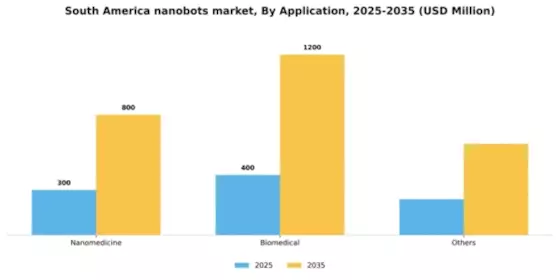
Nano Manipulators (Dominant) vs. Bio-Nanorobotics (Emerging)
Nano Manipulators characterize the dominant segment in the South America nanobots market due to their versatility and application across various fields, including manufacturing, healthcare, and environmental monitoring. Their precision and control capabilities make them essential for tasks such as assembly at the nanoscale. Conversely, Bio-Nanorobotics is recognized as an emerging segment with tremendous potential, particularly in the healthcare sector. These nanobots are designed for various applications, from drug delivery systems to cellular repair, indicating a shift towards more targeted and effective medical treatments. The synergy between these two segments reflects the innovative landscape of nanotechnology in South America.
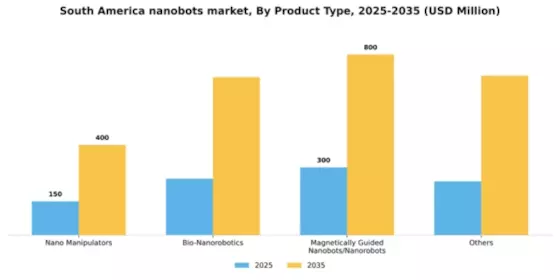
In the South America nanobots market, the application segment is dominated by nanomedicine, which holds the largest market share. This sector's significance stems from its expansive role in drug delivery, diagnostics, and therapeutic applications, leveraging the unique properties of nanobots to improve healthcare outcomes. Meanwhile, the biomedical segment, though smaller, is rapidly gaining traction, driven by advancements in healthcare technologies and increased demand for precise medical interventions.
Growth trends in the application segment are primarily fueled by innovations in nanotechnology and a rising emphasis on personalized medicine. The surge in chronic diseases and the need for effective treatment options are propelling the adoption of nanobots in medical applications. Furthermore, government initiatives and funding aimed at supporting research and development in nanomedicine enhance its growth prospects, establishing a robust framework for future advancements in the biomedical field.
Nanomedicine (Dominant) vs. Biomedical (Emerging)
Nanomedicine is a pivotal segment characterized by its extensive applications, primarily focusing on improving drug delivery mechanisms and enhancing diagnostic accuracy. This dominance is reflected in the rising number of clinical trials and collaborations among research institutions and pharmaceutical companies aimed at harnessing the potential of nanobots for therapeutic purposes. In contrast, the biomedical segment is emerging as a key player, driven by innovations like targeted therapies and regenerative medicine. This segment focuses on the integration of nanotechnology into medical devices and procedures, demonstrating significant potential for growth. As the healthcare sector demands more efficient and effective solutions, both segments are poised for expansion, with nanomedicine continuing to lead while biomedical applications rapidly evolve.
Get more detailed insights about South America Nanobots Market Request Free Sample
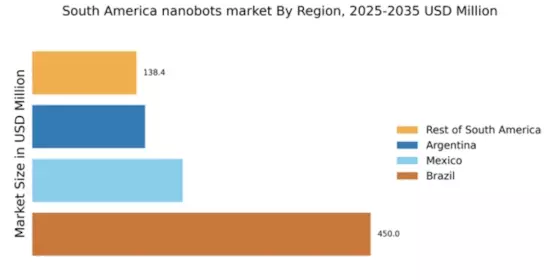
Brazil holds a dominant position in the South American nanobots market, accounting for 450.0 million, representing approximately 45% of the total market share. Key growth drivers include increasing investments in healthcare technology, particularly in drug delivery systems and diagnostics. Government initiatives, such as the National Science and Technology Strategy, promote research and development in nanotechnology, enhancing infrastructure and industrial capabilities in this sector. The rising demand for advanced medical solutions is also shaping consumption patterns, with a focus on precision medicine and targeted therapies. Key markets within Brazil include São Paulo and Rio de Janeiro, where major hospitals and research institutions are located. The competitive landscape features significant players like Adept Technology and Nanobot Medical, which are actively collaborating with local universities to foster innovation. The business environment is bolstered by favorable regulatory policies that encourage foreign investment and technology transfer. Applications in healthcare, electronics, and environmental monitoring are driving local market dynamics.
Mexico's nanobots market is valued at 200.0 million, capturing around 20% of the South American market share. The growth is fueled by increasing investments in biotechnology and nanotechnology, particularly in pharmaceuticals and agriculture. Demand trends indicate a rising interest in nanobots for drug delivery and pest control, supported by government initiatives aimed at fostering innovation in these sectors. The Mexican government has implemented policies to enhance research funding and collaboration between academia and industry, which is vital for market expansion. Key cities like Guadalajara and Monterrey are pivotal in the nanobots landscape, hosting numerous startups and research institutions. The competitive environment includes players like Nanosys and Zyvex Labs, which are establishing partnerships with local firms to penetrate the market. The business climate is characterized by a growing entrepreneurial ecosystem, with applications in healthcare, agriculture, and environmental sustainability driving local demand.
Argentina's nanobots market is valued at 150.0 million, representing about 15% of the South American market share. The growth is primarily driven by the increasing need for innovative healthcare solutions, particularly in drug delivery and cancer treatment. Demand trends show a shift towards personalized medicine, supported by government initiatives that promote research in nanotechnology. Regulatory frameworks are being developed to facilitate the commercialization of nanotechnology products, enhancing the industrial landscape. Key markets include Buenos Aires and Córdoba, where significant research activities are taking place. The competitive landscape features local players and international firms like Molecular Machines, which are collaborating with universities to advance nanobot applications. The business environment is evolving, with a focus on healthcare and environmental applications, creating opportunities for growth in the nanobots sector.
The Rest of South America holds a nanobots market value of 138.4 million, accounting for approximately 14% of the regional market share. Growth in this sub-region is driven by diverse applications across healthcare, agriculture, and environmental sectors. Demand trends indicate a rising interest in nanotechnology for sustainable solutions, supported by government initiatives aimed at promoting innovation and research. Regulatory policies are gradually evolving to accommodate the unique challenges of nanotechnology, fostering a conducive environment for market growth. Key countries in this sub-region include Chile and Colombia, where local startups are emerging in the nanotechnology space. The competitive landscape is characterized by a mix of local and international players, including NanoComposix and Bionanotechnology, which are exploring partnerships to enhance their market presence. The business environment is dynamic, with applications in agriculture, healthcare, and environmental monitoring driving local demand and innovation.
The nanobots market exhibits a dynamic competitive landscape characterized by rapid technological advancements and increasing applications across various sectors, particularly in healthcare and environmental monitoring. Key players such as Adept Technology (US), Nanosys (US), and Zyvex Labs (US) are at the forefront, leveraging innovation and strategic partnerships to enhance their market positioning. Adept Technology (US) focuses on developing advanced robotic systems that integrate nanotechnology, while Nanosys (US) emphasizes the production of nanomaterials for electronics, indicating a diverse operational focus that collectively shapes the competitive environment.The market structure appears moderately fragmented, with numerous players vying for market share. Companies are increasingly localizing manufacturing and optimizing supply chains to enhance efficiency and reduce costs. This trend is particularly evident as firms adapt to regional demands and regulatory requirements, which may influence their operational strategies and competitive dynamics.
In October Adept Technology (US) announced a partnership with a leading healthcare provider to develop nanobot-assisted surgical tools. This collaboration is poised to enhance precision in surgical procedures, potentially revolutionizing minimally invasive surgeries. The strategic importance of this partnership lies in its potential to position Adept Technology (US) as a leader in the medical applications of nanobots, thereby expanding its market reach and reinforcing its innovation-driven approach.
In September Nanosys (US) unveiled a new line of nanomaterials designed for energy-efficient electronics. This launch reflects the company's commitment to sustainability and innovation, aligning with global trends towards greener technologies. The introduction of these materials could significantly impact the electronics sector, providing Nanosys (US) with a competitive edge in a market increasingly focused on environmental responsibility.
In August Zyvex Labs (US) secured a substantial investment to accelerate its research and development efforts in nanotechnology applications for drug delivery systems. This funding is critical for Zyvex Labs (US) as it seeks to enhance its product offerings and expand its influence in the pharmaceutical sector. The strategic move underscores the growing importance of nanobots in healthcare, particularly in targeted therapies, which may redefine treatment paradigms.
As of November current trends in the nanobots market indicate a strong emphasis on digitalization, sustainability, and the integration of artificial intelligence. Strategic alliances are increasingly shaping the competitive landscape, fostering innovation and collaboration among key players. Looking ahead, competitive differentiation is likely to evolve, with a shift from price-based competition to a focus on technological advancements, innovation, and supply chain reliability. This transition may redefine market dynamics, compelling companies to invest in R&D and strategic partnerships to maintain a competitive edge.

Recent developments in the South America Nanobots Market have showcased significant advancements particularly with companies such as Braskem, Nanogea, Duke University, and Embraer spearheading innovations.
In March 2023, Nanobots were under intense scrutiny for their applications in pharmaceuticals and environmental sustainability, reflecting a growth trend due to rising investment in nanotechnology. Additionally, Merck Group and Quantum Materials Corporation are exploring potential partnerships to enhance nanomaterial innovations aimed at healthcare solutions in the region.
Growth in the market valuation of firms like NantHealth and NanoOne Materials indicates a strong correlation between technological advancements and market demand, as the proliferation of nanobot applications in diagnostics and treatment accelerates.
In terms of mergers, there was notable activity in February 2023 when Sibelius Pharmaceuticals announced a strategic acquisition of a nanotechnology firm, which has strengthened its R&D capabilities in drug delivery systems.
Lastly, Thermo Fisher Scientific has expanded its presence in South America through key collaborations with local institutions such as Universidad de Los Andes, aiming to leverage nanomedicine for advanced healthcare solutions. Such developments illustrate a vibrant and rapidly evolving landscape within the South America Nanobots Market.
The Nanobots Market is projected to grow at a 9.73% CAGR from 2025 to 2035, driven by advancements in healthcare, manufacturing, and environmental applications.
New opportunities lie in:
By 2035, the market is expected to achieve substantial growth, driven by innovative applications and technological advancements.
| MARKET SIZE 2024 | 938.4(USD Million) |
| MARKET SIZE 2025 | 1029.71(USD Million) |
| MARKET SIZE 2035 | 2606.5(USD Million) |
| COMPOUND ANNUAL GROWTH RATE (CAGR) | 9.73% (2025 - 2035) |
| REPORT COVERAGE | Revenue Forecast, Competitive Landscape, Growth Factors, and Trends |
| BASE YEAR | 2024 |
| Market Forecast Period | 2025 - 2035 |
| Historical Data | 2019 - 2024 |
| Market Forecast Units | USD Million |
| Key Companies Profiled | Adept Technology (US), Nanosys (US), Zyvex Labs (US), Molecular Machines (DE), NanoComposix (US), Bionanotechnology (US), Nanoscale (US), Nanobot Medical (US) |
| Segments Covered | Product Type, Application |
| Key Market Opportunities | Advancements in nanotechnology drive innovative healthcare solutions and environmental applications in the nanobots market. |
| Key Market Dynamics | Rising investment in nanotechnology drives innovation and competition in South America's nanobots market. |
| Countries Covered | Brazil, Mexico, Argentina, Rest of South America |
The overall market valuation was $938.4 Million in 2024.
The projected valuation for 2035 is $2606.5 Million.
The expected CAGR during the forecast period 2025 - 2035 is 9.73%.
The Magnetically Guided Nanobots/Nanorobots segment had the highest valuation at $300.0 Million in 2024.
The projected valuation range for Bio-Nanorobotics by 2035 is $250.0 Million to $700.0 Million.
The Biomedical application segment is expected to grow the most, with a valuation range of $400.0 Million to $1200.0 Million.
Key players include Adept Technology, Nanosys, Zyvex Labs, Molecular Machines, NanoComposix, Bionanotechnology, Nanoscale, and Nanobot Medical.
The Others segment in the Product Type category was valued at $238.4 Million in 2024.
The potential market size for Nanomedicine by 2035 is projected to range from $300.0 Million to $800.0 Million.
While specific comparisons to other regions are not provided, the growth trajectory suggests a robust development in the South America nanobots market.



Kindly complete the form below to receive a free sample of this Report

“This is really good guys. Excellent work on a tight deadline. I will continue to use you going forward and recommend you to others. Nice job”


“Thanks. It’s been a pleasure working with you, please use me as reference with any other Intel employees.”


“Thanks for sending the report it gives us a good global view of the Betaïne market.”


“Thank you, this will be very helpful for OQS.”


“We found the report very insightful! we found your research firm very helpful. I'm sending this email to secure our future business.”


“I am very pleased with how market segments have been defined in a relevant way for my purposes (such as "Portable Freezers & refrigerators" and "last-mile"). In general the report is well structured. Thanks very much for your efforts.”


“I have been reading the first document or the study, ,the Global HVAC and FP market report 2021 till 2026. Must say, good info! I have not gone in depth at all parts, but got a good indication of the data inside!”


“We got the report in time, we really thank you for your support in this process. I also thank to all of your team as they did a great job.”


“The Automotive 48V ECU Components Procurement Intelligence Study” was a complex project, but the Market Research Future (MRFR) team handled it with quality, agility, and customer-centricity. They delivered all requested data on time and within the agreed scope. The team, including Shubhendra Anand and Rahul Gotadki, was always readily available to clarify questions and swiftly implement necessary adjustments, driving the project to a successful conclusion within a very demanding timeframe.
I would also like to specifically commend Akshay Agarwal for his responsiveness and support at every stage—from our initial inquiry on May 6th through to final delivery on June 18th. His dedication made the entire process seamless.”



