Download Free Sample
Kindly complete the form below to receive a free sample of this Report
South Korea Brucellosis Market Research Report By species (Brucella suis, B. abortus, B. melitensis) -Forecast to 2035
As per Market Research Future analysis, the South Korea brucellosis market Size was estimated at 19.73 USD Million in 2024. The South Korea brucellosis market is projected to grow from 21.14 USD Million in 2025 to 42.16 USD Million by 2035, exhibiting a compound annual growth rate (CAGR) of 7.1% during the forecast period 2025 - 2035
The South Korea brucellosis market is experiencing notable growth driven by increased awareness and technological advancements.
| 2024 Market Size | 19.73 (USD Million) |
| 2035 Market Size | 42.16 (USD Million) |
| CAGR (2025 - 2035) | 7.15% |
Zoetis (US), Merck & Co (US), Boehringer Ingelheim (DE), Ceva Santé Animale (FR), Heska Corporation (US), Virbac (FR), Vetoquinol (FR), IDT Biologika (DE)
Our Impact
Enabled $4.3B Revenue Impact for Fortune 500 and Leading Multinationals
Partnering with 2000+ Global Organizations Each Year
30K+ Citations by Top-Tier Firms in the Industry
The brucellosis market in South Korea is currently experiencing notable developments, driven by a combination of factors including rising awareness of zoonotic diseases and increasing government initiatives aimed at controlling animal health. The prevalence of brucellosis, primarily affecting livestock, has prompted authorities to implement stringent measures for disease management and prevention. This has led to enhanced surveillance and vaccination programs, which are crucial in mitigating the impact of the disease on both animal and human populations. Furthermore, the growing demand for safe and healthy livestock products is influencing market dynamics, as consumers become more conscious of food safety and quality. In addition, advancements in diagnostic technologies are likely to play a pivotal role in shaping the brucellosis market. The introduction of rapid and accurate testing methods can facilitate early detection and control of outbreaks, thereby reducing economic losses in the agricultural sector. As the government continues to invest in research and development, the market may witness an influx of innovative solutions aimed at combating brucellosis. Overall, the interplay of regulatory frameworks, consumer awareness, and technological advancements appears to be steering the brucellosis market towards a more resilient and sustainable future.
The South Korean government is intensifying efforts to combat brucellosis through enhanced surveillance and vaccination programs. These initiatives aim to reduce the incidence of the disease in livestock, thereby protecting public health and ensuring food safety.
There is a growing awareness among consumers regarding the risks associated with zoonotic diseases, including brucellosis. This heightened consciousness is driving demand for safe livestock products, influencing market trends and encouraging producers to adopt better health practices.
Innovations in diagnostic tools are emerging as a key trend in the brucellosis market. Rapid and accurate testing methods are being developed, which could significantly improve disease detection and management, ultimately benefiting both livestock and human health.
The brucellosis market is also influenced by the rising livestock trade in South Korea. As the demand for meat and dairy products continues to grow, the movement of livestock across regions has increased. This trend, while beneficial for the economy, poses challenges for disease management, including brucellosis. The government is likely to invest in monitoring and control measures to ensure that livestock trade does not contribute to the spread of the disease. The livestock sector's contribution to the national economy is substantial, with estimates suggesting it accounts for around 5% of the agricultural GDP. Consequently, the brucellosis market may see a surge in demand for diagnostic tools and vaccines to manage the health of traded animals, thereby enhancing market growth.
The brucellosis market in South Korea is experiencing a notable shift due to enhanced veterinary regulations. The government has implemented stricter guidelines for livestock management, which aim to reduce the incidence of brucellosis among cattle and other livestock. This regulatory framework not only promotes animal health but also safeguards public health by minimizing the risk of zoonotic transmission. As a result, the market is likely to see an increase in demand for veterinary services and products aimed at disease prevention. The financial implications are significant, with the veterinary services sector projected to grow by approximately 10% annually, reflecting the increasing focus on disease control in livestock. This trend indicates a robust future for the brucellosis market, driven by regulatory compliance and enhanced veterinary practices.
Increased public health awareness regarding zoonotic diseases is another driver impacting the brucellosis market. As consumers become more informed about the risks associated with animal diseases, there is a growing demand for transparency in food production and safety. This trend is prompting livestock producers to adopt better health management practices, which in turn influences the market for brucellosis-related products and services. The public's heightened concern about food safety is likely to lead to increased investments in disease prevention measures, including vaccination and testing. This shift in consumer behavior could result in a market growth rate of approximately 7% over the next few years, as stakeholders respond to the demand for safer food products.
Technological advancements in vaccination are playing a crucial role in shaping the brucellosis market. Innovative vaccine development is leading to more effective and safer options for livestock, which is essential for controlling brucellosis outbreaks. The introduction of new vaccines that provide longer-lasting immunity could potentially reduce the incidence of the disease significantly. Furthermore, the South Korean government is likely to support research and development initiatives in this area, recognizing the economic impact of livestock diseases. The market for veterinary vaccines is projected to grow at a CAGR of 8% over the next five years, indicating a strong potential for the brucellosis market as vaccination becomes a cornerstone of disease prevention strategies.
Collaboration between public and private sectors is emerging as a significant driver for the brucellosis market. Partnerships between government agencies, research institutions, and private companies are fostering innovation in disease management and prevention strategies. These collaborations are likely to enhance the development of effective diagnostic tools and vaccines, which are critical for controlling brucellosis outbreaks. The South Korean government is expected to allocate funding for joint initiatives aimed at improving livestock health and reducing disease prevalence. This collaborative approach could lead to a more resilient livestock sector, with the potential to increase market opportunities in the brucellosis market by an estimated 6% in the coming years.
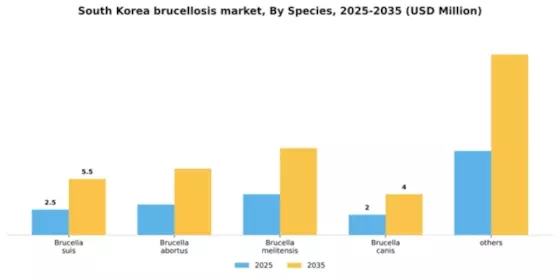
In the South Korea brucellosis market, the distribution of market share among various species reveals that Brucella abortus occupies the largest segment due to its prevalence in livestock and the associated economic impact. Brucella suis follows closely, showcasing significant traction among emerging markets and veterinary practices. Other species such as Brucella melitensis and Brucella canis have smaller shares but are critical in niche applications, contributing to the diversity of the market. The growth trends in this segment are primarily driven by increased awareness and testing among livestock producers regarding brucellosis. The emergence of Brucella suis as the fastest-growing species is indicative of changing agricultural practices and rising veterinary services. Enhanced control measures and government initiatives to manage and prevent brucellosis outbreaks further support this growth, emphasizing the need for effective solutions in the market.
Brucella abortus (Dominant) vs. Brucella suis (Emerging)
Brucella abortus stands as the dominant player in the South Korea brucellosis market due to its significant impact on cattle health and livestock economics. It is primarily associated with bovine brucellosis, causing severe losses in dairy and meat production. Efforts to curb its spread have led to increased vaccination and testing protocols among farms. On the other hand, Brucella suis, traditionally impacting pig populations, is emerging as a notable concern owing to changing farming practices and the ecological balance between livestock and wildlife. Its rising prevalence in veterinary focus highlights a shift towards newer approaches in disease management, providing opportunities for innovative solutions and market participation.
In the South Korea brucellosis market, serological tests encompass a substantial portion of the diagnostic methods, holding the largest market share due to their widespread availability and ability to quickly detect antibodies in patients. In contrast, molecular techniques, which involve advanced methods such as PCR, are emerging rapidly, gaining traction because of their specificity and sensitivity in detecting the brucella pathogen in diverse specimens. Growth trends in this segment are being driven by several factors, including increased awareness of brucellosis and its implications, improvements in laboratory technology, and the rising focus on precision medicine. Additionally, the increasing prevalence of brucellosis in both livestock and humans encourages innovation and investment in more accurate diagnostic tools, which bodes well for the future expansion of molecular techniques in the market.
Serological Tests (Dominant) vs. Bone Marrow Biopsy (Emerging)
Serological tests play a dominant role in the South Korea brucellosis market due to their effectiveness in large-scale screening and quick turnaround times. These tests are often the first line of diagnosis and are valued for their non-invasive nature. Conversely, bone marrow biopsy represents an emerging but crucial diagnostic method, utilized when serological tests yield inconclusive results. This method, although more invasive, offers significant insights into the presence of brucella organisms, especially in chronic cases. As the focus on accurate and early diagnosis intensifies, the role of bone marrow biopsy is likely to expand, complementing traditional serological approaches and enhancing overall diagnostic accuracy.
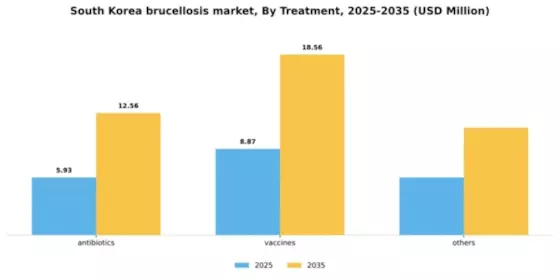
In the South Korea brucellosis market, the treatment segment is predominantly characterized by antibiotics, holding a significant market share. This segment has been pivotal in managing brucellosis outbreaks, with several established products available. Vaccines are emerging as a critical component in disease prevention, showing rapid growth due to increased awareness and vaccination initiatives. The growth trends in the treatment segment are primarily driven by advancements in antibiotic formulations and the rising acceptance of vaccines among both veterinarians and livestock owners. As awareness of brucellosis impacts on agricultural productivity increases, the demand for effective treatment and preventive solutions is likely to grow. Additionally, initiatives focusing on public health and food safety are further propelling the adoption of vaccines, indicating a shift towards more preventive measures in managing the disease.
Antibiotics: Established (Dominant) vs. Vaccines (Emerging)
Antibiotics have an established position in the South Korea brucellosis market, characterized by well-recognized efficacy in treating infected animals. These products are widely utilized due to their reliable performance in reducing infection rates. On the other hand, vaccines are emerging as a vital tool in the prevention landscape, aimed at safeguarding livestock before the onset of disease. The growing acceptance of vaccines, coupled with innovative product development, is enhancing their market presence. While antibiotics dominate in treatment scenarios, vaccines are gaining traction, signifying a shift towards a more balanced approach in managing brucellosis, which may soon redefine treatment paradigms.
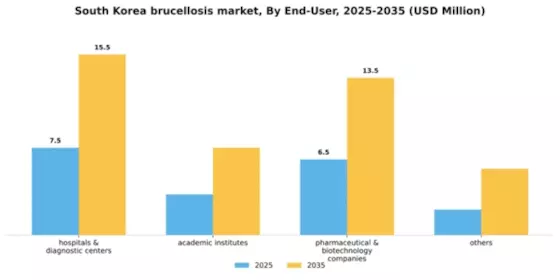
In the South Korea brucellosis market, hospitals & diagnostic centers hold the largest market share, driven by the increasing demand for early diagnosis and treatment of brucellosis. This segment accounts for significant healthcare resources, including specialized diagnostics and treatment protocols. Academic institutes, on the other hand, represent a rapidly growing segment, fueled by ongoing research and development in brucellosis and increased educational initiatives aimed at understanding the disease better. Growth trends indicate a rising focus on brucellosis in clinical research and diagnostics, primarily due to heightened awareness of zoonotic diseases. The collaboration between pharmaceutical & biotechnology companies and hospitals enhances the potential for innovations in treatment options. Furthermore, government initiatives and funding for research in brucellosis accelerate developments, particularly within academic institutions, making them a vital part of the ecosystem in the South Korea brucellosis market.
Hospitals & Diagnostic Centers (Dominant) vs. Academic Institutes (Emerging)
Hospitals & diagnostic centers are considered the dominant players in the South Korea brucellosis market due to their extensive infrastructure and established protocols for diagnosing and managing the disease. These facilities are crucial for providing timely care and leveraging advanced technologies for accurate detection. In contrast, academic institutes serve as emerging contributors, primarily focused on research, education, and the development of more effective treatment methodologies. Their role is becoming increasingly significant as they collaborate with healthcare providers to translate research findings into clinical practice, thus enhancing overall disease management and educating emerging professionals in the field.
Get more detailed insights about South Korea Brucellosis Market Request Free Sample
The brucellosis market exhibits a competitive landscape characterized by a blend of established players and emerging innovators. Key growth drivers include increasing awareness of zoonotic diseases, advancements in diagnostic technologies, and a rising demand for effective vaccines. Major companies such as Zoetis (US), Merck & Co (US), and Boehringer Ingelheim (DE) are strategically positioned to leverage these trends. Zoetis (US) focuses on innovation in vaccine development, while Merck & Co (US) emphasizes partnerships to enhance its product portfolio. Boehringer Ingelheim (DE) is investing in regional expansion, particularly in Asia, to capture growing market opportunities. Collectively, these strategies shape a competitive environment that is increasingly dynamic and responsive to market needs.Key business tactics within the brucellosis market include localizing manufacturing and optimizing supply chains to enhance efficiency and reduce costs. The market structure appears moderately fragmented, with several key players exerting influence over specific segments. This fragmentation allows for niche players to thrive, while larger companies consolidate their positions through strategic acquisitions and partnerships, thereby enhancing their market share and operational capabilities.
In October Zoetis (US) announced the launch of a new brucellosis vaccine aimed at improving livestock health and productivity. This strategic move is significant as it not only reinforces Zoetis's commitment to innovation but also addresses the growing demand for effective disease management solutions in the agricultural sector. The introduction of this vaccine is likely to enhance the company's competitive edge in the market.
In September Merck & Co (US) entered into a collaborative agreement with a leading agricultural research institute to develop advanced diagnostic tools for brucellosis. This partnership is pivotal as it underscores Merck's strategy to integrate cutting-edge technology into its offerings, thereby enhancing its diagnostic capabilities. Such collaborations may lead to improved disease detection and management, positioning Merck favorably against its competitors.
In August Boehringer Ingelheim (DE) expanded its production facility in South Korea to increase the output of its brucellosis vaccine. This expansion reflects the company's commitment to meeting the rising demand in the region and signifies a strategic investment in local manufacturing capabilities. By enhancing production capacity, Boehringer Ingelheim is likely to strengthen its market presence and improve supply chain reliability.
As of November current competitive trends in the brucellosis market are increasingly defined by digitalization, sustainability, and the integration of artificial intelligence (AI) in product development and diagnostics. Strategic alliances are shaping the landscape, enabling companies to pool resources and expertise to drive innovation. Looking ahead, competitive differentiation is expected to evolve, with a shift from price-based competition to a focus on technological advancements, innovative solutions, and robust supply chain management. This transition may ultimately enhance the resilience and adaptability of companies operating within the market.



The South Korea Brucellosis Market has witnessed several notable developments recently. In October 2023, the Ministry of Agriculture, Food and Rural Affairs of South Korea announced heightened surveillance of animal health to combat rising cases of brucellosis among livestock, specifically focusing on cattle and swine.
This initiative aims to mitigate risks associated with zoonotic transmission to humans. Key companies in this sector such as Medytox, SK Chemicals, and Green Cross Corporation are actively engaging in Research and Development to enhance vaccine production and improve diagnostic methods for brucellosis.
In terms of mergers and acquisitions, Celltrion has notably expanded its portfolio with an acquisition of a smaller biotechnology firm specializing in infectious diseases in September 2023, further strengthening its capabilities in biopharmaceuticals.
Additionally, major firms like CJ CheilJedang and Samsung Biologics continue to invest in innovative solutions to bolster their market presence. The market is experiencing growth in valuation driven by advances in vaccine technology and increased public health initiatives targeting brucellosis, as well as efforts from the Korea Vaccine and Hanmi Pharmaceutical in vaccine development over the past few years.
The Brucellosis Market in South Korea is projected to grow at a 7.15% CAGR from 2025 to 2035, driven by increased awareness and advancements in diagnostic technologies.
New opportunities lie in:
By 2035, the market is expected to achieve substantial growth and enhanced disease management capabilities.
| MARKET SIZE 2024 | 19.73(USD Million) |
| MARKET SIZE 2025 | 21.14(USD Million) |
| MARKET SIZE 2035 | 42.16(USD Million) |
| COMPOUND ANNUAL GROWTH RATE (CAGR) | 7.15% (2025 - 2035) |
| REPORT COVERAGE | Revenue Forecast, Competitive Landscape, Growth Factors, and Trends |
| BASE YEAR | 2024 |
| Market Forecast Period | 2025 - 2035 |
| Historical Data | 2019 - 2024 |
| Market Forecast Units | USD Million |
| Key Companies Profiled | Zoetis (US), Merck & Co (US), Boehringer Ingelheim (DE), Ceva Santé Animale (FR), Heska Corporation (US), Virbac (FR), Vetoquinol (FR), IDT Biologika (DE) |
| Segments Covered | Species, Diagnosis, Treatment, End-User |
| Key Market Opportunities | Emerging diagnostic technologies enhance detection and management of brucellosis in livestock and humans. |
| Key Market Dynamics | Rising regulatory scrutiny and technological advancements drive innovation in brucellosis diagnostics and treatment solutions. |
| Countries Covered | South Korea |
The overall market valuation for brucellosis in South Korea was $19.73 Million in 2024.
The projected market valuation for brucellosis in South Korea is $42.16 Million by 2035.
The expected CAGR for the South Korea brucellosis market during the forecast period 2025 - 2035 is 7.15%.
Key players in the South Korea brucellosis market include Zoetis, Merck & Co, Boehringer Ingelheim, Ceva Santé Animale, Heska Corporation, Virbac, Vetoquinol, and IDT Biologika.
The main segments of the South Korea brucellosis market include species, diagnosis, treatment, and end-user.
The valuation of the Brucella melitensis segment was $4.0 Million in 2024.
The projected valuation for the antibiotics treatment segment is $12.56 Million by 2035.
The serological tests segment is expected to grow to $7.5 Million by 2035.
The valuation range for the hospitals & diagnostic centers end-user segment was $7.5 Million to $15.5 Million in 2024.
The projected growth for the Brucella canis segment is expected to reach $4.0 Million by 2035.


Kindly complete the form below to receive a free sample of this Report

“This is really good guys. Excellent work on a tight deadline. I will continue to use you going forward and recommend you to others. Nice job”


“Thanks. It’s been a pleasure working with you, please use me as reference with any other Intel employees.”


“Thanks for sending the report it gives us a good global view of the Betaïne market.”


“Thank you, this will be very helpful for OQS.”


“We found the report very insightful! we found your research firm very helpful. I'm sending this email to secure our future business.”


“I am very pleased with how market segments have been defined in a relevant way for my purposes (such as "Portable Freezers & refrigerators" and "last-mile"). In general the report is well structured. Thanks very much for your efforts.”


“I have been reading the first document or the study, ,the Global HVAC and FP market report 2021 till 2026. Must say, good info! I have not gone in depth at all parts, but got a good indication of the data inside!”


“We got the report in time, we really thank you for your support in this process. I also thank to all of your team as they did a great job.”


“The Automotive 48V ECU Components Procurement Intelligence Study” was a complex project, but the Market Research Future (MRFR) team handled it with quality, agility, and customer-centricity. They delivered all requested data on time and within the agreed scope. The team, including Shubhendra Anand and Rahul Gotadki, was always readily available to clarify questions and swiftly implement necessary adjustments, driving the project to a successful conclusion within a very demanding timeframe.
I would also like to specifically commend Akshay Agarwal for his responsiveness and support at every stage—from our initial inquiry on May 6th through to final delivery on June 18th. His dedication made the entire process seamless.”



