Download Free Sample
Kindly complete the form below to receive a free sample of this Report
South Korea Erosion and Sediment Control Market Size, Share, Industry Trend & Analysis Research Report: By Product Type (Mats, Turfs, Blankets, Filter Socks, Logs, Wattles, Woven Sediment Fences and Silt Fences, Filtration Systems, Sediment Basin, Others) and By End Use (Highway and Road Construction, Energy and Mining, Government and Municipality, Landfill Construction and Maintenance, Infrastructure Development, Industrial Manufacturing, Others) - Forecast to 2035
As per Market Research Future analysis, the South Korea erosion and sediment control market Size was estimated at 86.4 USD Million in 2024. The South Korea erosion and-sediment-control market is projected to grow from 89.98 USD Million in 2025 to 135.0 USD Million by 2035, exhibiting a compound annual growth rate (CAGR) of 4.1% during the forecast period 2025 - 2035
The South Korea erosion and sediment control market is poised for growth driven by regulatory enhancements and technological advancements.
| 2024 Market Size | 86.4 (USD Million) |
| 2035 Market Size | 135.0 (USD Million) |
| CAGR (2025 - 2035) | 4.14% |
Geosyntec Consultants (US), Terracon Consultants (US), AECOM (US), Golder Associates (CA), Stantec (CA), Cardno (AU), Bennett Environmental (US), Ecosystem Restoration Associates (US)
Our Impact
Enabled $4.3B Revenue Impact for Fortune 500 and Leading Multinationals
Partnering with 2000+ Global Organizations Each Year
30K+ Citations by Top-Tier Firms in the Industry
The erosion and sediment control market in South Korea is currently experiencing notable developments driven by increasing environmental awareness and regulatory measures. The government has implemented various policies aimed at mitigating soil erosion and managing sediment runoff, particularly in urban areas and agricultural regions. This focus on sustainable practices is likely to enhance the demand for innovative erosion control solutions, such as biodegradable mats and advanced sediment filtration systems. Furthermore, the construction sector's growth, alongside infrastructure projects, appears to be a significant factor influencing market dynamics. As urbanization continues, the need for effective erosion management strategies becomes more pressing, suggesting a robust future for this market. In addition, the rising incidence of extreme weather events, including heavy rainfall and typhoons, has heightened the urgency for effective erosion and sediment control measures. The government’s investment in research and development of new technologies indicates a commitment to improving soil conservation practices. This trend may lead to the introduction of more efficient products and services tailored to local conditions. Overall, the erosion and-sediment-control market in South Korea seems poised for growth, driven by regulatory support, technological advancements, and an increasing emphasis on environmental sustainability.
The South Korean government has strengthened regulations concerning soil conservation and sediment management. This enhancement is likely to drive demand for compliant erosion control solutions, as businesses seek to adhere to new standards.
There is a noticeable trend towards the adoption of advanced technologies in the erosion and-sediment-control market. Innovations such as smart monitoring systems and eco-friendly materials are emerging, potentially improving efficiency and effectiveness.
Public awareness regarding environmental issues is on the rise in South Korea. This growing consciousness may lead to greater demand for erosion control products, as individuals and organizations seek to contribute to sustainable practices.
The erosion and-sediment-control market in South Korea is significantly influenced by the government's commitment to environmental policy initiatives. These policies aim to mitigate soil erosion and sedimentation, particularly in vulnerable areas. The South Korean government has implemented various regulations that mandate the use of erosion control measures in construction and land development projects. This regulatory environment is expected to drive market growth, as compliance with these policies often necessitates the adoption of advanced erosion control technologies. Furthermore, the government's investment in sustainable land management practices is projected to increase the market's value, with estimates suggesting a growth rate of approximately 6% annually over the next five years. As such, the erosion and-sediment-control market is likely to benefit from these proactive measures aimed at preserving natural resources and promoting ecological balance.
The erosion and-sediment-control market is increasingly shaped by the need for climate change adaptation strategies in South Korea. As extreme weather events become more frequent, the risk of soil erosion and sedimentation rises, prompting the need for effective control measures. The South Korean government has initiated various programs aimed at enhancing resilience to climate change, which includes funding for erosion control projects. Reports indicate that the market could see a growth of approximately 5% annually as stakeholders recognize the importance of integrating erosion control into climate adaptation plans. This trend suggests that the erosion and-sediment-control market will play a vital role in safeguarding infrastructure and natural resources against the adverse effects of climate change, thereby driving demand for innovative solutions.
Collaboration between the public and private sectors is emerging as a key driver of the erosion and-sediment-control market in South Korea. This partnership facilitates the sharing of resources, knowledge, and technology, which is essential for developing effective erosion control solutions. Public agencies are increasingly engaging with private companies to implement innovative erosion control projects, particularly in urban and rural areas. This collaboration is likely to enhance the market's growth, as it fosters the development of advanced technologies and practices that address erosion challenges. Furthermore, joint initiatives often attract funding from both government and private sources, which can significantly boost project implementation. As a result, the erosion and-sediment-control market is expected to benefit from this synergistic approach, leading to improved outcomes in soil conservation and sediment management.
Rapid urbanization in South Korea is a critical driver of the erosion and-sediment-control market. As cities expand, the demand for infrastructure development increases, leading to significant land disturbance and soil erosion. The construction of roads, buildings, and other infrastructure projects often results in increased sediment runoff, necessitating effective erosion control solutions. The South Korean government has recognized this challenge and is investing heavily in infrastructure projects, with an estimated budget of over $100 billion allocated for urban development in the coming years. This investment is likely to create a substantial demand for erosion and sediment control products and services, as developers seek to comply with environmental regulations and minimize the ecological impact of their projects. Consequently, the erosion and-sediment-control market is poised for growth as urbanization continues to reshape the landscape.
Agricultural practices in South Korea are a significant driver of the erosion and-sediment-control market. With agriculture being a vital sector of the economy, the need for soil conservation has become increasingly apparent. Farmers are adopting various erosion control techniques to maintain soil health and productivity, which is essential for sustainable agricultural practices. The government has introduced programs that promote the use of erosion control measures in farming, including subsidies for implementing best management practices. This initiative is expected to enhance the market, as it encourages farmers to invest in erosion control technologies. The erosion and-sediment-control market could potentially experience a growth rate of around 4% annually, driven by the agricultural sector's commitment to sustainable practices and soil conservation.
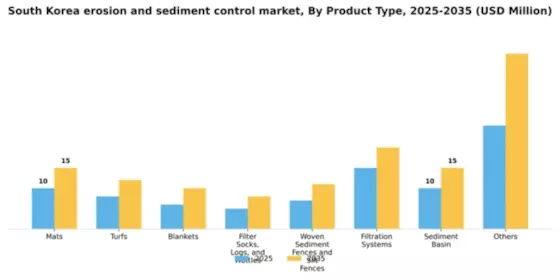
In the South Korea erosion and-sediment-control market, the distribution of market share among various product types illustrates the dominance of Mats, which hold a significant share due to their versatile applications in erosion control. Turfs and blankets also make notable contributions, while woven sediment fences and filtration systems are gaining traction. Additionally, filter socks, logs, and wattles are emerging as rapidly growing options, reflecting shifts in preference towards more efficient sediment control measures. Growth trends in the segment are bolstered by increasing awareness of environmental protection and regulations promoting effective erosion control practices. The demand for innovative solutions that ensure sustainability and efficiency drives the adoption of filter socks and logs, marking them as the fastest-growing segment. Furthermore, continuous advancements in material technology are enhancing the performance of traditional products like mats and blankets, ensuring their ongoing relevance in the market.
Mats (Dominant) vs. Filter Socks, Logs, and Wattles (Emerging)
Mats are regarded as the dominant product type in the erosion and-sediment-control market, primarily due to their effectiveness in providing immediate ground cover and controlling erosion on construction sites and landscapes. They are made from various materials, including natural fibers and synthetic options, catering to different environmental conditions and project requirements. Conversely, filter socks, logs, and wattles are categorized as emerging solutions, gaining recognition for their ability to filter silt and sediment while being easy to install and maintain. These products align with current environmental standards, making them increasingly popular among contractors and environmental regulators alike. The unique attributes of these emerging products position them for future growth as regulations become more stringent.
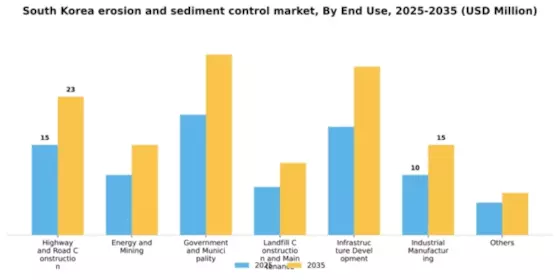
The South Korea erosion and-sediment-control market displays a varied distribution of market share across several end-use segments. Highway and road construction stands out as the largest segment, driven by continuous infrastructural developments and need for effective sediment management. Energy and mining, while smaller in share, is rapidly gaining ground, reflecting the growing emphasis on environmental sustainability in these sectors. In terms of growth trends, the erosion and-sediment-control market is witnessing an upsurge spurred by stringent regulatory frameworks and rising awareness of erosion control practices. Innovations in materials and techniques are enhancing efficiency, particularly in energy and mining, where the adoption of eco-friendly solutions is accelerating growth. The government and municipality segment follows closely, highlighting the importance of public initiatives in infrastructure and environmental management.
Highway and Road Construction: Dominant vs. Energy and Mining: Emerging
Highway and road construction remains the dominant segment within the South Korea erosion and-sediment-control market, characterized by large-scale projects and significant funding towards infrastructure improvements. This segment benefits from government support and public investments aimed at enhancing transportation networks. On the other hand, energy and mining represents an emerging segment fueled by the industry's shift towards sustainable practices. Companies in this sector are increasingly adopting advanced erosion control methods to comply with environmental regulations, thus driving its growth. The growing demand for sustainable energy solutions is prompting investments in eco-efficient technologies, making energy and mining a focal point for future market expansions.
Get more detailed insights about South Korea Erosion and Sediment Control Market Request Free Sample
The erosion and-sediment-control market in South Korea is characterized by a competitive landscape that is increasingly shaped by innovation, sustainability, and strategic partnerships. Key players such as Geosyntec Consultants (US), AECOM (US), and Golder Associates (CA) are actively positioning themselves to leverage these trends. Geosyntec Consultants (US) has focused on enhancing its service offerings through technological advancements, particularly in data analytics and environmental modeling, which appear to provide a competitive edge in project execution and client engagement. AECOM (US), on the other hand, has been pursuing regional expansion, particularly in Asia, to capitalize on the growing demand for erosion control solutions, indicating a strategic move towards market penetration. Golder Associates (CA) has emphasized sustainability in its operations, aligning its projects with environmental regulations and client sustainability goals, which seems to resonate well with the current market demands.The business tactics employed by these companies reflect a nuanced understanding of the market's structure, which is moderately fragmented. Localizing manufacturing and optimizing supply chains have emerged as critical strategies to enhance operational efficiency and reduce costs. The collective influence of these key players is significant, as they not only drive innovation but also set benchmarks for quality and service delivery within the market.
In August Geosyntec Consultants (US) announced a partnership with a leading technology firm to develop an advanced erosion monitoring system. This strategic move is likely to enhance their service portfolio and provide clients with real-time data, thereby improving decision-making processes. Such innovations could potentially redefine service standards in the erosion control sector, positioning Geosyntec as a leader in technological integration.
In September AECOM (US) secured a major contract for a large-scale infrastructure project aimed at improving sediment control measures in urban areas. This contract not only underscores AECOM's commitment to regional expansion but also highlights its capability to manage complex projects that require innovative solutions. The successful execution of this project could enhance AECOM's reputation and market share in South Korea.
In October Golder Associates (CA) launched a new initiative focused on sustainable practices in erosion control, which includes the use of biodegradable materials in their projects. This initiative appears to align with global sustainability trends and may attract environmentally conscious clients, thereby expanding Golder's market reach. The emphasis on sustainability is likely to become a key differentiator in the competitive landscape.
As of November the erosion and-sediment-control market is witnessing a shift towards digitalization, sustainability, and the integration of artificial intelligence (AI) in project management. Strategic alliances among companies are increasingly shaping the competitive environment, fostering innovation and enhancing service delivery. The evolution of competitive differentiation is likely to move away from traditional price-based competition towards a focus on technological advancements, reliability in supply chains, and innovative solutions that meet the growing demands for sustainability. This trend suggests that companies that prioritize these aspects may secure a more favorable position in the market.
The South Korea Erosion and Sediment Control Market has seen significant developments recently. In October 2023, F and D Construction announced a new initiative aimed at enhancing sediment control methods in response to increased regulatory pressures from the South Korean government, which is focusing on environmental sustainability in construction projects. Concurrently, EnviroTech Services has expanded its portfolio with innovative erosion control materials tailored for coastal areas, reflecting the country's ongoing struggle with natural disasters.
Several companies, including Terra Firma Solutions and Cummins Inc, have reported growth, attributed to new infrastructure projects across South Korea, leading to increased demand for their services. Notably, in September 2023, Bayer AG and AquaBlok collaborated on a project addressing soil erosion management, highlighting the growing trend of partnerships in this sector. Additionally, market valuations of companies, including Contech Engineered Solutions and Maccaferri, have surged due to heightened awareness of environmental issues. In the past few years, regulations have tightened, particularly following severe flooding incidents in 2021 that prompted a reevaluation of sediment management practices.
This evolving landscape presents both challenges and opportunities for stakeholders within the South Korean erosion control sector.
The erosion and-sediment-control market is projected to grow at a 4.14% CAGR from 2025 to 2035, driven by regulatory frameworks, technological advancements, and increasing environmental awareness.
New opportunities lie in:
By 2035, the market is expected to achieve robust growth, driven by innovation and sustainability initiatives.
| MARKET SIZE 2024 | 86.4(USD Million) |
| MARKET SIZE 2025 | 89.98(USD Million) |
| MARKET SIZE 2035 | 135.0(USD Million) |
| COMPOUND ANNUAL GROWTH RATE (CAGR) | 4.14% (2025 - 2035) |
| REPORT COVERAGE | Revenue Forecast, Competitive Landscape, Growth Factors, and Trends |
| BASE YEAR | 2024 |
| Market Forecast Period | 2025 - 2035 |
| Historical Data | 2019 - 2024 |
| Market Forecast Units | USD Million |
| Key Companies Profiled | Geosyntec Consultants (US), Terracon Consultants (US), AECOM (US), Golder Associates (CA), Stantec (CA), Cardno (AU), Bennett Environmental (US), Ecosystem Restoration Associates (US) |
| Segments Covered | Product Type, End Use |
| Key Market Opportunities | Adoption of innovative biodegradable materials for enhanced erosion and-sediment-control solutions. |
| Key Market Dynamics | Regulatory changes drive innovation in erosion and sediment control technologies within South Korea's construction sector. |
| Countries Covered | South Korea |
The market valuation was $86.4 Million in 2024.
The projected valuation for 2035 is $135.0 Million.
The expected CAGR during the forecast period 2025 - 2035 is 4.14%.
The Filtration Systems segment had the highest valuation at $15.0 - $20.0 Million in 2024.
The valuation range for the 'Highway and Road Construction' end-use segment was $15.0 - $23.0 Million in 2024.
Key players include Geosyntec Consultants, Terracon Consultants, AECOM, Golder Associates, Stantec, Cardno, Bennett Environmental, and Ecosystem Restoration Associates.
The valuation range for the 'Government and Municipality' end-use segment was $20.0 - $30.0 Million in 2024.
The 'Others' product type segment, with a valuation range of $25.4 - $43.0 Million in 2024, is expected to grow significantly by 2035.
The valuation range for the 'Infrastructure Development' end-use segment was $18.0 - $28.0 Million in 2024.
While specific comparisons to other regions are not provided, the growth trajectory and key players suggest a robust market presence in South Korea.



Kindly complete the form below to receive a free sample of this Report

“This is really good guys. Excellent work on a tight deadline. I will continue to use you going forward and recommend you to others. Nice job”


“Thanks. It’s been a pleasure working with you, please use me as reference with any other Intel employees.”


“Thanks for sending the report it gives us a good global view of the Betaïne market.”


“Thank you, this will be very helpful for OQS.”


“We found the report very insightful! we found your research firm very helpful. I'm sending this email to secure our future business.”


“I am very pleased with how market segments have been defined in a relevant way for my purposes (such as "Portable Freezers & refrigerators" and "last-mile"). In general the report is well structured. Thanks very much for your efforts.”


“I have been reading the first document or the study, ,the Global HVAC and FP market report 2021 till 2026. Must say, good info! I have not gone in depth at all parts, but got a good indication of the data inside!”


“We got the report in time, we really thank you for your support in this process. I also thank to all of your team as they did a great job.”


“The Automotive 48V ECU Components Procurement Intelligence Study” was a complex project, but the Market Research Future (MRFR) team handled it with quality, agility, and customer-centricity. They delivered all requested data on time and within the agreed scope. The team, including Shubhendra Anand and Rahul Gotadki, was always readily available to clarify questions and swiftly implement necessary adjustments, driving the project to a successful conclusion within a very demanding timeframe.
I would also like to specifically commend Akshay Agarwal for his responsiveness and support at every stage—from our initial inquiry on May 6th through to final delivery on June 18th. His dedication made the entire process seamless.”



