Rising Healthcare Expenditure
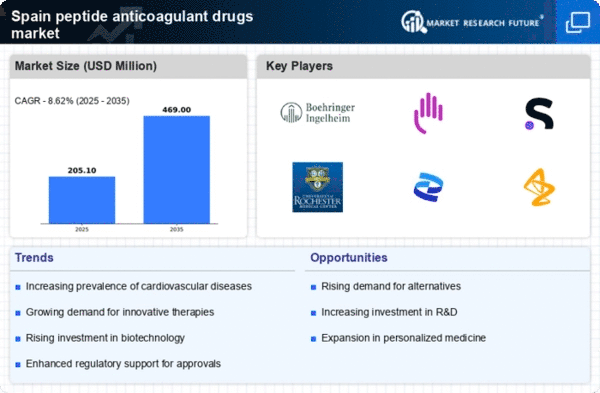
The increase in healthcare expenditure in Spain is a significant driver for the peptide anticoagulant-drugs market. As the government allocates more resources to healthcare, there is a corresponding rise in the availability of advanced medical treatments, including peptide anticoagulants. Recent reports indicate that healthcare spending in Spain has risen by approximately 5% annually, reflecting a commitment to improving patient outcomes. This financial support enables healthcare providers to adopt innovative therapies that may have previously been deemed too costly. Consequently, the peptide anticoagulant-drugs market is likely to benefit from this trend, as hospitals and clinics increasingly incorporate these advanced treatments into their protocols. The focus on enhancing patient care and reducing the burden of thromboembolic disorders further underscores the potential for growth in this market segment.
Growing Focus on Personalized Medicine
The shift towards personalized medicine is reshaping the landscape of the peptide anticoagulant-drugs market. In Spain, healthcare professionals are increasingly recognizing the importance of tailoring treatments to individual patient profiles, particularly in the management of thromboembolic disorders. This approach not only enhances treatment efficacy but also minimizes adverse effects, making peptide anticoagulants an attractive option. The integration of pharmacogenomics into clinical practice allows for more precise dosing and selection of anticoagulant therapies based on genetic factors. As awareness of personalized medicine grows among healthcare providers and patients alike, the demand for peptide anticoagulants is expected to rise. This trend indicates a broader movement towards individualized treatment strategies, which could significantly impact the future trajectory of the peptide anticoagulant-drugs market.
Advancements in Drug Development Technologies
Technological advancements in drug development are significantly influencing the peptide anticoagulant-drugs market. Innovations in peptide synthesis and formulation techniques have led to the creation of more effective and safer anticoagulant therapies. In Spain, research institutions and pharmaceutical companies are increasingly investing in biotechnological methods to enhance the efficacy of peptide-based drugs. This investment is reflected in the growing number of clinical trials aimed at evaluating new peptide anticoagulants. Furthermore, the integration of artificial intelligence and machine learning in drug discovery processes is streamlining the identification of potential candidates, thereby accelerating the time to market. As these technologies continue to evolve, they are likely to foster a more dynamic and competitive landscape within the peptide anticoagulant-drugs market, ultimately benefiting patients with improved treatment options.
Increasing Incidence of Thromboembolic Disorders
The rising incidence of thromboembolic disorders in Spain is a crucial driver for the peptide anticoagulant-drugs market. Conditions such as deep vein thrombosis (DVT) and pulmonary embolism (PE) are becoming more prevalent, leading to a heightened demand for effective treatment options. According to recent health statistics, thromboembolic events account for a significant number of hospital admissions, prompting healthcare providers to seek advanced therapeutic solutions. Peptide anticoagulants, known for their targeted action and reduced side effects, are increasingly favored in clinical settings. This trend is likely to continue, as the Spanish population ages and the prevalence of risk factors such as obesity and sedentary lifestyles increases. Consequently, the peptide anticoagulant-drugs market is expected to expand, driven by the need for innovative therapies that address these growing health challenges.
Regulatory Encouragement for Innovative Therapies
Regulatory bodies in Spain are increasingly encouraging the development of innovative therapies, which serves as a vital driver for the peptide anticoagulant-drugs market. The Spanish Agency of Medicines and Medical Devices (AEMPS) has implemented streamlined approval processes for novel anticoagulant drugs, fostering an environment conducive to innovation. This regulatory support is particularly important for peptide-based therapies, which often require extensive clinical validation. By facilitating faster access to the market, regulatory agencies are enabling pharmaceutical companies to introduce new peptide anticoagulants that meet the evolving needs of patients. As a result, the peptide anticoagulant-drugs market is likely to experience accelerated growth, driven by the influx of innovative products that align with regulatory expectations and patient demands.