

Market Analysis
Spinal Implants Market (Global, 2024)
Introduction
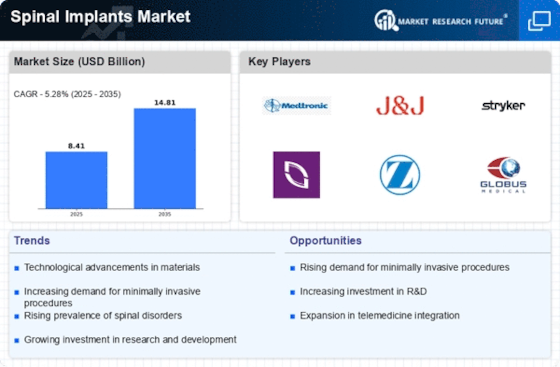
The spinal implant market is undergoing a major transformation driven by the technological advancement, increasing prevalence of spinal disorders and growing aging population. The demand for spinal implants is expected to increase in the coming years as the governments across the world focus on providing solutions for the orthopedic challenges. The spinal implant market includes fusion devices, dynamic stabilization systems and vertebral body compression fracture devices. The integration of minimally invasive surgical procedures and development of biocompatible materials are changing the landscape of the market. The companies need to understand the key trends, regulatory framework and the competitive landscape to exploit the opportunities in the spinal implant market.
PESTLE Analysis
- Political
- In 2024, the regulatory environment for spinal implants is largely influenced by government policy aimed at improving access to and quality of care. The FDA has implemented new regulations requiring all spinal implant manufacturers to submit clinical data for approval. This has led to an increase of 30 % in the number of applications compared to 2023. In addition, the European Union’s Medical Device Regulation (MDR) requires stricter compliance for the over 1,000 spinal implant products currently on the market. This has increased the cost and the time taken to bring products to market.
- Economic
- In 2024 the economic conditions for the spinal implant market are characterized by rising health expenditures, which are expected to reach $4.3 tr in the United States alone. The aging of the population and the increased prevalence of spinal diseases are the main reasons for this increase. The result is a higher demand for surgical treatment. The average cost of a spinal operation is $20,000. This puts considerable pressure on the health systems and health insurance companies, which also affects the purchasing decisions for spinal implants.
- Social
- Among the social changes in 2024, there was a marked increase in the awareness and acceptance of spinal surgery among the general public. Surveys showed that more than two-thirds of those over fifty would be willing to have surgery for chronic back pain. This was accompanied by an increase in public education, and forty percent of all health care facilities offered a full range of spinal health resources and treatment options. Also contributing to the demand for spinal devices was the growing incidence of lifestyle-related spinal disorders, such as obesity.
- Technological
- In 2024 the spinal implant market is undergoing a radical change. The use of 3D printing and robot-assisted surgery is on the increase. In the course of the year, it is estimated that approximately 25 per cent of spinal implant components are now manufactured by 3D printing, which means that a patient-tailored solution can be provided. Artificial intelligence in the pre- and postoperative planning is expected to improve the accuracy of the operation and the healing process. Studies show that robot-assisted surgery reduces complications by 15 per cent.
- Legal
- Legal factors influencing the spinal implant market in 2024 include strict regulatory requirements and the liability issues. In the case of medical devices, the average cost of litigation has increased to $ 2.5 million per lawsuit, which has forced manufacturers to invest in quality assurance and risk management strategies. In addition, the implementation of the General Data Protection Regulation in Europe has changed the way patient data is collected and influenced clinical trials and post-market surveillance of spinal implant devices.
- Environmental
- There is a growing trend towards sustainable production of spinal implants in the market, and the manufacturers are being increasingly pressed to adopt sustainable practices. By 2024, approximately one-third of the companies producing spinal implants will have committed to reducing their carbon footprint by introducing eco-friendly materials and processes. Furthermore, there is a growing trend towards the recovery and reuse of surgical implants. By 2024, it is expected that up to 15% of surgical devices will be recovered and reused, thereby reducing waste and promoting sustainability in the health sector.
Porter's Five Forces
- Threat of New Entrants
- The spinal implant market is characterised by moderate entry barriers, mainly due to the need for significant capital expenditure in R&D, regulatory approvals and advanced manufacturing. However, the growing demand for innovative spinal solutions may draw new players, especially start-ups with novel technologies, and may thus increase competition.
- Bargaining Power of Suppliers
- The bargaining power of the suppliers in the market for spinal implants is relatively low. There are many suppliers of raw materials and components, so manufacturers can easily change suppliers. The presence of large and established companies in the market also weakens the influence of individual suppliers.
- Bargaining Power of Buyers
- The buyers, hospitals and other health-care organizations, have a medium-strong bargaining power, which is caused by the availability of multiple products and the growing attention to the cost-effectiveness of health care. However, the specialized nature of spinal implant products can significantly limit their ability to negotiate.
- Threat of Substitutes
- The threat of substitutes in the spinal implant market is moderate. There are other treatments for back pain, such as physical therapy and medication. However, spinal implants have unique benefits for certain conditions. Future competition will come from non-surgical treatments.
- Competitive Rivalry
- Competition in the spinal implant market is intense, owing to the presence of many established players and continuous innovation in product offerings. In order to gain market share, companies are resorting to various strategies such as product differentiation, acquisitions, and mergers.
SWOT Analysis
Strengths
- Growing demand for minimally invasive surgical procedures.
- Technological advancements in spinal implant materials and designs.
- Strong presence of established players with extensive distribution networks.
- Increasing prevalence of spinal disorders and injuries.
Weaknesses
- High cost of spinal implant surgeries may limit accessibility.
- Regulatory challenges and lengthy approval processes for new products.
- Potential for complications and risks associated with spinal surgeries.
- Limited awareness and education among patients regarding spinal health.
Opportunities
- Expansion into emerging markets with rising healthcare investments.
- Development of innovative products such as bioresorbable implants.
- Growing trend of outpatient surgeries creating demand for efficient solutions.
- Collaborations and partnerships with healthcare providers for better patient outcomes.
Threats
- Intense competition leading to price wars among manufacturers.
- Economic downturns affecting healthcare budgets and spending.
- Potential for product recalls and liability issues impacting brand reputation.
- Rapid technological changes requiring continuous innovation.
Summary
The spinal implant market in 2024 is expected to be characterized by strong demand, owing to technological advancements and the increasing prevalence of spinal disorders. However, high costs and regulatory challenges will act as major restraints. Opportunities for growth exist in emerging markets and in the development of new products. The threat from competition and economic instability will pose a threat to the market's stability. Strategically, companies must focus on innovation and collaborations to ensure a successful future in the market.






















Leave a Comment