Author

Snehal Singh

Sports Equipment Market Size, Share, Industry Trend & Analysis Research Report By Equipment Type (Fitness Equipment [Treadmills, Exercise Bikes, Ellipticals, Rowing Machines, Dumbbells, Resistance Bands, Kettlebells], Team Sports Equipment [Soccer Balls, Basketballs, Volleyballs, Hockey Sticks, Footballs, Goalkeeper Gloves], Individual Sports Equipment [Tennis Racquets, Golf Clubs, Baseball Bats, Boxing Gloves, Badminton Racquets, Swimming Gear], Outdoor Sports Equipment [Camping Gear, Hiking Poles, Bicycles, Kayaks, Climbing Gear, Skateboards]), By Sport Category (Fitness, Soccer, Basketball, Tennis, Golf, Running, Swimming), By Distribution Channel (Offline Retail [Specialty Sports Stores, Department Stores], Online Retail [Brand-Owned Websites, E-commerce Marketplaces], Direct Sales [Company-Owned Stores, Authorized Dealers]), By End User (Professional Athletes, Amateur Athletes, Recreational Users), By Price Range (Economy, Mid-Range, Premium), By Region (North America, Europe, Asia-Pacific, South America, Middle East & Africa) Forecast to 2035
As per Market Research Future analysis, the Sports Equipment Market was estimated at 105.5 USD Billion in 2024. The Sports Equipment industry is projected to grow from 111.6 USD Billion in 2025 to 196.2 USD Billion by 2035, exhibiting a compound annual growth rate (CAGR) of 5.8% during the forecast period 2025 - 2035. North America holds the largest share of the global Sports Equipment Market at approximately 32%, driven by rising health awareness, strong consumer spending on fitness activities, and a well-established sports culture. The United States is the leading country within North America, capturing approximately 26% of the global Sports Equipment Market share, supported by high participation rates in fitness and recreational sports, strong brand presence of global leaders like Nike and Adidas, and a robust retail and e-commerce infrastructure. Ball Sports Equipment dominates the Sports Equipment Market as the largest product segment, accounting for an estimated 28% of the global market share, reflecting widespread consumer participation in football, basketball, cricket, tennis, and other ball games at both professional and recreational levels globally.
The Sports Equipment Market is currently experiencing robust growth driven by technological advancements and increasing health consciousness.
| 2024 Market Size | 105.5(USD Billion) |
| 2035 Market Size | 196.2 (USD Billion) |
| CAGR (2025 - 2035) | 5.8% |
Wilson Sporting Goods, Callaway Golf, Head, Yonex, Spalding, Rawlings, Easton, Decathlon, Prince Sports, Slazenger
Our Impact
Enabled $4.3B Revenue Impact for Fortune 500 and Leading Multinationals
Partnering with 2000+ Global Organizations Each Year
30K+ Citations by Top-Tier Firms in the Industry
The Sports Equipment Market is currently experiencing a dynamic evolution, driven by various factors that influence consumer preferences and technological advancements. The increasing awareness of health and fitness among individuals appears to be a primary catalyst for growth. As more people engage in physical activities, the demand for diverse sports equipment is likely to rise alongside growth in sportswear articles, sportswear trend, and expanding sports retail ecosystems. Additionally, innovations in materials and design are enhancing the performance and safety of sports gear, which may further attract consumers. Furthermore, the rise of e-commerce platforms is transforming how consumers access and purchase sports equipment, making it more convenient and accessible than ever before.
Moreover, sustainability is becoming a focal point within the Sports Equipment Market. Manufacturers are increasingly adopting eco-friendly practices and materials, responding to consumer demand for environmentally responsible products, including advancements such as carbon fiber in sports equipment market applications. This shift not only aligns with global sustainability goals but also appeals to a growing segment of environmentally conscious consumers. As the market continues to evolve, it seems poised for further expansion, with trends indicating a blend of technology, sustainability, and consumer engagement shaping its future trajectory. The interplay of these factors suggests a vibrant and competitive landscape for stakeholders in the Sports Equipment Market.
The integration of technology into sports equipment is reshaping the market landscape. Innovations such as smart wearables and performance-tracking devices are gaining traction, appealing to athletes and fitness enthusiasts alike. These advancements not only enhance user experience but also provide valuable data for performance improvement, contributing to the rise of smart sports, smart sports equipment, and technology-driven segments of the sports protective equipment market.
A growing emphasis on sustainability is influencing product development within the Sports Equipment Market. Companies are increasingly utilizing eco-friendly materials and sustainable manufacturing processes. This trend reflects a broader societal shift towards environmental responsibility, attracting consumers who prioritize green products.
The rise of online shopping is significantly impacting the Sports Equipment Market. E-commerce platforms are providing consumers with greater access to a wide range of products, often at competitive prices. This shift is changing traditional retail dynamics, as consumers increasingly prefer the convenience of online purchasing, reinforcing the evolution of modern sports retail channels.
Technological advancements in sports equipment are reshaping the Sports Equipment Market. Innovations such as smart wearables, enhanced materials, and performance analytics tools are becoming increasingly prevalent. For instance, the integration of sensors in sports gear allows athletes to monitor their performance in real-time, which is likely to attract tech-savvy consumers. The market for smart sports equipment is expected to expand significantly, with projections indicating a growth rate of around 6% annually. This evolution in technology not only enhances user experience but also drives the Sports Equipment Market towards new heights.
The increasing awareness of health and fitness among individuals appears to be a primary driver of the Sports Equipment Market. As more people prioritize physical well-being, the demand for various sports equipment, such as fitness trackers, gym gear, and outdoor sports items, is likely to rise. According to recent data, the fitness equipment segment alone is projected to grow at a compound annual growth rate of approximately 4.5% over the next five years. This trend indicates a shift towards a more active lifestyle, which could further stimulate the Sports Equipment Market as consumers seek products that enhance their physical activities and overall health.
The growing participation of youth in sports activities is a notable factor influencing the Sports Equipment Market. With schools and communities increasingly promoting sports programs, there is a surge in demand for youth-oriented sports equipment. Reports suggest that youth sports participation has increased by nearly 20% in recent years, leading to a corresponding rise in the sales of equipment tailored for younger athletes. This trend not only boosts the Sports Equipment Market but also fosters a culture of fitness and competition among the younger generation, potentially ensuring sustained growth in the sector.
The increasing popularity of outdoor activities is emerging as a significant driver for the Sports Equipment Market. As more individuals seek recreational activities such as hiking, cycling, and camping, the demand for related sports equipment is likely to surge. Recent surveys indicate that outdoor sports participation has risen by approximately 25% in recent years, reflecting a shift in consumer preferences towards nature-based activities. This trend not only enhances the visibility of the Sports Equipment Market but also encourages manufacturers to innovate and diversify their product offerings to cater to this expanding consumer base.
The rise in investment in sports infrastructure is contributing positively to the Sports Equipment Market. Governments and private entities are allocating substantial funds to develop sports facilities, which in turn creates a demand for various sports equipment. Recent statistics indicate that investments in sports infrastructure have increased by over 15% in the last few years, leading to a corresponding rise in the need for equipment across multiple sports disciplines. This trend suggests that as facilities improve, the Sports Equipment Market will likely experience a boost in sales, driven by both amateur and professional athletes.
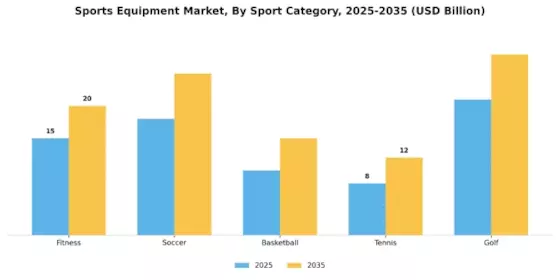
The Sports Equipment Market is primarily segmented into Fitness Equipment, Team Sports Equipment, Individual Sports Equipment, and Outdoor Sports Equipment. Among these segments, Fitness Equipment holds the largest market share, driven by the increasing trend of home workouts and the growing health consciousness among consumers. Following closely are Team Sports and Individual Sports Equipment, which also maintain substantial shares due to the rising participation rates in various sports. Outdoor Sports Equipment is emerging as a key player, especially with the renewed interest in outdoor recreational activities.
Fitness Equipment: Dominant vs. Outdoor Sports Equipment: Emerging
Fitness Equipment represents the dominant segment of the Sports Equipment Market, appealing to a broad demographic seeking to improve their health and fitness levels. This category includes a variety of products such as treadmills, weights, and resistance bands, and it benefits from a strong consumer affinity toward at-home and personalized fitness regimens. In contrast, Outdoor Sports Equipment is identified as the emerging segment, capitalizing on the surging popularity of outdoor activities following pandemic-related lockdowns. This segment encompasses gear for running, hiking, and cycling, reflecting a growing trend towards adventure sports and fitness activities that utilize outdoor spaces for exercise.
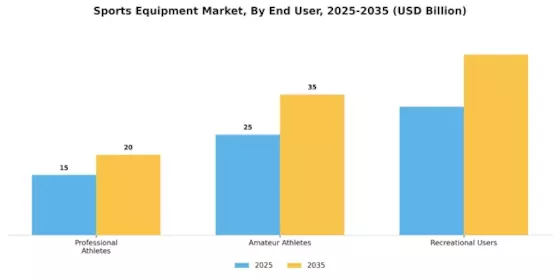
In the Sports Equipment Market, the Fitness category holds the largest share, appealing to consumers with its diverse range of products such as exercise machines, weights, and yoga mats. This segment attracts both casual users and serious fitness enthusiasts, which aids in its strong market position. Soccer follows closely, rapidly gaining traction due to the global popularity of soccer leagues and tournaments, fostering a growing demand for soccer-related equipment and gear, as reflected in evolving target market for sports equipment strategies. Development trends indicate that the Fitness segment continues to evolve, with innovations aimed at enhancing user experience and accessibility. As consumers prioritize health and wellness, there is a significant push towards smart fitness equipment, driving growth in this area. Conversely, the Soccer segment's growth is spurred by increased participation rates at all levels and heightened interest in skill development, contributing to its reputation as the fastest-growing segment within the market.
Fitness (Dominant) vs. Soccer (Emerging)
The Fitness segment remains dominant in the Sports Equipment Market due to its ability to cater to a wide range of consumers. With products ranging from home gym equipment to wearable fitness technology, this category appeals to all demographics focused on health and active lifestyles. Major brands continually innovate, integrating technology into fitness solutions to track performance, provide personalized training plans, and improve user engagement, supporting insights seen in gym shoes industry analysis and wider sportswear industries trends. The Soccer segment, classified as emerging, is experiencing a rapid upsurge in interest and investment, particularly driven by youth participation and professionalization of the sport globally. Soccer gear, including balls, cleats, and training accessories, is seeing increased consumer focus, creating opportunities for growth amid dynamic market conditions.
In the Sports Equipment Market, the distribution channels play a critical role in consumer accessibility. Online retail has emerged as the largest channel, capturing a significant share of the market due to the growing trend of e-commerce and convenience. In contrast, offline retail, while slightly trailing behind, is gaining traction with a resurgence of interest in physical stores and personalized shopping experiences. Direct sales also contribute to the distribution dynamics, appealing to niche markets and professional athletes.
Online Retail (Dominant) vs. Direct Sales (Emerging)
Online retail stands as the dominant force in the Sports Equipment Market, leveraging digital platforms to reach a broader customer base. Its advantages include convenience, a wider selection of products, and competitive pricing, attracting both casual users and serious athletes. On the other hand, direct sales have emerged as a valuable channel, especially among brands seeking to establish a unique identity and foster customer loyalty. This channel allows for personalized service and direct interaction with customers, making it well-suited for premium products and specialized equipment.
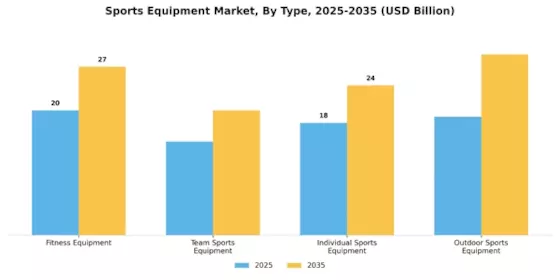
In the Sports Equipment Market, the distribution of market share among end-user segments reveals that professional athletes hold the largest share due to their substantial investments in high-performance equipment. These consumers prioritize quality and technological advancements, leading to a fierce competition among brands aiming to capture this lucrative segment. In contrast, amateur athletes and recreational users account for a growing share, driven by increasing participation rates and accessibility of equipment.
Professional Athletes: Dominant vs. Amateur Athletes: Emerging
Professional athletes represent the dominant force in the Sports Equipment Market, as they require specialized, high-quality gear to optimize their performance. This segment is characterized by a focus on innovation, as brands invest heavily in research and development to produce advanced equipment tailored to specific sports. On the other hand, amateur athletes, classified as emerging users, are in a dynamic growth phase, driven by rising fitness awareness and opportunities for participation in various sports. This segment is increasingly influenced by trends in social media, leading to a surge in demand for versatile and affordable equipment that meets their recreational needs.
Get more detailed insights about Sports Equipment Market Request Free Sample
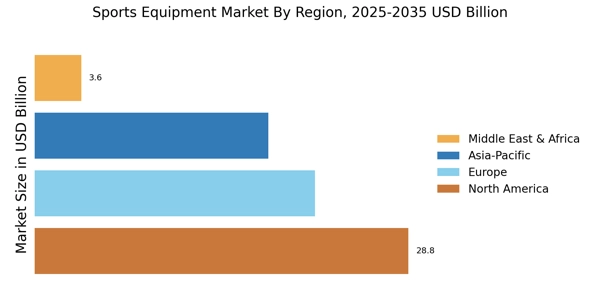
The Global Sports Equipment Market has shown vibrant growth, with distinct variations across different regions. North America holds a remarkable position, valued at 25.0 USD Billion in 2024 and projected to rise significantly to 35.0 USD Billion by 2035, indicating majority holding in the market. Europe follows closely, with a valuation of 20.0 USD Billion in 2024 and is expected to reach 28.0 USD Billion by 2035, demonstrating its strong presence and consumer demand for sports equipment.
In the Asia-Pacific (APAC) region, the market is valued at 15.0 USD Billion in 2024, with an anticipated growth to 20.0 USD Billion, fueled by increasing participation in sports and fitness, particularly within the asia pacific sports equipment and apparel market. Regional niches such as the australia sports gear & equipment market are also contributing to expansion. South America and the Middle East and Africa (MEA) have smaller market shares, valued at 6.0 USD Billion and 5.98 USD Billion, respectively, in 2024, but are expected to grow to 8.0 USD Billion and 9.0 USD Billion by 2035.
The disparities highlight the importance of market strategies tailored to each region, with North America and Europe featuring prominently due to their established sports culture and consumer base, while APAC shows significant potential for expansion driven by the youth segment's enthusiasm for sports activities.
The Global Sports Equipment Market is a dynamic sector characterized by a multitude of competitors, diverse product offerings, and a constant evolution in consumer preferences. Competitive insights into this market reveal that companies are leveraging innovative technologies and strategic marketing approaches to capture a larger share. The industry comprises a variety of manufacturers, distributors, and retailers, each vying for the attention of consumers. Trends such as increased health awareness, rising participation in sports activities, and advancements in material technology significantly influence market competition. As consumers increasingly seek high-performance products, companies are focusing on their research and development capabilities, aiming to enhance product features and functionalities. This competitive landscape is further shaped by the emergence of e-commerce and the direct-to-consumer model, which allows brands to engage more closely with their audience while lowering distribution costs.Mizuno stands out in the Global Sports Equipment Market due to its strong commitment to quality, performance, and innovation. The company has established itself as a prominent player, particularly in the domains of baseball, running, and golf equipment. Mizuno's reputation for delivering superior craftsmanship and technology-driven products enhances its competitive edge in the market. The brand's extensive global presence allows it to cater to a diverse consumer base, adapting to different regional preferences while maintaining its core values of excellence and performance. Additionally, Mizuno's strong historical background and relentless focus on research and development empower the company to introduce innovative products that resonate with elite athletes and sports enthusiasts alike. Its dedication to sustainability and community engagement further solidifies its standing in the competitive arena, enabling Mizuno to build lasting relationships with consumers and partners.Cleveland Golf has carved a niche for itself in the Global Sports Equipment Market, primarily focusing on golf-related products. The company is recognized for its innovative golf clubs, particularly wedges and drivers that appeal to both amateur and professional golfers. Its strategic market presence is supported by a portfolio of high-quality offerings that blend performance with user-friendly features. Cleveland Golf's strengths lie in its continuous research efforts and dedication to enhancing player performance through product innovation. The company actively engages in partnerships and sponsorships within the golf community, enhancing its visibility and brand loyalty. In recent years, Cleveland Golf has also pursued mergers and acquisitions that bolster its market positioning and expand its product line. This initiative-taking approach allows the company to adapt to changing consumer demands while reinforcing its reputation as a trusted name in the global golf equipment sector.




Sports Equipment Market has seen numerous developments and significant changes in recent months. Recently, Mizuno announced a partnership focusing on innovative running shoes, enhancing their presence in the global running community. Under Armour has expanded its offerings by entering the women’s sports apparel segment, catering to the growing demand for inclusive sporting goods. The golf sector has experienced notable activity, with TaylorMade launching inexperienced drivers, showing extensive investment in product development. In terms of mergers and acquisitions, Wilson Sporting Goods and Callaway Golf have been strategically acquiring smaller brands to enhance their portfolio, with transactions reported in early 2023.
Additionally, Adidas has seen a surge in market valuation, driven by a renewed focus on sustainability in its product lines, positively impacting its global brand perception. Over the past few years, the rise of esports has also influenced traditional sports equipment manufacturers, leading to collaborations between brands like Nike and gaming companies to create merchandise that appeals to younger audiences. As the market continues to evolve, companies like Puma and Reebok are investing in modern technologies to improve performance and user experience across their product ranges.
The Sports Equipment Market is projected to grow at a 3.03% CAGR from 2025 to 2035, driven by technological advancements, increasing health awareness, and rising participation in sports activities.
New opportunities lie in:
By 2035, the Sports Equipment Market is expected to achieve robust growth, reflecting evolving consumer preferences and technological innovations.
| MARKET SIZE 2024 | 105.5(USD Billion) |
| MARKET SIZE 2025 | 111.5 (USD Billion) |
| MARKET SIZE 2035 | 52.0(USD Billion) |
| COMPOUND ANNUAL GROWTH RATE (CAGR) | 5.8% (2025 - 2035) |
| REPORT COVERAGE | Revenue Forecast, Competitive Landscape, Growth Factors, and Trends |
| BASE YEAR | 2024 |
| Market Forecast Period | 2025 - 2035 |
| Historical Data | 2019 - 2024 |
| Market Forecast Units | USD Billion |
| Key Companies Profiled | Wilson Sporting Goods, Callaway Golf, Head, Yonex, Spalding, Rawlings, Easton, Decathlon, Prince Sports, Slazenger |
| Segments Covered | Equipment Type, Sport Category, Distribution Channel, End User, Regional |
| Key Market Opportunities | Integration of smart technology in sports equipment enhances user experience and performance tracking. |
| Key Market Dynamics | Rising consumer demand for sustainable sports equipment drives innovation and competitive differentiation among manufacturers. |
| Countries Covered | North America, Europe, APAC, South America, MEA |
The Sports Equipment Market is valued at approximately 71.98 USD Billion in 2024.
The market is expected to reach a valuation of 99.95 USD Billion by 2035.
The expected CAGR for the Sports Equipment Market during the forecast period 2025 - 2035 is 3.03%.
The Outdoor Sports Equipment segment is projected to grow from 18.98 USD Billion to 28.95 USD Billion.
In 2025, online retail is expected to generate between 20.0 and 30.0 USD Billion, while offline retail is projected to generate between 30.0 and 40.0 USD Billion.
Key players in the Sports Equipment Market include Nike, Adidas, Under Armour, and Puma, among others.
The revenue for fitness equipment is projected to grow from 20.0 USD Billion to 27.0 USD Billion.
The Recreational Users segment is anticipated to grow from 31.98 USD Billion to 44.95 USD Billion.
The soccer equipment segment is projected to increase from 18.0 USD Billion to 25.0 USD Billion.
The revenue for professional athletes is expected to range from 15.0 to 20.0 USD Billion, whereas amateur athletes are projected to generate between 25.0 and 35.0 USD Billion.


Research Methodology on Sports Equipment Market
This research methodology provides a detailed outline of the research strategies and methodologies utilized by Market Research Future to arrive at its findings and conclusions as laid out in the market research report “Sports Equipment Market - Forecast to 2030.” The research methodology is broken down into several distinct parts, the first of which is an overview of the research process utilized by Market Research Future. This is followed by a detailed examination of the primary sources used, the various market representativeness employed, secondary data sources, and the sample selection process.
Research Process:
Market Research Future’s report on the sports equipment market was created using an in-depth research process. To begin, a detailed primary research survey was conducted with industry stakeholders, experts in the field of sports equipment, and market participants from the various pertinent regional markets (North America, Europe, Asia-Pacific, and the Rest of the World). This survey was conducted using a combination of questionnaires, personal interviews, and teleconferencing. The data collected from the primary research survey was then used to formulate our base market figures and forecasts for the global market.
Secondary research was also conducted for this report. Multiple sources of published information, including market reports, 360-degree reviews of various sports equipment products, and other similar materials were reviewed and used to formulate our overall forecasts. We also conducted interviews with industry analysts, market professionals, CXOs, and so on who provided valuable insights related to new product launches, plans and trends that have impacted the sports equipment market.
Primary Data Sources:
The primary sources of data that were used for this report include surveys of owners, managers, executives, and professionals in the sports equipment market, industry specialists and experts, and current and prospective users. A combination of both primary and secondary sources was used to gain a comprehensive understanding of the various market dynamics and the hierarchy of the sports equipment market in different regions around the world.
Secondary Data Sources:
The secondary data sources used for the research include annual reports, investor presentations, press releases, journals, government data, publications, and other industry publications. Additionally, both in-country and international databases such as Bloomberg, Business Insider, Factiva, OWLER, Hoovers, and various others have been accessed to compile qualitative and quantitative information for the sports equipment market.
Market Representativeness:
To ensure the accuracy of our research, Market Research Future utilized multiple levels of market representativeness. To begin, regional representation was used for North America, Europe, APAC, and the Rest of the World. Once the various regional markets were identified, market sizes for each region were calculated based on sales and distribution channels. Additionally, the market is also represented according to product type and usage, as well as end-users from various regions.
Sample Selection Process:
To ensure accuracy and market representativeness, a stratified sampling method was implemented. In this method, the research was divided into several distinct parts including, product types, regional markets, distribution networks, and usage applications among other factors. Each of the distinct parts was further divided into strata that were outlined in our sample selection process to ensure that the highest level of accuracy was reached.
Finally, the research data was collected and validated with the help of advanced data triangulation methodologies. This method involves the analysis of the data from both primary and secondary sources to ensure the accuracy of the findings and the consistency of the final report.
Kindly complete the form below to receive a free sample of this Report

“This is really good guys. Excellent work on a tight deadline. I will continue to use you going forward and recommend you to others. Nice job”


“Thanks. It’s been a pleasure working with you, please use me as reference with any other Intel employees.”


“Thanks for sending the report it gives us a good global view of the Betaïne market.”


“Thank you, this will be very helpful for OQS.”


“We found the report very insightful! we found your research firm very helpful. I'm sending this email to secure our future business.”


“I am very pleased with how market segments have been defined in a relevant way for my purposes (such as "Portable Freezers & refrigerators" and "last-mile"). In general the report is well structured. Thanks very much for your efforts.”


“I have been reading the first document or the study, ,the Global HVAC and FP market report 2021 till 2026. Must say, good info! I have not gone in depth at all parts, but got a good indication of the data inside!”


“We got the report in time, we really thank you for your support in this process. I also thank to all of your team as they did a great job.”


“The Automotive 48V ECU Components Procurement Intelligence Study” was a complex project, but the Market Research Future (MRFR) team handled it with quality, agility, and customer-centricity. They delivered all requested data on time and within the agreed scope. The team, including Shubhendra Anand and Rahul Gotadki, was always readily available to clarify questions and swiftly implement necessary adjustments, driving the project to a successful conclusion within a very demanding timeframe.
I would also like to specifically commend Akshay Agarwal for his responsiveness and support at every stage—from our initial inquiry on May 6th through to final delivery on June 18th. His dedication made the entire process seamless.”



