×
Request Free Sample ×

Kindly complete the form below to receive a free sample of this Report

* Please use a valid business email

Leading companies partner with us for data-driven Insights

clients tt-cursor
Hero Background

Spray Gun Market

ID: MRFR/PCM/30384-CR
111 Pages
Snehal Singh
February 2026

Spray Gun Market Research Report Information By Type (Airless Spray Guns, HVLP Spray Guns, Conventional Spray Guns, Electrostatic Spray Guns), By Application (Automotive, Construction, Woodworking, Aerospace, Industrial, Others), By Mechanism (Manual Spray Guns, Automatic Spray Guns, Robotic Spray Guns)By Material (Water-based Coatings, Solvent-based Coatings, Powder Coatings), By End-Use Industry(Professional Contractors, DIY Enthusiasts, Manufacturers) By Region (North America, Europe, Asia Pacific, South America, Middle East & Africa) - Forecast to 2035

Share:
Download PDF ×

We do not share your information with anyone. However, we may send you emails based on your report interest from time to time. You may contact us at any time to opt-out.

Spray Gun Market Infographic
Purchase Options

Spray Gun Market Summary

As per Market Research Future analysis, the Spray Gun Market Size was valued at USD 1,540.78 million in 2024. The Spray Gun Industry is projected to grow from USD 1,617.66 million in 2025 to USD 2,454.68 million by 2035, exhibiting a compound annual growth rate (CAGR) of 4.3% during the forecast period (2025 - 2035).

Key Market Trends & Highlights

The Spray Gun Market is rapidly evolving, propelled by EV adoption and smart tech integration.

  • Spray guns are evolving with smart features like IoT integration and digital controls for real-time monitoring. These enhancements enable precise coating, reduced waste, and compatibility with robotics in manufacturing lines.
  • Eco-friendly designs are surging, with low-VOC and water-based paint compatibility becoming standard amid stricter regulations. Manufacturers prioritize recyclable materials and energy-efficient systems, aligning with global green initiatives in North America and Europe.
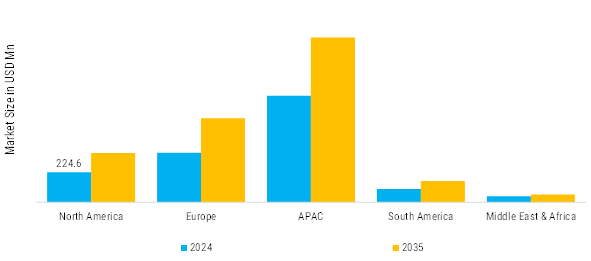
  • Asia-Pacific commands 46% share, fueled by China's manufacturing expansion and India's infrastructure projects. EV body coatings boost demand here, alongside portable guns for DIY renovations.
  • Automotive holds the largest slice, with EV rise demanding specialized finishes; construction follows via urbanization.

Market Size & Forecast

2024 Market Size 1,540.78 (USD Million)
2035 Market Size 2,454.68 (USD Million)
CAGR (2025 - 2035) 4.3%

Major Players

3M, Anest Iwaata Corporation, Asahi Sunac, Binks, Fuji Spray, Graco Inc., Ingersoll Rand, Nordson Corporation Prowin Tools Co., Sagola, SATA GmbH & Co. KG, Tritech Industries, Wagner GmbH, Walther Pilot

Our Impact
Enabled $4.3B Revenue Impact for Fortune 500 and Leading Multinationals
Partnering with 2000+ Global Organizations Each Year
30K+ Citations by Top-Tier Firms in the Industry

Spray Gun Market Trends

The spray gun market is divided into four types: airless spray guns, HVLP (High Volume Low Pressure) spray guns, conventional spray guns, and electrostatic spray guns. Airless spray guns are widely used in large-surface applications such as infrastructure and building coatings. HVLP spray guns are increasingly popular in car refinishing and woodworking due to their precision and little paint waste. Conventional spray guns continue to play a role in price-sensitive markets, but their share is rapidly declining. Electrostatic spray guns, which charge particles for better transfer efficiency, are gaining popularity in industrial OEM and aerospace finishing.


Manual spray guns are still widely used by contractors and small shops, automatic spray guns are frequent in semi-automated production lines, and robotic spray guns are becoming more used in high-volume automotive and industrial systems. In terms of materials, spray guns are utilized with water-based coatings, solvent-based coatings, and powder coatings, with the mix changing toward water-based and powder technologies in response to increasing environmental regulations.

Spray Gun Market Drivers

Technological Advancements in Spray Systems

The global spray-gun market is witnessing strong momentum due to continuous innovations in spraying technologies that enhance efficiency, sustainability, and finish quality. Traditional spray systems often struggled with high material waste, inconsistent finishes, and excessive overspray, but modern advancements are addressing these limitations and reshaping industrial and commercial coating practices. High Volume Low Pressure (HVLP) spray guns have gained widespread popularity for their ability to deliver fine atomization at lower air pressures, ensuring smooth, even finishes with minimal overspray. This makes them ideal for industries such as automotive refinishing, furniture, and decorative applications where high precision and reduced material wastage are crucial. Airless spray guns, on the other hand, are designed for large-scale projects like building exteriors, pipelines, and heavy equipment, where they can quickly apply thick coatings, primers, or protective layers without air compression, significantly boosting productivity.

Expansion Of Automotive and Transportation Sectors

The automotive and transportation industries are among the largest end- f g k g h h k ’ expansion. Spray guns are indispensable in vehicle manufacturing, body painting, refinishing, and repair processes, where they ensure smooth, uniform, and durable coatings that meet both aesthetic and protective requirements Spray guns are used extensively in auto body shops to restore finishes after collisions, scratches, or weather damage. This recurring demand sustains steady market growth even when new car sales fluctuate. Modern consumers expect vehicles with superior aesthetics, scratch resistance, and long-lasting surface protection. Automotive coatings applied through advanced spray gun systems, especially HVLP and electrostatic spray guns, deliver consistent color, gloss, and durability, making them indispensable for meeting customer expectations and OEM standards. For instance, Anest Iwata introduced a new airbrush system designed for the aerospace and automotive industries. The tool offers superior atomization control and reduced overspray, responding directly to demand for ultra-precise coatings in specialized manufacturing environments. ITW debuted an automated spray gun system that boosts productivity in large-scale production, such as automotive assembly lines.

Booming Construction and Infrastructure Development

The global construction sector is expanding rapidly due to urbanization, industrialization, and government-led infrastructure projects, creating a strong demand for coating tools like spray guns. Large-scale urban development projects in regions like Asia-Pacific and the Middle East are particularly important, megacities, new housing complexes, airports, and smart cities rely on efficient coating technologies to meet tight deadlines and quality standards. spray guns are extensively used to apply paints, primers, varnishes, sealants, and protective coatings to walls, ceilings, and facades, providing faster application and smoother finishes compared to traditional brushes or rollers. Beyond decorative painting, spray guns are critical in infrastructure projects such as bridges, highways, pipelines, and industrial facilities, where protective coatings are needed to guard against corrosion, weathering, and chemical exposure.

Market Segment Insights

By Application: Industrial (largest market) vs Automotive (fastest-growing)

Based on Application, the Spray Gun Market has been segmented into Automotive, Construction, Woodworking, Aerospace, Industrial, Others. The industrial segment is one of the most diverse and high-demand application areas for spray guns, covering sectors such as machinery, equipment manufacturing, heavy engineering, oil & gas, shipbuilding, electronics, and general manufacturing. Spray guns in this segment are used for applying a wide range of protective, functional, and decorative coatings that safeguard equipment against wear, corrosion, chemicals, and extreme environmental conditions while enhancing aesthetics and branding. In industrial environments, coatings are not only cosmetic but also highly performance driven. For example, anti-corrosive paints extend the life of machinery used in offshore oil rigs or chemical plants, while heat-resistant and fire-retardant coatings are essential for power generation equipment and pipelines. The automotive segment is the largest and most influential end-use industry in the Spray Gun Market, accounting for a significant share of demand due to the high coating requirements in vehicle manufacturing, refinishing, and repair. Spray guns are indispensable in automotive production lines where multiple layers, including primers, basecoats, clear coats, and specialty functional coatings, must be applied with precision to ensure durability, corrosion resistance, and aesthetic appeal. OEMs (Original Equipment Manufacturers) rely heavily on automated and electrostatic spray gun systems, often integrated with robotic applicators, to achieve consistent film thickness, reduce material wastage, and comply with stringent environmental regulations. In addition to OEM production, the aftermarket refinishing and repair industry represents a steady demand driver. Beyond passenger cars, the automotive spray gun segment also extends to commercial vehicles, two-wheelers, buses, and specialty vehicles, broadening the application scope. With emerging economies such as China, India, and Southeast Asian nations witnessing rapid growth in vehicle production and ownership, the automotive spray gun market in these regions is expected to expand substantially. Simultaneously, North America and Europe continue to invest in advanced spray technologies to meet consumer expectations for premium finishes and to align with stricter environmental norms.

By Mechanism: Manual Spray Guns (largest market) vs Automatic Spray Guns (LAN) (fastest-Growing)

Based on Mechanism, the Spray Gun Market has been segmented into Manual Spray Guns, Automatic Spray Guns, Robotic Spray Guns. Manual spray guns are the most widely used and traditional type of spray equipment, operated directly by a person who controls paint flow, spray pattern, and pressure through hand-held mechanisms. They remain popular across multiple industries such as automotive refinishing, woodworking, construction painting, and DIY applications because of their versatility, affordability, and ease of use. Automatic spray guns are advanced coating devices designed to deliver consistent, repeatable, and high-quality finishes in medium to-large scale industrial applications. Unlike manual spray guns that depend on operator skill, automatic guns are usually mounted on fixtures, conveyors, or production lines, where they can spray continuously with minimal human intervention. They are widely used in automotive manufacturing, industrial machinery, electronics, metal fabrication, packaging, and furniture finishing, where uniformity, efficiency, and speed are critical.

By Material: Water-based Coatings (largest) vs Powder Coating (fastest-growing)

Based on Material, the Spray Gun Market has been segmented into Water-based Coatings, Solvent-based Coatings, Powder Coating. Water-based coatings represent one of the fastest-growing material segments in the Spray Gun Market, largely driven by stringent environmental regulations and the global shift toward sustainable manufacturing practices. Unlike solvent-based coatings, these formulations use water as the primary carrier, which significantly reduces volatile organic compound (VOC) emissions and minimizes toxic exposure for operators. Powder coatings represent a rapidly expanding segment of the Spray Gun Market, primarily due to their durability, efficiency, and eco-friendly characteristics. Unlike liquid coatings, powder coatings use finely ground polymer particles that are electrostatically charged and sprayed onto a surface using specialized spray guns. Once applied, the coated object is cured under heat, creating a smooth, hard, and long-lasting finish. This process eliminates the need for solvents, making powder coatings a low VOC, environmentally sustainable alternative,’ g -driven market. Spray guns used for powder coatings are designed with electrostatic charging mechanisms that ensure uniform coverage and strong adhesion, even on complex geometries. They offer higher transfer efficiency (up to 95%), minimizing overspray and material wastage compared to traditional liquid spray methods.

By End-Use Industry: Manufacturers (largest) vs. Professional Contractors (Fastest-growing)

Based on End-Use Industry, the Spray Gun Market has been segmented into Professional Contractors, DIY Enthusiasts, Manufacturers. The manufacturers segment in the Spray Gun Market is the backbone of the industry, comprising leading companies that design and produce spray guns for diverse applications across automotive, industrial, woodworking, construction, and aerospace sectors. These manufacturers prioritize durability, precision, efficiency, and compliance with environmental standards, ensuring their products meet the high-performance demands of professional users worldwide. Prominent players include Graco Inc., known for its advanced industrial spray systems and reliability, Wagner SprayTech, which caters to both professional and DIY markets with versatile, user-friendly designs; and DeVilbiss Automotive Refinishing, a leader in automotive spray guns recognized for delivering flawless finishes. Professional contractors are one of the core end-user groups driving the demand for spray guns, as they operate across a wide spectrum of industries, including construction, automotive refinishing, industrial maintenance, marine, and large-scale painting projects. For contractors, spray guns are essential tools that enable them to deliver efficient, uniform, and high-quality finishes within tight project timelines, which is critical for maintaining their professional reputation and client satisfaction. Contractors typically rely on high-performance spray gun systems such as airless, HVLP (High Volume Low Pressure), and electrostatic spray guns, depending on the project requirements. For example, airless spray guns are favored for covering large surfaces quickly in construction and infrastructure projects, while HVLP guns are preferred in woodworking and automotive refinishing for their precision and fine atomization.

By Type: Airless Spray Guns (largest market) HVLP Spray Guns (fastest growing)

Based on Type, the Spray Gun Market has been segmented into Airless Spray Guns, HVLP Spray Guns, Conventional Spray Guns, Electrostatic Spray Guns. The airless spray gun segment is one of the most significant and rapidly expanding categories in the Spray Gun Market, driven by its ability to deliver high efficiency and versatility across a wide range of applications. Unlike conventional or HVLP spray guns that rely on compressed air, airless systems operate by pumping paint or coating material at extremely high pressure, through a precision-engineered nozzle. This process atomizes the coating into a fine spray without the need for air, allowing for fast and uniform application even on large or irregular surfaces. Emerging economies such as China and India are leading contributors to demand due to rapid construction activity, while developed markets in North America and Europe rely on airless spray systems for infrastructure upkeep and industrial refurbishment. The HVLP (High Volume Low Pressure) spray gun segment is a critical and rapidly evolving part of the Spray Gun Market, renowned for its efficiency, precision, and compliance with environmental standards. Unlike conventional spray systems, HVLP guns operate with a high volume of air at low pressure, which atomizes the paint into a fine mist while significantly reducing overspray and paint wastage.

Get more detailed insights about Spray Gun Market

Regional Insights

North America: Expanding mature and technologically

The North American spray gun market, covering the United States, and Canada, is a mature and technologically advanced hub that plays a crucial role in the global industry. Its strength stems from well-established sectors such as automotive, aerospace, construction, and industrial manufacturing, all of which rely heavily on precision coating applications. The automotive industry remains a central driver, with large-scale OEM production and robust aftermarket services in auto refinishing and repair. Rising consumer expectations for high-quality, durable, and aesthetically appealing finishes have pushed demand for advanced systems like HVLP and electrostatic spray guns, which provide precision while minimizing overspray. Similarly, the construction and infrastructure sector, fueled by urban development, renovation projects, and government investments in roads, bridges, and buildings, has created steady demand for spray guns used in protective and decorative coatings segment.
Spray Gun Market Regional Insights

Europe: Emerging automotive sector

The European spray gun market, covering countries such as Germany, France, Italy, the U.K., and Spain, is one of the most mature, technologically advanced, and environmentally conscious regions globally. The market is primarily driven by the automotive sector, where leading OEMs such as Volkswagen, BMW, Mercedes-Benz, and Fiat create strong demand for high-precision spray guns in both production lines and refinishing. Advanced technologies like HVLP, airless, and electrostatic spray guns are widely adopted, sustainability A defining feature of the European market is its strict environmental regulations, particularly the EU VOC (Volatile Organic Compounds) directives, which have accelerated the transition to waterborne and low-VOC coatings.

Asia-Pacific: Development of underpinned by industrialization

The Asia Pacific region has become one of the most dynamic and rapidly expanding markets for spray guns, underpinned by industrialization, manufacturing growth, and rising demand across automotive, construction, and industrial sectors. Rapid manufacturing expansion in China, India, Japan, and South Korea has created significant demand for high-efficiency and precise spray gun technologies across industries like automotive, consumer goods, and electronics. The automotive sector, in particular, is a major consumer, as OEMs and aftermarket repair shops require high-quality finishes, while the construction industry uses spray guns extensively for protective and decorative coatings. Concurrently, technological advancements, including airless, HVLP, and electrostatic spray systems, are improving atomization quality, reducing overspray, and increasing material efficiency, thereby boosting adoption rates.

Middle Eat & Africa: Emerging infrastructure development

The Middle East & Africa (MEA) spray gun market is steadily expanding, supported by industrial growth, infrastructure development, and sector-specific demand in industries such as oil & gas, automotive, and agriculture. Countries like Saudi Arabia, the UAE, and South Africa are at the forefront of regional adoption, together accounting for the majority of annual usage, which stands at-projects in oil & gas, expanding oil & gas sector, where spray guns are used extensively for protective coatings in pipelines, rigs, and refineries.

South America: Emerging coating solutions

The South America infrastructure projects, and demand for advanced coating solutions. Although smaller in scale compared to North America, Europe, and Asia Pacific, the market presents distinct opportunities for specialized and high-quality products. Growth is largely supported by industrial activity in Brazil and Argentina, where expanding automotive, aerospace, and energy sectors rely heavily on precision coating applications. Similarly, infrastructure development projects across the region, such as large-scale urban construction and energy pipelines, are fueling demand for spray guns in protective and decorative coatings. The adoption of HVLP and airless spray guns is also accelerating, driven by their material efficiency, reduced overspray, and alignment with growing environmental awareness.
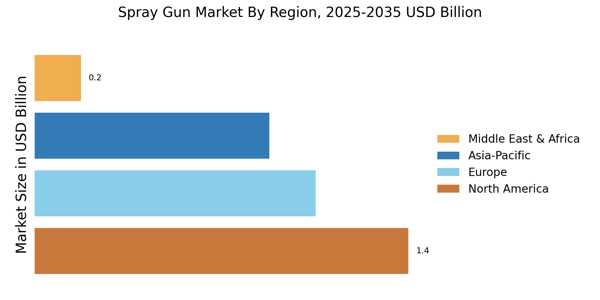

Spray Gun Market Regional Image

Key Players and Competitive Insights

Many global, regional, and local vendors characterize the Spray Gun Market. The market is highly competitive, with all the players competing to gain market share. Intense competition, rapid advances in technology, frequent changes in government policies, and environmental regulations are key factors that confront market growth. The vendors compete based on cost, product quality, reliability, and government regulations. Vendors must provide cost-efficient, high-quality products to survive and succeed in an intensely competitive market. The major players in the market Include 3M, Anest Iwaata Corporation, Asahi Sunac, Binks, Fuji Spray, Graco Inc., Ingersoll Rand, Nordson Corporation Prowin Tools Co., Sagola, SATA GmbH & Co. KG, Tritech Industries, Wagner GmbH, Walther Pilot developments and decisions to improve operational effectiveness.

Key Companies in the Spray Gun Market include

Industry Developments

August 2025: 3M unveiled the 3M™ Performance Spray Gun 2, designed for modern painters. Featuring a lightweight, impact-resistant composite body (up to 50% lighter than metal guns), laser marked controls, a redesigned comfort trigger, and quick change replaceable HVLP or Fine Finish nozzles for enhanced precision, ergonomics, and maintenance ease. The new gun also offers seamless compatibility with existing parts and accessories, including the 3M™ PPS™ Series 2.0 system.

October 2024: Sagola held a technical session at Centro Zaragoza to introduce the Sagola 4600 spray gun, featuring Dynamic Flow Technology™ (DFT) for finer atomization, Metal-to-Metal™ (M2M) construction for enhanced durability, and Altair LED lighting for improved visual control. By integrating these advancements, the session set a new standard in precision, ergonomics, and reliability for industrial refinishing, role in driving innovation and professional training within the coatings sector.

May 2023: Nordson introduced the Trilogy® Electrostatic Spray Systems, featuring the industry's highest voltage electrostatic guns (93 kV), dual atomization modes (Air Spray & HVLP), ergonomic handle-forward design, and durable polyamide construction. These systems deliver superior transfer efficiency, reduced material waste, consistent voltage across varying gun-to-part distances, easy maintenance (quick-flush fluid passages), and user comfort—driving down cost of ownership while enhancing productivity and finish quality in demanding industrial coating operations

Future Outlook

Spray Gun Market Future Outlook

The Spray Gun Market is projected to grow at a 4.3% CAGR from 2025 to 2035, driven by increasing demand for high-performance computing and enhanced security features.

New opportunities lie in:

  • Shift Toward Sustainable and Low-Voc Coatings
  • Growth In Furniture, Woodworking, And Consumer Goods
  • Expanding Aerospace and Defense Sector

By 2035, the Spray Gun Market is expected to achieve robust growth, driven by innovation and evolving consumer preferences.

Market Segmentation

Spray Gun Market by Material Outlook

  • Water-based Coatings

  • Solvent-based Coatings

  • Powder Coatings

Spray Gun Market by Mechanism Outlook

  • Manual Spray Guns

  • Automatic Spray Guns

  • Robotic Spray Guns

Spray Gun Market Protection by Type Outlook

  • Airless Spray Guns

  • HVLP Spray Guns

  • Conventional Spray Guns

  • Electrostatic Spray Guns

Spray Gun Market by End Use Industry Outlook

  • Professional Contractors

  • DIY Enthusiasts

  • Manufacturers

Spray Gun Market by Charging Power by Application Outlook

  • Automotive

  • Construction

  • Woodworking

  • Aerospace

  • Industrial

  • Others

Report Scope

Market Size 2024 1,540.78 (USD Million)
Market Size 2025 1,617.66 (USD Million)
Market Size 2035 2,454.68 (USD Million)
Compound Annual Growth Rate (CAGR) 4.3% (2025 - 2035)
Report Coverage Revenue Forecast, Competitive Landscape, Growth Factors, and Trends
Base Year 2024
Market Forecast Period 2025 - 2035
Historical Data 2019 - 2023
Market Forecast Units USD Million
Key Companies Profiled 3M, Anest Iwaata Corporation, Asahi Sunac, Binks, Fuji Spray, Graco Inc., Ingersoll Rand, Nordson Corporation Prowin Tools Co., Sagola, SATA GmbH & Co. KG, Tritech Industries, Wagner GmbH, Walther Pilot
Segments Covered By Type, By Application, By Mechanism, By Material, By End-Use Industry
Key Market Opportunities Shift Toward Sustainable and Low-Voc Coatings. Growth In Furniture, Woodworking, And Consumer Goods. Expanding Aerospace and Defense Sector.
Key Market Dynamics urbanization, and rising automotive production. advanced technologies like HVLP (High Volume Low Pressure). compatibility with waterborne or low-VOC materials to align with stricter sustainability regulations.
Region Covered North America, Europe, APAC, South America, MEA


Leave a Comment

FAQs

How much is the Spray Gun Market?

USD 1,617.66 Million (2035)

What is the growth rate of the Spray Gun Market?

4.3%

Which region held the largest market share in the Spray Gun Market?

North America

Who are the key players in the Spray Gun Market?

3M, Anest Iwaata Corporation, Asahi Sunac, Binks, Fuji Spray, Graco Inc., Ingersoll Rand, Nordson Corporation Prowin Tools Co., Sagola, SATA GmbH & Co. KG, Tritech Industries, Wagner GmbH, Walther Pilot

Which Type had the largest market share in the Spray Gun Market?

Airless Spray Guns

Download Free Sample

Kindly complete the form below to receive a free sample of this Report

Compare Licence

×
Features License Type
Single User Multiuser License Enterprise User
Price $4,950 $5,950 $7,250
Maximum User Access Limit 1 User Upto 10 Users Unrestricted Access Throughout the Organization
Free Customization
Direct Access to Analyst
Deliverable Format
Platform Access
Discount on Next Purchase 10% 15% 15%
Printable Versions