Download Free Sample
Kindly complete the form below to receive a free sample of this Report
Sterile Injectable Market Size, Growth Research Report By Dosage Form (Vials, Ampoules, Pre-filled Syringes, Cartridges), By Application (Oncology, Antibiotics, Hormones, Vaccines), By End-User (Hospitals, Clinics, Ambulatory Surgical Centers, Home Healthcare) and By Regional (North America, Europe, South America, Asia-Pacific, Middle East and Africa) - Competitor Industry Analysis and Trends Forecast Tillo 2035
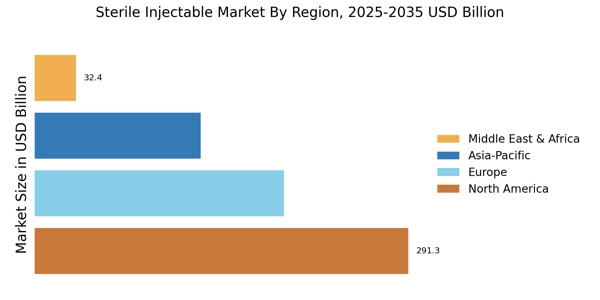
Global Sterile Injectable Market Size was valued at USD 647.41 Billion in 2024 & the market is projected to grow from USD 676.17 Billion in 2025 to USD 1,044.26 Billion by 2035, registering a CAGR of 4.44% during the forecast period 2025–2035. North America led the market with over 44.99% share, generating around USD 291.3 Billion in revenue.
The growing adoption of biologics is accelerating sterile injectable demand because many complex therapies require aseptic manufacturing and injectable delivery. Rising chronic disease burden, expanding targeted treatments, and increasing biologic approvals are encouraging pharmaceutical companies to expand sterile manufacturing capacity and advanced fill-finish capabilities.
A PubMed review found that 12 of 55 new molecular entities approved by the FDA in 2023 were therapeutic antibodies, while protein drugs represented approximately 31% of all newly approved drugs, reinforcing the expanding need for biologics-related manufacturing capabilities.
The Sterile Injectable Market is poised for substantial growth driven by technological advancements and increasing demand for personalized medicine.
| 2024 Market Size | 647.41 (USD Billion) |
| 2035 Market Size | 1044.26 (USD Billion) |
| CAGR (2025 - 2035) | 4.44% |
The Sterile Injectable Industry is currently experiencing a dynamic evolution, driven by various factors that influence its growth trajectory. The increasing prevalence of chronic diseases and the rising demand for biologics are pivotal in shaping the landscape of this market.
The demand for sterile injectable drugs is increasing alongside the growth of biologics, with over 50% of newly approved drugs in recent years being biologics that require parenteral administration, significantly driving the need for sterile injectable manufacturing capacity.
Furthermore, advancements in technology and manufacturing processes are enhancing the efficiency and safety of sterile injectables, thereby attracting more investments. Regulatory bodies are also playing a crucial role in ensuring that products meet stringent safety standards, which, while challenging, ultimately fosters consumer trust and market stability.
In addition, the Sterile Injectable Industry is witnessing a shift towards personalized medicine, which appears to be gaining traction among healthcare providers and patients alike. This trend suggests a growing inclination towards tailored therapies that cater to individual patient needs.
Pharmaceutical companies are rapidly expanding sterile injectable production capabilities, with global investments in aseptic manufacturing facilities exceeding USD 5 billion between 2022 and 2024 to support growing demand for vaccines, oncology drugs, and biologic therapies.
As the market continues to evolve, it is likely that innovation and collaboration among stakeholders will further propel growth, making the Sterile Injectable Industry a focal point for future developments in the pharmaceutical industry.
Recent innovations in manufacturing technologies are enhancing the production of sterile injectables. These advancements may lead to improved efficiency, reduced costs, and heightened safety standards, which could significantly impact market dynamics.
The trend towards personalized medicine is becoming increasingly prominent within the Sterile Injectable Industry. This shift indicates a growing preference for treatments tailored to individual patient profiles, potentially transforming therapeutic approaches.
Ongoing changes in regulatory frameworks are influencing the Sterile Injectable Industry. Stricter compliance requirements may challenge manufacturers but also ensure higher safety and efficacy standards, thereby fostering consumer confidence.
The Sterile Injectable Market is experiencing a notable increase in demand for biologics, which are complex medicines derived from living organisms. This trend is driven by the growing prevalence of chronic diseases and the need for targeted therapies. According to recent data, biologics account for a substantial portion of the pharmaceutical market, with projections indicating that they could represent over 50% of total drug sales by 2025.
The global market is adapting to this shift by enhancing production capabilities and ensuring compliance with stringent quality standards. As healthcare providers increasingly favor biologics for their efficacy and safety profiles, the global market is likely to see sustained growth, necessitating innovations in manufacturing processes and distribution channels.
A PubMed analysis of FDA approvals found 55 new molecular entities in 2023, including 12 therapeutic antibodies, while broader protein drugs represented approximately 31% of approved drugs. The continued flow of biologic approvals strengthens the requirement for specialized sterile manufacturing and injectable delivery capabilities.
The Sterile Injectable Market is witnessing a significant expansion in the availability of generic injectable drugs, which is reshaping the competitive landscape. As patents for several blockbuster biologics expire, generic manufacturers are entering the market, offering cost-effective alternatives. This trend is expected to increase access to essential medications, particularly in developing regions where affordability is a major barrier to treatment.
Data suggests that the market for generic injectables could grow at a compound annual growth rate of over 10% in the coming years. The global market must adapt to this shift by optimizing production processes and ensuring that generics meet the same stringent quality standards as their branded counterparts. This expansion not only benefits consumers but also stimulates innovation within the industry.
A U.S. study of 227 drugs entering generic competition found average generic uptake reached 66.1% in the first year and 82.7% in the second year. Although injected drugs showed lower uptake than oral medicines, the findings demonstrate substantial potential for generic competition and expanded access to injectable therapies.
Technological advancements are playing a crucial role in transforming the Sterile Injectable Market. Innovations such as automated filling systems, advanced sterilization methods, and real-time monitoring technologies are enhancing production efficiency and product quality. These technologies enable manufacturers to meet the increasing demand for sterile injectables while adhering to stringent regulatory requirements.
The global market is likely to benefit from the integration of artificial intelligence and machine learning, which can optimize production processes and reduce the risk of human error. As these technologies continue to evolve, they may lead to significant cost savings and improved product consistency, positioning the Sterile Injectable Market for sustained growth in a competitive landscape.
World Bank health-expenditure data show global current health expenditure per capita reached approximately USD 1,317 in 2023, while high-income economies averaged about USD 6,101. Increasing healthcare resources provide a stronger economic foundation for pharmaceutical manufacturers and healthcare systems to adopt advanced production, automation, quality-monitoring, and sterile-processing technologies.
The Sterile Injectable Market's Dosage Form segment showcases a varied distribution of market shares among its core values, with vials taking the lion's share of 45.00%. They have long been the preferred choice for both healthcare practitioners and patients due to their reliability, ease of use, and compatibility with various drug formulations. Ampoules and cartridges play specialized roles, often catering to specific therapeutic needs, whereas pre-filled syringes are quickly capturing attention owing to their convenience and ease of administration. Growth trends reveal that while vials maintain their dominance, pre-filled syringes are emerging as the fastest-growing segment within this market. The surge in demand for pre-filled syringes can be attributed to increased patient preference for ready-to-use solutions, reduced risk of contamination, and innovations in packaging technology. Moreover, the rise in chronic diseases requiring frequent injections bolsters the need for self-administration devices, propelling the growth of this segment further.
Pfizer CentreOne provides sterile fill-finish capabilities across vials, pre-filled syringes, and cartridges, supporting biologics, ADCs, microbial therapies, and small molecules. Its manufacturing network incorporates automated fill-finish and single-use technologies, demonstrating the continuing importance of vial-based sterile injectable production at commercial scale.
The Sterile Injectable Market Share is led by the oncology segment, driven by the growing global prevalence of cancer. Antibiotics hold a substantial share of 38.00% due to their widespread clinical use, while hormones and vaccines contribute notable portions, supported by expanding immunization programs and rising infectious disease concerns.
Oncology (Dominant) vs. Vaccines (Emerging)
Oncology is recognized as the dominant application in the sterile injectable market, primarily due to a rising incidence of cancer and the demand for effective treatments. This segment benefits from continuous innovation in drug formulation and delivery mechanisms tailored to meet the needs of patients undergoing chemotherapy. Comparatively, the vaccines segment is emerging rapidly, spurred by heightened awareness and initiatives targeting infectious diseases and immunization programs. As public health presents new challenges, the vaccine application in sterile injectables appears poised for robust growth, emphasizing the importance of safe and effective administration methods to ensure global health security.
The sterile injectable market exhibits a diverse distribution among various end-users, with hospitals holding the largest share of 58.00% due to their extensive range of procedures that require injectable medications. Clinics and ambulatory surgical centers are also significant players, offering specific services that cater to outpatient care. Home healthcare is emerging as a notable contender, reflecting changing patient preferences towards receiving treatment in their own homes, which has gained traction in recent years.
Hospitals (Dominant) vs. Home Healthcare (Emerging)
Hospitals dominate the sterile injectable market by providing a comprehensive array of services requiring injectable pharmacotherapy, including surgical procedures, oncology treatment, and emergency care. They benefit from advanced infrastructure and a high patient throughput, ensuring a consistent demand for sterile injectables. Conversely, home healthcare is an emerging sector that is rapidly gaining traction. It reflects a shift towards more patient-centered care, providing convenience and personalized treatment plans. This segment leverages technological advancements, such as telehealth and home infusion services, making it the fastest-growing end-user market in the sector.
North America leads in the Sterile Injectable Market Size, accounting for over 44.99% of the global revenue in 2024. The region's growth is driven by increasing healthcare expenditure, a robust pharmaceutical industry, and a rising prevalence of chronic diseases. Regulatory support from agencies like the FDA further catalyzes innovation and market expansion, ensuring high-quality standards and safety protocols.
The United States leads the sterile injectable market, followed by Canada. Major players such as Pfizer, Merck & Co., and Amgen dominate the landscape, leveraging advanced technologies and extensive distribution networks. The competitive environment is characterized by continuous product development and strategic partnerships, enhancing market accessibility and patient care.
Europe Sterile Injectable Market size was valued at USD 194.223 billion in 2024, making it the second-largest regional market with 30% share. The region benefits from a strong regulatory framework, with agencies like the European Medicines Agency (EMA) ensuring compliance and safety. Increasing demand for biologics and biosimilars, along with a growing elderly population, are key drivers of market growth, supported by favorable reimbursement policies across member states.
Leading countries in Europe include Germany, France, and the UK, where major pharmaceutical companies like Roche and Novartis are headquartered. The competitive landscape is marked by innovation and collaboration among industry players, focusing on advanced manufacturing techniques and personalized medicine. The presence of established firms fosters a dynamic environment for new entrants and startups.
The Asia-Pacific region is witnessing rapid growth in the sterile injectable market, accounting for approximately 20% of the global share. Factors such as increasing healthcare investments, a rising population, and growing awareness of advanced therapies are driving demand. Additionally, government initiatives to improve healthcare infrastructure and access to medications are significant catalysts for market expansion in this region.
Countries like China and India are at the forefront of this growth, with a surge in local manufacturing capabilities and partnerships with global players. The competitive landscape is evolving, with both established companies and new entrants striving to capture market share. The presence of key players like Sanofi and Teva Pharmaceutical Industries enhances the region's attractiveness for investment and innovation.
The Middle East and Africa region represents an emerging market for sterile injectables, holding about 5% of the global market share. The growth is driven by increasing healthcare needs, rising investments in healthcare infrastructure, and a growing focus on chronic disease management. However, challenges such as regulatory hurdles and economic disparities can impact market penetration and accessibility.
Leading countries in this region include South Africa and the UAE, where there is a growing presence of both local and international pharmaceutical companies. The competitive landscape is characterized by a mix of established firms and new entrants, focusing on expanding their product offerings and improving distribution channels. The potential for growth remains significant as governments prioritize healthcare improvements and access to essential medicines.
The global industry is characterized by a dynamic competitive landscape, driven by increasing demand for biologics and the growing prevalence of chronic diseases. Key players such as Pfizer (US), Roche (CH), and Novartis (CH) are strategically positioned to leverage their extensive research and development capabilities, focusing on innovation and expanding their product portfolios. These companies are actively pursuing mergers and acquisitions to enhance their market presence and foster collaboration in drug development, thereby shaping a competitive environment that emphasizes both quality and accessibility in sterile injectables.
In terms of business tactics, companies are increasingly localizing manufacturing to mitigate supply chain disruptions and optimize operational efficiency. The market appears moderately fragmented, with a mix of large multinational corporations and smaller specialized firms. The collective influence of these key players is significant, as they not only drive technological advancements but also set industry standards that smaller entities often follow.
In August 2025, Pfizer (US) announced a strategic partnership with a leading biotechnology firm to co-develop a new line of sterile injectables aimed at treating autoimmune diseases. This collaboration is expected to enhance Pfizer's capabilities in biologics, allowing for a more robust pipeline and potentially increasing market share in a rapidly growing segment. The strategic importance of this partnership lies in its potential to accelerate product development timelines and improve patient outcomes through innovative therapies.
In September 2025, Roche (CH) unveiled a state-of-the-art manufacturing facility in Switzerland dedicated to the production of sterile injectables. This facility is designed to incorporate advanced automation and digital technologies, which are anticipated to enhance production efficiency and ensure compliance with stringent regulatory standards. The establishment of this facility underscores Roche's commitment to maintaining a competitive edge through technological innovation and capacity expansion in response to rising global demand.
In July 2025, Novartis (CH) completed the acquisition of a smaller firm specializing in advanced delivery systems for sterile injectables. This acquisition is likely to bolster Novartis's product offerings and enhance its competitive positioning by integrating cutting-edge delivery technologies into its existing portfolio. The strategic move reflects a broader trend in the industry where companies seek to differentiate themselves through innovative delivery mechanisms that improve patient adherence and therapeutic efficacy.
As of October 2025, the global industry is witnessing trends such as digitalization, sustainability, and the integration of artificial intelligence in manufacturing processes. Strategic alliances are increasingly shaping the competitive landscape, enabling companies to pool resources and expertise to address complex challenges.
Looking ahead, competitive differentiation is expected to evolve, with a pronounced shift from price-based competition to a focus on innovation, technological advancements, and supply chain reliability. This transition may redefine market dynamics, compelling companies to invest in research and development to stay ahead in a rapidly changing environment.



The rising prevalence of chronic diseases, increasing demand for minimally invasive procedures, and technological advancements in drug delivery systems are key factors driving market growth.
Recent news developments in the sterile injectables market include:
In January 2023, West Pharmaceutical Services, Inc. announced the launch of its NovaGuard SA Pro safety system for prefilled syringes, designed to enhance patient safety and reduce the risk of needlestick injuries.
In February 2023, BD (Becton, Dickinson and Company) received FDA approval for its BD FACSJazz™ Cell Sorter, a benchtop cell sorter that enables precise and efficient cell sorting for research and clinical applications.
In March 2023, Gerresheimer AG announced a partnership with SiO2 Medical Products to develop and manufacture innovative glass primary packaging solutions for sterile injectables.
The Sterile Injectable Market size is projected to reach USD 1,044.26 Billion by 2035, growing at a CAGR of 4.44%, driven by technological advancements, increasing chronic diseases, and rising demand for biologics.
New opportunities lie in:
By 2035, the Sterile Injectable Market is expected to achieve robust growth, reflecting evolving healthcare needs.
| MARKET SIZE 2024 | 647.41(USD Billion) |
| MARKET SIZE 2025 | 676.17(USD Billion) |
| MARKET SIZE 2035 | 1044.26(USD Billion) |
| COMPOUND ANNUAL GROWTH RATE (CAGR) | 4.44% (2025 - 2035) |
| REPORT COVERAGE | Revenue Forecast, Competitive Landscape, Growth Factors, and Trends |
| BASE YEAR | 2024 |
| Market Forecast Period | 2025 - 2035 |
| Historical Data | 2019 - 2024 |
| Market Forecast Units | USD Billion |
| Key Companies Profiled | Pfizer (US), Roche (CH), Novartis (CH), Bristol-Myers Squibb (US), Amgen (US), Sanofi (FR), Merck & Co. (US), GSK (GB), Teva Pharmaceutical Industries (IL) |
| Segments Covered | Dosage Form, Application, End-User, Regional |
| Key Market Opportunities | Advancements in biologics and personalized medicine drive growth in the Sterile Injectable Market. |
| Key Market Dynamics | Rising demand for biologics drives innovation and competition in the sterile injectable market, influencing regulatory frameworks. |
| Countries Covered | North America, Europe, APAC, South America, MEA |
The Pre-filled Syringes segment is projected to reach a valuation of 320.0 USD Billion by 2035.
The Oncology application segment is anticipated to reach a market size of 200.0 USD Billion by 2035.
The Hospitals end-user segment is expected to dominate, with a projected valuation of 400.0 USD Billion by 2035.
The Vaccines application segment is projected to reach a valuation of 444.26 USD Billion by 2035.
By 2035, the market size for Antibiotics is projected at 250.0 USD Billion, whereas Hormones is expected to reach 150.0 USD Billion.



Kindly complete the form below to receive a free sample of this Report

“This is really good guys. Excellent work on a tight deadline. I will continue to use you going forward and recommend you to others. Nice job”


“Thanks. It’s been a pleasure working with you, please use me as reference with any other Intel employees.”


“Thanks for sending the report it gives us a good global view of the Betaïne market.”


“Thank you, this will be very helpful for OQS.”


“We found the report very insightful! we found your research firm very helpful. I'm sending this email to secure our future business.”


“I am very pleased with how market segments have been defined in a relevant way for my purposes (such as "Portable Freezers & refrigerators" and "last-mile"). In general the report is well structured. Thanks very much for your efforts.”


“I have been reading the first document or the study, ,the Global HVAC and FP market report 2021 till 2026. Must say, good info! I have not gone in depth at all parts, but got a good indication of the data inside!”


“We got the report in time, we really thank you for your support in this process. I also thank to all of your team as they did a great job.”


“The Automotive 48V ECU Components Procurement Intelligence Study” was a complex project, but the Market Research Future (MRFR) team handled it with quality, agility, and customer-centricity. They delivered all requested data on time and within the agreed scope. The team, including Shubhendra Anand and Rahul Gotadki, was always readily available to clarify questions and swiftly implement necessary adjustments, driving the project to a successful conclusion within a very demanding timeframe.
I would also like to specifically commend Akshay Agarwal for his responsiveness and support at every stage—from our initial inquiry on May 6th through to final delivery on June 18th. His dedication made the entire process seamless.”



