Download Free Sample
Kindly complete the form below to receive a free sample of this Report
Stress Urinary Incontinence Market Research Report: Information by Product Type (Therapeutic or Interventional Devices and Absorbent Products), By End User (Hospitals, Specialty Clinics, Ambulatory Surgical Centers, Home Care Settings, and others), By Region (North America, Europe, Asia Pacific, South America, Middle East & Africa) -Global Forecast to 2035.
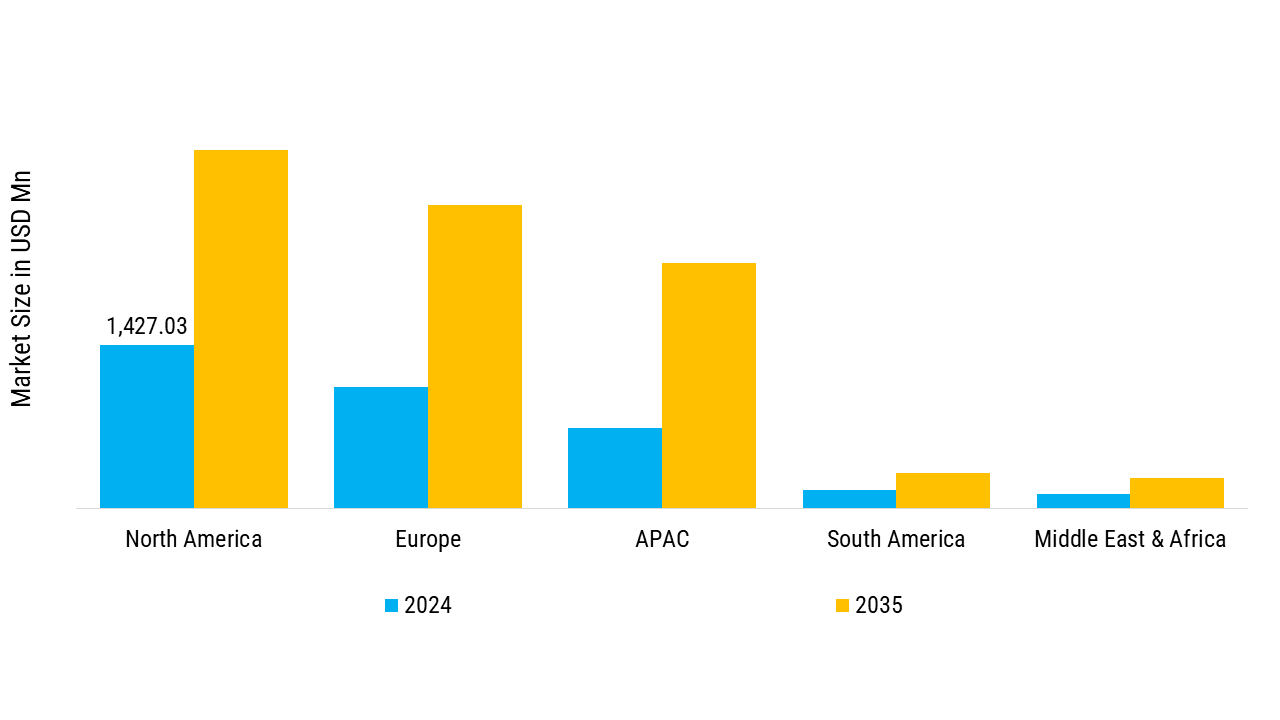
The Global Stress Urinary Incontinence Market size was valued at USD 3,482.48 Million in 2024, and the market is projected to grow from USD 3,770.83 Million in 2025 to USD 8,520.25 Million by 2035, registering a CAGR of 8.51% during the forecast period 2025–2035. North America led the market in 2024 with over 40.98% share, generating around USD 1,427.03 Million in revenue.
The global market is expanding steadily due to the rising aging population, increasing prevalence of pelvic floor disorders, and growing awareness regarding minimally invasive treatment options. Advancements in sling devices, absorbent products, and home-based management solutions are further accelerating global treatment adoption.
According to the World Health Organization (WHO), urinary incontinence affects nearly 200 million people globally, while CDC-supported studies indicate that approximately 50% of adult women experience some form of urinary incontinence during their lifetime.
The Stress Urinary Incontinence Market is driven by a confluence of demographic shifts, technological innovation, and a necessary recalibration in response to historical regulatory challenges.
| 2024 Market Size | 3,482.48 (USD Million) |
| 2035 Market Size | 8,520.25 (USD Million) |
| CAGR (2025 - 2035) | 8.51% |
Innovation in Artificial Urinary Sphincters (AUS) and Smart Wearable Devices represents a transformative opportunity for the Global Stress Urinary Incontinence Market, as treatments evolve from passive mechanical systems to active, data-driven solutions. While the AMS 800 has been the hydraulic "gold standard" for decades, the industry is entering a "digital revolution" characterized by miniaturization and automation. A landmark development in this space is the electronic Artificial Urinary Sphincter (eAUS).
Clinical feasibility studies reported in early 2025 showed a 92.6% successful implantation rate with no revisions required in the initial cohorts of both men and women.
Based on Product type, the Stress Urinary Incontinence Market has been bifurcated into Therapeutic or Interventional Devices and Absorbent Products. Therapeutic or Interventional Devices further Segmented into Urethral Slings, Artificial Urinary Sphincters, Urethral Bulking Agents, Pessaries, Disposable Vaginal Inserts, and Others. Urethral Slings is further bifurcated into Midurethral Slings, and Autologous Slings. Absorbent Products further Segmented into Adult Diapers, Absorbent Pads, Protective Underwear, and Drip Collectors. The Absorbent Products segment held the largest market share in 2025 at 58.4%, and the Therapeutic or Interventional Devices segment is the fastest growing segment during the forecast period.
Based on End user, the Stress Urinary Incontinence Industry has been segmented into Hospitals, Specialty Clinics, Ambulatory Surgical Centers, Home Care Settings, and others. The Hospitals segment held the largest market share in 2025 at 46.8%, and the Ambulatory Surgical Centers segment is the fastest growing segment during the forecast period.
North America leads in the Stress Urinary Incontinence Market size, accounting for over 40.98% of the global revenue in 2024. North America dominates the SUI devices market due to high prevalence—23% among U.S. women—and advanced infrastructure enabling early adoption of innovations like minimally invasive slings. An aging population and rising prostate cancer cases (333,830 new U.S. diagnoses in 2026) drive demand, particularly for male slings and sphincters. Favorable reimbursements and R&D by firms like Boston Scientific bolster growth, positioning the U.S., Canada, and Mexico as key contributors.
Europe Stress Urinary Incontinence Industry size was valued at USD 1044.74 million in 2024, making it the second-largest regional market with a 30% share. Europe benefits from strong clinical standards and high SUI rates (14.5% in ages 30-60), with over 60% of UK women reporting pelvic floor issues. Mature healthcare systems in Germany, France, UK, Italy, and Spain support widespread sling procedures and pessaries, fueled by aging demographics and generics enhancing affordability. Awareness campaigns and urology networks promote device uptake, though regulatory scrutiny on meshes tempers expansion.
Asia-Pacific is the fastest-growing market in the worldwide sonobuoy sector, due to rising navy expenditures, expanding submarine fleets, and escalating maritime security concerns. Countries such as India, China, Japan, South Korea, and Australia are substantially investing in ASW capabilities to secure sea lanes and monitor disputed seas like as the South China Sea and the Indian Ocean.
The P-8A Poseidon fleet in Australia, as well as Japan's maritime patrol modernization, have dramatically increased sonobuoy deployment rates. India is a particularly important growth market because of its emphasis on adaption and underwater warfare modernization.
South America's expansion ties to urbanization in Brazil and Argentina, where improving diagnostics address rising female SUI from obesity and childbirth. Generic availability and retail growth enhance affordability, supporting hospital-based slings amid growing elderly care. Economic pressures slow premium devices, but awareness and supply chain enhancements promise steady uptake.
MEA's market develops steadily via urbanization and women's health focus, with rising incontinence from lifestyle shifts in Saudi Arabia and South Africa. Limited infrastructure hampers penetration, but healthcare investments and partnerships boost retail access to pessaries and non-invasives. Aging trends and education elevate demand, though affordability challenges persist in Africa.
Many global, regional, and local vendors characterize the Stress Urinary Incontinence Market. The market is highly competitive, with all the players competing to gain market share. Intense competition, rapid advances in Product, frequent changes in government policies, and environmental regulations are key factors that confront market growth. The vendors compete based on cost, product quality, reliability, and government regulations. Vendors must provide cost-efficient, high-quality products to survive and succeed in an intensely competitive market.
The major players in the market Include Boston Scientific Corporation, Coloplast A/S, Laborie, Caldera Medical, Neomedic International, Zephyr Surgical Implants, Merz Pharmaceuticals, LLC, Kimberly-Clark, Ontex, CL Medical, strategic market developments and decisions to improve operational effectiveness.





August 2025: Laborie Acquires announced acquisition of the JADA System, marking a major milestone in expanding the company's obstetrics portfolio. The addition of the JADA, an FDA-cleared device for the rapid control and treatment of abnormal postpartum uterine bleeding, further reinforces Laborie's commitment to transforming the patient journey through innovative solutions that enhance maternal health and safety.
April 2025: Caldera Medical, a women’s health medical device company that develops and markets best-in-class products for the treatment of Stress Urinary Incontinence, Pelvic Organ Prolapse, Polyps and Fibroids, announced today that it has completed its acquisition of Atlantic Therapeutics, an Ireland based provider of non-invasive pelvic floor strengthening and nerve stimulating solutions for women. The acquisition bolsters Caldera Medical’s expanding portfolio, furthering its mission to improve the quality of life for women.
March 2025: Merz Therapeutics, a business of the Merz Group and a leader in the field of neurotoxins, and the Israeli start-up Vensica Therapeutics Ltd., a urology company, announced today that they have entered into a strategic license and collaboration agreement for the delivery of botulinum neurotoxin A to the bladder wall by using Vensica’s innovative ultrasound-assisted delivery catheter.
The Stress Urinary Incontinence INdustry size is projected to reach USD 8,520.25 million by 2035, growing at a CAGR of 8.51%, driven by increasing demand for high-performance computing and enhanced security features.
New opportunities lie in:
|
Market End User 2024 |
3,482.48 (USD Million) |
|
Market End User 2025 |
3,770.83 (USD Million) |
|
Market End User 2035 |
8,520.25 (USD Million) |
|
Compound Annual Growth Rate (CAGR) |
8.51% (2025 - 2035) |
|
Report Coverage |
Revenue Forecast, Competitive Landscape, Growth Factors, and Trends |
|
Base Year |
2024 |
|
Market Forecast Period |
2025 - 2035 |
|
Historical Data |
2019 - 2023 |
|
Market Forecast Units |
USD Million |
|
Key Companies Profiled |
Boston Scientific Corporation, Coloplast A/S, Laborie, Caldera Medical, Neomedic International, Zephyr Surgical Implants, Merz Pharmaceuticals, LLC, Kimberly-Clark, Ontex, CL Medical. |
|
Segments Covered |
By Product Type By End User |
|
Key Market Opportunities |
Growth of ambulatory surgical centers Innovation in artificial urinary sphincters and smart devices. |
|
Key Market Dynamics |
High Prevalence in Post-Prostatectomy Patients Adoption of minimally invasive sling and bulking procedures Growing demand for home care absorbent products Rising Technological advancements in interventional devices. |
|
Region Covered |
North America, Europe, Asia Pacific, South America, Middle East & Africa. |



Kindly complete the form below to receive a free sample of this Report

“This is really good guys. Excellent work on a tight deadline. I will continue to use you going forward and recommend you to others. Nice job”


“Thanks. It’s been a pleasure working with you, please use me as reference with any other Intel employees.”


“Thanks for sending the report it gives us a good global view of the Betaïne market.”


“Thank you, this will be very helpful for OQS.”


“We found the report very insightful! we found your research firm very helpful. I'm sending this email to secure our future business.”


“I am very pleased with how market segments have been defined in a relevant way for my purposes (such as "Portable Freezers & refrigerators" and "last-mile"). In general the report is well structured. Thanks very much for your efforts.”


“I have been reading the first document or the study, ,the Global HVAC and FP market report 2021 till 2026. Must say, good info! I have not gone in depth at all parts, but got a good indication of the data inside!”


“We got the report in time, we really thank you for your support in this process. I also thank to all of your team as they did a great job.”


“The Automotive 48V ECU Components Procurement Intelligence Study” was a complex project, but the Market Research Future (MRFR) team handled it with quality, agility, and customer-centricity. They delivered all requested data on time and within the agreed scope. The team, including Shubhendra Anand and Rahul Gotadki, was always readily available to clarify questions and swiftly implement necessary adjustments, driving the project to a successful conclusion within a very demanding timeframe.
I would also like to specifically commend Akshay Agarwal for his responsiveness and support at every stage—from our initial inquiry on May 6th through to final delivery on June 18th. His dedication made the entire process seamless.”



