Download Free Sample
Kindly complete the form below to receive a free sample of this Report
Surgical Procedures Volume Market Research Report By Procedure Type (Cardiac Surgery, Orthopedic Surgery, Neurological Surgery, Gastrointestinal Surgery, Cosmetic Surgery), By End-User (Hospitals, Ambulatory Surgery Centers, Clinics, Other Healthcare Facilities), By Patient Age (Pediatric (18 years), Adult (18-64 years), Geriatric (65+ years)), By Surgical Approach (Open Surgery, Minimally Invasive Surgery, Robotic Surgery), By Anesthesia Type (General Anesthesia, Local Anesthesia, Regional Anesthesia) and By Regional (North America, Europe, South America, Asia Pacific, Middle East and Africa) - Growth & Industry Forecast 2025 To 2035
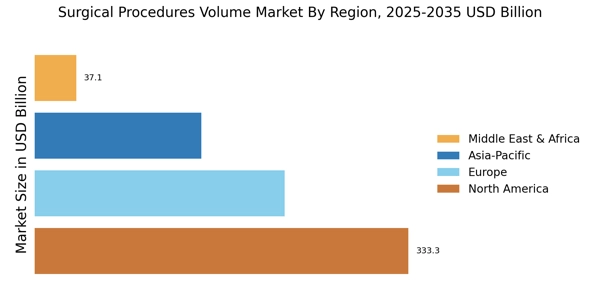
Global Surgical Procedures Volume Market Size was valued at USD 742.93 Billion in 2024 & the market is projected to grow from USD 794.36 Billion in 2025 to USD 1,551.27 Billion by 2035, registering a CAGR of 6.92% during the forecast period 2025–2035. North America led the market with over 44.86% share, generating around USD 333.3 Billion in revenue.
The rising burden of chronic diseases and an aging population is increasing demand for surgical interventions. Cardiovascular disorders, cancer, orthopedic conditions, and age-related diseases require greater procedural care, supporting higher surgical volumes and expanding healthcare capacity worldwide.
WHO estimates that 313 million surgical procedures are performed globally each year, while another 143 million procedures are needed annually in low- and middle-income countries to save lives and prevent disability, highlighting substantial unmet surgical demand and future volume potential.
The Surgical Procedures Volume Market is experiencing a transformative shift driven by technological advancements and changing patient preferences.
| 2024 Market Size | 742.93 (USD Billion) |
| 2035 Market Size | 1551.27 (USD Billion) |
| CAGR (2025 - 2035) | 6.92% |
The Surgical Procedures Volume Market is currently experiencing a dynamic evolution, influenced by various factors such as technological advancements, demographic shifts, and changing healthcare policies. The integration of minimally invasive techniques and robotic-assisted surgeries appears to enhance patient outcomes and reduce recovery times, thereby driving demand for these procedures. Furthermore, an aging population is likely to contribute to an increased prevalence of chronic diseases, necessitating a higher volume of surgical interventions.
As healthcare systems adapt to these trends, the market is poised for substantial growth, reflecting the ongoing commitment to improving surgical care and patient safety. In addition, the Surgical Procedures Volume Industry is witnessing a shift towards outpatient surgeries, which may indicate a preference for cost-effective and efficient healthcare solutions. This trend suggests that patients are increasingly opting for procedures that allow for quicker recovery and reduced hospital stays. Moreover, the rise of telemedicine and digital health tools could further transform the landscape, enabling better preoperative assessments and postoperative follow-ups. Overall, the market's trajectory seems promising, with numerous opportunities for innovation and improvement in surgical practices.
The Surgical Procedures Volume Industry is significantly influenced by ongoing technological innovations. The adoption of advanced surgical instruments, imaging technologies, and robotic systems is transforming traditional practices. These advancements not only enhance precision but also improve patient safety and recovery times, thereby increasing the overall volume of procedures performed.
There is a noticeable trend towards outpatient surgical procedures within the Surgical Procedures Volume Industry. This shift reflects a growing preference for less invasive techniques that allow patients to return home on the same day. Such procedures are often associated with lower costs and reduced hospital stays, appealing to both patients and healthcare providers.
The incorporation of digital health solutions is emerging as a pivotal trend in the Surgical Procedures Volume Industry. Telemedicineand digital platforms facilitate better patient engagement, preoperative assessments, and postoperative care. This integration may lead to improved surgical outcomes and increased patient satisfaction, ultimately influencing the volume of surgical procedures conducted.
The aging population is a critical driver of the Surgical Procedures Volume Market. As individuals age, they often experience a higher incidence of chronic diseases and conditions that necessitate surgical intervention. For instance, the World Health Organization indicates that the proportion of the population aged 60 years and older is expected to double from 12% to 22% between 2015 and 2050. This demographic shift is likely to increase the demand for various surgical procedures, including orthopedic, cardiovascular, and cancer surgeries. Consequently, healthcare systems are adapting to accommodate this growing need, which may lead to an increase in surgical volumes and a corresponding expansion of the Surgical Procedures Volume Industry.
The rising prevalence of chronic diseases is another significant driver influencing the Surgical Procedures Volume Market. Conditions such as diabetes, obesity, and cardiovascular diseases are becoming increasingly common, leading to a higher demand for surgical interventions. According to the Centers for Disease Control and Prevention, approximately 6 in 10 adults in the United States have a chronic disease, which often requires surgical management. This trend is expected to persist, as the burden of chronic diseases continues to escalate, thereby driving the volume of surgical procedures. As healthcare providers seek to address these challenges, the Surgical Procedures Volume Industry is likely to experience substantial growth.
In the Surgical Procedures Volume Market, the procedure type segments showcase varied market share distributions, with Cardiac Surgery leading as the largest segment holding market share of 34.00%. This dominance stems from the increasing prevalence of cardiovascular diseases, prompting higher surgical interventions. Following closely, Orthopedic Surgery emerges as a significant player, fueled by an aging population and increased sports-related injuries requiring surgical attention. These trends reflect a shift towards specialized surgical procedures that cater to specific health needs.
Medtronic generated USD 12.481 billion from its cardiovascular portfolio in FY2025, including USD 6.392 billion from Cardiac Rhythm & Heart Failure, demonstrating substantial commercial activity supporting cardiovascular procedure technologies.
In the surgical procedures volume market, hospitals are the largest end-user segment, significantly contributing to the overall market share with 65.00%. They serve as the primary settings for complex surgeries, undertaking a wide variety of procedures. Ambulatory Surgery Centers (ASCs) are gaining traction, capturing an increasing share due to their efficiency and cost-effectiveness in performing minimally invasive surgeries.
Johnson & Johnson's MedTech business generated USD 33.792 billion in 2025, including USD 9.845 billion from Surgery, reflecting substantial demand for hospital-based surgical technologies and supporting the continued importance of hospitals as major procedural centers.
The Surgical Procedures Volume Market exhibits a diverse distribution across patient age categories. The Adult segment (ages 18-64) holds the largest market share of 70.00%, significantly impacting the demand for surgical procedures. This span captures a wide demographic, encompassing patients seeking elective surgeries, minimally invasive procedures, and treatment for chronic conditions, solidifying its prominence in the market. Conversely, the Pediatric and Geriatric segments, while smaller, play vital roles in certain specialties, reflecting differing healthcare needs and priorities as patients age. Growth trends indicate an upward trajectory for the Geriatric segment due to the global aging population and increased prevalence of age-related health issues. Innovations in surgical techniques, enhanced anesthetic approaches, and improved postoperative care are driving growth in geriatric procedures. As the Adult segment continues to dominate, healthcare systems are also focusing on integrating geriatric-specific protocols to address this emerging demand, ensuring safe and effective surgical experiences for older patients.
Adult (Dominant) vs. Geriatric (Emerging)
The Adult segment remains the dominant force in the Surgical Procedures Volume Market, characterized by its extensive range of elective surgeries and treatments for chronic diseases. This group not only drives volume but also influences trends in surgical advancements and patient preference for minimally invasive procedures. Meanwhile, the Geriatric segment is emerging rapidly, fueled by an aging global population and advancements in surgical care tailored to this demographic. This segment faces unique challenges, including higher rates of comorbidities and the need for specialized care protocols. As healthcare systems adapt to these trends, the distinct characteristics and needs of both Adults and Geriatrics will shape the future landscape of surgical procedures.
The Surgical Procedures Volume Market showcases a diverse array of approaches, with Minimally Invasive Surgery (MIS) securing the largest market share of 55.00% due to its advantages such as reduced recovery time and lower risk of complications. Open Surgery, while still significant, is declining as more healthcare facilities adopt minimally invasive techniques that align with patient demand for less invasive options. Robotic Surgery is also carving out a notable niche as healthcare adopts advanced technologies that offer precision and enhanced control.
Minimally Invasive Surgery (Dominant) vs. Robotic Surgery (Emerging)
Minimally Invasive Surgery (MIS) has become the dominant approach in the Surgical Procedures Volume Market, characterized by smaller incisions, less pain, and quicker recovery times for patients, making it favorable among surgeons and patients alike. This segment continually excels as it integrates technological advancements, improving surgical outcomes and patient satisfaction. In contrast, Robotic Surgery is emerging as a fast-growing segment, leveraging advanced robotics to enhance surgical precision and dexterity. Although it currently holds a smaller market share than MIS, the rising adoption of robotic systems in surgical settings points to its substantial potential for future growth, driven by innovations that appeal to both healthcare providers and patients.
In the Surgical Procedures Volume Market, General Anesthesia currently holds the largest market share of 60.00% due to its widespread application in major surgical procedures. This anesthetic type is preferred for surgeries that require full sedation, allowing for longer and more complex operations. On the other hand, Local Anesthesia is gaining popularity, particularly in outpatient and minor surgeries, as it entails less recovery time and offers a quicker return to normal activities for patients. This shift indicates a diversification in patient preferences and procedural approaches. Growth trends in the anesthesia segment exhibit a transitional phase, with a noticeable increase in the adoption of Local Anesthesia driven by advancements in medical technology and an increasing number of minimally invasive procedures. The significant focus on patient safety and satisfaction has catalyzed this trend, as local options present fewer risks and side effects compared to general anesthesia. Additionally, as surgical practices evolve, healthcare providers are investing in training and resources to enhance the efficacy of Local Anesthesia, solidifying its position in the market.
General Anesthesia (Dominant) vs. Regional Anesthesia (Emerging)
General Anesthesia remains the dominant force in the Surgical Procedures Volume Market, known for its extensive use in various large-scale surgeries requiring complete patient unawareness and immobility. Its robust infrastructure, including advanced monitoring equipment and anesthetic agents, supports its critical role in surgical settings. Conversely, Regional Anesthesia is emerging as a compelling alternative, particularly for surgeries targeting specific body regions. It offers significant advantages such as reduced systemic effects and faster recovery times. The rising acceptance of Regional Anesthesia can be attributed to increased patient awareness and physician familiarity, positioning it as a key player in the evolving landscape of surgical anesthesia.
North America leads in the Surgical Procedures Volume Market Size, accounting for over 44.86% of the global revenue in 2024. Key growth drivers include advanced healthcare infrastructure, high prevalence of chronic diseases, and increasing surgical interventions. Regulatory support, such as the FDA's streamlined approval processes for robotic-assisted surgerymedical devices, further catalyzes market growth.
The U.S. leads this region, followed by Canada, which holds about 10% of the market share. The competitive landscape is characterized by major players like Medtronic, Johnson & Johnson, and Stryker, which dominate the market with innovative surgical solutions. The presence of these key players fosters a robust ecosystem for surgical procedures, ensuring continuous advancements in technology and patient care. The focus on minimally invasive surgeries and robotic-assisted procedures is also gaining traction, enhancing surgical outcomes and patient recovery times.
Europe Surgical Procedures Volume Market size was valued at USD 222.879 Billion in 2024, making it the second-largest regional market with a 30% share. Key drivers include an aging population, increasing healthcare expenditure, and advancements in surgical technologies. Regulatory frameworks, such as the EU Medical Device Regulation, are enhancing safety and efficacy, thereby boosting market confidence.
Germany and France are the largest markets in this region, contributing significantly to the overall volume. Leading countries like Germany, France, and the UK are home to major players such as B. Braun Melsungen AG and Smith & Nephew. The competitive landscape is marked by a focus on innovation and collaboration among healthcare providers and manufacturers. The emphasis on patient-centered care and the integration of digital health solutions are shaping the future of surgical procedures in Europe.
Asia-Pacific is emerging as a powerhouse in the surgical procedures volume market, accounting for about 20% of the global share. The region's growth is driven by rising healthcare investments, increasing awareness of surgical options, and a growing population with rising health concerns. Countries like China and India are at the forefront, with significant investments in healthcare infrastructure and technology, contributing to the overall market expansion.
China is the largest market in the region, followed by India, which is rapidly increasing its surgical capabilities. The competitive landscape features key players like Terumo Corporation and Abbott Laboratories, which are expanding their presence through strategic partnerships and innovations. The focus on affordable healthcare solutions and the adoption of advanced surgical techniques are expected to further propel market growth in this region.
The Middle East and Africa region is witnessing a gradual increase in the surgical procedures volume market, holding approximately 5% of the global share. Key growth drivers include improving healthcare infrastructure, increasing investments in medical technology, and a rising prevalence of lifestyle-related diseases. Countries like the UAE and South Africa are leading this growth, supported by government initiatives to enhance healthcare access and quality.
The competitive landscape is characterized by a mix of local and international players, with a focus on expanding surgical capabilities. Key players are increasingly investing in training and development to improve surgical outcomes. The emphasis on public-private partnerships is also fostering innovation and improving healthcare delivery in the region.
The Surgical Procedures Volume Market is characterized by a dynamic competitive landscape, driven by technological advancements, increasing healthcare demands, and a growing emphasis on patient-centric solutions. Major players such as Medtronic (US), Johnson & Johnson (US), and Stryker (US) are at the forefront, each adopting distinct strategies to enhance their market positioning. Medtronic (US) focuses on innovation through its robust pipeline of minimally invasive surgical technologies, while Johnson & Johnson (US) emphasizes strategic acquisitions to bolster its product portfolio. Stryker (US) is actively pursuing digital transformation initiatives, integrating advanced data analytics into its surgical solutions, thereby enhancing operational efficiency and patient outcomes.
Collectively, these strategies not only shape the competitive environment but also indicate a shift towards more integrated and technologically advanced surgical solutions. In terms of business tactics, companies are increasingly localizing manufacturing to reduce lead times and optimize supply chains. This approach appears to be particularly effective in addressing regional market demands and regulatory requirements. The market structure is moderately fragmented, with a mix of established players and emerging companies vying for market share. The collective influence of key players is significant, as they drive innovation and set industry standards, thereby shaping the overall market dynamics.
In August 2025, Medtronic (US) announced the launch of its new robotic-assisted surgical system, which is designed to enhance precision in minimally invasive procedures. This strategic move is likely to position Medtronic as a leader in the robotic surgery segment, catering to the increasing demand for advanced surgical technologies. The introduction of this system not only reflects Medtronic's commitment to innovation but also aligns with the broader trend of integrating robotics into surgical practices, potentially transforming surgical outcomes.
In September 2025, Johnson & Johnson (US) completed the acquisition of a leading digital health company, which specializes in AI-driven surgical planning tools. This acquisition is indicative of Johnson & Johnson's strategy to enhance its digital capabilities and provide comprehensive solutions that improve surgical efficiency and patient care. By integrating AI into its offerings, the company is likely to gain a competitive edge in the market, as healthcare providers increasingly seek data-driven solutions to optimize surgical procedures.
In July 2025, Stryker (US) launched a new cloud-based platform that connects surgical teams and provides real-time data analytics during procedures. This initiative underscores Stryker's focus on digital transformation and its commitment to improving surgical workflows. By leveraging cloud technology, Stryker aims to enhance collaboration among surgical teams, ultimately leading to better patient outcomes and increased operational efficiency.
As of October 2025, current competitive trends in the global market are heavily influenced by digitalization, sustainability, and the integration of artificial intelligence. Strategic alliances among key players are becoming increasingly common, as companies seek to leverage complementary strengths to enhance their offerings. The competitive landscape is evolving, with a noticeable shift from price-based competition to a focus on innovation, technology, and supply chain reliability. This evolution suggests that future differentiation will hinge on the ability to deliver advanced, patient-centric solutions that not only meet regulatory standards but also exceed patient expectations.


The Surgical Procedures Volume Market is expected to witness significant growth between 2025 and 2034, driven by factors such as the rising prevalence of chronic diseases, technological advancements, and increasing healthcare expenditure.
The market is estimated to be valued at USD 742.93 billion in 2024 and is projected to reach USD 1450.84 billion by 2034, exhibiting a CAGR of 6.92%. The increasing demand for minimally invasive surgeries, coupled with the growing geriatric population, is further contributing to the market growth.
Recent advancements in robotic surgery and the adoption of AI-powered systems are expected to revolutionize the surgical landscape, leading to improved patient outcomes and reduced recovery times. Key players in the market are focusing on strategic partnerships, mergers, and acquisitions to expand their product portfolios and gain a competitive edge.
Ongoing research and development initiatives are expected to drive innovation and introduce new surgical techniques, further shaping the future of the Surgical Procedures Volume Market.
The Surgical Procedures Volume Industry size is projected to reach USD 1551.27 Billion by 2035, growing at a CAGR of 6.92%, driven by technological advancements, increasing healthcare access, and rising surgical demand.
New opportunities lie in:
By 2035, the market is expected to achieve robust growth, reflecting evolving healthcare dynamics.
| MARKET SIZE 2024 | 742.93(USD Billion) |
| MARKET SIZE 2025 | 794.36(USD Billion) |
| MARKET SIZE 2035 | 1551.27(USD Billion) |
| COMPOUND ANNUAL GROWTH RATE (CAGR) | 6.92% (2025 - 2035) |
| REPORT COVERAGE | Revenue Forecast, Competitive Landscape, Growth Factors, and Trends |
| BASE YEAR | 2024 |
| Market Forecast Period | 2025 - 2035 |
| Historical Data | 2019 - 2024 |
| Market Forecast Units | USD Billion |
| Key Companies Profiled | Medtronic (US), Johnson & Johnson (US), Stryker (US), Boston Scientific (US), Abbott Laboratories (US), B. Braun Melsungen AG (DE), Zimmer Biomet (US), Smith & Nephew (GB), Terumo Corporation (JP) |
| Segments Covered | Procedure Type, End-User, Patient Age, Surgical Approach, Anesthesia Type, Regional |
| Key Market Opportunities | Integration of advanced robotic systems enhances efficiency in the Surgical Procedures Volume Market. |
| Key Market Dynamics | Technological advancements and regulatory changes drive evolving trends in surgical procedures volume and market dynamics. |
| Countries Covered | North America, Europe, APAC, South America, MEA |
In 2024, the Orthopedic Surgery segment had the highest valuation at 185.37 USD Billion.
In 2024, Minimally Invasive Surgery was valued at 300.0 USD Billion, surpassing Open Surgery, which was valued at 200.0 USD Billion.
Cardiac Surgery is projected to grow from 148.58 USD Billion in 2024 to 309.12 USD Billion by 2035.
In 2024, the valuation for Ambulatory Surgery Centers ranged from 150.0 to 350.0 USD Billion.
In 2024, the market for Geriatric patients was valued at 222.88 USD Billion, significantly lower than the Adult patients' valuation of 445.76 USD Billion.
The Gastrointestinal Surgery segment is projected to grow from 174.29 USD Billion in 2024 to 362.56 USD Billion by 2035.


Kindly complete the form below to receive a free sample of this Report

“This is really good guys. Excellent work on a tight deadline. I will continue to use you going forward and recommend you to others. Nice job”


“Thanks. It’s been a pleasure working with you, please use me as reference with any other Intel employees.”


“Thanks for sending the report it gives us a good global view of the Betaïne market.”


“Thank you, this will be very helpful for OQS.”


“We found the report very insightful! we found your research firm very helpful. I'm sending this email to secure our future business.”


“I am very pleased with how market segments have been defined in a relevant way for my purposes (such as "Portable Freezers & refrigerators" and "last-mile"). In general the report is well structured. Thanks very much for your efforts.”


“I have been reading the first document or the study, ,the Global HVAC and FP market report 2021 till 2026. Must say, good info! I have not gone in depth at all parts, but got a good indication of the data inside!”


“We got the report in time, we really thank you for your support in this process. I also thank to all of your team as they did a great job.”


“The Automotive 48V ECU Components Procurement Intelligence Study” was a complex project, but the Market Research Future (MRFR) team handled it with quality, agility, and customer-centricity. They delivered all requested data on time and within the agreed scope. The team, including Shubhendra Anand and Rahul Gotadki, was always readily available to clarify questions and swiftly implement necessary adjustments, driving the project to a successful conclusion within a very demanding timeframe.
I would also like to specifically commend Akshay Agarwal for his responsiveness and support at every stage—from our initial inquiry on May 6th through to final delivery on June 18th. His dedication made the entire process seamless.”



