Surgical Sutures Market (2026 - 2035)

Surgical Sutures Market Research Report: Size, Share, Trend Analysis By Product Type (Absorbable Sutures, Non-Absorbable Sutures, Barbed Sutures, Surgical Zip Ties), By Material (Silk, Polypropylene, Polyglycolic Acid, Polyester, Catgut), By Applications (Cardiothoracic Surgery, Orthopedic Surgery, Plastic Surgery, General Surgery), By End-use (Hospitals, Ambulatory Surgical Centers, Clinics), and By Regional (North America, Europe, South America, Asia Pacific, Middle East and Africa) - Growth Outlook & Industry Forecast 2025 To 2035

Forecast Period
2026-2035
CAGR
5.92%
2025 Market Size
USD 5.48 Billion (2025)
2035 Market Size
USD 9.74 Billion (2035)
Healthcare ● Updated July 22, 2026 Report ID: MRFR/HC/10219-HCR | Pages: 200 | Author: Satyendra Maurya, Kinjoll Dey

Surgical Sutures Market Summary

The Surgical Sutures Market was valued at USD 5.48 Billion in 2025, with the forecast period opening at USD 5.80 Billion in 2026 and projected to reach USD 9.74 Billion by 2035 at a CAGR of 5.92%. Rising elective surgical volumes driven by chronic disease prevalence and government programs expanding hospital infrastructure in developing economies have created a sustained demand floor. Value-based reimbursement policies in the United States and the EU Medical Device Regulation (MDR 2017/745) have accelerated adoption of next-generation closure solutions that reduce post-operative complications and readmission costs [1][2].

A technology shift is reshaping the Surgical Sutures Market as legacy silk and catgut products give way to engineered synthetic polymers with antimicrobial coatings and predictable absorption profiles. The WHO's Global Spending on Health report estimated that surgical-site infection prevention alone accounted for over USD 3.3 billion in annual healthcare expenditure across OECD nations, driving hospital procurement committees toward advanced suture platforms that demonstrably cut infection rates [3]. Barbed, knotless designs and antibacterial triclosan-coated filaments are now standard requests in tender specifications across most G20 health systems.

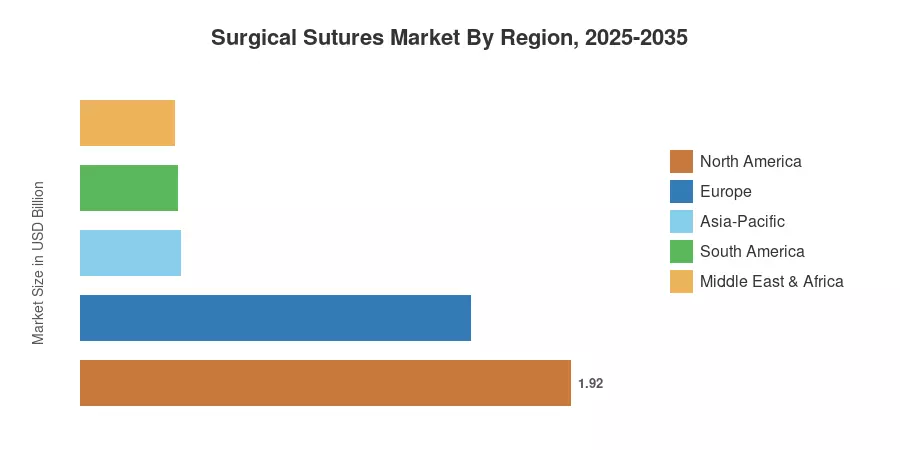
North America commands roughly 35% of the Surgical Sutures Market, supported by high procedural volumes and premium product mix in the US. Asia-Pacific is the fastest-growing region, expanding at a CAGR above 7% as India, China, and ASEAN nations invest heavily in private hospital capacity and surgical training programs. Europe holds the second-largest share at approximately 28%, anchored by Germany, France, and the UK. Over the coming decade, convergence of minimally invasive surgical techniques with advanced closure materials will redefine competitive dynamics across every region.


Key Report Takeaways

• By Product

  • Absorbable sutures captured approximately 57% of Surgical Sutures Market revenue in 2025, driven by elimination of follow-up removal visits and compatibility with value-based care pathways.
  • Non-absorbable sutures continue to serve critical roles in cardiovascular and orthopedic procedures where long-term tensile strength is non-negotiable.

• By Filament Structure

  • Monofilament designs held the largest revenue share in 2025 owing to reduced tissue drag and lower infection potential compared to braided alternatives.


• By Source


  • Synthetic polymer-based sutures are advancing at a CAGR of approximately 6.95% through 2035, outpacing natural-source materials across every application category.

• By Region

  • North America retained dominance in the Surgical Sutures Market, with the US accounting for over 78% of regional revenue.
  • Asia-Pacific posted the strongest regional growth trajectory, led by India's Ayushman Bharat hospital expansion and China's county-level surgical capacity upgrades.


Market Size and Forecast (2021–2035)

Market Research Future's estimates combine bottom-up revenue modeling from manufacturer shipment data, hospital procurement databases across 42 countries, and top-down cross-validation against national health expenditure statistics. Historical figures reflect actual market performance; forecast values apply a calibrated CAGR with adjustments for anticipated regulatory shifts and procedure-volume trajectories.
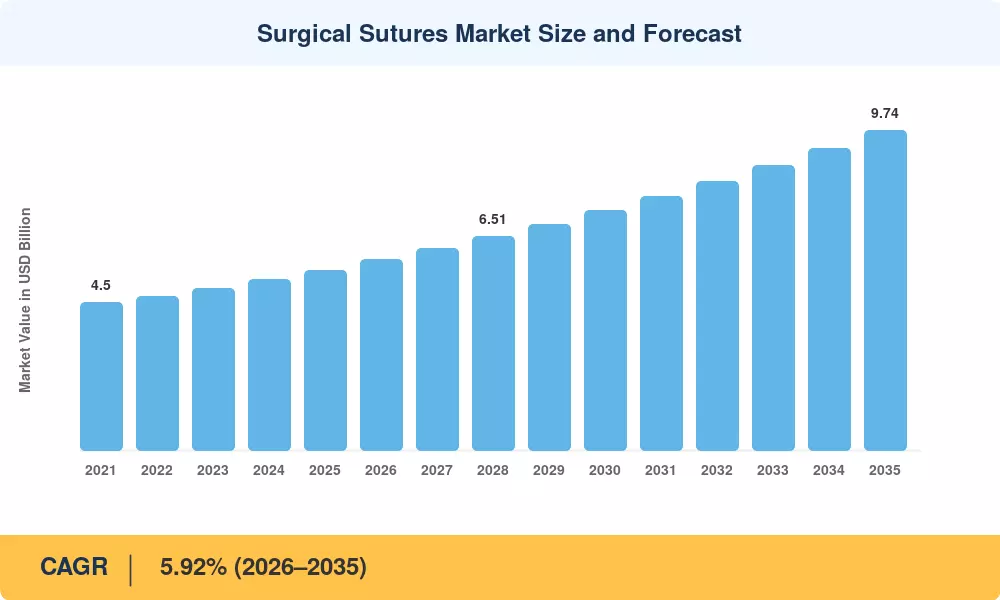
Surgical Sutures Market Size and Forecast
Our Impact
Enabled $4.3B Revenue Impact for Fortune 500 and Leading Multinationals
Partnering with 2000+ Global Organizations Each Year
30K+ Citations by Top-Tier Firms in the Industry

Driver Impact Analysis

Driver ~% Impact on CAGR Geographic Relevance Impact Timeline
Rising global surgical procedure volumes +1.4% Global Long-term
Antimicrobial coating adoption mandates +1.1% North America, Europe Short-term
Hospital infrastructure expansion in Asia-Pacific +0.9% Asia-Pacific Medium-term
Value-based care reimbursement models +0.8% North America, Europe Medium-term
Aging population and chronic disease burden +0.7% Global Long-term
Shift toward minimally invasive surgery +0.6% Global Medium-term
Bundled surgical consumables procurement +0.4% North America Short-term


Rising Global Surgical Procedure Volumes

The Lancet Commission on Global Surgery estimated that 313 million surgical procedures are performed annually worldwide, yet five billion people still lack access to safe, affordable surgical care [5]. Governments in India, Indonesia, and Nigeria have committed over USD 12 billion collectively to district-hospital surgical capacity through 2030, directly expanding the addressable base for the Surgical Sutures Market. Each new operating theatre commissioned represents a recurring procurement channel for closure materials.

Antimicrobial Coating Adoption

The US Centers for Disease Control reported that surgical-site infections affect roughly 2–5% of inpatients undergoing surgery, costing USD 3,000–29,000 per episode in additional care [7]. Triclosan and chlorhexidine-coated sutures have demonstrated 30% reductions in SSI incidence in randomized controlled trials, prompting hospital infection-control committees to mandate coated products in standard surgical kits. This clinical evidence base is a powerful tailwind for the Surgical Sutures Market through the short and medium term.

Hospital Infrastructure Expansion in Asia-Pacific

India's National Health Mission and China's Healthy China 2030 initiative together represent over USD 85 billion in cumulative healthcare capital expenditure through 2030 [8]. Private hospital chains such as Apollo Hospitals, Fortis Healthcare, and Narayana Health are adding an estimated 45,000 surgical beds annually across tier-2 and tier-3 cities in India alone. These new facilities stock advanced synthetic suture portfolios from day one, bypassing legacy catgut altogether.

Value-Based Care Reimbursement

CMS bundled-payment programs in the United States now cover over 40 surgical episode categories, incentivizing hospitals to adopt products that reduce complications and readmissions [9]. Advanced suture technologies that lower wound dehiscence rates directly improve hospital margins under these models, creating a financial pull that transcends traditional procurement price sensitivity in the Surgical Sutures Market.


Restraints Impact Analysis

Restraint impact estimates below are directional and represent headwinds that moderate, but do not reverse, the overall growth trajectory of the Surgical Sutures Market.

Restraint ~% Impact on CAGR Geographic Relevance Impact Timeline
Competition from tissue adhesives and sealants –0.5% Global Medium-term
Robotic stapling platform displacement –0.4% North America, Europe Long-term
Raw-material price volatility (polymers) –0.3% Global Short-term
Regulatory approval delays for novel coatings –0.3% Europe, Asia-Pacific Medium-term
Price erosion from group purchasing organizations –0.2% North America Short-term


Tissue Adhesive and Sealant Competition

Cyanoacrylate-based tissue adhesives and fibrin sealants have gained traction in superficial wound closure, particularly in pediatric and emergency-department settings where speed outweighs tensile strength requirements [13]. The global tissue adhesives segment grew at roughly 8% annually between 2021 and 2024, eroding suture utilization in dermatological and minor plastic surgery procedures. While adhesives cannot yet replicate the mechanical performance of sutures in deep-tissue or load-bearing applications, their expanding clinical validation represents a real competitive boundary for the Surgical Sutures Market.

Robotic Stapling Platforms

In order to facilitate automated anastomosis in gastrointestinal and thoracic procedures, Intuitive Surgical and Medtronic have integrated powered stapling modules into robotic surgical consoles [14]. These platforms offer a compelling value proposition that has the potential to replace suture-based closure in specific high-volume procedure categories. In published benchmarks, they reduce operative time by 15–20 minutes per case. Because suture-based closure remains the clinical gold standard in numerous surgical specialties, including cardiovascular, ophthalmic, and gynecological, the restraint remains moderate.


Surgical Sutures Market Opportunities

Smart and Bioelectronic Sutures

Sutures embedded with microsensors have been demonstrated by research teams at MIT and Tufts University to be capable of monitoring wound pH, temperature, and tension in real time, and communicating the data to clinician dashboards [16]. By the early 2030s, the commercialization of these platforms could establish a premium product tier within the Surgical Sutures Market, which is estimated to be worth several hundred million dollars.


Emerging Market Surgical Access Programs

In comparison to the global average of 4,469 surgical procedures per 100,000 population, Sub-Saharan Africa performs only 234 surgical procedures per 100,000 population [5]. Multilateral programs from the World Bank and WHO that focus on surgical capacity in low-income countries present a greenfield opportunity for cost-effective suture manufacturers, particularly those that provide pre-sterilized, single-use kits that are suitable for rural and mobile surgical units.


Subscription-Based Surgical Consumables Platforms

Hospital systems are increasingly receptive to vendor-managed inventory and subscription procurement models that bundle sutures with complementary closure products under predictable per-procedure pricing [12]. This shift allows manufacturers to lock in multi-year contracts, improve revenue visibility, and cross-sell higher-margin specialty products across the Surgical Sutures Market.

Barbed Knotless Suture Expansion

Knotless barbed sutures reduce closure time by 30–50% in laparoscopic and robotic-assisted procedures, with multiple meta-analyses confirming equivalent or superior wound outcomes [17]. As robotic surgery platforms proliferate globally, the addressable procedure volume for barbed sutures will expand significantly through 2035.

Private-Label and Regional Manufacturing

Governments in India, Brazil, and Turkey have introduced local manufacturing incentives and import-substitution policies that favor domestic suture production [8]. Companies establishing regional manufacturing hubs can capture price-sensitive segments of the Surgical Sutures Market while benefiting from tariff advantages and faster regulatory pathways.


Surgical Sutures Market Future Outlook

Digital Integration and Smart Closure Systems

The convergence of flexible electronics with biocompatible polymers will yield sutures capable of continuous wound monitoring by the late 2020s. NIH-funded research at Tufts University has already demonstrated pH-sensing suture prototypes with wireless data transmission [16]. The Surgical Sutures Market stands to develop an entirely new premium tier as these technologies move from bench to bedside between 2028 and 2032.

Robotic Surgery Synergies

Over 7,500 robotic surgical systems are installed globally, with installations growing at roughly 15% annually [14]. Rather than displacing sutures entirely, robotic platforms are creating demand for specialized closure materials — ultra-fine monofilaments, barbed knotless designs, and pre-loaded needle-suture combinations optimized for robotic instrument channels. The Surgical Sutures Market will increasingly segment into robotic-compatible and conventional product lines.

Sustainability and Circular Supply Chains

Single-use consumable waste streams are being examined by hospital systems, which are estimated to be responsible for 4.4% of global carbon emissions [19]. Biodegradable packaging, bio-based polymer raw materials, and reduced-plastic suture trays represent emerging product differentiation vectors. Manufacturers investing in sustainable production will acquire preferential access to ESG-conscious procurement programs across the Surgical Sutures Market.


Consolidation and Platform Business Models

The trend toward bundled surgical consumables contracts — pairing sutures with staplers, hemostats, and mesh products under single-vendor agreements — will intensify through 2035 [12]. Mid-tier suture manufacturers face increasing pressure to either scale through acquisition or accept component-supplier roles within larger platforms. This dynamic will reshape the competitive landscape of the Surgical Sutures Market, favoring companies with broad closure portfolios and global distribution reach.


Surgical Sutures Market Segmentation

By Product

Segment Key Metric Primary Demand Driver
Absorbable ~57% revenue share (2025) Elimination of removal visits, value-based care fit
Non-Absorbable CAGR ~4.3% (2026–2035) Cardiovascular and orthopedic tensile requirements


Absorbable sutures dominate the Surgical Sutures Market because they align with hospital efficiency goals — no follow-up appointment for removal translates directly into reduced outpatient burden and lower total episode cost. Polyglycolic acid (PGA) and polydioxanone (PDO) formulations lead this category, with newer glycomer and poliglecaprone variants gaining share in soft-tissue closure. Non-absorbable products retain essential roles where permanent mechanical support is clinically mandated, particularly in cardiac valve repair and tendon reattachment procedures.

By Filament Structure

Segment Key Metric Primary Demand Driver
Monofilament ~63% revenue share (2025) Lower infection risk, reduced tissue drag
Multifilament CAGR ~4.1% (2026–2035) Superior handling and knot security


Monofilament sutures have steadily gained share in the Surgical Sutures Market due to their smooth surface profile, which resists bacterial colonization and passes through tissue with minimal trauma. Multifilament (braided) sutures retain a loyal clinical following in general and gynecological surgery, where their superior pliability and knot-holding characteristics outweigh infection-risk concerns, especially when paired with antimicrobial coatings.

By Source

Segment Key Metric Primary Demand Driver
Synthetic CAGR ~6.95% (2026–2035) Predictable absorption, batch consistency
Natural ~26% revenue share (2025) Cost advantage in price-sensitive markets


Synthetic sutures drive fast market expansion due to their predictable absorption rates, high tensile strength, and batch-to-batch manufacturing consistency. Conversely, natural sutures retain a solid revenue share by serving as a cost-effective alternative in price-sensitive healthcare systems and developing markets

By Coating

Segment Key Metric Primary Demand Driver
Coated (Antimicrobial) ~69% revenue share (2025) SSI reduction mandates, clinical evidence
Uncoated CAGR ~3.8% (2026–2035) Budget-constrained procurement channels


Coated (antimicrobial) sutures command the vast majority of market revenue as strict hospital infection control protocols drive adoption, while uncoated alternatives maintain steady growth across cost-sensitive procurement channels.

By Application

Segment Key Metric Primary Demand Driver
Cardiovascular Surgery ~24% revenue share (2025) High procedure complexity, non-absorbable demand
General Surgery CAGR ~5.8% (2026–2035) Largest procedure volume globally
Orthopedic Surgery ~14% revenue share (2025) Joint replacement and sports medicine growth
Gynecology & Obstetrics CAGR ~6.4% (2026–2035) C-section rates, pelvic floor repair
Ophthalmic Surgery ~7% revenue share (2025) Cataract and vitreoretinal procedure volumes
Plastic & Reconstructive Surgery CAGR ~9.39% (2026–2035) Aesthetic demand, trauma reconstruction


Cardiovascular surgery dominates revenue share through critical non-absorbable, high-tensile suture demand, while plastic and reconstructive surgery leads market growth behind surging cosmetic procedures and trauma repair. Meanwhile, general and orthopedic surgeries sustain high baseline consumption driven by sheer global procedure volume.

By End User

Segment Key Metric Primary Demand Driver
Hospitals ~70% revenue share (2025) Centralized procurement, complex procedures
Ambulatory Surgical Centers CAGR ~7.6% (2026–2035) Outpatient procedure migration, cost efficiency
Clinics & Others ~8% revenue share (2025) Minor procedures, wound care


Hospitals anchor the Surgical Sutures Market through their dominance of complex, inpatient surgical procedures across all specialties. Ambulatory surgical centers represent the fastest-growing channel as payers and regulators push lower-acuity procedures — hernia repair, arthroscopy, cataract surgery — into outpatient settings that demand efficient, single-use suture kits with integrated needle-suture configurations.


Regional Market Share Analysis

Region Key Metric Primary Investment Themes
North America ~35% revenue share (2025) Bundled procurement, antimicrobial mandates
Europe ~28% revenue share (2025) EU MDR compliance, aging demographics
Asia-Pacific CAGR ~7.2% (2026–2035) Hospital capacity expansion, surgical training
South America USD 0.38 Billion (2025) Private hospital chains, import substitution
Middle East & Africa CAGR ~6.8% (2026–2035) Government health reform, surgical access
Total USD 5.48 Billion (2025)

The Surgical Sutures Market exhibits distinct regional dynamics shaped by healthcare spending levels, surgical volume maturity, and regulatory environments. North America leads on premium product mix, while Asia-Pacific drives volume growth through infrastructure buildout.


North America

Country Key Metric Key Driver
US ~78% of regional revenue CMS bundled payments, high procedure volumes
Canada CAGR ~5.1% Provincial health system modernization
Mexico USD 0.14 Billion (2025) Medical tourism growth, IMSS procurement reform


The United States dominates the North American Surgical Sutures Market through its combination of 50+ million annual inpatient surgical procedures and hospital willingness to pay premium prices for infection-reducing technologies. Canada's single-payer system increasingly favors antimicrobial-coated products after Health Canada's 2023 guidance on surgical-site infection prevention [7]. Mexico benefits from a growing medical tourism sector centered in Monterrey, Guadalajara, and Mexico City, where private facilities stock international-grade suture portfolios.

Europe

Country Key Metric Key Driver
Germany ~23% of regional revenue MedTech hub, strong surgical volume
UK CAGR ~5.4% NHS procurement framework modernization
France USD 0.22 Billion (2025) Public hospital investment cycle
Italy ~12% of regional revenue Orthopedic and cardiovascular surgery volume
Spain CAGR ~5.2% Private healthcare sector expansion
Nordic Countries USD 0.13 Billion (2025) High per-capita surgical spending
Russia CAGR ~4.8% Domestic manufacturing incentives
Rest of Europe ~14% of regional revenue Mixed public/private health systems


EU MDR implementation has raised the bar for suture quality documentation, pushing smaller manufacturers to consolidate or exit. Germany serves as the region's pricing benchmark, while the UK's NHS framework agreements increasingly specify antimicrobial-coated products as default across all elective surgical pathways [2].

Asia-Pacific

Country Key Metric Key Driver
China ~32% of regional revenue Healthy China 2030 initiative
India CAGR ~8.4% Ayushman Bharat, private hospital expansion
Japan USD 0.19 Billion (2025) Aging population, robotic surgery adoption
South Korea CAGR ~6.9% Advanced healthcare infrastructure
ASEAN ~15% of regional revenue Medical tourism, public health reform
Rest of Asia-Pacific CAGR ~6.1% Infrastructure catch-up investment


Asia-Pacific is the fastest-growing region in the Surgical Sutures Market, propelled by massive government investment in surgical infrastructure. India alone is adding an estimated 45,000 hospital beds annually through private-sector chains, while China's county-level hospital modernization program has upgraded over 1,400 surgical departments since 2020 [8]. Japan's aging demographic profile sustains high cardiovascular and orthopedic procedure volumes despite a mature market.

South America

Country Key Metric Key Driver
Brazil ~58% of regional revenue SUS public health system procurement
Argentina CAGR ~5.6% Private hospital sector growth
Rest of South America USD 0.07 Billion (2025) Regional health integration programs


Brazil's SUS (Unified Health System) represents the continent's largest single procurement channel for the Surgical Sutures Market. Local manufacturing by companies such as Surgical Specialties and Technofio supplies price-sensitive public-sector demand, while premium imported products serve the private hospital segment in São Paulo and Rio de Janeiro [18].

Middle East & Africa

Country Key Metric Key Driver
Saudi Arabia ~28% of regional revenue Vision 2030 health sector investment
UAE CAGR ~7.0% Medical tourism and private hospital buildout
South Africa USD 0.05 Billion (2025) Public-private partnership surgical programs
Egypt CAGR ~6.5% Universal health insurance rollout
Rest of MEA ~30% of regional revenue NGO-supported surgical access campaigns


Saudi Arabia's Vision 2030 healthcare modernization has allocated over USD 65 billion to new hospital construction and equipment procurement, creating a premium demand corridor for the Surgical Sutures Market in the Gulf region. Sub-Saharan Africa remains underserved, with WHO-supported surgical camps and NGO procurement representing the primary demand channel outside South Africa and Nigeria [5].


Surgical Sutures Market By Region, 2025-2035

Competitive Benchmarking

The Surgical Sutures Market exhibits medium concentration, with the top five companies commanding an estimated 55–62% of global revenue. Ethicon (Johnson & Johnson) maintains clear market leadership, followed by Medtronic and B. Braun. The remainder of the market is fragmented across regional manufacturers and specialty players, creating active M&A dynamics as platform companies seek to fill portfolio and geographic gaps [20].

Company Est. Revenue Share Range Key Offerings Strategic Positioning
Ethicon (Johnson & Johnson) ~18–22% VICRYL, PDS, ETHILON, MONOCRYL Full-spectrum closure portfolio with global distribution
Medtronic (Covidien) ~10–14% CAPROSYN, SURGIPRO, V-Loc barbed Robotic surgery integration, bundled consumables
B. Braun Melsungen ~8–11% Novosyn, Monosyn, Optilene Strong European presence, value pricing
Smith & Nephew ~5–8% VICRYL Plus alternative portfolio Wound management ecosystem integration
Teleflex ~4–6% Deknatel suture lines Specialty surgical instruments cross-sell
DemeTech Corporation ~3–5% Full absorbable and non-absorbable range US-based cost-competitive manufacturing
Peters Surgical ~2–4% FILAPEAU, OPTIME European specialty and emerging market focus
Sutures India ~2–4% TRUSYNTH, TRUGLYDE Low-cost manufacturing, emerging market penetration
ConMed Corporation ~2–3% Anchoring and fixation sutures Orthopedic and sports medicine niche
Internacional Farmacéutica (Dolphin) ~1–3% Broad suture portfolio Latin American and African market specialization


Recent News & Developments


  • Medtronic (January 2025): Expanded V-Loc barbed suture portfolio with 90-day absorption variants designed for robotic-assisted laparoscopic cholecystectomy and hernia repair [22].
  • B. Braun Melsungen (September 2024): Opened a new suture manufacturing facility in Penang, Malaysia, increasing Asia-Pacific production capacity by 40% to serve regional hospital buildout demand [23].
  • US FDA (June 2024): Issued updated guidance on antimicrobial suture labeling requirements, mandating standardized SSI reduction claims supported by randomized controlled trial data [7].
  • DemeTech Corporation (April 2024): Secured a five-year group purchasing agreement with Vizient Inc. covering its full range of absorbable and non-absorbable suture products across 3,000+ US member hospitals [12].


Surgical Sutures Market Report Scope

Parameter Detail
Market Scope Global Surgical Sutures Market covering product, filament, source, coating, application, end user, and geography
Study Period 2021–2035
CAGR (Forecast) 5.92% (2026–2035)
Base Year Market Size USD 5.48 Billion (2025)
Forecast Endpoint USD 9.74 Billion (2035)
Fastest Growing Segment Plastic & Reconstructive Surgery (by Application); Ambulatory Surgical Centers (by End User)
Companies Profiled 10 (Ethicon, Medtronic, B. Braun, Smith & Nephew, Teleflex, DemeTech, Peters Surgical, Sutures India, ConMed, Internacional Farmacéutica)
Valuation Currency USD Billion


FAQs

How do triclosan-coated sutures compare with chlorhexidine-coated alternatives in SSI prevention?
Triclosan-coated sutures carry broader clinical trial support, with over 20 published RCTs confirming 25–30% SSI reduction. Chlorhexidine variants show promise in orthopedic applications but lack equivalent regulatory clearance breadth [7].
What procurement strategy maximizes value when negotiating suture contracts with GPOs?
Multi-year, volume-committed agreements with tiered pricing and clinical-outcome clauses deliver the strongest per-unit economics. Pairing sutures with staplers under a single vendor frequently unlocks 8–12% bundle discounts [12].
Are barbed knotless sutures appropriate for pediatric surgical applications?
Clinical adoption in pediatric laparoscopic procedures is growing, with published case series showing comparable outcomes to conventional interrupted closure. Surgeon training and tissue-thickness assessment remain critical selection factors [17].
How do raw-material supply disruptions affect suture pricing stability?
Polyglycolic acid and polydioxanone depend on petrochemical feedstocks subject to 10–18% annual price swings. Dual-sourcing strategies and long-term polymer contracts mitigate procurement volatility [15].
What regulatory pathway applies to smart sutures with embedded biosensors?
FDA classifies sensor-integrated sutures as combination products requiring both device and potentially drug-pathway review. Pre-submission meetings with the FDA's Office of Combination Products are essential before clinical trials [7].
How does the shift toward ambulatory surgical centers affect suture product design?
ASCs prioritize single-use, pre-packaged kits with integrated needles that minimize setup time. Manufacturers targeting this channel must optimize for ease-of-opening and waste-stream reduction [12].
What role do local manufacturing mandates play in emerging market suture procurement?
India, Brazil, and Turkey offer tariff advantages and preferential tender scoring for domestically produced sutures. International manufacturers increasingly establish joint ventures or contract facilities to access these preferences [8].    
Author
Author
Author Profile
Satyendra Maurya LinkedIn
Research Analyst
An accomplished research analyst with high proficiency in market forecasting, data visualization, competitive benchmarking, and others. He holds a pronounced track record in research and consulting projects for sectors such as life sciences, medical devices, and healthcare IT. His capabilities in qualitative and quantitative analysis have resulted in positive client outcomes. Working on niche market trends, opportunities, sales, and forecasted value is part of his skill set.
Co-Author
Co-Author Profile
Kinjoll Dey LinkedIn
Senior Research Analyst
He is an extremely curious individual currently working in Healthcare and Medical Devices Domain. Kinjoll is comfortably versed in data centric research backed by healthcare educational background. He leverages extensive data mining and analytics tools such as Primary and Secondary Research, Statistical Analysis, Machine Learning, Data Modelling. His key role also involves Technical Sales Support, Client Interaction and Project management within the Healthcare team. Lastly, he showcases extensive affinity towards learning new skills and remain fascinated in implementing them.
Share::
Request Free Sample

Research Approach


Secondary Research

The secondary research process involved comprehensive analysis of regulatory databases, peer-reviewed surgical journals, clinical publications, and authoritative health organizations. Key sources included the US Food & Drug Administration (FDA) Center for Devices and Radiological Health, European Medicines Agency (EMA) Medical Device Coordination Group, National Institutes of Health (NIH) Clinical Trials Registry, National Center for Biotechnology Information (NCBI/PubMed), World Health Organization (WHO) Global Health Observatory, Centers for Disease Control and Prevention (CDC) National Healthcare Safety Network, American College of Surgeons (ACS) National Surgical Quality Improvement Program, American Society of General Surgeons (ASGS), Society of American Gastrointestinal and Endoscopic Surgeons (SAGES), American Academy of Orthopaedic Surgeons (AAOS), European Society of Thoracic Surgeons (ESTS), Eurostat Healthcare Database, Organisation for Economic Co-operation and Development (OECD) Health Statistics, and national health ministry reports from key markets. These sources were used to collect surgical procedure statistics, regulatory approval data for suture devices, clinical safety studies on suture-related complications, hospital discharge data, demographic trends in surgical volumes, and competitive landscape analysis for absorbable sutures, non-absorbable sutures, barbed sutures, and surgical zip ties.


Primary Research

In order to gather both qualitative and quantitative insights, supply-side and demand-side stakeholders were interviewed during the primary research process. CEOs, VPs of Product Development, heads of regulatory affairs, and commercial directors from suture material suppliers, surgical suture manufacturers, and medical device OEMs were examples of supply-side sources. Board-certified general surgeons, orthopedic surgeons, cardiothoracic surgeons, plastic surgeons, OR managers, procurement leads from hospitals and health systems, directors of materials management from ambulatory surgical centers, and executives of group purchasing organizations (GPOs) were among the demand-side sources. Primary research gathered information on surgical adoption patterns, suture pricing strategies, private label vs. branded dynamics, and reimbursement coding (CPT/DRG) structures. It also verified antimicrobial and smart suture pipeline timelines and validated market segmentation across product types and materials.

Primary Respondent Breakdown:

By Designation: C-level Primaries (28%), Director Level (32%), Others (40%)

By Region: North America (38%), Europe (32%), Asia-Pacific (22%), Rest of World (8%)


Market Size Estimation

Global market valuation was derived through revenue mapping and surgical procedure volume analysis. The methodology included:

Identification of 50+ key manufacturers across North America, Europe, Asia-Pacific, and Latin America

Product mapping across absorbable sutures (polyglycolic acid, polylactic acid, catgut), non-absorbable sutures (polypropylene, silk, polyester), barbed sutures, and surgical zip ties

Analysis of reported and modeled annual revenues specific to surgical suture portfolios

Coverage of manufacturers representing 75-80% of global market share in 2024

Extrapolation using bottom-up (surgical procedure volume × sutures per procedure × ASP by country) and top-down (manufacturer revenue validation) approaches to derive segment-specific valuations across cardiac, orthopedic, general, and plastic surgery applications

Share::
Request Free Sample
Download Free Sample

Kindly complete the form below to receive a free sample of this Report

Share::
Request Free Sample
Download PDF ×

We do not share your information with anyone. However, we may send you emails based on your report interest from time to time. You may contact us at any time to opt-out.
















