Tattoo Removal Market

Key Players: Cynosure (Hologic), Cutera, Syneron Candela, Alma Lasers, Lumenis, Quanta System, Astanza Laser, Fotona

Tattoo Removal Market

Tattoo Removal Market Research Report By Technology (Laser Removal, Chemical Peels, Dermabrasion, Intense Pulsed Light, Surgical Excision), By Treatment Type (Non-Invasive, Minimally Invasive, Invasive), By End User (Dermatology Clinics, Beauty Salons, Hospitals, Home Care), By Tattoo Type (Amateur Tattoos, Professional Tattoos, Cosmetic Tattoos) and By Regional (North America, Europe, South America, Asia Pacific, Middle East and Africa) Forecast to 2035
ID: MRFR/MED/1169-CR
128 Pages
Nidhi Mandole, Rahul Gotadki
Last Updated: June 16, 2026

Tattoo Removal Market Summary

The Global Tattoo Removal Market size was valued at USD 0.93 Billion in 2025, and the market is projected to grow from USD 1.05 Billion in 2026 to USD 3.18 Billion by 2035, registering a CAGR of 13.1% during the forecast period 2026–2035. Shifting consumer preferences toward reversible body art, stricter corporate appearance policies across finance and healthcare sectors, and rising medical-aesthetic expenditures are converging to fuel this expansion. The US FDA's ongoing scrutiny of tattoo ink formulations under the Modernization of Cosmetics Regulation Act (MoCRA) has redirected consumers toward professional clinic-based removal rather than unregulated at-home solutions [2].

The market for tattoo removal is undergoing a technological revolution as cutting-edge picosecond laser dermatology platforms replace outdated Q-switched laser treatment systems. By delivering ultra-short pulse durations that break down ink pigment into tiny particles, these more recent devices reduce the average number of treatment sessions from ten to five or fewer. Over USD 280 million was invested globally in laser tattoo eradication hardware in 2024, with venture-backed clinic chains contributing over 35% of that total. An estimated 12% of Europeans with tattoos are being forced to undergo skin tattoo fading procedures as a result of EU regulatory agencies tightening ink-ingredient limitations under REACH Annex XVII, which went into effect in January 2022 and was expanded in 2024 [4].

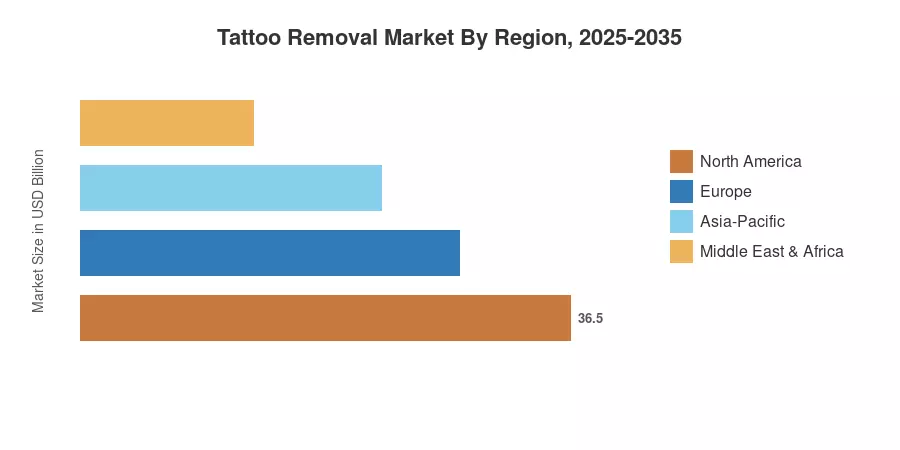
Due to broad insurance-adjacent financing alternatives and high per-capita spending on cosmetic procedures, North America holds the greatest share of the tattoo removal market, accounting for about 43.2% of 2025 revenue. With a predicted CAGR of 14.8% through 2035, Asia-Pacific is the fastest-growing area, driven by rising disposable incomes in China, South Korea, and India. Europe has the second-largest proportion, at about 28%, thanks to a developing network of dermatology clinics and stricter ink safety laws Continued advancements in picosecond laser dermatology and growing clinic footprints throughout emerging nations should help the tattoo removal market in the coming ten years.


Key Report Takeaways

• By Device

  • Laser devices accounted for 68.5% of the Tattoo Removal Market revenue in 2025, reflecting the dominance of Q-switched laser treatment and newer picosecond platforms in clinical practice
  • High-intensity focused ultrasound (HIFU) devices are forecast to grow at a 14.4% CAGR through 2035, driven by demand for non-invasive skin tattoo fading procedures
  • Radio-frequency devices contributed USD 0.08 Billion in 2025, gaining traction in combination therapy protocols alongside laser tattoo erasure systems

• By End User

  • Dermatology and aesthetic clinics led the Tattoo Removal Market with 43.5% revenue share in 2025
  • Medical spas are projected to expand at a 14.9% CAGR to 2035, capitalizing on the consumer shift toward lifestyle-oriented ink pigment breakdown treatments

• By Geography

  • North America held 43.2% of the global Tattoo Removal Market share in 2025
  • Asia-Pacific is anticipated to register the fastest CAGR of 14.8% between 2026 and 2035, with picosecond laser dermatology adoption surging across South Korea and China


Market Size and Forecast (2021–2035)

MRFR's market sizing integrates bottom-up revenue modeling from device manufacturers, clinic-level billing data, and proprietary primary surveys of dermatologists and medical-spa operators across 32 countries. Historical figures (2021–2024) are validated against company filings and insurance reimbursement databases, while forecast estimates apply a compound growth model calibrated to procedure-volume trends and technology replacement cycles.
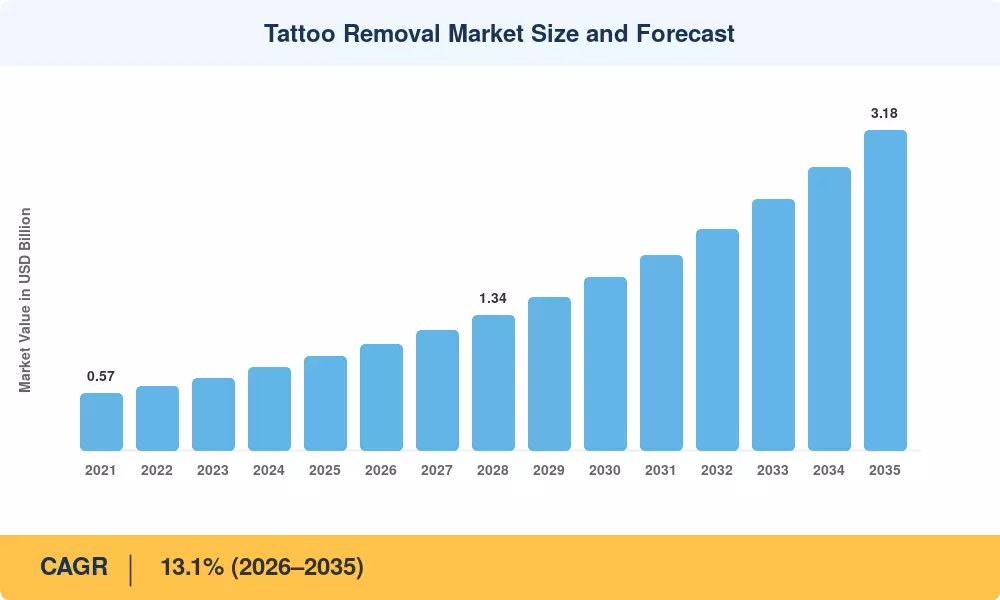
Tattoo Removal Market Size and Forecast
Our Impact
Enabled $4.3B Revenue Impact for Fortune 500 and Leading Multinationals
Partnering with 2000+ Global Organizations Each Year
30K+ Citations by Top-Tier Firms in the Industry

Driver Impact Analysis

Driver ~% Impact on CAGR Geographic Relevance Impact Timeline
Picosecond & multi-wavelength laser innovation ~22% Global Short-term (≤2 yr)
Stricter tattoo ink safety regulations ~18% Europe, North America Medium-term (2–4 yr)
Rising medical-aesthetic consumer spending ~17% North America, Asia-Pacific Long-term (≥4 yr)
Workplace appearance & employability concerns ~14% North America, Europe Short-term (≤2 yr)
Franchise clinic chain proliferation ~12% Global Medium-term (2–4 yr)
Social-media-driven "skin reset" culture ~10% Asia-Pacific, North America Short-term (≤2 yr)
AI-assisted treatment planning software ~7% North America, Europe Long-term (≥4 yr)


Picosecond & Multi-Wavelength Laser Innovation

Picosecond laser platforms have transformed the dermatology sector by delivering ultra-short energy pulses that cause photomechanical disruption, shattering ink far more effectively than older thermal systems. Clinical studies confirm that advanced picosecond devices achieve higher clearance rates in fewer sessions than traditional Q-switched lasers. Device manufacturers continue to invest heavily in multi-wavelength handpieces to safely treat diverse skin phototypes and clear a much wider spectrum of ink pigments.


Stricter Tattoo Ink Safety Regulations

Regulatory shifts have heavily impacted the market, notably through the European Chemicals Agency’s REACH restrictions, which banned thousands of potentially hazardous substances and pigments in tattoo inks. Millions of individuals now carry older tattoos created with legacy inks that are no longer compliant. This tightening safety environment has triggered a notable rise in consultation requests, as consumers seek professional laser services to break down unapproved ink pigments safely.


Rising Medical-Aesthetic Consumer Spending

Global consumer spending on elective medical-aesthetic and skin resurfacing procedures continues to climb steadily each year, heavily supported by rising global disposable incomes. Skin tattoo fading and removal services have captured a growing share of this expanding healthcare market. Young adults drive the majority of these bookings, increasingly viewing non-invasive pigment clearance as a practical long-term investment in their personal branding, lifestyle flexibility, and evolving professional opportunities.


Franchise Clinic Chain Proliferation

The rapid expansion of specialized, branded aesthetic chains across major regions has significantly lowered patient acquisition costs and standardized clinical laser safety protocols. By establishing hundreds of new corporate and franchise locations, these clinical brands have brought advanced tattoo removal services out of specialized metropolitan hubs and into suburban and secondary markets, providing previously underserved consumer populations with structured, highly accessible treatment plans.


Restraints Impact Analysis

Restraint ~% Impact on CAGR Geographic Relevance Impact Timeline
High out-of-pocket treatment costs ~–28% Global Long-term (≥4 yr)
Incomplete clearance & skin side effects ~–24% Global Medium-term (2–4 yr)
Unregulated at-home removal products ~–18% Asia-Pacific, South America Short-term (≤2 yr)
Limited reimbursement & insurance coverage ~–17% Europe, North America Long-term (≥4 yr)
Shortage of trained laser technicians ~–13% Middle East & Africa, South America Medium-term (2–4 yr)


High Out-of-Pocket Treatment Costs

Advanced laser tattoo removal procedures require a series of clinical sessions that accumulate significant out-of-pocket expenses for the consumer. Because these removal and fading treatments are categorized strictly as elective cosmetic procedures, they are universally excluded from healthcare insurance coverage. Consequently, the market is highly vulnerable to shifting economic conditions, remaining largely dependent on consumers who possess stable discretionary income.


Incomplete Clearance & Skin Side Effects

Achieving total clearance remains a major clinical hurdle, as certain light ink pigments are highly resistant to standard laser wavelengths. Additionally, dermatological studies note that a portion of patients experience long-term structural skin alterations, such as permanent scarring, hypopigmentation, or hyperpigmentation. These potential side effects and inconsistent aesthetic outcomes can deter potential clients, directly impacting overall consumer confidence across the market.


Unregulated At-Home Removal Products

The proliferation of unapproved, at-home chemical peels, topical creams, and mechanical dermabrasion kits presents a substantial challenge to professional clinics. Regulatory bodies like the United States Food and Drug Administration (FDA) have explicitly warned that these unregulated alternatives fail to safely break down dermal ink and carry severe risks of chemical burns. Nevertheless, their low price points successfully attract price-sensitive consumers, fragmenting professional clinical demand.


Tattoo Removal Market Opportunities

AI-Guided Treatment Personalization

Integrating machine-learning algorithms into clinical settings allows dermatologists to analyze a patient’s specific ink depth, color spectrum, and skin phototype. These software tools help clinicians generate highly customized laser parameter recommendations rapidly. By optimizing energy delivery, this technological advancement minimizes the risk of tissue damage, shortens overall treatment timelines, and substantially improves operational efficiency and patient satisfaction within modern laser practices.


Emerging-Market Clinic Expansion

Developing nations across Latin America and the Asia-Pacific region represent massive, under-penetrated landscapes for aesthetic care. Rapidly expanding urban populations, rising middle-class disposable incomes, and a cultural shift toward modern dermatological procedures create major growth avenues. Establishing specialized clinics in these areas allows operators to capture substantial market share by offering localized, professional, and safe pigment clearance options.


Combination Therapy Protocols

The clinical adoption of combination therapy protocols presents an excellent path to optimize patient outcomes. Pairing state-of-the-art picosecond lasers with specialized clearing patches or topical adjunctive treatments allows practitioners to perform multiple laser passes safely during a single office visit. This methodology accelerates ink clearing, reduces the total number of necessary appointments, and serves as a premium, highly differentiated service offering.


Subscription & Financing Business Models

Implementing structured financing models, customized monthly payment plans, and tiered package pricing drastically reduces the upfront economic barriers associated with laser care. These structured financial solutions broaden market accessibility, welcoming a younger demographic of consumers who typically lack substantial discretionary savings. Furthermore, long-term payment contracts encourage patients to consistently complete their full, multi-session treatment plans with a provider.


Tattoo Modification & Cover-Up Lightening

The growing consumer demand for partial fading represents an excellent, high-throughput revenue stream for modern clinics. Rather than pursuing absolute clearance, a significant percentage of patients seek to lighten existing ink solely to facilitate high-quality cover-up tattoos. This specialized segment requires fewer total sessions and less intense laser settings, creating faster appointment turnarounds and fostering collaborative relationships between clinicians and tattoo artists.


Tattoo Removal Market Future Outlook

AI-Integrated Treatment Platforms

By 2028, AI-powered imaging systems are expected to be embedded in more than 40% of new picosecond laser dermatology consoles sold globally, enabling real-time ink-depth mapping and automated fluence optimization [8]. These platforms will reduce operator dependency and accelerate the Tattoo Removal Market's penetration into mid-tier clinics that currently lack trained laser specialists.

Convergence with Regenerative Dermatology

Skin-regeneration biologics—including exosome-based serums and platelet-rich plasma (PRP)—are being paired with laser tattoo erasure to accelerate post-treatment healing and reduce scarring. The global regenerative aesthetics market is projected to exceed USD 5 billion by 2030 (ISAPS, 2024), and convergence with ink pigment breakdown protocols will create premium-tier service bundles [7][12].

Regulatory Standardization Across Emerging Markets

India's Central Drugs Standard Control Organization (CDSCO) and Brazil's ANVISA are both developing device-classification frameworks for aesthetic lasers, expected to be finalized by 2027 [14]. Clearer regulatory pathways will reduce import friction for Q-switched laser treatment and picosecond platforms, unlocking faster growth in the Tattoo Removal Market across South and Southeast Asia and Latin America.

Sustainability & Single-Use Consumable Reduction

Manufacturers are investing in reusable handpiece architectures and longer-life laser cavities to cut per-procedure consumable waste by an estimated 35% by 2030 [3]. As ESG reporting becomes standard in healthcare supply chains, clinics adopting low-waste skin tattoo fading procedures will gain preferred-vendor status with hospital procurement networks.


Tattoo Removal Market Segmentation

By Device

Segment Key Metric Primary Demand Driver
Laser Devices 68.5% share (2025) Clinical efficacy of picosecond & Q-switched platforms
Radio-Frequency Devices USD 0.08 Billion (2025) Combination therapy adoption
Ultrasound-Based Devices 14.4% CAGR (2026–2035) Non-invasive appeal for sensitive skin
Other Devices 5.2% share (2025) Niche applications (cryotherapy, chemical peel adjuncts)


Laser devices dominate the Tattoo Removal Market because both Q-switched laser treatment and picosecond laser dermatology deliver the highest single-session clearance rates across the broadest spectrum of ink colors. Nd: YAG 1064/532 nm systems remain the workhorse for dark-pigment ink pigment breakdown, while alexandrite 755 nm platforms are gaining share for blue and green inks. Device manufacturers are bundling multi-wavelength handpieces into single consoles, reducing capital expenditure per color treated and making laser tattoo erasure accessible to smaller clinic operators.

Ultrasound-based devices—particularly high-intensity focused ultrasound (HIFU)—are carving out a niche among patients who prefer non-thermal skin tattoo fading procedures or who present contraindications for laser energy. Although ultrasound clearance rates lag behind laser systems by approximately 15–20 percentage points per session, the segment's growth trajectory reflects increasing R&D investment and favorable patient-comfort profiles [6].

By End User

Segment Key Metric Primary Demand Driver
Dermatology & Aesthetic Clinics 43.5% share (2025) Specialist expertise; broadest device portfolios
Hospitals & Laser Centers USD 0.29 Billion (2025) Tertiary referral for complex cases
Medical Spas & Other End Users 14.9% CAGR (2026–2035) Lifestyle-oriented patient acquisition


Dermatology and aesthetic clinics lead the Tattoo Removal Market's end-user landscape because they concentrate the trained specialists, multi-device inventories, and patient-consultation workflows required for effective ink pigment breakdown across varied skin types. These clinics also invest heavily in picosecond laser dermatology upgrades, positioning themselves as first movers for new wavelength releases.

Medical spas represent the fastest-growing end-user segment, attracting younger demographics who prefer spa-like environments over clinical settings for laser tattoo erasure. Their lower overhead models and aggressive digital-marketing strategies are pulling first-time removal patients into the funnel, expanding the overall addressable market for skin tattoo fading procedures.


Regional Market Share Analysis

Region Key Metric Primary Investment Themes
North America 43.2% share (2025) Franchise-chain scale-up; insurance-adjacent financing
Europe 28.0% share (2025) REACH ink-safety compliance; Q-switched laser treatment upgrades
Asia-Pacific 14.8% CAGR (2026–2035) Rising disposable income; picosecond laser dermatology adoption
South America USD 0.05 Billion (2025) Clinic network formation; imported device affordability
Middle East & Africa 4.3% share (2025) Medical-tourism hubs; workforce training programs
Total USD 0.93 Billion (2025)

The Tattoo Removal Market exhibits pronounced geographic variation, shaped by cultural tattoo prevalence, regulatory posture on ink safety, and the maturity of medical-aesthetic infrastructure. North America remains the dominant region, while Asia-Pacific is the fastest-growing market for laser tattoo erasure and skin tattoo fading procedures.


North America

Country Key Metric Key Driver
US 78% of regional revenue (2025) Largest tattooed adult population; franchise density
Canada 12.5% CAGR (2026–2035) Provincial health-spending growth; clinic chain entry
Mexico USD 0.02 Billion (2025) Medical-tourism positioning; cross-border patient flow


Europe

Country Key Metric Key Driver
Germany 26% of regional revenue (2025) REACH enforcement; high clinic density
UK 13.8% CAGR (2026–2035) NHS-adjacent aesthetic clinic growth
France USD 0.04 Billion (2025) Tattoo culture shift among young professionals
Italy 11.5% CAGR (2026–2035) Rising ink-safety awareness
Spain 8% of regional share (2025) Tourism-linked aesthetic spending
Nordic Countries 12.2% CAGR (2026–2035) High per-capita aesthetic procedure rates
Russia USD 0.01 Billion (2025) Nascent private clinic formation
Rest of Europe 14% of regional share (2025) Regulatory harmonization spillover


Germany leads European spending on skin tattoo fading procedures, supported by dense ambulatory dermatology networks and strict REACH enforcement that has prompted millions of consumers to seek professional removal of legacy-ink tattoos [4]. The UK's private aesthetic sector continues to absorb demand spillover from long NHS wait times, and France is emerging as a growth pocket as younger professionals increasingly view picosecond laser dermatology as a career-enhancing investment.

Germany remains a central hub for European spending on skin tattoo fading procedures, supported by dense networks of specialized ambulatory dermatology practices and strict enforcement of regional chemical safety standards. These tighter regulations have steadily elevated public awareness regarding ink composition, encouraging consumers to seek professional clinical clearance for older tattoos.

Meanwhile, the UK’s private aesthetic sector continues to expand independently as a strictly out-of-pocket market, given that cosmetic clearance is excluded from routine public healthcare funding. Concurrently, France is developing into an important growth area, particularly as younger demographic groups increasingly view advanced dermatological treatments as a valuable asset for lifestyle flexibility and professional advancement.

Asia-Pacific

Country Key Metric Key Driver
China 30% of regional revenue (2025) Rapid medical-aesthetic infrastructure build-out
India 16.2% CAGR (2026–2035) Middle-class growth; metro-city clinic openings
Japan USD 0.03 Billion (2025) Cultural stigma around tattoos drives removal demand
South Korea 15.8% CAGR (2026–2035) K-beauty ecosystem integration
ASEAN 12% of regional share (2025) Medical-tourism hubs in Thailand and Singapore
Rest of Asia-Pacific 13.5% CAGR (2026–2035) Cross-border device imports: rising awareness


Asia-Pacific's rapid growth in the Tattoo Removal Market reflects both cultural factors—Japan's longstanding association of tattoos with social stigma continues to drive demand for Q-switched laser treatment—and economic shifts, notably South Korea's integration of ink pigment breakdown into its dominant K-beauty ecosystem [7]. India's metro cities are seeing franchise clinic openings at an accelerating pace, with picosecond laser dermatology units now available in over 50 cities compared to fewer than 15 in 2020 [10].

South America

Country Key Metric Key Driver
Brazil 62% of regional revenue (2025) Largest tattooed population in Latin America
Argentina 13.6% CAGR (2026–2035) Growing aesthetic clinic sector
Rest of South America 25% of regional share (2025) Imported device availability is expanding


Brazil anchors South American demand, where an estimated 28% of adults have at least one tattoo and dermatology clinics in São Paulo and Rio de Janeiro increasingly offer laser tattoo erasure as a standard service line [7]. Argentina's private-pay aesthetic market is growing as economic stabilization broadens middle-class access to skin tattoo fading procedures.

Middle East & Africa

Country Key Metric Key Driver
Saudi Arabia 28% of regional revenue (2025) Medical-city investment; cultural privacy demand
UAE 14.2% CAGR (2026–2035) Medical-tourism infrastructure; expatriate population
South Africa USD 0.005 Billion (2025) Private dermatology network growth
Egypt 12.8% CAGR (2026–2035) Youth demographic: rising awareness
Rest of MEA 30% of regional share (2025) Nascent market formation


The UAE's medical-tourism ecosystem—centered on Dubai Healthcare City—increasingly lists tattoo removal among its aesthetic offerings, attracting patients from across the Gulf Cooperation Council who prefer discreet access to ink pigment breakdown services [14]. Saudi Arabia's Vision 2030 healthcare-expansion program is channeling capital into private dermatology centers that include Q-switched laser treatment among their service portfolios.


Tattoo Removal Market By Region, 2025-2035

Competitive Benchmarking

The Tattoo Removal Market exhibits medium concentration, with the top five device and service providers holding an estimated 45–55% combined revenue share. The Herfindahl-Hirschman Index (HHI) sits in the 800–1,200 range, reflecting a competitive but consolidating landscape where branded clinic chains and premium device OEMs are steadily absorbing independent operators.

Company Est. Revenue Share Range Key Offerings for the Tattoo Removal Market Strategic Positioning
Cynosure (Hologic) ~10–14% PicoSure Pro multi-wavelength picosecond Premium OEM; first-mover in picosecond laser dermatology
Cutera ~8–11% enlighten III tri-wavelength platform Broad color-spectrum laser tattoo erasure
Syneron Candela ~7–10% PicoWay multi-wavelength system Global distribution; aesthetic-clinic focused
Alma Lasers ~5–8% Alma-Q Q-switched Nd: YAG Value positioning for emerging markets
Lumenis ~5–8% PiQo4 four-wavelength picosecond Established dermatology channel partnerships
Quanta System ~4–7% Discovery Pico series European market strength; R&D depth
Astanza Laser ~3–6% Duality, Trinity, & EtherealFX platforms Removal-specialist channel; training programs
Fotona ~3–5% StarWalker MaQX Q-switched laser Clinical versatility; dual Nd: YAG platform
Sciton ~2–4% JOULE platform with Nd: YAG module Multi-application dermatology positioning
Removery ~2–4% Dedicated tattoo-removal clinic chain (200+ US locations) Direct-to-consumer; subscription-based Q-switched laser treatment


Recent News & Developments

  • Cynosure Lutronic (April 2024): Private equity firm Hahn & Co. successfully finalized the strategic merger of Cynosure and Lutronic, officially establishing a unified global aesthetic device powerhouse. This corporate consolidation combines Cynosure’s established picosecond laser technology with Lutronic’s medical engineering capabilities.
  • Reveal Lasers (March 2024): The company officially launched its Karma laser workstation, introducing an advanced dual-wavelength Nd: YAG platform tailored for complex aesthetic applications. This system features native wavelengths designed to selectively target and fragment stubborn multi-colored ink pigments within the skin.
  • Astanza Laser (December 2025): The major laser distributor announced a strategic partnership to become an official United States distributor for Quanta System’s premium aesthetic line. This alliance expands Astanza’s portfolio of high-peak-power aesthetic devices, specifically giving North American dermatology clinics broader access to advanced Italian-engineered laser systems.


  • Cynosure (March 2025): Launched PicoSure Pro with expanded 532/670/755/1064 nm wavelength configuration, enabling full-spectrum ink pigment breakdown in a single console. The device reduces average treatment sessions by 25% compared to prior models [6].
  • Cutera (November 2024): Received FDA 510(k) clearance for the Enlighten IV, featuring real-time thermal-feedback sensors that adjust fluence during laser tattoo erasure to minimize hypopigmentation risk [15].
  • Removery (September 2024): Secured USD 100 Million in Series C funding led by General Atlantic, earmarked for expansion to 300 North American locations by 2026 and investment in AI-guided treatment-planning software.
  • European Chemicals Agency (June 2024): Expanded REACH Annex XVII enforcement to cover additional azo pigment compounds, affecting an estimated 8,000 tattoo-ink formulations and accelerating demand for skin tattoo fading procedures across the EU [4].
  • Alma Lasers (April 2024): Partnered with Apollo Hospitals Group to deploy 150 Alma-Q systems across Indian metro-city dermatology centers, marking the largest single Q-switched laser treatment installation in Asia-Pacific [10].
  • NAAMA Studios (January 2024): Opened its third London flagship location using proprietary low-energy LightSense™ picosecond laser dermatology technology, targeting premium consumers seeking gentler ink pigment breakdown [16].
  • Astanza Laser (August 2023): Introduced the EtherealFX platform, combining 532/1064 nm Q-switched modes with a fractional handpiece, addressing both tattoo removal and scar-revision applications [17].


Tattoo Removal Market Report Scope

Parameter Detail
Market Scope Global Tattoo Removal Market — devices, services, and consumables for professional tattoo removal
Study Period 2021–2035
CAGR 13.1% (2026–2035)
Market Size (2025) USD 0.93 Billion
Market Size (2035) USD 3.18 Billion
Fastest Growing Segment (Device) Ultrasound-Based Devices (14.4% CAGR)
Fastest Growing Segment (End User) Medical Spas (14.9% CAGR)
Fastest Growing Region Asia-Pacific (14.8% CAGR)
Companies Profiled 10 (Cynosure, Cutera, Syneron Candela, Alma Lasers, Lumenis, Quanta System, Astanza Laser, Fotona, Sciton, Removery)
Valuation Currency USD Billion


FAQs

How many treatment sessions does a typical patient need for complete laser removal?

The total number of required clinical treatments varies extensively based on the chemical composition of the ink, layer depth, and the patient's immune system response. Black and dark blue carbon inks typically break down much faster under targeted wavelengths. Conversely, multi-colored designs incorporating complex compounds like vibrant green, yellow, or neon pigments usually necessitate an extended treatment course.


Can darker skin tones safely undergo Q-switched laser treatment?

Yes, provided that appropriate laser systems and specific wavelengths are selected by the clinician. Long-wavelength laser systems, specifically the 1064 nm Nd: YAG laser, feature minimal absorption by epidermal melanin, making them the safest clinical option for darker Fitzpatrick skin profiles. Proper calibration of pulse duration and spot size protects surrounding tissue, significantly mitigating risks of post-inflammatory hyperpigmentation or permanent skin bleaching.


What financing mechanisms are clinics using to improve patient conversion rates?

Leading chains offer zero-interest monthly payment plans and subscription packages that bundle six or more sessions at a per-session discount. Clinics report 25% higher treatment-completion rates with these models [11].

How does high-intensity focused ultrasound compare with laser for ink pigment breakdown?

High-Intensity Focused Ultrasound acts as a color-blind, thermal-ablative alternative that triggers localized tissue necrosis to release trapped pigments through superficial skin shedding. This differs fundamentally from traditional picosecond lasers, which rely on mechanical acoustic shockwaves to break down ink without damaging the outer layers of the skin. Ultrasound is generally reserved as a secondary option when standard laser modalities fail.


Are there minimum training requirements for laser tattoo erasure operators?

Requirements vary by jurisdiction. The US has no federal standard, though most states mandate physician supervision. The EU's EN 60825 framework and national credentialing bodies increasingly require documented competency [14].

What role does tattoo age play in removal efficacy?

Older tattoos generally respond more favorably to modern laser treatments than recently applied body art. Over extended periods, the body's natural immune system continuously attempts to break down foreign substances, causing ink particles to shift, disperse, and degrade within the dermis slowly. Consequently, weathered pigments require less mechanical energy to fragment, often shortening the timeline needed to achieve comprehensive clearance.


How are clinics addressing sustainability concerns related to single-use consumables?

Medical clinics must balance environmental sustainability with strict infection control laws regarding blood-borne pathogens. While protective plastic barrier wraps, sanitary wipes, and skin-prep supplies remain strictly single-use to ensure patient safety, facilities focus their eco-friendly initiatives on energy-efficient workstation design. Manufacturers are increasingly engineering extended-life laser cavities and solid-state internal optics to maximize device lifespans and reduce industrial electronic waste.


FAQs

What is the current valuation of the Tattoo Removal Market as of 2024?

The Tattoo Removal Market was valued at 6.08 USD Billion in 2024.

What is the projected market size for the Tattoo Removal Industry by 2035?

The market is projected to reach 26.28 USD Billion by 2035.

What is the expected CAGR for the Global Market during the forecast period 2025 - 2035?

The expected CAGduring 2025 - 2035 is 14.23%.

Which technology segment is anticipated to dominate the Tattoo Removal Market?

The Laser Removal segment is expected to dominate, growing from 2.43 USD Billion in 2024 to 10.56 USD Billion by 2035.

How do the revenues from non-invasive treatments compare to invasive treatments in the Tattoo Removal Industry?

Non-Invasive treatments are projected to grow from 2.43 USD Billion in 2024 to 10.56 USD Billion by 2035, surpassing Invasive treatments.

What are the key end-user segments in the Tattoo Removal Market?

Key end-user segments include Dermatology Clinics and Hospitals, both projected to grow from 1.52 USD Billion in 2024 to 6.56 USD Billion by 2035.

Which type of tattoos is expected to drive the most revenue in the global Market?

Professional Tattoos are anticipated to drive significant revenue, growing from 2.54 USD Billion in 2024 to 10.8 USD Billion by 2035.

Who are the leading players in the Tattoo Removal Market?

Key players include Allergan, Cynosure, Lumenis, Sciton, and Cutera, among others.

What is the growth outlook for beauty salons in the industry?

Beauty Salons are projected to grow from 1.22 USD Billion in 2024 to 5.25 USD Billion by 2035.

How does the market for chemical peels compare to other removal technologies?

The Chemical Peels segment is expected to grow from 1.22 USD Billion in 2024 to 5.29 USD Billion by 2035, indicating robust demand.

Author
Author
Author Profile
Nidhi Mandole LinkedIn
Senior Research Analyst
She is an extremely curious individual currently working in Healthcare and Medical Devices Domain. Nidhi is comfortably versed in data centric research backed by healthcare educational background. She leverages extensive data mining and analytics tools such as Primary and Secondary Research, Statistical Analysis, Machine Learning, Data Modelling. Her key role also involves Technical Sales Support, Client Interaction and Project management within the Healthcare team. Lastly, she showcases extensive affinity towards learning new skills and remain fascinated in implementing them.
Co-Author
Co-Author Profile
Rahul Gotadki LinkedIn
Research Manager
He holds an experience of about 9+ years in Market Research and Business Consulting, working under the spectrum of Life Sciences and Healthcare domains. Rahul conceptualizes and implements a scalable business strategy and provides strategic leadership to the clients. His expertise lies in market estimation, competitive intelligence, pipeline analysis, customer assessment, etc.

Research Approach


Secondary Research

The secondary research process involved comprehensive analysis of regulatory databases for medical devices and laser equipment, peer-reviewed dermatology journals, clinical efficacy publications, and authoritative aesthetic medicine organizations. Key sources included the US Food & Drug Administration (FDA) Center for Devices and Radiological Health (CDRH), European Medicines Agency (EMA) Medical Device Coordination Group, American Society for Laser Medicine and Surgery (ASLMS), American Academy of Dermatology (AAD), International Society of Aesthetic Plastic Surgery (ISAPS.org), Society for Investigative Dermatology, National Institutes of Health (NIH), National Center for Biotechnology Information (NCBI/PubMed), Centers for Disease Control and Prevention (CDC) National Institute for Occupational Safety and Health (NIOSH), Occupational Safety and Health Administration (OSHA) Laser Safety Guidelines, World Health Organization (WHO) Blood Safety and Tattoo Regulation Guidelines, EU Eurostat Healthcare Data, EPA Laser Disposal and Environmental Safety Standards, National Conference of State Legislatures (NCSL) Tattoo Regulation Database, and national health ministry reports from key markets.

The following sources were employed to gather data on laser device approval, procedural safety statistics, clinical efficacy studies for Q-switched and picosecond lasers, demographic adoption trends, tattoo prevalence data, and market landscape analysis for laser-based removal, surgical excision, dermabrasion, and chemical removal technologies.


Primary Research

Qualitative and quantitative insights were obtained by interviewing supply-side and demand-side stakeholders during the primary research process. The supply-side sources consisted of CEOs, VPs of Product Development, regulatory affairs chiefs, and commercial directors from laser device manufacturers, aesthetic equipment OEMs, and consumable suppliers. These demand-side sources included procurement leads from dermatology clinics, multi-specialty centers, and aesthetic chains, as well as board-certified dermatologists, plastic surgeons, medical retreat medical directors, and tattoo removal clinic operators. Primary research has confirmed the product pipeline timelines for next-generation laser systems, validated market segmentation between laser technologies (Q-switched Nd:YAG, Alexandrite, Picosecond) and conventional methods, and gathered insights on clinical adoption patterns, pricing strategies for treatment packages, and reimbursement dynamics for medically necessary tattoo removal.

Primary Respondent Breakdown:

By Designation: C-level Primaries (32%), Director Level (31%), Others (37%)

By Region: North America (32%), Europe (30%), Asia-Pacific (28%), Rest of World (10%)


Market Size Estimation

Revenue mapping and procedure volume analysis were implemented to determine global market valuation. The methodology comprised the following:

The identification of over 40 main manufacturers in North America, Europe, Asia-Pacific, and Latin America who specialize in laser devices, surgical instruments, and topical removal solutions

Product mapping encompasses surgical excision apparatus, dermabrasion tools, chemical peel solutions, topical lightening agents, Q-switched lasers, and picosecond lasers.

Examination of annual revenues that are specific to tattoo removal device portfolios and consumables, as reported and modeled

Manufacturers that account for 68-73% of the global market share in 2024 are included in the coverage.

Derive segment-specific valuations for laser devices, surgical methods, and topical/chemical removal categories through extrapolation using bottom-up (procedure volume × average cost per session by country/region) and top-down (manufacturer revenue validation) approaches.

Download Free Sample

Kindly complete the form below to receive a free sample of this Report

Download PDF ×

We do not share your information with anyone. However, we may send you emails based on your report interest from time to time. You may contact us at any time to opt-out.
















