Thyroid Disorder Market Research Report Information by Type (Hypothyroidism and Hyperthyroidism), Treatment (Medications, Radioactive Iodine Therapy, and Surgery), Route of Administration (Oral, Intravenous and others), End-User (Hospitals, Clinics, and others) and Region (Americas, Europe, Asia-Pacific, and Middle East & Africa) - Forecast till 2035
As per Market Research Future analysis, the Thyroid Disorder Market Size was estimated at 2.511 USD Billion in 2024. The Thyroid Disorder industry is projected to grow from 2.617 USD Billion in 2025 to 3.948 USD Billion by 2035, exhibiting a compound annual growth rate (CAGR) of 4.2% during the forecast period 2025 - 2035
Key Market Trends & Highlights
The Thyroid Disorder Market is experiencing a dynamic shift towards personalized treatment and advanced diagnostic technologies.
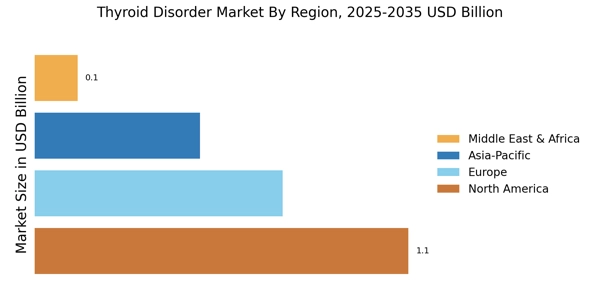
North America remains the largest market for thyroid disorders, driven by increased awareness and screening initiatives.
The Asia-Pacific region is emerging as the fastest-growing market, fueled by rising healthcare expenditure and a growing patient population.
Hypothyroidism continues to dominate the market as the largest segment, while hyperthyroidism is recognized as the fastest-growing segment.
Key market drivers include the rising incidence of thyroid disorders and advancements in diagnostic technologies, which are shaping treatment approaches.
Market Size & Forecast
2024 Market Size
2.511 (USD Billion)
2035 Market Size
3.948 (USD Billion)
CAGR (2025 - 2035)
4.2%
Major Players
AbbVie(US), Bristol-Myers Squibb (US), Eli Lilly and Company (US), Merck & Co. (US), Novartis (CH), Pfizer(US), Sanofi (FR), Takeda Pharmaceutical Company (JP), Amgen (US)
Our Impact
Enabled $4.3B Revenue Impact for Fortune 500 and Leading Multinationals
Partnering with 2000+ Global Organizations Each Year
30K+ Citations by Top-Tier Firms in the Industry
Thyroid Disorder Market Trends
The Thyroid Disorder Market is currently experiencing notable transformations driven by various factors. An increasing prevalence of thyroid disorders, coupled with heightened awareness regarding the importance of early diagnosis and treatment, appears to be propelling market growth. Healthcare providers are increasingly focusing on innovative diagnostic tools and therapeutic options, which may enhance patient outcomes. Furthermore, the integration of advanced technologies in treatment protocols suggests a shift towards more personalized medicine, potentially improving the management of thyroid-related conditions.
In addition, the rising demand for effective treatment options is likely to stimulate research and development activities within the pharmaceutical sector. This trend indicates a growing interest in novel therapies, including biologics and targeted treatments, which could redefine standard care practices. As the Thyroid Disorder Market evolves, stakeholders must remain vigilant to emerging trends and adapt strategies accordingly to meet the changing needs of patients and healthcare systems.
Increased Awareness and Screening
There is a growing recognition of thyroid disorders among the general population and healthcare professionals. This heightened awareness is leading to more frequent screenings and early diagnosis, which may contribute to improved patient outcomes.
Technological Advancements in Treatment
The Thyroid Disorder Market is witnessing a surge in the adoption of advanced technologies for treatment. Innovations such as minimally invasive surgical techniques and targeted therapies are becoming more prevalent, potentially enhancing the effectiveness of interventions.
Focus on Personalized Medicine
A shift towards personalized medicine is becoming evident in the management of thyroid disorders. Tailoring treatment plans to individual patient profiles may improve therapeutic efficacy and patient satisfaction, indicating a significant trend in the market.
Thyroid Disorder Market Drivers
Rising Healthcare Expenditure
The Thyroid Disorder Market is positively impacted by rising healthcare expenditure across various regions. As governments and private sectors allocate more funds towards healthcare, there is an increased focus on managing chronic conditions, including thyroid disorders. This trend is reflected in the growing availability of healthcare services, improved access to medications, and enhanced patient education initiatives. Higher healthcare spending is likely to facilitate better diagnosis and treatment options for patients suffering from thyroid disorders. Consequently, the Thyroid Disorder Market is expected to expand as more individuals seek care and treatment, driven by the availability of resources and support.
Growing Demand for Targeted Therapies
The Thyroid Disorder Market is witnessing a shift towards targeted therapies, which are designed to address specific molecular targets associated with thyroid disorders. This trend is driven by the increasing understanding of the underlying mechanisms of these conditions, leading to the development of more effective treatment options. Patients are increasingly seeking therapies that offer personalized approaches, which can lead to better management of their conditions. The market for targeted therapies is expected to grow as pharmaceutical companies invest in research and development to create innovative solutions. This focus on precision medicine not only enhances treatment efficacy but also aligns with the evolving expectations of patients within the Thyroid Disorder Market.
Rising Incidence of Thyroid Disorders
The Thyroid Disorder Market is experiencing growth due to the increasing prevalence of thyroid disorders, which affects millions worldwide. According to health statistics, conditions such as hypothyroidism and hyperthyroidism are becoming more common, particularly among women. This rise in incidence is attributed to various factors, including genetic predisposition and environmental influences. As awareness of these disorders grows, more individuals seek diagnosis and treatment, thereby driving demand for therapeutic options. The Thyroid Disorder Market is projected to expand as healthcare providers enhance screening practices and patients become more informed about their health. This trend suggests a potential increase in the market size, as more patients are likely to require ongoing management and treatment for their thyroid conditions.
Advancements in Diagnostic Technologies
The Thyroid Disorder Market is significantly influenced by advancements in diagnostic technologies. Innovations such as high-sensitivity thyroid function tests and imaging techniques have improved the accuracy of diagnosing thyroid disorders. These technologies enable healthcare professionals to detect conditions at earlier stages, which is crucial for effective treatment. The introduction of point-of-care testing devices has also facilitated quicker diagnosis, allowing for timely intervention. As diagnostic capabilities continue to evolve, the Thyroid Disorder Market is likely to see an increase in patient referrals and treatment initiation, ultimately contributing to market growth. Enhanced diagnostic tools not only improve patient outcomes but also expand the overall market by attracting more patients seeking reliable testing.
Increased Investment in Research and Development
The Thyroid Disorder Market is benefiting from increased investment in research and development (R&D) aimed at understanding thyroid disorders better and developing new treatment modalities. Pharmaceutical companies and research institutions are allocating significant resources to explore novel therapeutic agents and improve existing treatments. This influx of funding is likely to accelerate the pace of innovation within the Thyroid Disorder Market, leading to the introduction of new drugs and therapies that can address unmet medical needs. As R&D efforts continue to expand, the market is expected to evolve, offering patients more options and potentially improving overall health outcomes.
Market Segment Insights
By Thyroid Disorder Type Outlook: Hypothyroidism (Largest) vs. Hyperthyroidism (Fastest-Growing)
The Thyroid Disorder Market exhibits a distinct segmentation wherein hypothyroidism dominates, attributed to its higher prevalence and awareness among patients and healthcare providers. This segment accounts for a substantial portion of the market, significantly influenced by the aging population and rising incidence rates of thyroid-related diseases. In contrast, hyperthyroidism is gaining traction, gradually increasing its market share as awareness, diagnostic practices, and treatment options for this condition improve.
Growth trends within the Thyroid Disorder Market indicate that while hypothyroidism remains the largest segment, hyperthyroidism is emerging as the fastest-growing area. The increasing focus on early diagnosis and treatment, coupled with advancements in pharmaceuticals, contributes to hyperthyroidism's rapid growth. Moreover, the prevalence of risk factors such as autoimmune disorders and stress in modern lifestyles acts as a significant driver for this transformation, making hyperthyroidism a focal point for future market strategies.
Hypothyroidism: Dominant vs. Hyperthyroidism: Emerging
Hypothyroidism is characterized by an underactive thyroid gland, leading to insufficient hormone production responsible for regulating metabolism. This segment has established itself as the dominant player within the Thyroid Disorder Market, greatly influenced by the high prevalence rates and ongoing education initiatives urging individuals to seek medical advice. Patients are often treated with hormone replacement therapies, which ensure consistent demand. On the other hand, hyperthyroidism presents as an emerging segment, marked by an overactive thyroid that accelerates metabolism. Current trends suggest that hyperthyroidism is on an upward trajectory, propelled by advancements in diagnostic tools and treatments. This emerging position attracts significant interest from pharmaceutical companies seeking to develop innovative therapies that cater to the growing patient population.
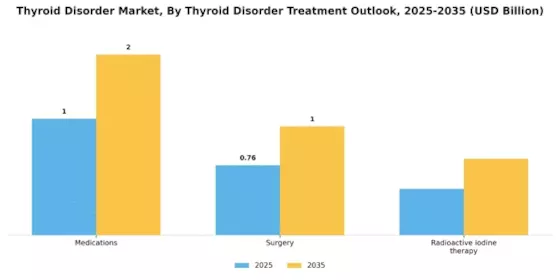
By Thyroid Disorder Treatment Outlook: Medications (Largest) vs. Surgery (Fastest-Growing)
The Thyroid Disorder Treatment Market shows a diverse distribution of treatment options, with medications holding the largest market share. This segment is favored for its non-invasive approach and effectiveness in managing hormone levels, making it a preferred choice among patients. In contrast, surgery, though accounting for a smaller percentage, is rapidly gaining traction as an effective option for certain types of thyroid disorders, prompting significant interest from healthcare professionals.
Recent trends indicate a growing awareness of thyroid disorders, leading to increased diagnosis and treatment rates. Medications are often first-line treatments, but surgical options are becoming increasingly popular due to advancements in techniques and technologies. As patients seek comprehensive solutions, the market is evolving, resulting in a surge in surgical interventions that cater to more severe cases, thereby driving growth in this segment.
Medications (Dominant) vs. Surgery (Emerging)
Medications stand out as the dominant force within the Thyroid Disorder Treatment segment, primarily due to their effectiveness in controlling hormone levels and managing symptoms associated with hypothyroidism and hyperthyroidism. With a wide range of options that include levothyroxine and antithyroid medications, this segment appeals to patients looking for less invasive treatment. On the other hand, surgery is the emerging choice for patients suffering from nodular thyroid disease or cancer, where medications may not be sufficient. This trend is powered by advancements in surgical techniques, such as minimally invasive procedures, which have significantly reduced recovery times and risks. Thus, while medications will maintain dominance, surgery is poised for growth as clinical practices evolve.
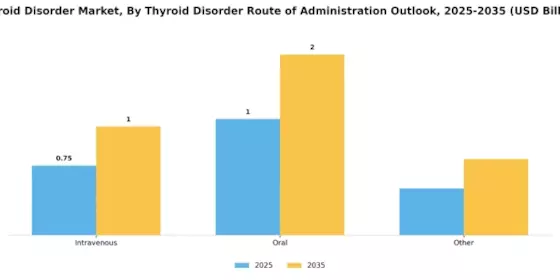
By Thyroid Disorder Route of Administration Outlook: Oral (Largest) vs. Intravenous (Fastest-Growing)
In the Thyroid Disorder Market, the distribution of routes of administration has shown distinct preferences, with the oral segment commanding the largest share. This preference is largely reflective of its convenience, ease of consumption, and established efficacy among patients. Consequently, the oral route remains the predominant choice for managing thyroid conditions, significantly influencing market dynamics and product development.
Oral (Dominant) vs. Intravenous (Emerging)
The oral administration route for thyroid disorder treatments has established itself as the dominant segment due to its patient-friendly nature. Medications administered orally offer convenient dosage forms like tablets and capsules, making adherence easier for patients. In contrast, intravenous administration is emerging rapidly, primarily driven by the need for faster therapeutic effects and improved bioavailability in certain patient populations. While oral medications remain the favored choice for long-term management, intravenous treatments are gaining traction for acute care scenarios, signifying a shift towards more personalized treatment options in the thyroid disorder market.
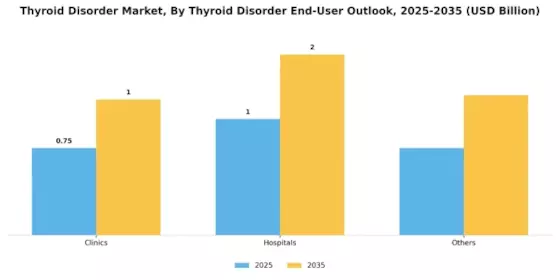
By Thyroid Disorder End-User Outlook: Clinics (Largest) vs. Hospitals (Fastest-Growing)
The Thyroid Disorder Market has seen notable segmentation based on end-user outlook, dominated primarily by clinics. Clinics account for a significant portion of the market share, attributed to their accessibility and the convenience they offer for patients seeking diagnosis and treatment. Hospitals follow as a substantial component, benefiting from their comprehensive care capabilities, but are not as prevalent as clinics in day-to-day outpatient management.
Clinics (Dominant) vs. Hospitals (Emerging)
Clinics are the dominant force in the Thyroid Disorder Market due to their focus on outpatient services and specialized care tailored for thyroid conditions. These establishments often provide personalized treatment plans and follow-ups, fostering strong patient relationships. In contrast, hospitals, while currently emerging as a growing segment, are increasingly focusing on expanding their outpatient services for thyroid disorders. They boast advanced medical technologies and specialist networks, allowing them to attract more patients seeking comprehensive care, thus marking a significant pivot in the thyroid disorder care landscape.
North America is the largest market for thyroid disorders, accounting for approximately 45% of the global market share. The region's growth is driven by increasing prevalence of thyroid diseases, heightened awareness, and advancements in treatment options. Regulatory support from agencies like the FDA facilitates faster drug approvals, enhancing market dynamics. The demand for innovative therapies and personalized medicine is also on the rise, further propelling market growth.
The United States is the leading country in this region, with significant contributions from Canada. Major pharmaceutical companies such as AbbVie, Eli Lilly, and Merck & Co. are actively involved in developing and marketing thyroid disorder treatments. The competitive landscape is characterized by a focus on research and development, with companies investing heavily in new therapies to meet the growing demand for effective treatment options.
Europe : Emerging Market with Growth Potential
Europe is witnessing significant growth in the thyroid disorder market, holding approximately 30% of the global share. The increasing incidence of thyroid-related conditions, coupled with rising healthcare expenditure, is driving demand for effective treatments. Regulatory frameworks in countries like Germany and France are supportive of innovative therapies, which enhances market accessibility and patient care. The region is also focusing on preventive healthcare measures, which is expected to further boost market growth.
Leading countries in Europe include Germany, France, and the UK, where key players like Novartis and Sanofi are making substantial investments. The competitive landscape is marked by collaborations and partnerships aimed at enhancing product offerings. The presence of well-established healthcare systems facilitates the introduction of new therapies, ensuring that patients have access to the latest treatment options available.
Asia-Pacific : Rapidly Growing Healthcare Sector
The Asia-Pacific region is emerging as a significant player in the thyroid disorder market, accounting for about 20% of the global market share. The growth is driven by increasing awareness of thyroid health, rising disposable incomes, and improvements in healthcare infrastructure. Countries like China and India are witnessing a surge in demand for thyroid treatments, supported by government initiatives aimed at enhancing healthcare access and affordability. Regulatory bodies are also streamlining approval processes for new therapies, fostering market growth.
China is the largest market in this region, followed by India, where local and international players are competing to capture market share. Companies like Takeda and Amgen are actively involved in the development of innovative therapies. The competitive landscape is characterized by a mix of multinational corporations and local firms, all striving to meet the growing demand for effective thyroid disorder treatments. This dynamic environment is expected to drive further advancements in the sector.
Middle East and Africa : Untapped Market with Potential
The Middle East and Africa region is gradually emerging in the thyroid disorder market, holding approximately 5% of the global share. The growth is primarily driven by increasing awareness of thyroid health issues and the rising prevalence of thyroid disorders. Government initiatives aimed at improving healthcare access and affordability are also contributing to market expansion. Regulatory bodies are working to enhance the approval processes for new treatments, which is expected to stimulate market growth in the coming years.
Leading countries in this region include South Africa and the UAE, where there is a growing presence of international pharmaceutical companies. The competitive landscape is evolving, with both local and The Thyroid Disorder. Companies are focusing on partnerships and collaborations to enhance their product offerings and meet the increasing demand for effective thyroid disorder treatments.
Key Players and Competitive Insights
The Thyroid Disorder Market is characterized by a dynamic competitive landscape, driven by increasing prevalence rates and a growing awareness of thyroid-related health issues. Key players such as AbbVie (US), Eli Lilly and Company (US), and Novartis (CH) are strategically positioned to leverage innovation and expand their market presence. AbbVie (US) focuses on developing novel therapies, while Eli Lilly and Company (US) emphasizes partnerships to enhance its product portfolio. Novartis (CH) is actively pursuing regional expansion, particularly in emerging markets, which collectively shapes a competitive environment that is increasingly focused on patient-centric solutions and advanced therapeutic options.
In terms of business tactics, companies are localizing manufacturing and optimizing supply chains to enhance efficiency and responsiveness to market demands. The Thyroid Disorder Market appears moderately fragmented, with several key players exerting influence over various segments. This fragmentation allows for a diverse range of treatment options, yet the collective strategies of these companies indicate a trend towards consolidation and collaboration, particularly in research and development initiatives.
In August 2025, AbbVie (US) announced a strategic partnership with a leading biotechnology firm to co-develop a new class of thyroid hormone replacement therapies. This collaboration is expected to accelerate the development timeline and enhance the therapeutic efficacy of treatments, thereby positioning AbbVie (US) as a frontrunner in the market. The strategic importance of this partnership lies in its potential to address unmet medical needs and improve patient outcomes, which is increasingly becoming a focal point in the industry.
In September 2025, Eli Lilly and Company (US) launched a digital health platform aimed at improving patient engagement and adherence to thyroid disorder treatments. This initiative reflects a broader trend towards digitalization in healthcare, where technology is utilized to enhance patient experiences and outcomes. The strategic significance of this move is profound, as it not only strengthens Eli Lilly's (US) market position but also aligns with the growing demand for integrated healthcare solutions that prioritize patient-centric care.
In July 2025, Novartis (CH) expanded its manufacturing capabilities in Asia to meet the rising demand for thyroid medications in the region. This expansion is indicative of Novartis's (CH) commitment to regional growth and its strategy to ensure supply chain reliability. The implications of this move are substantial, as it positions Novartis (CH) to better serve a burgeoning market while also mitigating potential supply chain disruptions that could arise from global uncertainties.
As of October 2025, current competitive trends in the Thyroid Disorder Market are increasingly defined by digitalization, sustainability, and the integration of artificial intelligence in treatment protocols. Strategic alliances are shaping the landscape, fostering innovation and enhancing the development of advanced therapies. Looking ahead, competitive differentiation is likely to evolve from traditional price-based competition towards a focus on innovation, technological advancements, and the reliability of supply chains, thereby ensuring that companies remain agile and responsive to the ever-changing healthcare environment.
Key Companies in the Thyroid Disorder Market include
Industry Developments
Recent development in the thyroid disorder market are
• In November 2015, a program that focuses on managing the daily routine of those having the life-long condition of hypothyroidism was launched by Abbie under Good Morning Hypothyroidism (GMH).
• In October 2016, ThyroTest was introduced by Abbott acquired Alere Inc., a service provider organization and a diagnostic device manufacturer introduced in the market, which is a test to detect hypothyroidism.
• In March 2018, an orally available tyrosine kinase inhibitor was discovered by Eisai.
• Also, in the same month, it was announced by Eisai Co Ltd and Merck about their strategic collar radiation. They are popularly called MSD after the collaboration.
• The commercialization of LENVIMA was also done in the year 2018.
Future Outlook
Thyroid Disorder Market Future Outlook
The Thyroid Disorder Market is projected to grow at a 4.2% CAGR from 2024 to 2035, driven by increasing prevalence, advancements in diagnostics, and enhanced treatment options.
New opportunities lie in:
Development of telehealth platforms for remote patient monitoring
Investment in AI-driven diagnostic tools for early detection
Expansion of personalized medicine approaches in treatment protocols
By 2035, the Thyroid Disorder Market is expected to achieve substantial growth and innovation.
Market Segmentation
Thyroid Disorder Market Thyroid Disorder Type Outlook Outlook
Hypothyroidism
Hyperthyroidism
Thyroid Disorder Market Thyroid Disorder End-User Outlook Outlook
Clinics
Hospitals
Others
Thyroid Disorder Market Thyroid Disorder Treatment Outlook Outlook
Medications
Surgery
Radioactive iodine therapy
Thyroid Disorder Market Thyroid Disorder Route of Administration Outlook Outlook
Intravenous
Oral
Other
Report Scope
MARKET SIZE 2024
2.511(USD Billion)
MARKET SIZE 2025
2.617(USD Billion)
MARKET SIZE 2035
3.948(USD Billion)
COMPOUND ANNUAL GROWTH RATE (CAGR)
4.2% (2024 - 2035)
REPORT COVERAGE
Revenue Forecast, Competitive Landscape, Growth Factors, and Trends
BASE YEAR
2024
Market Forecast Period
2025 - 2035
Historical Data
2019 - 2024
Market Forecast Units
USD Billion
Key Companies Profiled
Market analysis in progress
Segments Covered
Market segmentation analysis in progress
Key Market Opportunities
Integration of telemedicine and digital health solutions in the Thyroid Disorder Market.
Key Market Dynamics
Rising prevalence of thyroid disorders drives demand for innovative treatment options and enhanced diagnostic technologies.
What is the projected market valuation of the Thyroid Disorder Market by 2035?
The Thyroid Disorder Market is projected to reach a valuation of 3.948 USD Billion by 2035.
What was the market valuation of the Thyroid Disorder Market in 2024?
In 2024, the Thyroid Disorder Market was valued at 2.511 USD Billion.
What is the expected CAGR for the Thyroid Disorder Market during the forecast period 2025 - 2035?
The expected CAGR for the Thyroid Disorder Market during the forecast period 2025 - 2035 is 4.2%.
Which companies are considered key players in the Thyroid Disorder Market?
Key players in the Thyroid Disorder Market include AbbVie, Bristol-Myers Squibb, Eli Lilly and Company, and Merck & Co.
What are the projected revenues for Hypothyroidism and Hyperthyroidism segments by 2035?
By 2035, the projected revenue for Hypothyroidism is 2.368 USD Billion, while Hyperthyroidism is expected to reach 1.58 USD Billion.
What treatment options are available in the Thyroid Disorder Market and their projected revenues?
Projected revenues for treatment options by 2035 include Medications at 1.949 USD Billion, Surgery at 1.174 USD Billion, and Radioactive iodine therapy at 0.825 USD Billion.
How does the route of administration impact the Thyroid Disorder Market?
By 2035, the Oral route of administration is projected to generate 1.951 USD Billion, indicating its significant role in the Thyroid Disorder Market.
What are the expected revenues for different end-users in the Thyroid Disorder Market by 2035?
By 2035, Hospitals are expected to generate 1.563 USD Billion, Clinics 1.174 USD Billion, and Others 1.211 USD Billion.
How does the Thyroid Disorder Market's growth compare to other healthcare sectors?
The Thyroid Disorder Market's growth, with a projected CAGR of 4.2%, suggests a steady expansion compared to other healthcare sectors.
What factors may influence the growth of the Thyroid Disorder Market in the coming years?
Factors such as advancements in treatment options and increasing awareness of thyroid disorders may influence the Thyroid Disorder Market's growth.
Author
Author
Satyendra Maurya
Research Analyst
An accomplished research analyst with high proficiency in market forecasting, data visualization, competitive benchmarking, and others. He holds a pronounced track record in research and consulting projects for sectors such as life sciences, medical devices, and healthcare IT. His capabilities in qualitative and quantitative analysis have resulted in positive client outcomes. Working on niche market trends, opportunities, sales, and forecasted value is part of his skill set.
read more
Co-Author
Rahul Gotadki
Research Manager
He holds an experience of about 9+ years in Market Research and Business Consulting, working under the spectrum of Life Sciences and Healthcare domains. Rahul conceptualizes and implements a scalable business strategy and provides strategic leadership to the clients. His expertise lies in market estimation, competitive intelligence, pipeline analysis, customer assessment, etc.
The secondary research process involved comprehensive analysis of regulatory databases, peer-reviewed endocrinology journals, clinical publications, and authoritative health organizations. Key sources included the US Food & Drug Administration (FDA) Center for Drug Evaluation and Research, European Medicines Agency (EMA) Human Medicines Division, Pharmaceuticals and Medical Devices Agency (PMDA) Japan, American Thyroid Association (ATA) Guidelines Repository, European Thyroid Association (ETA) Clinical Practice Guidelines, The Endocrine Society, American Association of Clinical Endocrinologists (AACE), National Institutes of Health (NIH) National Institute of Diabetes and Digestive and Kidney Diseases (NIDDK), Centers for Disease Control and Prevention (CDC) National Center for Health Statistics National Health and Nutrition Examination Survey (NHANES), World Health Organization (WHO) Global Health Observatory, IQVIA National Prescription Audit (NPA), Symphony Health Integrated Dataverse (IDV), Cochrane Library Endocrinology Collection, PubMed/MEDLINE Thyroid Research Database, Centers for Medicare & Medicaid Services (CMS) Physician/Supplier Procedure Summary, Eurostat Healthcare Statistics, OECD Health Statistics, and national endocrinology society reports from key markets including the British Thyroid Foundation, Thyroid Federation International, and Japan Thyroid Association. These sources were used to collect prescription volume data, drug approval databases (levothyroxine, liothyronine, methimazole, propylthiouracil), radioactive iodine therapy procedure statistics, thyroidectomy surgical volumes, epidemiological prevalence data for autoimmune thyroiditis and Graves' disease, reimbursement codes, and clinical safety studies for hormone replacement therapies and antithyroid agents.
Primary Research
In order to gather both qualitative and quantitative insights, supply-side and demand-side stakeholders were interviewed during the primary research process. Chief Medical Officers, Heads of Endocrine Therapeutics, Global Brand Presidents for Thyroid Portfolios, regulatory affairs directors, and commercial strategy leads from pharmaceutical companies creating biologic agents, TSH suppressive treatments, and synthetic thyroid hormones were examples of supply-side sources. Board-certified endocrinologists, thyroid surgeons, nuclear medicine doctors, hospital pharmacy directors, clinical pharmacists, and procurement leads from academic medical centers, endocrinology specialty clinics, integrated health networks, and ambulatory surgical centers were among the demand-side sources. In addition to gathering information on generic substitution rates, brand loyalty in hormone replacement therapy, radioactive iodine dosing protocols, and reimbursement dynamics for thyroid function testing versus pharmaceutical interventions, primary research validated treatment protocol adoption patterns and confirmed pipeline drug development timelines (including TSH receptor monoclonal antibodies and next-generation thyromimetics).
Primary Respondent Breakdown:
• By Designation: C-level Primaries (32%), Director Level (30%), Others (38%)
• By Region: North America (38%), Europe (25%), Asia-Pacific (28%), Rest of World (9%)
Market Size Estimation
Global market valuation was derived through revenue mapping, prescription volume analysis, and procedure data triangulation. The methodology included:
• Identification of 35+ key manufacturers across North America, Europe, Asia-Pacific, and Latin America specializing in thyroid hormone replacement therapies (levothyroxine sodium, liothyronine), antithyroid medications (thioamides), and diagnostic agents (radioactive iodine isotopes)
• Product mapping across hypothyroidism treatments, hyperthyroidism therapeutics, thyroid hormone suppressive therapies, and adjuvant care segments
• Analysis of reported and modeled annual revenues specific to thyroid disorder drug portfolios, including branded and generic market share splits
• Coverage of manufacturers representing 75-80% of global market share in 2024
• Extrapolation using bottom-up (prescription volume × ASP by country/region, thyroidectomy procedure volumes × surgical costs, radioactive iodine therapy sessions × reimbursement rates) and top-down (manufacturer revenue validation, IQVIA audit data reconciliation) approaches to derive segment-specific valuations for oral levothyroxine, intravenous thyroid formulations, and surgical intervention markets
“This is really good guys. Excellent work on a tight deadline. I will continue to use you going forward and recommend you to others. Nice job”
Noah MalgeriCo-Founder
“Thanks. It’s been a pleasure working with you, please use me as reference with any other Intel employees.”
Joseph AguayoSales Operations & Pricing Manager
“Thanks for sending the report it gives us a good global view of the Betaïne market.”
Peter Groot koerkampAccount and Business Manager
“Thank you, this will be very helpful for OQS.”
La Terria DoddProgram Support Specialist
“We found the report very insightful! we found your research firm very helpful. I'm sending this email to secure our future business.”
Younghwan ChoiSenior Retail Manager
“I am very pleased with how market segments have been defined in a relevant way for my purposes (such as "Portable Freezers & refrigerators" and "last-mile").
In general the report is well structured. Thanks very much for your efforts.”
Mark IrwinManagement Consultant
“I have been reading the first document or the study, ,the Global HVAC and FP market report 2021 till 2026. Must say, good info! I have not gone in depth at all parts, but got a good indication of the data inside!”
Rob KooikerGroup Product Manager HVAC & Fire Protection GMA
“We got the report in time, we really thank you for your support in this process. I also thank to all of your team as they did a great job.”
Akif MorogluStrategy & Business Development Director
“The Automotive 48V ECU Components Procurement Intelligence Study” was a complex project, but the Market Research Future (MRFR) team handled it with quality, agility, and customer-centricity. They delivered all requested data on time and within the agreed scope. The team, including Shubhendra Anand and Rahul Gotadki, was always readily available to clarify questions and swiftly implement necessary adjustments, driving the project to a successful conclusion within a very demanding timeframe.
I would also like to specifically commend Akshay Agarwal for his responsiveness and support at every stage—from our initial inquiry on May 6th through to final delivery on June 18th. His dedication made the entire process seamless.”
Guilherme Gomes MartinsProduct Management Director