Author

Snehal Singh

Turmeric Market Size, Share, Industry Trend & Analysis Research Report: By Application (Food and Beverages, Cosmetics, Pharmaceuticals, Nutraceuticals), By Form (Powder, Liquid, Capsules, Extracts), By Source (Organic, Conventional), By Distribution Channel (Online, Offline, Direct Sales) andBy Regional (North America, Europe, South America, Asia Pacific, Middle East and Africa)- Forecast to 2035.
As per Market Research Future analysis, the Turmeric Market Size was estimated at 3.43 USD Billion in 2024. The Turmeric industry is projected to grow from 3.601 USD Billion in 2025 to 5.854 USD Billion by 2035, exhibiting a compound annual growth rate (CAGR) of 4.98% during the forecast period 2025 - 2035
The Turmeric Market is experiencing robust growth driven by health trends and innovation.
| 2024 Market Size | 3.43 (USD Billion) |
| 2035 Market Size | 5.854 (USD Billion) |
| CAGR (2025 - 2035) | 4.98% |
McCormick & Company (US), Dabur India Limited (IN), Kancor Ingredients Limited (IN), Organic India (IN), Starwest Botanicals (US), Sundaram Multi Pap Limited (IN), The Spice House (US), Frontier Co-op (US), Bennett & Coleman (IN)
Our Impact
Enabled $4.3B Revenue Impact for Fortune 500 and Leading Multinationals
Partnering with 2000+ Global Organizations Each Year
30K+ Citations by Top-Tier Firms in the Industry
The Turmeric Market is currently experiencing a notable transformation, driven by increasing consumer awareness regarding health benefits associated with turmeric. This spice, renowned for its anti-inflammatory and antioxidant properties, is gaining traction in various sectors, including food and beverages, cosmetics, and dietary supplements. As consumers become more health-conscious, the demand for natural and organic products is on the rise, prompting manufacturers to innovate and diversify their offerings. Additionally, the growing trend of plant-based diets is further propelling the use of turmeric in culinary applications, as it aligns with the preferences of a more health-oriented demographic. Moreover, The Turmeric Market, as producers seek to adopt eco-friendly practices. This shift not only caters to environmentally conscious consumers but also enhances brand reputation. The integration of turmeric into functional foods and beverages is likely to expand, as manufacturers explore its potential in enhancing flavor profiles while providing health benefits. Overall, the Turmeric Market appears poised for growth, with evolving consumer preferences and a focus on sustainability shaping its future trajectory.
The increasing emphasis on health and wellness is driving the demand for turmeric products. Consumers are actively seeking natural remedies and dietary supplements that promote overall well-being, leading to a surge in turmeric's popularity.
Producers in the Turmeric Market are increasingly adopting sustainable practices. This trend reflects a growing consumer preference for environmentally friendly products, which enhances brand loyalty and market competitiveness.
The culinary sector is witnessing a rise in the incorporation of turmeric into various dishes. Chefs and food manufacturers are exploring creative ways to utilize this spice, appealing to health-conscious consumers and enhancing flavor.
The Turmeric Market experiences a notable surge in demand for natural remedies, driven by an increasing consumer preference for herbal and organic products. This trend is largely attributed to a growing awareness of the potential health benefits associated with turmeric, including its anti-inflammatory and antioxidant properties. As consumers become more health-conscious, they are gravitating towards natural alternatives to synthetic medications. Market data indicates that the herbal supplement segment, which includes turmeric, is projected to grow at a compound annual growth rate of approximately 7.5% over the next five years. This shift towards natural remedies is likely to bolster the Turmeric Market, as manufacturers respond by expanding their product lines to include turmeric-based supplements and functional foods.
The Turmeric Market is poised for growth due to the rising interest in functional foods, which are foods enhanced with additional health benefits. Turmeric Market, recognized for its bioactive compounds, particularly curcumin, is increasingly being incorporated into functional food products. This trend is supported by market data indicating that the functional food market is expected to grow at a rate of 8% per year. Consumers are actively seeking foods that not only satisfy hunger but also contribute to overall health and wellness. As a result, food manufacturers are exploring innovative ways to integrate turmeric into their offerings, such as fortified snacks and beverages. This growing interest in functional foods is likely to drive demand within the Turmeric Market, as consumers prioritize health-enhancing ingredients.
The Turmeric Market is significantly influenced by the expansion of the food and beverage sector, where turmeric is increasingly utilized as a flavoring agent and natural colorant. The rising trend of incorporating turmeric into various culinary applications, such as beverages, snacks, and sauces, is indicative of its versatility. Market data suggests that the food industry is projected to witness a growth rate of around 5% annually, with turmeric playing a pivotal role in this expansion. This growth is further fueled by the increasing popularity of ethnic cuisines that prominently feature turmeric, thereby enhancing its visibility and acceptance among consumers. As food manufacturers innovate and create new products that highlight turmeric, the Turmeric Market is likely to benefit from this culinary evolution.
The Turmeric Market is increasingly influenced by sustainability and ethical sourcing trends, as consumers become more conscious of the environmental and social impacts of their purchases. There is a growing demand for turmeric sourced from sustainable farming practices, which not only supports local farmers but also appeals to environmentally aware consumers. Market data indicates that products labeled as organic or sustainably sourced are experiencing higher sales growth compared to conventional products. This trend is prompting manufacturers to adopt transparent supply chains and ethical sourcing practices, thereby enhancing their brand reputation. As sustainability becomes a key purchasing criterion, the Turmeric Market is likely to see a shift towards more responsible sourcing and production methods, aligning with consumer values.
The Turmeric Market is benefiting from increased research and development activities focused on the health benefits of turmeric. Scientific studies continue to explore the therapeutic potential of turmeric, particularly its anti-inflammatory and antioxidant properties. This research is crucial in substantiating the claims made by manufacturers and enhancing consumer trust in turmeric products. Furthermore, the growing body of evidence supporting turmeric's health benefits is likely to stimulate demand across various sectors, including dietary supplements and functional foods. As more research emerges, it is anticipated that new applications for turmeric will be discovered, further expanding its market potential. The emphasis on R&D in the Turmeric Market may lead to innovative product formulations that cater to evolving consumer preferences.
In the Turmeric Market, the 'Food and Beverages' segment holds the largest share, driven by the increasing consumer preference for natural and organic products. This segment encompasses a variety of applications including culinary spices, beverages, and dietary supplements, making it a vital contributor to market dynamics. Following closely is the 'Pharmaceuticals' segment, which is experiencing rapid growth due to rising health awareness and the shift towards herbal medicines for chronic conditions.
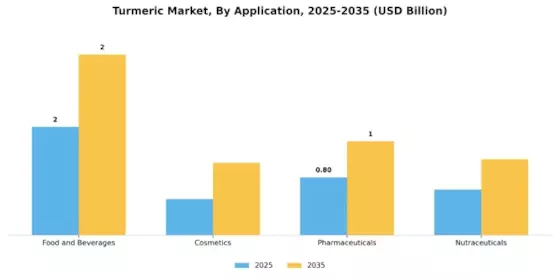
Food and Beverages: Dominant vs. Pharmaceuticals: Emerging
The 'Food and Beverages' segment is recognized as the dominant force in the Turmeric Market, known for its extensive applications in cooking and health-centric products. Turmeric Market is renowned for its flavor, color, and numerous health benefits, leading to its widespread incorporation in various food items and beverages. Conversely, the 'Pharmaceuticals' segment is emerging as a significant player, fueled by the increasing demand for natural remedies and preventive healthcare solutions. With growing research into turmeric's active compounds, this segment is poised to innovate and capture a larger market share, further emphasizing the versatile nature of turmeric in both culinary and medical fields.
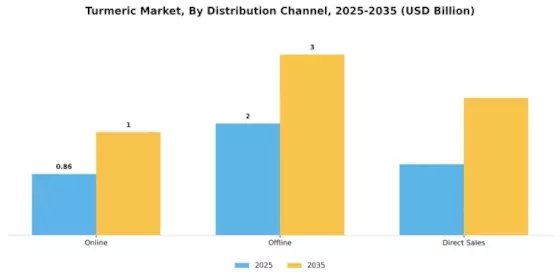
In the Turmeric Market, the form segment is critical, showcasing significant diversity in product offerings. The powder form holds a dominant position, favored for its versatility and ease of use in culinary applications and supplements. Following closely, liquids, capsules, and extracts represent substantial shares as well, each catering to distinct consumer preferences. Liquid turmeric is gaining traction for its convenient consumption, while capsules appeal to health-conscious individuals looking for dietary supplements. Extracts, although currently smaller in share, are showing remarkable growth due to increased consumer awareness of their concentrated benefits and health-promoting properties.
Powder (Dominant) vs. Extracts (Emerging)
The powder form of turmeric is the most established and widely utilized, appealing to a broad audience due to its multifunctionality in cooking, health supplements, and traditional medicine. Its popularity is driven by the traditional use of turmeric in various cuisines and the growing trend towards natural ingredients in food products. In contrast, turmeric extracts represent an emerging segment, capturing attention due to their potent concentration of active compounds like curcumin. As consumers become more health-focused, the demand for extracts is surging, propelled by research supporting their anti-inflammatory and antioxidant benefits. These characteristics position extracts as a vital player in the market's future, appealing to consumers seeking effective health supplements.
The Turmeric Market showcases a diverse landscape where Organic turmeric accounts for the largest share among the sourcing options. This segment is favored due to rising health consciousness and the growing consumer preference for naturally sourced products without synthetic fertilizers or pesticides. As consumers become more aware of the environmental and health benefits associated with organic farming practices, Organic turmeric continues to dominate, signaling a shift towards sustainable sourcing methods. On the other hand, the Conventional turmeric segment is noted for its rapid growth, emerging as the fastest-growing option in the market. This growth is attributed to its accessibility, lower price points, and widespread adoption in food processing and culinary sectors. The increasing demand for turmeric in both traditional and modern cuisine is driving the rise of Conventional turmeric, making it a vital player in the overall market landscape.
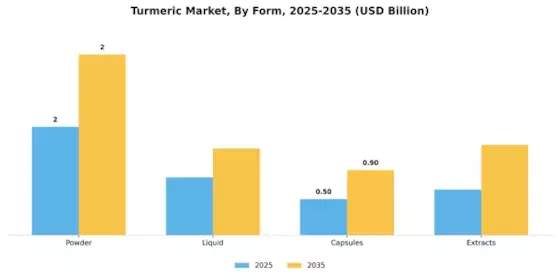
Source: Organic (Dominant) vs. Conventional (Emerging)
Organic turmeric is characterized by its cultivation without the use of synthetic chemicals, and it appeals to health-conscious consumers. This segment enjoys a strong reputation for quality and purity and often commands a premium price, reflecting the value placed on organic certification. In contrast, Conventional turmeric, which is grown using standard agricultural practices, caters to a broader audience due to its affordability and availability. While it lacks the same level of consumer loyalty as Organic, it provides a robust alternative for industries requiring bulk supplies. Both segments play crucial roles in the Turmeric Market, serving different consumer needs and preferences.
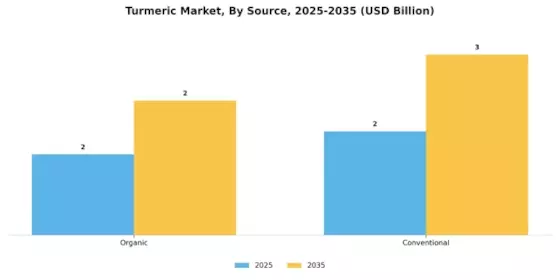
In the Turmeric Market, the distribution landscape is primarily dominated by the online channel, which accounts for the largest share of sales. The growing trend of e-commerce has transformed how consumers purchase turmeric, leading to a significant increase in online sales. Offline channels, including supermarkets and health food stores, still hold substantial value but are gradually losing market share to their online counterparts. As the demand for turmeric products continues to rise, the offline distribution channel is evolving, focusing more on enhancing the in-store experience and product accessibility. However, online sales are seeing remarkable growth, driven by the convenience of purchasing from home, a wider variety of products, and an increase in health awareness among consumers. Companies are thus investing in digital marketing strategies to capture this expanding market segment.
Offline (Dominant) vs. Direct Sales (Emerging)
The offline distribution channel remains dominant in the Turmeric Market, primarily due to established retail networks and consumer habits favoring in-person shopping experiences. Supermarkets and health-focused outlets offer consumers the opportunity to interact with products, fostering trust and immediate purchase decisions. In contrast, direct sales, though emerging, are gaining traction as companies leverage personalized marketing and direct-to-consumer approaches. This segment appeals particularly to niche markets and health-conscious consumers who prefer tailored products and greater engagement with producers. The emergence of social media and digital platforms significantly enhances the visibility of direct sales, allowing companies to build strong connections and loyalty among their customer base.
Get more detailed insights about Turmeric Market Request Free Sample
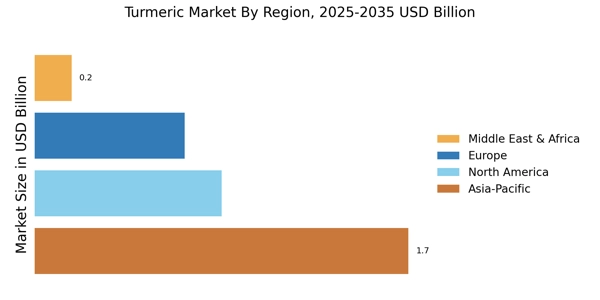
North America held a noteworthy position within the market, valued at 0.72 USD Billion, showcasing a solid growth trajectory by reaching 1.23 USD Billion by 2035. Europe followed, valued at 1.05 USD Billion in 2024, which signified its importance in the Global Turmeric Market revenue landscape, as it benefited from a growing trend towards health and wellness products.
The Asia-Pacific (APAC) region dominated the market with a substantial valuation of 1.36 USD Billion in 2024, reflecting the region's rich agricultural heritage and high consumption of turmeric in food and traditional medicine.
Meanwhile, South America and the Middle East and Africa (MEA) represented smaller but emerging markets, valued at 0.21 USD Billion and 0.09 USD Billion, respectively, in 2024, indicating opportunities for growth as demand begins to rise.
The diverse regional insights underscored the varying market dynamics, with APAC being the majority holder due to its cultural integration of turmeric, while North America and Europe experienced significant growth driven by health trends.
The Global Turmeric Market is a dynamic and rapidly evolving sector characterized by a diverse array of players competing for market share amid growing consumer demand for natural and health-enhancing products. The market is largely driven by the expanding awareness of turmeric's health benefits, such as its anti-inflammatory and antioxidant properties, spurring innovations in product development and increasing application across various industries, including food, cosmetics, and pharmaceuticals. Competitive insights within this landscape reveal a significant emphasis on sourcing high-quality turmeric, establishing sustainable farming practices, and creating unique product offerings that cater to evolving consumer preferences. Companies within this market are challenged to continuously enhance their supply chains and distribution networks while also investing in marketing strategies that effectively communicate the versatility and health benefits of turmeric to the end consumer. Health and Harmony is a prominent player in the Global Turmeric Market, known for its commitment to high-quality natural products that prioritize wellness. The company has established a robust presence through its diverse product line, which includes turmeric powders, extracts, and blends that are tailored to meet various consumer needs. Health and Harmony's strengths lie in its rigorous quality assurance processes, ensuring that all products sourced are organic and free from contaminants, which resonates well with health-conscious consumers. Additionally, the company leverages its expertise in herbal formulations to create blends that integrate turmeric with other beneficial herbs and spices, enhancing the overall health benefits. With a strong focus on sustainable sourcing and eco-friendly practices, Health and Harmony has built a loyal customer base that values the company's integrity and commitment to holistic health. Evanston Foods plays a significant role in the Global Turmeric Market by emphasizing the importance of quality and originality in its product offerings. Specializing in organic turmeric products, the company guarantees that its turmeric is sourced from trusted growers who adhere to sustainable farming practices. This commitment not only ensures high product quality but also positions Evanston Foods favorably among environmentally conscious consumers seeking to make responsible choices. The brand is recognized for its innovative approach to turmeric, introducing unique blends and value-added products that cater to a variety of culinary applications. By continuously engaging with consumers to assess their preferences, Evanston Foods enhances its market adaptability and expands its reach. Through a combination of quality assurance, consumer engagement, and innovative product development, Evanston Foods effectively strengthens its competitive edge in the growing Global Turmeric Market.
The Global Turmeric Market has been witnessing notable developments recently, with increasing demands in both culinary and health sectors. Companies such as Health and Harmony, Evanston Foods, and Kancor Ingredients are focusing on enhancing product quality and expanding their distribution networks to meet the rising consumer interest in turmeric's health benefits.
Additionally, Organic India and Dabur India Limited are launching new turmeric-based supplements to cater to the growing trend of natural health products. Moreover, Bioriginal Food and Science Corp reported a significant increase in market valuation, attributed to rising global awareness of turmeric's anti-inflammatory properties.
These trends are contributing positively to the overall market dynamics, drawing investments from major players like Herbalife Nutrition Ltd. and Nestlé S.A. Recent mergers and acquisitions, including potential collaborations by Indus Herbs and Turmeric Market Co., are also shaping the market landscape.
Consequently, this surge in activity is affecting supply chains and pricing strategies as businesses seek to solidify their positions in an increasingly competitive environment within the turmeric industry.
The Turmeric Market is projected to grow at a 4.98% CAGR from 2025 to 2035, driven by increasing health awareness, demand for natural products, and expanding culinary applications.
New opportunities lie in:
By 2035, the Turmeric Market is expected to solidify its position as a key player in the global health and wellness sector.
| MARKET SIZE 2024 | 3.43(USD Billion) |
| MARKET SIZE 2025 | 3.601(USD Billion) |
| MARKET SIZE 2035 | 5.854(USD Billion) |
| COMPOUND ANNUAL GROWTH RATE (CAGR) | 4.98% (2025 - 2035) |
| REPORT COVERAGE | Revenue Forecast, Competitive Landscape, Growth Factors, and Trends |
| BASE YEAR | 2024 |
| Market Forecast Period | 2025 - 2035 |
| Historical Data | 2019 - 2024 |
| Market Forecast Units | USD Billion |
| Key Companies Profiled | McCormick & Company (US), Dabur India Limited (IN), Kancor Ingredients Limited (IN), Organic India (IN), Starwest Botanicals (US), Sundaram Multi Pap Limited (IN), The Spice House (US), Frontier Co-op (US), Bennett & Coleman (IN) |
| Segments Covered | Application, Form, Source, Distribution Channel, Regional |
| Key Market Opportunities | Growing demand for organic turmeric products driven by health-conscious consumer trends. |
| Key Market Dynamics | Rising consumer demand for natural health products drives innovation and competition in the turmeric market. |
| Countries Covered | North America, Europe, APAC, South America, MEA |
The Turmeric Market was valued at 3.43 USD Billion in 2024.
The market is projected to reach 5.854 USD Billion by 2035.
The expected CAGR for the Turmeric Market during 2025 - 2035 is 4.98%.
Key players include McCormick & Company, Dabur India Limited, and Organic India, among others.
The main application segments include Food and Beverages, Cosmetics, Pharmaceuticals, and Nutraceuticals.
The Food and Beverages segment is projected to grow from 1.5 USD Billion in 2024 to 2.5 USD Billion by 2035.
The Cosmetics segment is expected to increase from 0.5 USD Billion in 2024 to 1.0 USD Billion by 2035.
Available forms of turmeric include Powder, Liquid, Capsules, and Extracts.
The Organic turmeric segment is projected to grow from 1.5 USD Billion in 2024 to 2.5 USD Billion by 2035.
Distribution channels, including Online and Offline sales, are expected to grow significantly, with Offline projected to reach 2.54 USD Billion by 2035.


The secondary research process involved comprehensive analysis of agricultural databases, food and beverage industry reports, peer-reviewed nutritional journals, cosmetic chemistry publications, pharmaceutical research, and authoritative health and trade organizations. Key sources included the Food and Agriculture Organization (FAO) of the United Nations, United States Department of Agriculture (USDA), European Food Safety Authority (EFSA), Food Standards Agency (FSA) UK, Spices Board of India, Agricultural and Processed Food Products Export Development Authority (APEDA), National Center for Biotechnology Information (NCBI/PubMed), National Institutes of Health (NIH) Office of Dietary Supplements, World Health Organization (WHO) Traditional Medicine Center, International Trade Centre (ITC) Trade Map, UN Comtrade Database, Organic Trade Association (OTA), International Federation of Organic Agriculture Movements (IFOAM), Cosmetics Europe, Personal Care Products Council (PCPC), United States Pharmacopeia (USP), European Directorate for the Quality of Medicines (EDQM), India Ministry of Commerce and Industry, National Agricultural Statistics Service (NASS), and national spice board reports from key producing nations. These sources were used to collect production and trade statistics, regulatory approval data for curcumin and turmeric extracts, clinical safety and efficacy studies, organic certification trends, and market landscape analysis for food-grade turmeric, pharmaceutical-grade curcuminoids, cosmetic applications, and nutraceutical formulations.
In order to gather both qualitative and quantitative insights, supply-side and demand-side stakeholders were interviewed during the primary research process. Managing directors, chief operating officers, vice presidents of sourcing and procurement, heads of quality assurance and regulatory affairs, and commercial directors from companies that grow turmeric, process spices, make oleoresin, extract curcumin, and manufacture finished goods were examples of supply-side sources. Procurement heads from food and beverage companies, R&D directors from cosmetic and personal care companies, formulation scientists from pharmaceutical companies, category managers from nutraceutical brands, and purchasing leads from retail chains, e-commerce platforms, specialty health stores, and foodservice distributors were examples of demand-side sources. In addition to confirming organic versus conventional sourcing trends, distribution channel dynamics, and market segmentation across powder, liquid, capsule, and extract forms, primary research also gathered information on pricing strategies, sustainability certifications, and regional consumption patterns.
Primary Respondent Breakdown:
By Designation: C-level Primaries (28%), Director Level (32%), Others (40%)
By Region: North America (32%), Europe (30%), Asia-Pacific (28%), Rest of World (10%)
Global market valuation was derived through production volume analysis, trade flow mapping, and revenue aggregation across the value chain. The methodology included:
Identification of 60+ key stakeholders across cultivation (India, Bangladesh, Myanmar, Indonesia), processing (oleoresin and curcumin extraction), and finished goods manufacturing across North America, Europe, Asia-Pacific, Latin America, and Middle East & Africa
Product mapping across powder, liquid, capsules, and extracts forms, with further segmentation by organic and conventional sourcing
Application-wise analysis covering food and beverages (culinary spices, natural coloring, functional foods), cosmetics (skincare, personal care), pharmaceuticals (APIs, formulations), and nutraceuticals (dietary supplements)
Distribution channel analysis across online (e-commerce platforms, D2C brands), offline (supermarkets, health food stores, pharmacies), and direct sales (foodservice, industrial bulk)
Analysis of reported and modeled annual revenues specific to turmeric portfolios, including raw spice trade, value-added extracts, and finished consumer products
Coverage of manufacturers and processors representing 75-80% of global market share in 2024
Extrapolation using bottom-up (production volume × farm-gate and processed prices by country, trade volume × international prices, and application-specific demand modeling) and top-down (manufacturer revenue validation, trade statistics reconciliation) approaches to derive segment-specific valuations across all form factors, sources, applications, and distribution channels
Kindly complete the form below to receive a free sample of this Report

“This is really good guys. Excellent work on a tight deadline. I will continue to use you going forward and recommend you to others. Nice job”


“Thanks. It’s been a pleasure working with you, please use me as reference with any other Intel employees.”


“Thanks for sending the report it gives us a good global view of the Betaïne market.”


“Thank you, this will be very helpful for OQS.”


“We found the report very insightful! we found your research firm very helpful. I'm sending this email to secure our future business.”


“I am very pleased with how market segments have been defined in a relevant way for my purposes (such as "Portable Freezers & refrigerators" and "last-mile"). In general the report is well structured. Thanks very much for your efforts.”


“I have been reading the first document or the study, ,the Global HVAC and FP market report 2021 till 2026. Must say, good info! I have not gone in depth at all parts, but got a good indication of the data inside!”


“We got the report in time, we really thank you for your support in this process. I also thank to all of your team as they did a great job.”


“The Automotive 48V ECU Components Procurement Intelligence Study” was a complex project, but the Market Research Future (MRFR) team handled it with quality, agility, and customer-centricity. They delivered all requested data on time and within the agreed scope. The team, including Shubhendra Anand and Rahul Gotadki, was always readily available to clarify questions and swiftly implement necessary adjustments, driving the project to a successful conclusion within a very demanding timeframe.
I would also like to specifically commend Akshay Agarwal for his responsiveness and support at every stage—from our initial inquiry on May 6th through to final delivery on June 18th. His dedication made the entire process seamless.”



