Download Free Sample
Kindly complete the form below to receive a free sample of this Report
As per MRFR analysis, the UK Botulinum Toxin Market Size was estimated at 175.95 USD Million in 2024. The Botulinum Toxin industry is projected to grow from 194.44 in 2025 to 527.85 by 2035, exhibiting a compound annual growth rate (CAGR) of 10.5 during the forecast period 2025 - 2035.
The UK Botulinum Toxin Market is experiencing robust growth driven by aesthetic and therapeutic applications.
| 2024 Market Size | 175.95 (USD Million) |
| 2035 Market Size | 527.85 (USD Million) |
| CAGR (2025 - 2035) | 10.5% |
Allergan (GB), Ipsen (GB), Medytox (GB), Revance Therapeutics (GB), Hugel (GB), Medytox (GB), Galderma (GB), Sientra (GB)
Our Impact
Enabled $4.3B Revenue Impact for Fortune 500 and Leading Multinationals
Partnering with 2000+ Global Organizations Each Year
30K+ Citations by Top-Tier Firms in the Industry
The UK Botulinum Toxin Market is currently experiencing a notable evolution, driven by increasing consumer awareness regarding aesthetic procedures and the therapeutic applications of botulinum toxin. This market appears to be expanding as more individuals seek non-invasive treatments for both cosmetic and medical purposes. The rise in demand for minimally invasive procedures, coupled with advancements in technology, suggests a shift in consumer preferences towards safer and more effective options. Furthermore, the regulatory landscape in the UK is evolving, which may influence the availability and use of botulinum toxin products in various sectors, including dermatology and neurology. In addition, the UK Botulinum Toxin Market seems to be characterized by a growing emphasis on safety and efficacy. Healthcare professionals are increasingly focusing on training and certification to ensure that procedures are performed correctly, which may enhance patient trust and satisfaction. The market could also witness a rise in competition among manufacturers, leading to innovations in product formulations and delivery methods. Overall, the UK Botulinum Toxin Market appears poised for continued growth, driven by changing consumer attitudes and advancements in medical practices.
The UK Botulinum Toxin Market is witnessing a surge in demand for aesthetic procedures. Consumers are increasingly opting for non-surgical options to enhance their appearance, which may lead to a broader acceptance of botulinum toxin treatments. This trend suggests a shift in societal norms regarding beauty and self-care.
There is a growing recognition of the therapeutic benefits of botulinum toxin beyond cosmetic uses. Conditions such as chronic migraines and excessive sweating are being treated with these products, indicating a potential for market diversification. This expansion may attract a wider range of healthcare professionals to incorporate botulinum toxin into their practice.
The UK Botulinum Toxin Market is increasingly prioritizing safety and proper training for practitioners. As the number of procedures rises, there is a corresponding emphasis on ensuring that healthcare providers are adequately trained. This focus on education may enhance patient outcomes and foster greater confidence in the use of botulinum toxin.
The UK Botulinum Toxin Market benefits from a robust regulatory framework that supports the safe use of botulinum toxin products. The Medicines and Healthcare products Regulatory Agency (MHRA) plays a crucial role in ensuring that these products meet stringent safety and efficacy standards. Recent guidelines have been established to streamline the approval process for new botulinum toxin formulations, which may encourage innovation and competition within the market. Furthermore, the UK government has been proactive in promoting the use of botulinum toxin for therapeutic purposes, which could expand its applications beyond aesthetics. This regulatory support is essential for fostering a secure environment for both practitioners and patients, thereby enhancing market growth.
The proliferation of medical aesthetic clinics across the UK is a significant driver for the Botulinum Toxin Market. These clinics are increasingly offering a range of services, including botulinum toxin injections, which cater to the growing demand for non-surgical aesthetic procedures. The number of registered aesthetic practitioners has seen a steady increase, with estimates suggesting a growth of over 20% in the past five years. This expansion is not only making treatments more accessible to a wider audience but also fostering a competitive environment that encourages quality and innovation. As more clinics emerge, the market is likely to witness enhanced service offerings and improved consumer experiences, further stimulating growth.
The UK Botulinum Toxin Market is poised for growth due to the rising disposable income among consumers. As economic conditions improve, individuals are increasingly willing to invest in aesthetic treatments, including botulinum toxin procedures. Reports indicate that the average spending on cosmetic procedures has risen by approximately 15% over the past few years, reflecting a shift in consumer attitudes towards self-care and appearance enhancement. This trend is particularly evident among younger demographics, who are more inclined to seek out aesthetic treatments as part of their lifestyle choices. Consequently, the increase in disposable income is expected to bolster demand for botulinum toxin products and services in the UK.
The UK Botulinum Toxin Market is experiencing a notable surge in awareness regarding the benefits of botulinum toxin treatments. This increase in public knowledge is largely driven by social media and celebrity endorsements, which have popularized aesthetic procedures. As a result, more individuals are seeking information about the potential applications of botulinum toxin, not only for cosmetic enhancements but also for medical conditions such as chronic migraines and excessive sweating. According to recent surveys, approximately 30% of adults in the UK are now familiar with botulinum toxin treatments, indicating a growing acceptance and demand. This heightened awareness is likely to propel the market forward, as consumers become more informed about the safety and efficacy of these treatments.
Technological advancements are significantly influencing the UK Botulinum Toxin Market, particularly in the development of new treatment techniques and delivery methods. Innovations such as micro-needling and ultrasound-guided injections are enhancing the precision and effectiveness of botulinum toxin applications. These advancements not only improve patient outcomes but also reduce the risk of complications, which is paramount in maintaining consumer trust. Additionally, the integration of digital platforms for consultation and treatment planning is becoming increasingly prevalent, allowing practitioners to offer personalized services. As these technologies continue to evolve, they are likely to attract a broader clientele, further driving market growth.
In the UK Botulinum Toxin Market, the application segment is primarily dominated by Cosmetic Procedures, which holds a significant market share due to the growing preferences for aesthetic enhancements among consumers. As the societal acceptance of cosmetic procedures increases, more individuals are willing to invest in services aimed at improving their appearance. Meanwhile, Medical Treatments, encompassing a range of therapeutic uses, is rapidly gaining traction as healthcare practitioners recognize the efficacy of botulinum toxin in addressing various medical conditions.
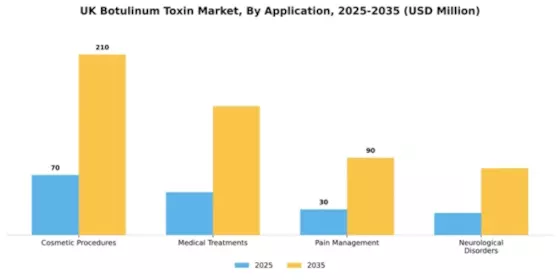
Cosmetic Procedures (Dominant) vs. Medical Treatments (Emerging)
Cosmetic Procedures currently stand out as the dominant application in the UK Botulinum Toxin Market, largely due to high consumer demand for aesthetic treatments such as wrinkle reduction and facial rejuvenation. This segment thrives on trends influenced by social media and celebrity endorsements, propelling its growth. Conversely, Medical Treatments, while emerging, showcase substantial potential as innovative applications in areas such as neurological disorders and pain management become more recognized. Increasing clinical evidence supporting the therapeutic benefits of botulinum toxin is predicted to drive this segment forward, with healthcare professionals eagerly exploring its applications beyond cosmetic uses.
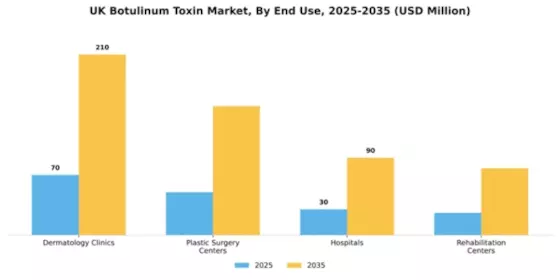
The UK Botulinum Toxin Market exhibits a varied landscape across its end-use segments, with Dermatology Clinics holding the largest share by catering to cosmetic and therapeutic needs. These clinics leverage the growing demand for aesthetic procedures and non-surgical treatment options, thus solidifying their position in the market. Conversely, Plastic Surgery Centers are rapidly increasing in popularity, driven by advancements in surgical techniques and rising public awareness of cosmetic enhancements. Both segments serve distinct patient demographics yet contribute significantly to market dynamics. Growth trends indicate a robust demand for Botulinum Toxin in both Dermatology Clinics and Plastic Surgery Centers. The rise in minimally invasive procedures and consumer preference for botulinum treatments to achieve youthful appearances are key drivers fueling this market. Furthermore, hospitals and rehabilitation centers are also witnessing an uptick in utilization, though at a slower pace, suggesting that specialized clinics will continue to lead the segment, especially as new applications for botulinum toxin are explored.
Dermatology Clinics (Dominant) vs. Rehabilitation Centers (Emerging)
Dermatology Clinics are a dominant force in the UK Botulinum Toxin Market, providing a wide array of cosmetic services that cater to patients seeking anti-aging solutions. These clinics are typically equipped with advanced technology and trained professionals who ensure high standards of care. They play a crucial role in educating clients about the benefits and risks associated with botulinum treatments, fostering trust and loyalty. On the other hand, Rehabilitation Centers, though currently an emerging segment, are beginning to adopt Botulinum Toxin for therapeutic purposes, particularly in neuromuscular disorders. Their growth potential lies in the integration of aesthetic and therapeutic market approaches, positioning them uniquely as they tap into a previously underutilized sector.
In the UK Botulinum Toxin Market, Botulinum Toxin Type A dominates, accounting for the largest share of the market. This product is widely recognized for its effectiveness in cosmetic and therapeutic applications, positioning it as a ubiquitous choice among practitioners and patients alike. In contrast, Botulinum Toxin Type B is gaining traction, carving out a notable niche due to its unique therapeutic benefits, particularly for patients who may not respond well to Type A, thereby enhancing the competitive dynamics of the market.
Botulinum Toxin Type A (Dominant) vs. Botulinum Toxin Type B (Emerging)
Botulinum Toxin Type A remains the dominant player in the UK Botulinum Toxin Market, chosen for its proven efficacy and broad applicability across cosmetic enhancements and various therapeutic treatments such as chronic migraines and spasticity. This type is typically the first-line option for many practitioners, leading to its widespread use. Conversely, Botulinum Toxin Type B is emerging as a valuable alternative, particularly for patients with specific needs that Type A cannot satisfy. Its unique mechanisms provide distinct advantages in treating certain conditions, driving its rapid acceptance and growth, especially among specialized treatment providers.

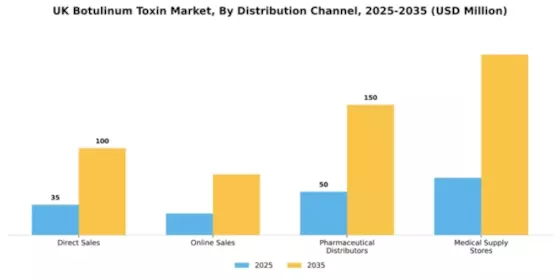
In the UK Botulinum Toxin Market, the distribution of sales across different channels reveals distinct characteristics. Direct Sales holds a significant portion of the market as it allows for personalized service and direct interaction between practitioners and suppliers, leading to strong customer loyalty. In contrast, Online Sales is gaining momentum, appealing to an increasingly tech-savvy customer base looking for convenience and accessibility, thereby expanding its market share considerably.
Direct Sales (Dominant) vs. Online Sales (Emerging)
Direct Sales remains the dominant channel in the UK Botulinum Toxin Market, as it allows suppliers to cultivate strong relationships with healthcare professionals and clinics, facilitating better understanding of customer needs and preferences. This channel is characterized by hands-on service and rapid delivery times. Meanwhile, Online Sales is emerging as a significant and quickly expanding channel, driven by the increasing acceptance of e-commerce and the demand for immediate access to products. Online platforms provide a broader reach and cater to a demographic that values online purchasing convenience, thus reshaping how botulinum products are accessed and consumed.
Get more detailed insights about UK Botulinum Toxin Market Request Free Sample
The UK Botulinum Toxin Market is characterized by a competitive landscape that is increasingly shaped by innovation, strategic partnerships, and a focus on expanding therapeutic applications. Key players such as Allergan (GB), Ipsen (GB), and Galderma (GB) are actively pursuing strategies that emphasize product differentiation and market penetration. Allergan (GB), known for its flagship product Botox, continues to leverage its strong brand presence while investing in research and development to enhance its product offerings. Ipsen (GB) is focusing on expanding its portfolio through strategic collaborations, particularly in the therapeutic domain, which may enhance its competitive positioning. Galderma (GB) appears to be concentrating on digital transformation initiatives, aiming to improve customer engagement and streamline operations, thereby shaping the competitive dynamics of the market.The business tactics employed by these companies reflect a concerted effort to optimize supply chains and localize manufacturing processes. The market structure is moderately fragmented, with several players vying for market share. However, the collective influence of major companies like Allergan (GB) and Ipsen (GB) suggests a trend towards consolidation, as these firms seek to enhance their operational efficiencies and market reach.In January 2026, Allergan (GB) announced a strategic partnership with a leading biotechnology firm to co-develop a new formulation of its botulinum toxin product aimed at treating chronic migraines. This collaboration is significant as it not only diversifies Allergan's product pipeline but also reinforces its commitment to addressing unmet medical needs, potentially increasing its market share in the therapeutic segment.In December 2025, Ipsen (GB) launched a new marketing campaign targeting aesthetic practitioners, emphasizing the safety and efficacy of its botulinum toxin products. This initiative is crucial as it aims to strengthen Ipsen's brand recognition in the aesthetic market, which is becoming increasingly competitive. By enhancing its visibility among practitioners, Ipsen (GB) may improve its sales performance and customer loyalty.In November 2025, Galderma (GB) unveiled a digital platform designed to facilitate better communication between healthcare providers and patients regarding botulinum toxin treatments. This move is indicative of a broader trend towards digitalization in the healthcare sector, as it seeks to enhance patient education and engagement, potentially leading to increased treatment uptake.As of February 2026, the competitive trends in the UK Botulinum Toxin Market are increasingly defined by digitalization, sustainability, and the integration of artificial intelligence in product development and marketing strategies. Strategic alliances are becoming more prevalent, as companies recognize the value of collaboration in navigating the complexities of the market. Looking ahead, competitive differentiation is likely to evolve from traditional price-based competition to a focus on innovation, technological advancements, and supply chain reliability, which may ultimately reshape the landscape of the industry.
The UK Botulinum Toxin Market is projected to grow at a 10.5% CAGR from 2024 to 2035, driven by increasing aesthetic procedures, therapeutic applications, and technological advancements.
New opportunities lie in:
By 2035, the market is expected to solidify its position as a leader in aesthetic and therapeutic solutions.
| MARKET SIZE 2024 | 175.95(USD Million) |
| MARKET SIZE 2025 | 194.44(USD Million) |
| MARKET SIZE 2035 | 527.85(USD Million) |
| COMPOUND ANNUAL GROWTH RATE (CAGR) | 10.5% (2024 - 2035) |
| REPORT COVERAGE | Revenue Forecast, Competitive Landscape, Growth Factors, and Trends |
| BASE YEAR | 2024 |
| Market Forecast Period | 2025 - 2035 |
| Historical Data | 2019 - 2024 |
| Market Forecast Units | USD Million |
| Key Companies Profiled | Allergan (GB), Ipsen (GB), Medytox (GB), Revance Therapeutics (GB), Hugel (GB), Medytox (GB), Galderma (GB), Sientra (GB) |
| Segments Covered | Application, End Use, Product Type, Distribution Channel |
| Key Market Opportunities | Growing demand for non-surgical aesthetic procedures drives innovation in the UK Botulinum Toxin Market. |
| Key Market Dynamics | Regulatory changes and consumer preferences drive innovation and competition in the UK Botulinum Toxin Market. |
| Countries Covered | UK |


Kindly complete the form below to receive a free sample of this Report

“This is really good guys. Excellent work on a tight deadline. I will continue to use you going forward and recommend you to others. Nice job”


“Thanks. It’s been a pleasure working with you, please use me as reference with any other Intel employees.”


“Thanks for sending the report it gives us a good global view of the Betaïne market.”


“Thank you, this will be very helpful for OQS.”


“We found the report very insightful! we found your research firm very helpful. I'm sending this email to secure our future business.”


“I am very pleased with how market segments have been defined in a relevant way for my purposes (such as "Portable Freezers & refrigerators" and "last-mile"). In general the report is well structured. Thanks very much for your efforts.”


“I have been reading the first document or the study, ,the Global HVAC and FP market report 2021 till 2026. Must say, good info! I have not gone in depth at all parts, but got a good indication of the data inside!”


“We got the report in time, we really thank you for your support in this process. I also thank to all of your team as they did a great job.”


“The Automotive 48V ECU Components Procurement Intelligence Study” was a complex project, but the Market Research Future (MRFR) team handled it with quality, agility, and customer-centricity. They delivered all requested data on time and within the agreed scope. The team, including Shubhendra Anand and Rahul Gotadki, was always readily available to clarify questions and swiftly implement necessary adjustments, driving the project to a successful conclusion within a very demanding timeframe.
I would also like to specifically commend Akshay Agarwal for his responsiveness and support at every stage—from our initial inquiry on May 6th through to final delivery on June 18th. His dedication made the entire process seamless.”



