Download Free Sample
Kindly complete the form below to receive a free sample of this Report
UK Dyslexia Treatment Market Research Report By Type (Phonological Dyslexia, Surface Dyslexia, Others), By Treatment & Diagnosis (Medications, Tools, DIAGNOSIS) and By End Users (Specialty Center, Home Care, Hospitals & Clinics, Others) - Growth & Industry Forecast 2025 To 2035
As per Market Research Future analysis, the UK dyslexia treatment market size was estimated at 1175.59 USD Million in 2024. The UK dyslexia treatment market is projected to grow from 1259.64 USD Million in 2025 to 2513.0 USD Million by 2035, exhibiting a compound annual growth rate (CAGR) of 7.1% during the forecast period 2025 - 2035
The UK dyslexia treatment market is experiencing a transformative shift towards early intervention and technology integration.
| 2024 Market Size | 1175.59 (USD Million) |
| 2035 Market Size | 2513.0 (USD Million) |
| CAGR (2025 - 2035) | 7.15% |
Bristol-Myers Squibb (US), Pearson (GB), Houghton Mifflin Harcourt (US), Lexia Learning (US), Nessy (GB), Learning Ally (US), Dyslexia Gold (GB), Read Naturally (US)
Our Impact
Enabled $4.3B Revenue Impact for Fortune 500 and Leading Multinationals
Partnering with 2000+ Global Organizations Each Year
30K+ Citations by Top-Tier Firms in the Industry
The dyslexia treatment market is currently experiencing significant changes, driven by a growing awareness of learning disabilities and the need for effective interventions. Recent initiatives by educational institutions and healthcare providers emphasize early diagnosis and tailored support for individuals with dyslexia. This shift reflects a broader societal understanding of the challenges faced by those with learning differences, leading to increased demand for specialized resources and therapies. Furthermore, advancements in technology are playing a pivotal role in shaping treatment options, with digital tools and applications emerging as valuable aids in the learning process. In addition, the dyslexia treatment market is witnessing a rise in collaborative efforts among educators, therapists, and parents. This partnership approach aims to create a more supportive environment for individuals with dyslexia, ensuring that they receive comprehensive care. As a result, there is a growing emphasis on training programs for educators to equip them with the necessary skills to identify and assist students with dyslexia. Overall, the landscape of the dyslexia treatment market appears to be shifting towards a more inclusive and informed framework, fostering better outcomes for those affected by this condition.
There is a noticeable trend towards prioritizing early intervention strategies in the dyslexia treatment market. Educational institutions are increasingly implementing screening programs to identify dyslexia at a young age, allowing for timely support and tailored learning plans. This proactive approach aims to mitigate the long-term impacts of dyslexia on academic performance and self-esteem.
The integration of technology into dyslexia treatment is becoming more prevalent. Digital tools, such as specialized software and mobile applications, are being utilized to enhance learning experiences. These resources provide interactive and engaging methods for individuals with dyslexia, potentially improving their reading and writing skills.
Collaboration among various stakeholders, including educators, healthcare professionals, and families, is emerging as a key trend. This collective effort seeks to create a holistic support system for individuals with dyslexia. By sharing knowledge and resources, stakeholders aim to develop comprehensive strategies that address the diverse needs of those affected by dyslexia.
The increasing awareness of dyslexia among educators, parents, and healthcare professionals is a pivotal driver in the market. As understanding of the condition improves, more individuals are seeking diagnosis and treatment options. This heightened awareness is reflected in the rising number of children diagnosed with dyslexia, which has been reported to be around 10% in the UK. Consequently, educational institutions are adapting their curricula to accommodate these learners, thereby creating a demand for specialized treatment programs. The market is likely to benefit from this trend, as more resources are allocated to support affected individuals. Furthermore, public campaigns and initiatives aimed at educating the population about dyslexia are expected to continue, further propelling the market forward.
A supportive legislative framework is emerging as a critical driver in the dyslexia treatment market. Recent policies in the UK have emphasized the importance of providing adequate support for individuals with learning disabilities, including dyslexia. The Children and Families Act 2014, for instance, mandates that local authorities ensure that children with special educational needs receive appropriate support. This legal backing has led to an increase in resources allocated to dyslexia treatment programs, fostering a more inclusive educational environment. As schools and organizations align their practices with these legislative requirements, The market is likely to see growth. The ongoing commitment to improving educational access for dyslexic individuals suggests a positive trajectory for the market in the coming years.
Innovations in educational techniques and methodologies are significantly influencing the dyslexia treatment market. Evidence-based approaches, such as structured literacy programs, have gained traction in recent years, demonstrating effectiveness in improving reading skills among dyslexic students. The UK government has invested in training teachers to implement these techniques, which has led to a more supportive learning environment. As a result, the demand for specialized training and resources in the dyslexia treatment market is on the rise. Additionally, the integration of multi-sensory learning strategies has shown promise in enhancing engagement and retention for dyslexic learners. This evolution in educational practices is likely to foster a more inclusive atmosphere, ultimately benefiting the dyslexia treatment market.
The market is experiencing growth due to increased funding for special education programs in the UK. Government initiatives aimed at improving educational outcomes for children with learning disabilities have led to a rise in financial support for schools and organizations that provide dyslexia treatment. Reports indicate that funding for special educational needs has increased by approximately 15% over the past few years, allowing for the development of tailored programs and resources. This financial backing is crucial for the implementation of effective treatment strategies, as it enables schools to hire specialized staff and invest in necessary materials. Consequently, the dyslexia treatment market is likely to expand as more institutions are equipped to address the needs of dyslexic students.
The shift towards personalized learning solutions is a notable driver in the dyslexia treatment market. As educational paradigms evolve, there is a growing recognition that individualized approaches can significantly enhance learning outcomes for dyslexic students. This trend is supported by research indicating that tailored interventions can improve reading proficiency by up to 30%. In response, educational technology companies are developing adaptive learning tools that cater specifically to the needs of dyslexic learners. These innovations are gaining traction in the UK, where schools are increasingly adopting personalized learning strategies. The market is poised to benefit from this demand, as more resources are allocated to create customized solutions that address the unique challenges faced by dyslexic individuals.
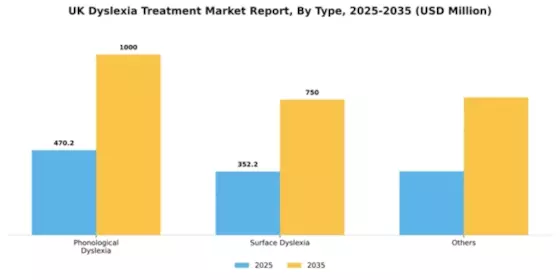
In the UK dyslexia treatment market, Phonological Dyslexia has emerged as the largest segment, eclipsing others in terms of market share. This type of dyslexia, which primarily impacts the ability to manipulate sounds in language, accounts for a significant portion of the treatment demographics. Conversely, Surface Dyslexia, although smaller in share, is gaining traction as awareness and understanding of this subtype grow, leading to increased demand for targeted treatments. Growth trends indicate a rising focus on comprehensive educational frameworks that cater to different dyslexia types. The increasing prevalence of dyslexia diagnoses is driving the market's expansion, with specialized programs and interventions for Surface Dyslexia becoming more prevalent. As educators become more informed and inclusive, investments in diverse treatment options for both segments are expected to rise, enhancing overall market prospects.
Phonological Dyslexia: Dominant vs. Surface Dyslexia: Emerging
Phonological Dyslexia is recognized as the dominant segment in the UK dyslexia treatment market. This type is characterized by challenges in phonemic awareness and sound processing, profoundly affecting reading abilities. Treatment approaches often involve phonics-based interventions that focus on sound-letter relationships. On the other hand, Surface Dyslexia is emerging as a vital segment, noted for difficulties with whole word recognition and visual memory. As practitioners evolve their strategies, tailored therapies are being developed, enhancing the efficacy of treatments for Surface Dyslexia. Both segments represent the crucial diversity within dyslexia treatment, ensuring that resources and methodologies address the varied needs of individuals affected.
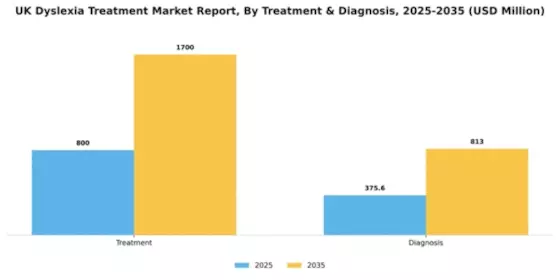
In the UK dyslexia treatment market, the distribution of market share between treatment and diagnosis is notably skewed, with treatment emerging as the largest segment. This is largely due to the critical need for effective interventions and support services tailored to individuals diagnosed with dyslexia, reflecting a consolidated investment towards therapeutic solutions. Conversely, the diagnosis segment, though smaller in overall share, is recognized for its rapid growth as awareness about dyslexia increases and more individuals seek formal assessments, thus expanding its footprint in the marketplace. Growth trends indicate a burgeoning recognition of dyslexia, driving demand both for comprehensive assessments in the diagnosis segment and for innovative treatment solutions. Factors contributing to this trend include increased advocacy for neurodiversity, enhancements in diagnostic technologies, and the development of more tailored treatment programs. As stakeholders prioritize these areas, the UK dyslexia treatment market will likely see sustained momentum, with treatment methods continuously evolving to meet emerging educational and therapeutic needs.
Treatment (Dominant) vs. Diagnosis (Emerging)
In the UK dyslexia treatment market, the treatment segment stands as the dominant force, characterized by a wide array of interventions including behavioral therapies, specialized tutoring, and technological aids aimed at enhancing reading and learning capabilities. These approaches are increasingly personalized, taking into account the unique profiles of individuals with dyslexia. On the other hand, the diagnosis segment is emerging rapidly, catalyzed by greater understanding and acceptance of dyslexia. Diagnostic tools have advanced significantly, aligning with improved identification methods that cater to various age groups. The growing emphasis on early intervention underscores the importance of timely diagnosis to facilitate effective treatment, thus bridging the gap between diagnosis and therapeutic practices in this dynamic marketplace.
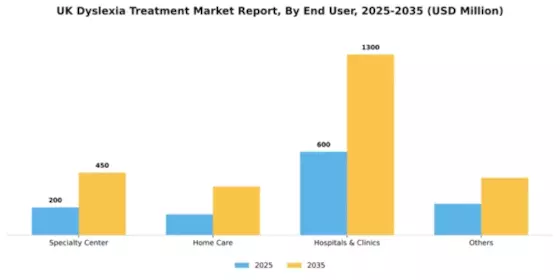
The UK dyslexia treatment market is distinctly segmented among various end users, with Specialty Centers commanding the largest share. These centers specialize in comprehensive diagnosis and tailored treatment plans, positioning themselves as the preferred choice for many affected individuals. On the other hand, Home Care services are experiencing rapid growth, catering to those seeking more convenient, flexible treatment options. This shift reflects changing consumer preferences towards personalized and accessible care solutions. Factors driving the growth of Home Care services include advancements in teletherapy, increased awareness of dyslexia, and a growing demand for in-home support. Additionally, the integration of technology in treatment plans enhances the overall experience, making it more effective and adaptable. Specialty Centers remain vital for comprehensive care, yet the emerging trend of Home Care highlights the need for diverse treatment avenues in the UK dyslexia treatment market.
Specialty Center (Dominant) vs. Home Care (Emerging)
Specialty Centers play a dominant role in the UK dyslexia treatment market, offering specialized facilities equipped with trained professionals who provide targeted therapies and resources for affected individuals. Their comprehensive approach ensures that diagnosis and treatment are tailored to the specific needs of each patient, fostering optimal outcomes. The demand for these centers is driven by their reputation for effective care and the complexity of dyslexia, necessitating specialized attention. Conversely, Home Care services are emerging as a significant alternative, appealing to a broader audience seeking flexibility. These services leverage technology to deliver personalized treatment plans in a comfort-oriented environment, addressing the needs of individuals unwilling or unable to visit traditional facilities. Together, these segments illustrate the dynamic landscape of treatment options available in the market.
Get more detailed insights about UK Dyslexia Treatment Market Request Free Sample
The dyslexia treatment market exhibits a dynamic competitive landscape characterized by a blend of innovation, strategic partnerships, and a focus on digital transformation. Key players such as Pearson (GB), Dyslexia Gold (GB), and Houghton Mifflin Harcourt (US) are actively shaping the market through their distinct operational strategies. Pearson (GB) emphasizes educational technology, leveraging its extensive portfolio to enhance learning experiences for dyslexic students. Dyslexia Gold (GB) focuses on developing targeted interventions that utilize gamification to engage learners, while Houghton Mifflin Harcourt (US) is investing in adaptive learning technologies to personalize educational content. Collectively, these strategies foster a competitive environment that prioritizes tailored solutions and technological advancements.In terms of business tactics, companies are increasingly localizing their operations to better serve the UK market, optimizing supply chains to enhance efficiency. The market structure appears moderately fragmented, with a mix of established players and emerging startups. This fragmentation allows for diverse approaches to treatment, although the influence of major companies remains substantial, as they set benchmarks for quality and innovation.
In October Pearson (GB) announced a partnership with a leading tech firm to integrate AI-driven analytics into its dyslexia treatment programs. This strategic move is likely to enhance the personalization of learning experiences, allowing educators to tailor interventions based on real-time data. Such advancements may position Pearson as a frontrunner in the market, as the demand for data-driven solutions continues to rise.
In September Dyslexia Gold (GB) launched a new online platform designed to provide comprehensive resources for educators and parents. This initiative not only expands their product offerings but also strengthens their community engagement, which is crucial for building brand loyalty. The platform's focus on accessibility and user-friendliness could potentially attract a broader audience, thereby increasing market share.
In August Houghton Mifflin Harcourt (US) unveiled a new suite of digital tools aimed at enhancing reading comprehension for dyslexic students. This launch reflects a growing trend towards digitalization in educational resources, suggesting that the company is keen on maintaining its competitive edge through continuous innovation. The integration of these tools into existing curricula may facilitate smoother adoption by educators, further solidifying Houghton Mifflin Harcourt's position in the market.
As of November the competitive trends in the dyslexia treatment market are increasingly defined by digitalization, sustainability, and the integration of AI technologies. Strategic alliances are becoming more prevalent, as companies recognize the value of collaboration in enhancing their offerings. Looking ahead, competitive differentiation is likely to evolve from traditional price-based strategies to a focus on innovation, technological advancements, and supply chain reliability. This shift underscores the importance of adaptability in a rapidly changing market landscape.



Recent developments in the UK Dyslexia Treatment Market include a growing emphasis on personalized learning approaches, with companies like Dyslexia Action and Lexonik expanding their offerings to meet diverse learning needs. Funding initiatives by the British Dyslexia Association have also been instrumental in advocating for better access to resources and support, particularly in schools. In terms of market dynamics, notable advancements have been made in the incorporation of technology in dyslexia treatment, led by companies like Nessy and Sound Reading System, which offer innovative educational tools.
In regards to mergers and acquisitions, there were no recent significant transactions reported among key players like Dyslexia Search and The Tutor Trust, suggesting a relatively stable market environment. However, in the last two years, Beechwood Therapy gained recognition for its effective interventions, and MindSpark Learning initiated strategic partnerships with educational institutions to enhance dyslexia support. The UK's commitment to improving literacy rates and support for individuals with dyslexia remains a priority, as reflected in government initiatives and collaboration between organizations to strengthen treatment frameworks and accessibility across various regions.
The Dyslexia Treatment Market is projected to grow at a 7.15% CAGR from 2025 to 2035, driven by increasing awareness, technological advancements, and enhanced educational support.
New opportunities lie in:
By 2035, the dyslexia treatment market is expected to achieve substantial growth and innovation.
| MARKET SIZE 2024 | 1175.59(USD Million) |
| MARKET SIZE 2025 | 1259.64(USD Million) |
| MARKET SIZE 2035 | 2513.0(USD Million) |
| COMPOUND ANNUAL GROWTH RATE (CAGR) | 7.15% (2025 - 2035) |
| REPORT COVERAGE | Revenue Forecast, Competitive Landscape, Growth Factors, and Trends |
| BASE YEAR | 2024 |
| Market Forecast Period | 2025 - 2035 |
| Historical Data | 2019 - 2024 |
| Market Forecast Units | USD Million |
| Key Companies Profiled | Bristol-Myers Squibb (US), Pearson (GB), Houghton Mifflin Harcourt (US), Lexia Learning (US), Nessy (GB), Learning Ally (US), Dyslexia Gold (GB), Read Naturally (US) |
| Segments Covered | Type, Treatment & Diagnosis, End User |
| Key Market Opportunities | Integration of digital tools and personalized learning approaches enhances dyslexia treatment market potential. |
| Key Market Dynamics | Growing emphasis on personalized learning strategies drives innovation in dyslexia treatment solutions within the UK. |
| Countries Covered | UK |
The market valuation was $1175.59 Million in 2024.
The projected valuation for 2035 is $2513.0 Million.
The expected CAGR is 7.15% during the forecast period 2025 - 2035.
The Treatment segment had the highest valuation at $800.0 Million in 2024.
Key players include Bristol-Myers Squibb, Pearson, Houghton Mifflin Harcourt, Lexia Learning, Nessy, Learning Ally, Dyslexia Gold, and Read Naturally.
The Phonological Dyslexia segment was valued at $470.2365 Million in 2024.
The Surface Dyslexia segment was valued at $352.2365 Million, which is lower than the Phonological Dyslexia segment but higher than the Others segment.
The Home Care segment is projected to grow from $150.0 Million in 2024 to a higher valuation by 2035.
The Hospitals & Clinics segment was valued at $600.0 Million in 2024.
The market is expected to grow steadily, reaching a valuation of $2513.0 Million by 2035.



Kindly complete the form below to receive a free sample of this Report

“This is really good guys. Excellent work on a tight deadline. I will continue to use you going forward and recommend you to others. Nice job”


“Thanks. It’s been a pleasure working with you, please use me as reference with any other Intel employees.”


“Thanks for sending the report it gives us a good global view of the Betaïne market.”


“Thank you, this will be very helpful for OQS.”


“We found the report very insightful! we found your research firm very helpful. I'm sending this email to secure our future business.”


“I am very pleased with how market segments have been defined in a relevant way for my purposes (such as "Portable Freezers & refrigerators" and "last-mile"). In general the report is well structured. Thanks very much for your efforts.”


“I have been reading the first document or the study, ,the Global HVAC and FP market report 2021 till 2026. Must say, good info! I have not gone in depth at all parts, but got a good indication of the data inside!”


“We got the report in time, we really thank you for your support in this process. I also thank to all of your team as they did a great job.”


“The Automotive 48V ECU Components Procurement Intelligence Study” was a complex project, but the Market Research Future (MRFR) team handled it with quality, agility, and customer-centricity. They delivered all requested data on time and within the agreed scope. The team, including Shubhendra Anand and Rahul Gotadki, was always readily available to clarify questions and swiftly implement necessary adjustments, driving the project to a successful conclusion within a very demanding timeframe.
I would also like to specifically commend Akshay Agarwal for his responsiveness and support at every stage—from our initial inquiry on May 6th through to final delivery on June 18th. His dedication made the entire process seamless.”



