Download Free Sample
Kindly complete the form below to receive a free sample of this Report
UK Empty Capsule Market Research Report: Size, Share, Trend Analysis By Types (Gelatin Capsules, Vegetarian Capsules), By Functionality (Fast-release Capsules, Slow-release Capsules), By Physical Characteristics (Halal, Non-Halal), By Form (Hard Capsules, Soft Capsules), By Appearance (Transparent, Opaque) and By Applications (Pharmaceutical, Nutraceutical) - Growth Outlook & Industry Forecast 2025 To 2035
As per Market Research Future analysis, the UK empty capsule market Size was estimated at 1274.62 USD Million in 2024. The UK empty capsule market is projected to grow from 1359.9 USD Million in 2025 to 2599.37 USD Million by 2035, exhibiting a compound annual growth rate (CAGR) of 6.6% during the forecast period 2025 - 2035
The UK empty capsule market is experiencing a notable shift towards sustainability and personalization.
| 2024 Market Size | 1274.62 (USD Million) |
| 2035 Market Size | 2599.37 (USD Million) |
| CAGR (2025 - 2035) | 6.69% |
Capsugel (BE), Qualicaps (JP), ACG Worldwide (IN), Suheung Co Ltd (KR), Lonza Group (CH), Famar (FR), Medisca (CA), Roxlor (US), Ginkgo BioWorks (US)
Our Impact
Enabled $4.3B Revenue Impact for Fortune 500 and Leading Multinationals
Partnering with 2000+ Global Organizations Each Year
30K+ Citations by Top-Tier Firms in the Industry
The empty capsule market is currently experiencing notable growth, driven by increasing demand for dietary supplements and pharmaceuticals. This trend appears to be influenced by a rising consumer preference for capsule formulations over traditional tablets, as capsules are often perceived as easier to swallow and more effective in delivering active ingredients. Additionally, the expansion of the nutraceutical sector in the UK contributes to this market's evolution, as more companies seek to develop innovative products that cater to health-conscious consumers. Furthermore, advancements in capsule technology, such as the development of vegetarian and gelatin capsules, are likely to enhance product offerings and attract a broader customer base. Moreover, regulatory support for the empty capsule market is becoming more pronounced, with government initiatives aimed at promoting health and wellness. This regulatory environment may encourage manufacturers to invest in research and development, leading to the introduction of new and improved capsule products. As the market continues to evolve, it is essential for stakeholders to remain aware of consumer trends and preferences, as these factors will likely shape the future landscape of the empty capsule market in the UK.
There is a growing trend towards vegetarian capsules, driven by increasing consumer awareness regarding health and dietary preferences. This shift reflects a broader movement towards plant-based products, as more individuals seek alternatives to traditional gelatin capsules. Manufacturers are responding to this demand by expanding their offerings of vegetarian options, which may enhance market competitiveness.
Innovations in capsule manufacturing technology are transforming the empty capsule market. Enhanced production techniques are leading to improved capsule quality, stability, and bioavailability of active ingredients. These advancements may provide manufacturers with opportunities to create specialized capsules that cater to specific consumer needs, thereby potentially increasing market share.
The trend towards customization in the empty capsule market is becoming increasingly prominent. Consumers are seeking tailored solutions that meet their unique health requirements. This demand for personalized products may encourage manufacturers to develop capsules that can be filled with specific formulations, thus allowing for greater consumer satisfaction and loyalty.
The empty capsule market in the UK is experiencing a notable surge due to the increasing health consciousness among consumers. As individuals become more aware of the importance of dietary supplements and nutraceuticals, the demand for empty capsules is likely to rise. This trend is further supported by the growing preference for natural and organic products, which aligns with the use of vegetarian capsules. According to recent data, the UK dietary supplement market is projected to reach approximately £2.5 billion by 2026, indicating a robust growth trajectory. This heightened awareness is driving manufacturers to innovate and expand their product offerings, thereby enhancing the empty capsule market.
The empty capsule market in the UK is experiencing a transformation due to the expansion of e-commerce platforms. The rise of online shopping has made dietary supplements more accessible to consumers, facilitating a broader reach for manufacturers. This shift is particularly relevant in the context of the empty capsule market, as consumers increasingly prefer the convenience of purchasing products online. E-commerce sales of dietary supplements are projected to account for over 30% of the total market by 2025, indicating a substantial opportunity for growth. As online platforms continue to evolve, the empty capsule market is likely to see increased competition and innovation.
The empty capsule market in the UK benefits from a supportive regulatory environment that encourages the development and consumption of nutraceuticals. Regulatory bodies are increasingly recognizing the health benefits of dietary supplements, leading to a more favorable landscape for manufacturers. The UK government has implemented guidelines that promote transparency and safety in the production of dietary products, which in turn boosts consumer confidence. This regulatory support is expected to propel the empty capsule market, as companies are more inclined to invest in research and development. The market is anticipated to grow at a CAGR of around 6% over the next five years, reflecting the positive impact of these regulations.
The empty capsule market is increasingly influenced by the growing demand for sustainable packaging solutions. As environmental concerns gain prominence, consumers are becoming more discerning about the products they purchase, including their packaging. This trend is prompting manufacturers in the empty capsule market to explore eco-friendly materials and practices. The UK government has set ambitious targets for reducing plastic waste, which is likely to drive innovation in sustainable packaging. Market analysis suggests that companies adopting sustainable practices may see a competitive advantage, as consumers are willing to pay a premium for environmentally friendly products. This shift could significantly impact the empty capsule market in the coming years.
The empty capsule market is witnessing a shift towards personalized nutrition, driven by advancements in technology and consumer preferences. As individuals seek tailored health solutions, the demand for customized supplements is on the rise. This trend is particularly evident in the UK, where consumers are increasingly interested in products that cater to their specific health needs. The empty capsule market is poised to benefit from this shift, as manufacturers are exploring innovative ways to offer personalized formulations. Market Research Future indicates that the personalized nutrition segment is expected to grow significantly, potentially reaching £1 billion by 2027, thereby enhancing the prospects for the empty capsule market.
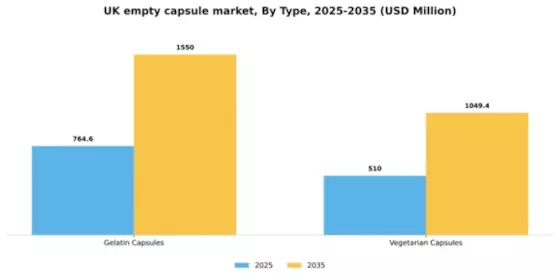
In the UK empty capsule market, gelatin capsules dominate the segment, accounting for a significant market share due to their widespread acceptance and use in dietary supplements and pharmaceuticals. These capsules are favored for their ability to mask odor and taste, making them a preferred choice for manufacturers. On the other hand, vegetarian capsules are gaining traction, particularly among health-conscious consumers and those with dietary restrictions, though they currently hold a smaller share of the total market.
Gelatin Capsules (Dominant) vs. Vegetarian Capsules (Emerging)
Gelatin capsules are established as the dominant force in the UK empty capsule market, primarily due to their versatility and consumer trust. They are made from animal-derived gelatin, providing an efficient delivery method for a wide range of pharmaceutical and nutraceutical products. In contrast, vegetarian capsules are emerging as a strong alternative, appealing to a growing segment of consumers seeking plant-based options. These capsules are made from hydroxypropyl methylcellulose (HPMC) or pullulan, catering to vegan and vegetarian preferences, thus driving their rapid growth and adoption in this evolving market.
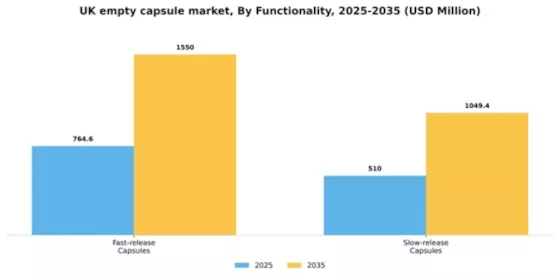
In the UK empty capsule market, the fast-release capsules segment holds a significant majority, showcasing its dominance among manufacturers and consumers. This type is favored for its ability to provide quicker therapeutic effects, meeting the immediate needs of patients and practitioners. Conversely, slow-release capsules are gaining traction due to the growing preference for extended medication release, catering to chronic conditions that require sustained treatment. The growth trends for this segment are driven by advancements in formulation technologies and an increasing focus on patient adherence to medication regimens. Fast-release capsules continue to thrive at a steady pace, while slow-release capsules are emerging rapidly as healthcare providers recognize their value for long-term medication management. As a result, both segments are expected to see continued investment and innovation in the coming years.
Functionality: Fast-release Capsules (Dominant) vs. Slow-release Capsules (Emerging)
Fast-release capsules are characterized by their ability to dissolve quickly in the gastrointestinal tract, ensuring the swift release of active ingredients into the system. This feature makes them highly sought after in acute care settings where rapid responses are critical. On the other hand, slow-release capsules are developed to provide a gradual and controlled release of medication over an extended period. This emerging segment is particularly appealing for chronic disease management, as it enhances patient compliance by reducing the frequency of dosing. Both segments are critical in addressing varied patient needs, with fast-release serving immediate therapeutic demands and slow-release offering sustained effectiveness.
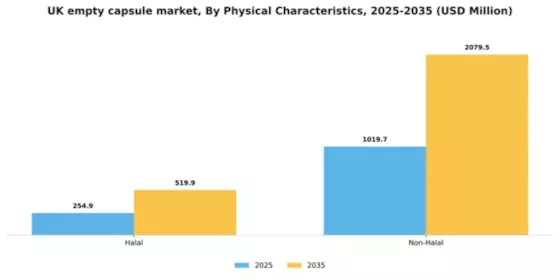
In the UK empty capsule market, the Halal segment has established itself as the dominant player, capturing a significant share of the market due to increasing dietary restrictions and consumer demand for Halal-certified products. This segment represents a substantial portion of the overall market, appealing particularly to a diverse consumer base that prioritizes adherence to Halal principles in their dietary choices. Conversely, the Non-Halal segment, while smaller in comparison, is rapidly gaining traction as manufacturers explore innovative formulations and target broader consumer demographics. Growth trends indicate that the interest in Halal empty capsules will continue to rise, driven by a growing awareness of health and wellness among consumers as well as expanding global trade networks that promote Halal standards. On the other hand, the Non-Halal segment is experiencing a surge, attributed to increasing innovation in capsule formulations and rising demand for non-Halal products in niche markets, especially among the general population seeking alternatives. This dynamic landscape is shaping a vibrant and competitive environment in the UK empty capsule market.
Halal (Dominant) vs. Non-Halal (Emerging)
The Halal segment is recognized for its established market presence, focusing on quality and compliance with religious guidelines which appeal to a large consumer base seeking Halal options. This segment's products are often manufactured from vegetarian sources or fully comply with Halal certification standards, ensuring reliability and trust among consumers. In contrast, the Non-Halal segment is emerging with innovative options that cater to niche audiences, such as those looking for specific health benefits or augmented functionality beyond standard offerings. As companies adapt to evolving consumer habits, the Non-Halal segment is expanding its market presence by incorporating diverse ingredients and active compounds which may not be suitable for Halal applications, thus appealing to a wider variety of preferences and requirements.
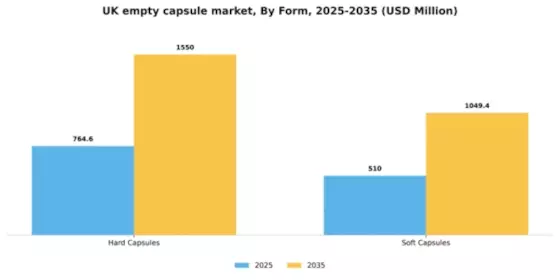
In the segment of the UK empty capsule market, hard capsules hold the largest share, catering extensively to both pharmaceutical and dietary supplement industries. Their robust structure and ability to encapsulate a variety of formulations make them a preferred choice for many manufacturers. Conversely, soft capsules, though smaller in market share, are witnessing a rapid increase in popularity, particularly for oil-based and liquid fill formulations due to their enhanced bioavailability and consumer preference for easier swallowing. Growth trends indicate that the demand for soft capsules is accelerating, driven by innovations in formulation technology and a rise in health consciousness among consumers. Additionally, the convenience and versatility offered by soft capsules are fostering their adoption across various therapeutic areas. This is contrasted by the steady demand for hard capsules, bolstered by their cost-effectiveness and widespread acceptance in traditional therapeutic applications.
Hard Capsules (Dominant) vs. Soft Capsules (Emerging)
Hard capsules are characterized by their rigid outer shell, typically made from gelatin or hydroxypropyl methylcellulose, making them suitable for a wide range of solid formulations. Their dominance in the UK empty capsule market is attributed to cost efficiency, scalability in production, and compatibility with a variety of active ingredients. On the other hand, soft capsules are gaining traction as an emerging choice for manufacturers, primarily due to their ability to encapsulate liquid substances, providing improved absorption rates. The market positioning of soft capsules is strengthened by advancements in encapsulation technology, which enhances their stability and efficacy, appealing to a health-conscious demographic seeking innovative delivery methods.
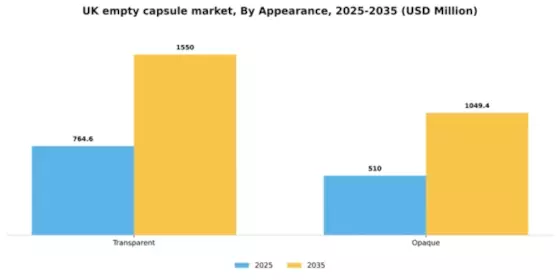
In the UK empty capsule market, the distribution of market share between the transparent and opaque segments reveals a clear leader. Transparent capsules hold a dominant position, largely attributed to their versatility and consumer preference for visibility in health products. Conversely, opaque capsules are gaining traction as they cater to the growing demand for product confidentiality and light-sensitive formulations. This shift indicates that while transparent capsules continue to thrive, opaque variations are swiftly carving a niche for themselves. Recent trends show a significant increase in the popularity of opaque capsules, which is currently the fastest-growing segment in this market. Factors driving this growth include rising consumer awareness regarding ingredient confidentiality and tailored health solutions. Additionally, innovations in capsule design and manufacturing are facilitating the introduction of more appealing opaque options, thereby attracting a broader audience. The overall dynamics of the market indicate a balanced coexistence of both segments, each appealing to different consumer preferences.
Appearance: Transparent (Dominant) vs. Opaque (Emerging)
Transparent capsules are characterized by their clarity, allowing consumers to see the contents, which is particularly important for health-conscious buyers who prefer transparency in their products. As the dominant force in the market, they cater to a wide range of applications, including dietary supplements and pharmaceuticals, promoting trust and visibility. In contrast, opaque capsules are emerging as a favored choice for brands focusing on confidentiality and aesthetic appeal. They are increasingly utilized for products that require protection from light exposure, enhancing stability and efficacy. The rise of opaque capsules reflects evolving consumer preferences towards discretion in product formulation, leading to innovation in materials and design aimed at capturing this growing segment of the market.
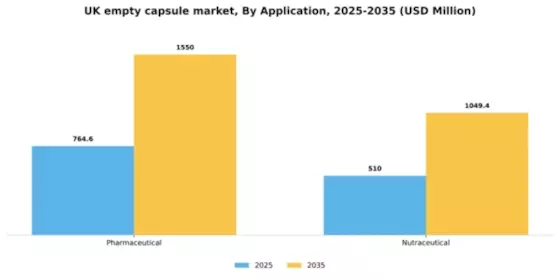
In the UK empty capsule market, the Pharmaceutical segment dominates, capturing a significant share of the total market. This segment benefits from the increasing demand for advanced drug delivery systems, driven by innovations in the pharmaceutical industry. Nutraceuticals, on the other hand, are an emerging segment, gaining popularity as consumer awareness of health and wellness products continues to rise. Growth trends for the UK empty capsule market are largely influenced by the shift towards preventive healthcare and personalized medicine. The demand for Dietary Supplements and herbal products is driving the Nutraceutical sector's remarkable growth, making it the fastest-growing segment. With consumers eager for natural and organic solutions, the Nutraceuticals segment is expected to significantly expand in the coming years.
Pharmaceutical (Dominant) vs. Nutraceutical (Emerging)
The Pharmaceutical segment in the UK empty capsule market remains dominant due to its extensive application in drug formulations. This segment is characterized by its reliance on rapid technological advancements that cater to specific therapeutic needs. Its dominance is further reinforced by strict regulatory frameworks ensuring safety and efficacy in pharmaceutical applications. Conversely, the Nutraceutical segment is emerging, driven by an increasing trend towards preventative health. This segment targets health-conscious consumers looking for dietary supplements that enhance wellness. As the market evolves, both segments are expected to coexist, catering to a wide spectrum of health-related needs.
Get more detailed insights about UK Empty Capsule Market Request Free Sample
The empty capsule market in the UK is characterized by a competitive landscape that is increasingly shaped by innovation, sustainability, and strategic partnerships. Key players such as Capsugel (Belgium), Qualicaps (Japan), and Lonza Group (Switzerland) are actively pursuing strategies that emphasize product differentiation and technological advancement. Capsugel (Belgium), for instance, has focused on expanding its product portfolio to include plant-based capsules, which aligns with the growing consumer demand for vegan and environmentally friendly options. This strategic positioning not only enhances their market share but also reinforces their commitment to sustainability, a critical driver in today’s market. In terms of business tactics, companies are increasingly localizing manufacturing to reduce lead times and enhance supply chain efficiency. The market structure appears moderately fragmented, with several players vying for dominance. However, the collective influence of major companies like ACG Worldwide (India) and Suheung Co Ltd (South Korea) is notable, as they leverage their extensive distribution networks and manufacturing capabilities to optimize operations and meet regional demands. In October 2025, Qualicaps (Japan) announced a strategic partnership with a leading pharmaceutical company to develop a new line of customized capsules tailored for specific drug formulations. This collaboration is significant as it not only enhances Qualicaps' product offerings but also positions them as a key player in the personalized medicine space, which is gaining traction in the pharmaceutical industry. Such partnerships are likely to foster innovation and drive growth in the empty capsule market. In September 2025, Lonza Group (Switzerland) unveiled a new manufacturing facility in the UK aimed at increasing production capacity for its capsule products. This expansion is strategically important as it allows Lonza to better serve the local market while also reducing transportation costs and lead times. The facility is expected to incorporate advanced manufacturing technologies, further enhancing operational efficiency and product quality. Moreover, in August 2025, ACG Worldwide (India) launched a new range of biodegradable capsules, reflecting a growing trend towards sustainability in the industry. This move not only addresses environmental concerns but also positions ACG as a forward-thinking leader in the market, likely attracting environmentally conscious consumers and businesses alike. As of November 2025, the competitive trends in the empty capsule market are increasingly defined by digitalization, sustainability, and the integration of artificial intelligence in manufacturing processes. Strategic alliances are becoming more prevalent, as companies recognize the need to collaborate to enhance innovation and operational efficiency. Looking ahead, it appears that competitive differentiation will increasingly shift from price-based competition to a focus on innovation, technology, and supply chain reliability, as companies strive to meet the evolving demands of consumers and regulatory standards.

The UK Empty Capsule Market has seen significant developments recently, particularly with the increased demand for pharmaceutical formulations and dietary supplements. Companies such as Mitsubishi Gas Chemical Company Inc and Qualicaps have reported growth due to the rise in demand for vegetarian and gelatin capsules. In July 2023, MediCaps Ltd announced a new production facility in the UK to enhance their manufacturing capabilities, responding to the market's growth. Moreover, recent mergers and acquisitions are shaping the market landscape. In September 2023, Famar S.A. acquired a competitor in the region to expand its market share and enhance its service offerings.
Natural Capsules Ltd has also been focusing on Research and Development to innovate its product line amidst growing competition.
Additionally, Helvetia Pharma AG is increasing its market presence by partnering with local distributors to better access the UK market. With such strategic initiatives, the UK Empty Capsule Market is poised for growth, reflecting the rising interest and investment in pharmaceutical advancements. The overall market is expected to see an increase in valuation, with projections indicating sustained growth through the next few years, primarily driven by innovations in capsule technology and expanded product offerings.
The Empty Capsule Market is projected to grow at a 6.69% CAGR from 2025 to 2035, driven by increasing demand for dietary supplements and pharmaceutical innovations.
New opportunities lie in:
By 2035, the empty capsule market is expected to achieve robust growth and increased market share.
| MARKET SIZE 2024 | 1274.62(USD Million) |
| MARKET SIZE 2025 | 1359.9(USD Million) |
| MARKET SIZE 2035 | 2599.37(USD Million) |
| COMPOUND ANNUAL GROWTH RATE (CAGR) | 6.69% (2025 - 2035) |
| REPORT COVERAGE | Revenue Forecast, Competitive Landscape, Growth Factors, and Trends |
| BASE YEAR | 2024 |
| Market Forecast Period | 2025 - 2035 |
| Historical Data | 2019 - 2024 |
| Market Forecast Units | USD Million |
| Key Companies Profiled | Capsugel (BE), Qualicaps (JP), ACG Worldwide (IN), Suheung Co Ltd (KR), Lonza Group (CH), Famar (FR), Medisca (CA), Roxlor (US), Ginkgo BioWorks (US) |
| Segments Covered | Type, Functionality, Physical Characteristics, Form, Appearance, Application |
| Key Market Opportunities | Growing demand for plant-based capsules driven by consumer preference for natural ingredients and sustainability. |
| Key Market Dynamics | Rising demand for plant-based capsules driven by consumer preference for natural and sustainable products in the UK. |
| Countries Covered | UK |
The market valuation of the UK empty capsule market was $1274.62 Million in 2024.
The projected market valuation for the UK empty capsule market is $2599.37 Million by 2035.
The expected CAGR for the UK empty capsule market during the forecast period 2025 - 2035 is 6.69%.
Key players in the UK empty capsule market include Capsugel, Qualicaps, ACG Worldwide, Suheung Co Ltd, Lonza Group, Famar, Medisca, Roxlor, and Ginkgo BioWorks.
In 2024, the valuation for gelatin capsules was $764.62 Million, while vegetarian capsules were valued at $510.0 Million.
In 2024, fast-release capsules were valued at $764.62 Million, whereas slow-release capsules had a valuation of $510.0 Million.
The market valuation for halal capsules was $254.92 Million, while non-halal capsules were valued at $1019.7 Million in 2024.
In 2024, hard capsules were valued at $764.62 Million, and soft capsules had a valuation of $510.0 Million.
The market valuation for transparent capsules was $764.62 Million, while opaque capsules were valued at $510.0 Million in 2024.
In 2024, the pharmaceutical application dominated with a valuation of $764.62 Million, while nutraceutical applications were valued at $510.0 Million.


Kindly complete the form below to receive a free sample of this Report

“This is really good guys. Excellent work on a tight deadline. I will continue to use you going forward and recommend you to others. Nice job”


“Thanks. It’s been a pleasure working with you, please use me as reference with any other Intel employees.”


“Thanks for sending the report it gives us a good global view of the Betaïne market.”


“Thank you, this will be very helpful for OQS.”


“We found the report very insightful! we found your research firm very helpful. I'm sending this email to secure our future business.”


“I am very pleased with how market segments have been defined in a relevant way for my purposes (such as "Portable Freezers & refrigerators" and "last-mile"). In general the report is well structured. Thanks very much for your efforts.”


“I have been reading the first document or the study, ,the Global HVAC and FP market report 2021 till 2026. Must say, good info! I have not gone in depth at all parts, but got a good indication of the data inside!”


“We got the report in time, we really thank you for your support in this process. I also thank to all of your team as they did a great job.”


“The Automotive 48V ECU Components Procurement Intelligence Study” was a complex project, but the Market Research Future (MRFR) team handled it with quality, agility, and customer-centricity. They delivered all requested data on time and within the agreed scope. The team, including Shubhendra Anand and Rahul Gotadki, was always readily available to clarify questions and swiftly implement necessary adjustments, driving the project to a successful conclusion within a very demanding timeframe.
I would also like to specifically commend Akshay Agarwal for his responsiveness and support at every stage—from our initial inquiry on May 6th through to final delivery on June 18th. His dedication made the entire process seamless.”



