Download Free Sample
Kindly complete the form below to receive a free sample of this Report
UK Herpes Zoster Market Research Report: Size, Share, Trend Analysis By Diagnosis (Laboratory Testing, Immunofluorescent Microscopy, Real-Time Polymerase Chain Reaction (PCR), Serological Testing, Others), By Treatment and Prevention (Antiviral Medications, Narcotic Medications, Anti-Inflammatory Medications, Antihistamines, Anticonvulsants, Capsaicin, Numbing Creams, Gels, or Patches, Vaccines, Others), By Route of Administration (Oral, Topical, Others) and By End Users (Hospitals & Clinics, Diagnostic Centers, Research & Academic Institutes, Home Care Settings, Others) - Growth Outlook & Industry Forecast 2025 To 2035
As per Market Research Future analysis, the UK herpes zoster market size was estimated at $7.88 Million in 2024.. The UK herpes zoster market is projected to grow from 8.31 $ Million in 2025 to 14.18 $ Million by 2035, exhibiting a compound annual growth rate (CAGR) of 5.4% during the forecast period 2025 - 2035
The UK herpes zoster market is experiencing growth driven by increased vaccination and innovative treatment options.
| 2024 Market Size | 7.88 (USD Million) |
| 2035 Market Size | 14.18 (USD Million) |
| CAGR (2025 - 2035) | 5.49% |
GSK (GB), Merck & Co (US), Pfizer (US), Sanofi (FR), AstraZeneca (GB), Bristol-Myers Squibb (US), Novartis (CH), Teva Pharmaceutical Industries (IL)
Our Impact
Enabled $4.3B Revenue Impact for Fortune 500 and Leading Multinationals
Partnering with 2000+ Global Organizations Each Year
30K+ Citations by Top-Tier Firms in the Industry
The herpes zoster market is experiencing notable developments driven by increased awareness of the condition and its potential complications. Herpes zoster, commonly known as shingles, arises from the reactivation of the varicella-zoster virus, which also causes chickenpox. The prevalence of this condition appears to be rising, particularly among older adults, who are at a higher risk for severe outcomes. Consequently, healthcare providers are focusing on vaccination strategies and treatment options to mitigate the impact of this disease. The introduction of new vaccines and therapies is expected to enhance patient outcomes and reduce healthcare costs associated with herpes zoster. In addition, the ongoing efforts to educate the public about the importance of vaccination against herpes zoster are likely to contribute to market growth. Initiatives led by health organizations aim to inform individuals about the benefits of vaccination, particularly for those aged fifty and above. This demographic is increasingly recognizing the value of preventive measures, which may lead to higher vaccination rates. As awareness continues to grow, the herpes zoster market is poised for expansion, with potential advancements in treatment options and increased accessibility to vaccines.
The herpes zoster market is witnessing an upward trend in vaccination rates, particularly among older adults. Increased awareness campaigns and healthcare provider recommendations are encouraging individuals to receive the shingles vaccine. This trend is likely to enhance overall public health outcomes and reduce the incidence of herpes zoster.
Recent advancements in treatment options for herpes zoster are emerging, with new therapies being developed to alleviate symptoms and reduce complications. These innovations may provide healthcare professionals with more effective tools to manage the condition, potentially improving patient quality of life.
There is a growing emphasis on preventive healthcare measures within the herpes zoster market. Health organizations are promoting vaccination as a key strategy to prevent the onset of shingles. This focus on prevention is expected to drive market growth and enhance public health initiatives.
The increase in healthcare expenditure in the UK is a notable driver for herpes zoster. As the government and private sectors invest more in healthcare services, there is a corresponding rise in the availability of treatments and preventive measures for various conditions, including herpes zoster. The NHS has been expanding its budget to accommodate the growing healthcare needs of the population, which may include funding for herpes zoster vaccines and treatments. This trend suggests that patients will have better access to necessary healthcare services, potentially leading to higher diagnosis rates and treatment uptake. Consequently, the herpes zoster market is likely to benefit from this upward trajectory in healthcare spending.
Government initiatives aimed at improving public health are significantly influencing the herpes zoster market. The UK government has allocated funding for vaccination programs targeting older adults, which is expected to enhance vaccine coverage. Such initiatives not only aim to reduce the incidence of herpes zoster but also alleviate the associated healthcare costs. By investing in preventive measures, the government appears to be taking a proactive stance in managing the disease, which could lead to a decrease in hospitalizations and complications. This strategic focus on prevention is likely to foster a more robust herpes zoster market, as increased funding may facilitate research and development of new treatment options.
Technological advancements in healthcare are playing a pivotal role in shaping the herpes zoster market. Innovations in vaccine development and treatment methodologies are enhancing the efficacy and accessibility of options available to patients. For instance, the introduction of recombinant vaccines has shown promise in providing better immunity against herpes zoster. Additionally, telemedicine has emerged as a valuable tool, allowing patients to consult healthcare professionals remotely, which may lead to increased diagnosis and treatment initiation. The integration of technology in healthcare delivery is likely to streamline processes, making it easier for patients to access necessary care, thus propelling the growth of the herpes zoster market.
The rising awareness regarding herpes zoster is a crucial driver for its market. Educational campaigns by health authorities and non-profit organizations in the UK have significantly contributed to public knowledge about the condition. This increased awareness is likely to lead to higher consultation rates among individuals experiencing symptoms, thereby driving demand for diagnostic and therapeutic options. Furthermore, the National Health Service (NHS) has been proactive in disseminating information about the importance of vaccination, which may enhance the uptake of the herpes zoster vaccine. As a result, the herpes zoster market is expected to witness growth, with an anticipated increase in vaccination rates contributing to a healthier population and reduced incidence of the disease.
The demographic shift towards an aging population in the UK is a significant driver for herpes zoster. As individuals age, their immune systems tend to weaken, making them more susceptible to herpes zoster. According to recent statistics, approximately 1 in 3 individuals will develop herpes zoster in their lifetime, with the incidence being notably higher in those aged 50 and above. This demographic trend suggests a growing patient population that may require treatment and preventive measures, thereby expanding the market. The healthcare system is likely to adapt to this increasing demand, potentially leading to enhanced availability of vaccines and therapies tailored for older adults, which could further stimulate the herpes zoster market.
In the UK herpes zoster market, the market share distribution among the diagnosis segment values reveals that Laboratory Testing holds the largest share, indicating its established role in accurate diagnosis and patient management. Following closely are Serological Testing and Immunofluorescent Microscopy, which also contribute significantly but do not match the dominance of Laboratory Testing. The Others category includes less common methods, displaying a minimal yet noteworthy presence in the market. Current growth trends show that Real-Time Polymerase Chain Reaction (PCR) is rapidly gaining traction as a diagnostic method due to its high sensitivity and specificity. Increasing awareness about herpes zoster and advancements in diagnostic technologies are driving the demand for PCR testing. Additionally, as more healthcare practitioners recognize the advantages of innovative testing methods, the adoption of PCR is expected to accelerate, solidifying its position in the market.
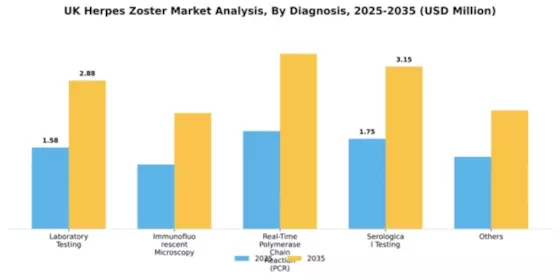
Immunofluorescent Microscopy (Dominant) vs. Serological Testing (Emerging)
Immunofluorescent Microscopy has emerged as a dominant method in the diagnosis of herpes zoster, widely adopted due to its effectiveness in visualizing viral antigens in tissue samples. This technique offers rapid and precise results, making it a preferred choice among healthcare providers for confirming diagnoses. On the other hand, Serological Testing is viewed as an emerging method, gaining attention for its ability to detect antibodies against varicella-zoster virus (VZV). Its increasing utilization is attributed to the convenience of blood sample collection and the potential for broader screening in the population, positioning it as a viable alternative for diagnosis in various clinical settings.
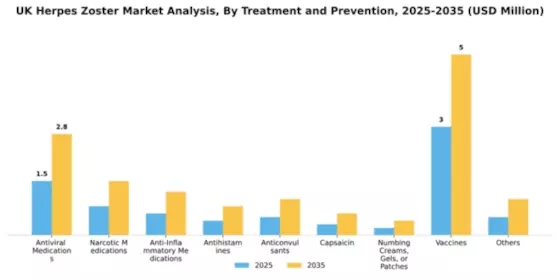
Among the segment values in the UK herpes zoster market, Antiviral Medications hold the largest share, signifying its central role in treating herpes zoster. Following closely are Vaccines, which are carving out a larger presence due to their preventive benefits. Other segment values like Narcotic Medications and Anti-Inflammatory Medications also contribute significantly but do not match the prominence of the largest share holder. The growth trends in this segment are largely driven by increasing awareness of herpes zoster and the effectiveness of preventative therapies such as vaccines. Likewise, ongoing research and development in antiviral medications enhance their market appeal. The rising healthcare expenditure and a focus on preventive healthcare practices further propel the demand for effective treatment options within this segment.
Antiviral Medications (Dominant) vs. Vaccines (Emerging)
Antiviral Medications are a dominant force in the market, celebrated for their efficacy in reducing the duration and severity of herpes zoster outbreaks. As the first line of defense, they remain a staple in treatment regimens. In contrast, Vaccines are emerging rapidly, targeted towards prevention and poised for growth as public health initiatives increasingly promote vaccination. While antiviral medications address acute episodes, the growing population awareness and healthcare policies supporting vaccinations position vaccines as a critical component of a comprehensive herpes zoster management strategy. The demand for both segments illustrates a balanced approach to treatment and preventative care, catering to varying patient needs.
In the UK herpes zoster market, the route of administration is segmented into Oral, Topical, and Others. Oral administration holds the largest share due to its ease of use and patient compliance. This segment is preferred by both healthcare providers and patients alike, contributing significantly to the overall treatment landscape. Topical treatments, while comprising a smaller portion of the market, are gaining traction as patients seek less invasive options for relief from herpes zoster symptoms. Others include various delivery methods but represent a minimal share compared to Oral and Topical options. Growth trends in this market are largely driven by increasing awareness about herpes zoster and its complications, resulting in more patients seeking treatment. The Topical segment is showing promise as it appeals to consumers looking for alternatives that minimize systemic side effects. Additionally, advancements in formulation technologies are enhancing the effectiveness of topical applications, which in turn is expected to accelerate the growth of this segment in the coming years. The overall trend favors a diversified approach to administration routes, ensuring comprehensive care options for patients.
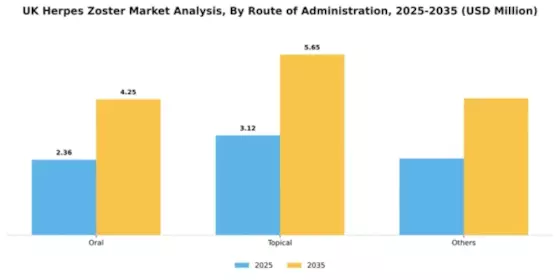
Oral (Dominant) vs. Topical (Emerging)
The Oral segment is characterized by its dominance in the UK herpes zoster market, largely because of the wide acceptance of oral antivirals and pain medications by both clinicians and patients. This method ensures that patients adhere to their treatment regimens more effectively, leading to improved outcomes. On the other hand, the Topical segment is emerging as a viable alternative, particularly among patients who are hesitant to take oral medications due to potential side effects. Topical formulations offer localized relief without the systemic implications of oral dosages, which enhances their appeal. As patient preferences evolve, the Topical segment is expected to grow at an accelerated rate, driven by innovations in formulations that provide enhanced efficacy and application convenience.
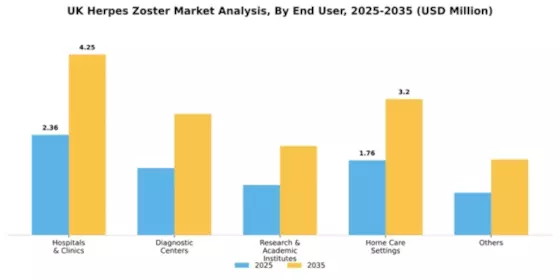
In the UK herpes zoster market, Hospitals & Clinics account for the majority of the end-user segment, demonstrating significant market share due to their capacity to provide specialized care and treatment for herpes zoster patients. Their extensive resources, coupled with the prevalence of zoster cases often requiring immediate medical attention, solidify their position as the dominant segment. Conversely, Home Care Settings are rapidly gaining traction among patients seeking convenient treatment options, reflecting ongoing trends in patient preference and enhanced home healthcare services. The growth trends for the end-user segment reveal a notable shift towards Home Care Settings, which is becoming an increasingly popular option for patients. This shift is primarily driven by technological advancements in telemedicine and remote monitoring, allowing healthcare professionals to provide quality care outside traditional clinical settings. Additionally, the increasing aging population is indicating a rise in the demand for effective home-based healthcare solutions, thereby contributing to the growth of this segment in the UK herpes zoster market.
Hospitals & Clinics (Dominant) vs. Home Care Settings (Emerging)
Hospitals & Clinics serve as the backbone of the UK herpes zoster market due to their capacity to deliver comprehensive healthcare services, including diagnosis and treatment. Their extensive infrastructure and qualified healthcare staff ensure that patients receive timely and specialized care. Furthermore, these facilities are often equipped with advanced diagnostic tools, enabling accurate and swift treatment. Conversely, Home Care Settings represent an emerging segment characterized by a growing demand for convenience and personalized care. These settings cater to patients preferring at-home treatment alternatives, supported by innovations in healthcare technologies that allow for effective remote care solutions. The rise of this segment highlights a significant change in patient preferences, providing a complementary approach to traditional hospital care.
Get more detailed insights about UK Herpes Zoster Market Request Free Sample
The herpes zoster market is characterized by a competitive landscape that is increasingly shaped by innovation, strategic partnerships, and regional expansion. Key players such as GSK (GB), Merck & Co (US), and Pfizer (US) are actively pursuing strategies that enhance their market positioning. GSK (GB) focuses on developing advanced vaccine formulations, while Merck & Co (US) emphasizes its robust pipeline of antiviral therapies. Pfizer (US) is leveraging its extensive distribution network to enhance accessibility to its products, thereby strengthening its foothold in the market. Collectively, these strategies contribute to a dynamic competitive environment, where innovation and operational efficiency are paramount.In terms of business tactics, companies are increasingly localizing manufacturing to reduce costs and optimize supply chains. The market appears moderately fragmented, with several players vying for market share. However, the influence of major companies is significant, as they set the tone for pricing and product development. This competitive structure allows for a diverse range of offerings, catering to various patient needs and preferences.
In October GSK (GB) announced a collaboration with a leading biotechnology firm to enhance its vaccine development capabilities. This partnership is expected to accelerate the introduction of next-generation vaccines, potentially increasing GSK's market share and reinforcing its commitment to innovation. The strategic importance of this collaboration lies in its potential to address unmet medical needs and improve patient outcomes in the herpes zoster space.
In September Merck & Co (US) launched a new antiviral treatment specifically targeting herpes zoster, which has shown promising results in clinical trials. This launch not only diversifies Merck's product portfolio but also positions the company as a leader in antiviral therapies. The strategic significance of this move is underscored by the growing demand for effective treatments, which could enhance patient adherence and overall satisfaction.
In August Pfizer (US) expanded its distribution network in the UK, aiming to improve access to its herpes zoster vaccine. This strategic expansion is likely to enhance Pfizer's competitive edge by ensuring that its products are readily available to healthcare providers and patients alike. The importance of this initiative cannot be overstated, as it aligns with the broader trend of increasing accessibility to essential healthcare products.
As of November the competitive trends in the herpes zoster market are increasingly defined by digitalization, sustainability, and the integration of artificial intelligence (AI) in drug development. Strategic alliances are becoming more prevalent, as companies recognize the value of collaboration in driving innovation. Looking ahead, competitive differentiation is expected to evolve, with a shift from price-based competition to a focus on technological advancements, innovative solutions, and reliable supply chains. This transition may ultimately lead to improved patient outcomes and a more sustainable market environment.






The UK Herpes Zoster Market has recently seen notable developments. In December 2023, the National Health Service (NHS) emphasized the importance of vaccination against shingles, driving greater awareness and potentially increasing market growth. Additionally, GlaxoSmithKline has announced advancements in its vaccine development processes aimed at improving efficacy and accessibility for patients. Meanwhile, Teva Pharmaceutical Industries has launched its latest antiviral treatment, further expanding its portfolio in the Herpes Zoster sector.
In terms of mergers and acquisitions, in November 2023, Eli Lilly and Company acquired a small biotech firm focused on therapeutic options for Herpes Zoster, aiming to enhance its Research and Development capabilities. This move is expected to bolster Eli Lilly’s position in the market. Growth in market valuation is evident, with companies like Merck and Co. stating revenue increases linked to vaccine sales. Industry reports indicate that the increased incidence of Herpes Zoster cases is also serving as a catalyst for innovations and investments from major players, such as Roche and AstraZeneca.
These developments reflect a dynamic environment that is adapting to both regulatory changes and evolving consumer health needs in the UK.
The Herpes Zoster Market is projected to grow at a 5.49% CAGR from 2025 to 2035, driven by increasing vaccination rates, rising awareness, and an aging population.
New opportunities lie in:
By 2035, the herpes zoster market is expected to achieve substantial growth and enhanced accessibility.
| MARKET SIZE 2024 | 7.88(USD Million) |
| MARKET SIZE 2025 | 8.31(USD Million) |
| MARKET SIZE 2035 | 14.18(USD Million) |
| COMPOUND ANNUAL GROWTH RATE (CAGR) | 5.49% (2025 - 2035) |
| REPORT COVERAGE | Revenue Forecast, Competitive Landscape, Growth Factors, and Trends |
| BASE YEAR | 2024 |
| Market Forecast Period | 2025 - 2035 |
| Historical Data | 2019 - 2024 |
| Market Forecast Units | USD Million |
| Key Companies Profiled | GSK (GB), Merck & Co (US), Pfizer (US), Sanofi (FR), AstraZeneca (GB), Bristol-Myers Squibb (US), Novartis (CH), Teva Pharmaceutical Industries (IL) |
| Segments Covered | Diagnosis, Treatment and Prevention, Route of Administration, End User |
| Key Market Opportunities | Emerging vaccine technologies and increased awareness drive growth in the herpes zoster market. |
| Key Market Dynamics | Rising demand for herpes zoster vaccines drives competitive innovation and regulatory scrutiny in the UK market. |
| Countries Covered | UK |
The overall market valuation for the UK herpes zoster market was $7.88 Million in 2024.
The projected market valuation for the UK herpes zoster market is $14.18 Million by 2035.
The expected CAGR for the UK herpes zoster market during the forecast period 2025 - 2035 is 5.49%.
Key players in the UK herpes zoster market include GSK (GB), Merck & Co (US), Pfizer (US), Sanofi (FR), AstraZeneca (GB), Bristol-Myers Squibb (US), Novartis (CH), and Teva Pharmaceutical Industries (IL).
In 2024, the segment valuations for laboratory testing in the UK herpes zoster market included $1.58 Million for Laboratory Testing and $1.25 Million for Immunofluorescent Microscopy.
Revenue from antiviral medications in the UK herpes zoster market is expected to reach $2.8 Million by 2035.
The projected revenue for vaccines in the UK herpes zoster market is $5.0 Million by 2035.
By 2035, expected revenues from oral routes of administration are $4.25 Million, while topical routes are projected at $5.65 Million.
The anticipated revenue from hospitals and clinics in the UK herpes zoster market is $4.25 Million by 2035.
In 2024, the segment revenues for serological testing in the UK herpes zoster market were $1.75 Million.


Kindly complete the form below to receive a free sample of this Report

“This is really good guys. Excellent work on a tight deadline. I will continue to use you going forward and recommend you to others. Nice job”


“Thanks. It’s been a pleasure working with you, please use me as reference with any other Intel employees.”


“Thanks for sending the report it gives us a good global view of the Betaïne market.”


“Thank you, this will be very helpful for OQS.”


“We found the report very insightful! we found your research firm very helpful. I'm sending this email to secure our future business.”


“I am very pleased with how market segments have been defined in a relevant way for my purposes (such as "Portable Freezers & refrigerators" and "last-mile"). In general the report is well structured. Thanks very much for your efforts.”


“I have been reading the first document or the study, ,the Global HVAC and FP market report 2021 till 2026. Must say, good info! I have not gone in depth at all parts, but got a good indication of the data inside!”


“We got the report in time, we really thank you for your support in this process. I also thank to all of your team as they did a great job.”


“The Automotive 48V ECU Components Procurement Intelligence Study” was a complex project, but the Market Research Future (MRFR) team handled it with quality, agility, and customer-centricity. They delivered all requested data on time and within the agreed scope. The team, including Shubhendra Anand and Rahul Gotadki, was always readily available to clarify questions and swiftly implement necessary adjustments, driving the project to a successful conclusion within a very demanding timeframe.
I would also like to specifically commend Akshay Agarwal for his responsiveness and support at every stage—from our initial inquiry on May 6th through to final delivery on June 18th. His dedication made the entire process seamless.”



