×
Request Free Sample ×

Kindly complete the form below to receive a free sample of this Report

* Please use a valid business email

Leading companies partner with us for data-driven Insights

clients tt-cursor
Hero Background

UK Running Gears Market

ID: MRFR/CG/53289-HCR
200 Pages
Shubham Munde
October 2025

UK Running Gears Market Research Report By Sensor Type (Bio Impedance Technology Sensors, 3-Axis Accelerometer Sensors, Altitude Meter, Temperature Measurement Sensors, Angular Velocity Sensors), By Products (Smart Fitness Tracker & Gears, Latest Technologies & Software, Sports Footwear & Equipment) and By Type (Departments Or Large Retail Organizations, Specialty Brand Stores, Online Platforms)-Forecast to 2035

Share:
Download PDF ×

We do not share your information with anyone. However, we may send you emails based on your report interest from time to time. You may contact us at any time to opt-out.

UK Running Gears Market Infographic
Purchase Options

UK Running Gears Market Summary

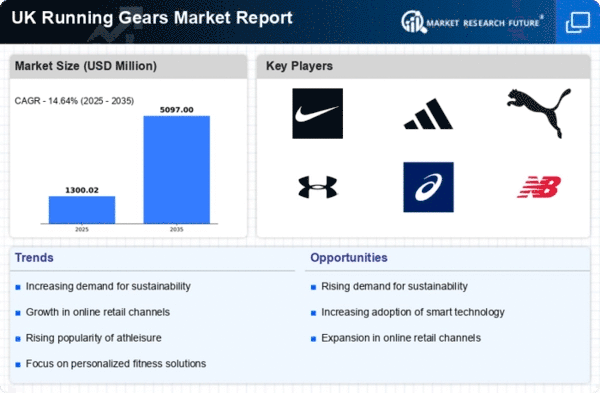
As per MRFR analysis, the UK running gears market Size was estimated at 1134.0 USD Million in 2024. The UK running gears market is projected to grow from 1300.02 USD Million in 2025 to 5097.0 USD Million by 2035, exhibiting a compound annual growth rate (CAGR) of 14.64% during the forecast period 2025 - 2035.

Key Market Trends & Highlights

The UK running gears market is experiencing a dynamic shift towards sustainability and technological innovation.

  • Sustainability initiatives are increasingly influencing consumer preferences in the running gears market.
  • Technological advancements in gear design are enhancing performance and comfort for runners.
  • E-commerce growth is reshaping the retail landscape, making running gear more accessible to consumers.
  • Increased health awareness and the rise of community running events are driving demand for running gears in the UK.

Market Size & Forecast

2024 Market Size 1134.0 (USD Million)
2035 Market Size 5097.0 (USD Million)
CAGR (2025 - 2035) 14.64%

Major Players

Nike (US), Adidas (DE), Puma (DE), Under Armour (US), Asics (JP), New Balance (US), Saucony (US), Brooks (US), Hoka One (US)

UK Running Gears Market Trends

The running gears market is currently experiencing a dynamic evolution, driven by a growing awareness of health and fitness among consumers. This trend is reflected in the increasing participation in running events and recreational jogging, which has led to a heightened demand for specialized footwear and apparel. Innovations in technology, such as moisture-wicking fabrics and advanced cushioning systems, are becoming more prevalent, enhancing the overall running experience. Furthermore, sustainability is emerging as a key consideration, with brands focusing on eco-friendly materials and production processes to appeal to environmentally conscious consumers. In addition, the rise of e-commerce platforms is reshaping how consumers access running gear. Online shopping offers convenience and a wider selection, allowing individuals to compare products and prices easily. This shift is likely to continue, as more consumers prefer the flexibility of purchasing from home. As the running gears market adapts to these changes, it appears poised for further growth, with potential opportunities in niche segments such as trail running and minimalist footwear. The interplay of technology, sustainability, and e-commerce is expected to define the future landscape of this market.

Sustainability Initiatives

There is a noticeable shift towards sustainable practices within the running gears market. Brands are increasingly adopting eco-friendly materials and ethical manufacturing processes. This trend reflects a growing consumer preference for products that minimize environmental impact, suggesting that sustainability may become a standard expectation rather than a differentiator.

Technological Advancements

Innovations in technology are significantly influencing the running gears market. Enhanced materials and design features, such as improved cushioning and breathability, are being integrated into footwear and apparel. These advancements not only improve performance but also cater to the diverse needs of runners, indicating a trend towards personalization in gear.

E-commerce Growth

The rise of e-commerce is transforming how consumers purchase running gear. Online platforms provide greater accessibility and variety, allowing consumers to explore a broader range of products. This trend is likely to continue, as convenience and competitive pricing become increasingly important to shoppers.

UK Running Gears Market Drivers

Increased Health Awareness

The rising awareness of health and fitness among the UK population is a pivotal driver for the running gears market. As individuals increasingly prioritize physical well-being, the demand for quality running gear has surged. According to recent data, approximately 60% of adults in the UK engage in regular physical activity, with running being a popular choice. This trend is likely to continue, as more people recognize the benefits of cardiovascular exercise. Consequently, the running gears market is experiencing a notable uptick in sales, particularly in footwear and apparel designed for running. Retailers are responding by expanding their product lines to cater to this growing demographic, which may further stimulate market growth. The emphasis on health and fitness is expected to remain a key factor influencing consumer purchasing decisions in the running gears market.

Focus on Sustainable Materials

The emphasis on sustainability is becoming increasingly relevant in the running gears market. Consumers are showing a growing preference for products made from eco-friendly materials, prompting brands to adapt their offerings. In 2025, it is anticipated that sales of sustainable running gear will account for approximately 25% of the total market share. This shift is indicative of a broader trend towards environmental consciousness among consumers, particularly in the UK. Brands that prioritize sustainable practices are likely to gain a competitive edge, as they appeal to the values of eco-aware consumers. The running gears market is thus witnessing a transformation, with companies investing in sustainable materials and production processes. This focus on sustainability may not only enhance brand loyalty but also contribute to the overall growth of the market.

Growth of Online Retail Channels

The expansion of online retail channels is transforming the landscape of the running gears market. With the increasing reliance on e-commerce, consumers are now able to access a wider range of products from the comfort of their homes. In 2025, online sales are expected to represent over 30% of total sales in the running gears market. This shift is driven by the convenience of online shopping, coupled with the ability to compare prices and read reviews. Retailers are adapting their strategies to enhance the online shopping experience, offering features such as virtual fitting rooms and personalized recommendations. As more consumers turn to online platforms for their running gear needs, the market is likely to see a significant increase in sales, particularly among younger demographics who prefer digital shopping.

Rise of Community Running Events

The proliferation of community running events across the UK is significantly impacting the running gears market. Events such as marathons, fun runs, and charity races have gained immense popularity, drawing participants from various age groups and fitness levels. In 2025, it is estimated that over 1 million individuals will participate in organized running events, creating a robust demand for specialized running gear. This trend not only encourages individuals to invest in quality footwear and apparel but also fosters a sense of community and motivation among participants. As more events are organized, the running gears market is likely to benefit from increased sales, particularly in performance-oriented products. The social aspect of running events may also lead to a rise in brand loyalty, as participants often seek gear that aligns with their community involvement.

Technological Innovations in Gear Design

Technological advancements in gear design are reshaping the running gears market. Innovations such as moisture-wicking fabrics, enhanced cushioning systems, and lightweight materials are becoming increasingly prevalent. These developments cater to the evolving needs of runners, providing improved comfort and performance. In 2025, it is projected that the market for technologically advanced running shoes will account for approximately 40% of total sales in the running gears market. Brands are investing heavily in research and development to create products that not only meet but exceed consumer expectations. This focus on innovation is likely to attract a broader audience, including both seasoned runners and newcomers. As technology continues to evolve, the running gears market may witness a shift towards more personalized and performance-driven products.


Market Segment Insights

By Sensor Type: 3-Axis Accelerometer Sensors (Largest) vs. Bio Impedance Technology Sensors (Fastest-Growing)

In the UK running gears market, the distribution of market share among various sensor types shows that 3-Axis Accelerometer Sensors hold the largest share, reflecting their widespread application in tracking and optimizing performance. Other notable segments include Bio Impedance Technology Sensors and Angular Velocity Sensors, which have begun to carve significant niches, albeit with smaller shares when compared to the leading category. Each sensor type plays a crucial role in the broader landscape of running gear technology, contributing to advancements in functionality and user experience. Growth trends indicate a robust upward trajectory for Bio Impedance Technology Sensors, driven by increasing consumer demand for health-tracking features in running gear. The shift towards more technologically advanced products is fueled by consumers' growing awareness of their health metrics, pushing brands to innovate continuously. Meanwhile, the established 3-Axis Accelerometer Sensors are expected to maintain their dominance through ongoing enhancements in accuracy and data collection methodologies, catering to a tech-savvy consumer base.

Bio Impedance Technology Sensors (Dominant) vs. Temperature Measurement Sensors (Emerging)

Bio Impedance Technology Sensors are currently considered dominant in the UK running gears market due to their ability to measure body composition parameters such as fat mass, muscle mass, and hydration levels. These insights are particularly valuable to performance-oriented runners, helping them to customize their training regimens effectively. In contrast, Temperature Measurement Sensors are emerging as essential tools for runners looking to monitor their body temperature during workouts, aimed at preventing overheating and improving performance. While still in the growth phase, Temperature Measurement Sensors hold significant potential as the market shifts towards integrating more advanced health metrics into running gear, enhancing the overall training experience.

By Products: Smart Fitness Tracker & Gears (Largest) vs. Sports Footwear & Equipment (Fastest-Growing)

In the UK running gears market, the distribution of market share is notably skewed with the Smart Fitness Tracker & Gears segment leading significantly, commanding a substantial portion of overall sales. Following this, the Sports Footwear & Equipment segment has observed a steady rise, attracting attention from consumers keen on enhancing their athletic performance with quality gear. The Latest Technologies & Software segment, while impactful, trails behind in share compared to these two primary categories. Growth trends in the UK running gears market indicate a shift towards technology integration within sports equipment. The increasing popularity of health tracking and fitness applications promotes sustained demand for smart fitness gear. Moreover, innovative designs and materials in sports footwear are capturing emerging trends, with consumer preferences leaning towards lightweight and high-performance products. This growth is further fueled by rising health awareness and the ongoing participation of individuals in fitness activities.

Sports Footwear & Equipment (Dominant) vs. Latest Technologies & Software (Emerging)

The Sports Footwear & Equipment segment remains dominant in the UK running gears market, offering a diverse range of products tailored for various athletic activities. Brands are focused on integrating advanced materials and technologies that enhance comfort, performance, and durability. These innovations attract consumers who prioritize quality and functionality in their purchasing decisions. In contrast, the Latest Technologies & Software segment is emerging, characterized by apps and devices that provide data-driven insights into user performance. While still growing, this segment complements the traditional focus on physical products, with consumers increasingly turning to tech solutions that elevate their fitness journey.

By Market Type: Departments Or Large Retail Organizations (Largest) vs. Online Platforms (Fastest-Growing)

In the UK running gears market, the distribution among market types shows that Departments or Large Retail Organizations hold the largest share, appealing to a wide customer base through convenience and a variety of brands. Online Platforms are emerging as a formidable force, catering to the growing online shopping trend, particularly among younger demographics, thus capturing significant market attention. The growth trends for these segments indicate a shift towards increased online shopping, further accelerated by advancements in digital technologies and changing consumer behavior. The growth of Online Platforms is particularly pronounced, driven by convenience and personalization, while Departments or Large Retail Organizations rely on their established presence and customer service to retain their market position.

Departments Or Large Retail Organizations (Dominant) vs. Specialty Brand Stores (Emerging)

Departments or Large Retail Organizations demonstrate a dominant presence in the UK running gears market by offering a broad assortment of products and competitive pricing. Their extensive reach allows them to cater to diverse customer needs and preferences. On the other hand, Specialty Brand Stores are emerging as key players, focusing on niche markets and delivering tailored experiences. This segment often emphasizes premium products and personalized services, attracting consumers looking for quality and expertise in their running gear. The contrasting strategies between these two types of market players highlight the ongoing evolution within the UK running gears market.

Get more detailed insights about UK Running Gears Market

Key Players and Competitive Insights

The running gears market exhibits a dynamic competitive landscape characterized by rapid innovation and evolving consumer preferences. Key players such as Nike (US), Adidas (DE), and Hoka One (US) are at the forefront, leveraging their brand equity and technological advancements to capture market share. Nike (US) continues to emphasize sustainability in its product lines, while Adidas (DE) focuses on expanding its digital footprint through enhanced e-commerce capabilities. Hoka One (US), known for its performance-oriented footwear, is increasingly targeting niche segments, particularly among long-distance runners, thereby diversifying its consumer base. Collectively, these strategies contribute to a competitive environment that is both fragmented and highly competitive, with each player striving to differentiate itself through innovation and customer engagement.

In terms of business tactics, companies are increasingly localizing manufacturing to mitigate supply chain disruptions and enhance responsiveness to market demands. This approach appears to be particularly effective in the UK, where consumer preferences are shifting towards locally produced goods. The market structure is moderately fragmented, with several key players holding substantial market shares, yet numerous smaller brands also competing for attention. This fragmentation allows for a diverse range of products, catering to various consumer needs and preferences.

In October 2025, Adidas (DE) announced a strategic partnership with a leading tech firm to develop smart running shoes that integrate real-time performance tracking. This initiative not only aligns with the growing trend of digitalization in sports gear but also positions Adidas (DE) as a pioneer in merging technology with athletic performance. The potential for enhanced consumer engagement through personalized data insights could significantly bolster brand loyalty and market presence.

In September 2025, Nike (US) launched a new line of eco-friendly running shoes made from recycled materials, reinforcing its commitment to sustainability. This move is indicative of a broader industry trend towards environmentally conscious products, which resonates well with the increasing consumer demand for sustainable options. By prioritizing sustainability, Nike (US) not only enhances its brand image but also addresses the growing concerns regarding environmental impact among consumers.

In November 2025, Hoka One (US) expanded its product range to include a new series of trail running shoes designed specifically for the UK market. This strategic move reflects an understanding of local consumer preferences and the growing popularity of trail running as a recreational activity. By tailoring its offerings to meet specific market demands, Hoka One (US) is likely to strengthen its competitive position and attract a dedicated customer base.

As of November 2025, the running gears market is increasingly defined by trends such as digitalization, sustainability, and the integration of artificial intelligence in product development. Strategic alliances among key players are shaping the competitive landscape, fostering innovation and enhancing product offerings. Looking ahead, it appears that competitive differentiation will increasingly pivot from price-based strategies to a focus on innovation, technological advancements, and supply chain reliability. This shift suggests that companies that can effectively leverage these trends will likely emerge as leaders in the evolving market.

Key Companies in the UK Running Gears Market market include

Industry Developments

The UK Running Gears Market has seen significant developments recently, particularly with major brands like Adidas, Nike, and ASICS enhancing their product lines to cater to the surging demand for running gear amidst increased public health awareness. As of August 2023, Adidas has launched a new eco-friendly running shoe line aimed at sustainability, reflecting growing consumer interest in environmentally responsible products.

Nike continues to innovate with its performance technology, creating running shoes that offer enhanced support and durability. In terms of market growth, recent reports indicate a valuation increase, particularly in niche segments such as trail running gear, which has grown by over 15% compared to 2022.

Regarding mergers and acquisitions, as of June 2023, Puma announced its strategic acquisition of a smaller UK-based athletic apparel company to boost its presence in the region, signifying a trend towards consolidation in the market. Furthermore, the UK market has witnessed a notable shift towards online retail, with companies like New Balance and Saucony investing in digital platforms to enhance customer engagement and accessibility following the significant increase in online purchases seen during the COVID-19 pandemic.

Future Outlook

UK Running Gears Market Future Outlook

The running gears market is projected to grow at 14.64% CAGR from 2024 to 2035, driven by increasing health awareness, technological advancements, and rising participation in running events.

New opportunities lie in:

  • Expansion of eco-friendly running gear lines
  • Development of smart running shoes with performance tracking
  • Partnerships with fitness apps for integrated user experiences

By 2035, the running gears market is expected to achieve substantial growth and innovation.

Market Segmentation

UK Running Gears Market Products Outlook

  • Smart Fitness Tracker & Gears
  • Latest Technologies & Software
  • Sports Footwear & Equipment

UK Running Gears Market Market Type Outlook

  • Departments Or Large Retail Organizations
  • Specialty Brand Stores
  • Online Platforms

UK Running Gears Market Sensor Type Outlook

  • Bio Impedance Technology Sensors
  • 3-Axis Accelerometer Sensors
  • Altitude Meter
  • Temperature Measurement Sensors
  • Angular Velocity Sensors

Report Scope

MARKET SIZE 2024 1134.0(USD Million)
MARKET SIZE 2025 1300.02(USD Million)
MARKET SIZE 2035 5097.0(USD Million)
COMPOUND ANNUAL GROWTH RATE (CAGR) 14.64% (2024 - 2035)
REPORT COVERAGE Revenue Forecast, Competitive Landscape, Growth Factors, and Trends
BASE YEAR 2024
Market Forecast Period 2025 - 2035
Historical Data 2019 - 2024
Market Forecast Units USD Million
Key Companies Profiled Nike (US), Adidas (DE), Puma (DE), Under Armour (US), Asics (JP), New Balance (US), Saucony (US), Brooks (US), Hoka One (US)
Segments Covered Sensor Type, Products, Market Type
Key Market Opportunities Integration of smart technology in running gears enhances performance tracking and consumer engagement.
Key Market Dynamics Growing consumer preference for sustainable materials drives innovation in the running gears market.
Countries Covered UK

Leave a Comment

FAQs

What is the expected market size of the UK Running Gears Market in 2024?

The UK Running Gears Market is expected to be valued at 1.26 billion USD in 2024.

What is the projected market value of the UK Running Gears Market by 2035?

By 2035, the UK Running Gears Market is anticipated to reach a valuation of 6.38 billion USD.

What is the expected CAGR for the UK Running Gears Market from 2025 to 2035?

The market is expected to grow at a CAGR of 15.889 percent between 2025 and 2035.

Which companies are the major players in the UK Running Gears Market?

Key players in this market include Adidas, Nike, Asics, and Under Armour among others.

What is the market size of Bio Impedance Technology Sensors in 2024?

Bio Impedance Technology Sensors are valued at 0.2 billion USD in 2024.

What will be the market size of 3-Axis Accelerometer Sensors by 2035?

The market size for 3-Axis Accelerometer Sensors is projected to reach 1.5 billion USD by 2035.

What is the expected market size for Temperature Measurement Sensors in 2024?

Temperature Measurement Sensors are expected to be valued at 0.25 billion USD in 2024.

How much is the Altitude Meter segment expected to grow by 2035?

The Altitude Meter segment is anticipated to grow to 0.75 billion USD by 2035.

What factors are driving growth in the UK Running Gears Market?

Increasing awareness of fitness and technological advancements in running gear are key growth drivers.

How are current market trends influencing the UK Running Gears Market?

Emerging trends include the integration of advanced sensing technologies and eco-friendly materials in running gear.

Download Free Sample

Kindly complete the form below to receive a free sample of this Report

Compare Licence

×
Features License Type
Single User Multiuser License Enterprise User
Price $4,950 $5,950 $7,250
Maximum User Access Limit 1 User Upto 10 Users Unrestricted Access Throughout the Organization
Free Customization
Direct Access to Analyst
Deliverable Format
Platform Access
Discount on Next Purchase 10% 15% 15%
Printable Versions