Download Free Sample
Kindly complete the form below to receive a free sample of this Report
UK Veterinary Laboratory Testing Market Research Report: Size, Share, Trend Analysis By Animal Type (Companion, Livestock Animals), By Technology (Clinical Biochemistry, Molecular Diagnostics, Others) and By Product (Consumables, Instruments) - Growth Outlook & Industry Forecast 2025 To 2035
As per Market Research Future analysis, the UK veterinary laboratory-testing market size was estimated at 370.6 USD Million in 2024.. The UK veterinary laboratory-testing market is projected to grow from 411.25 USD Million in 2025 to 1165.0 USD Million by 2035, exhibiting a compound annual growth rate (CAGR) of 10.9% during the forecast period 2025 - 2035
The UK veterinary laboratory-testing market is experiencing robust growth driven by technological advancements and rising pet ownership.
| 2024 Market Size | 370.6 (USD Million) |
| 2035 Market Size | 1165.0 (USD Million) |
| CAGR (2025 - 2035) | 10.97% |
Idexx Laboratories (US), Zoetis (US), Neogen Corporation (US), Thermo Fisher Scientific (US), Virbac (FR), Heska Corporation (US), Randox Laboratories (GB), Boehringer Ingelheim (DE), MediVet (AU)
Our Impact
Enabled $4.3B Revenue Impact for Fortune 500 and Leading Multinationals
Partnering with 2000+ Global Organizations Each Year
30K+ Citations by Top-Tier Firms in the Industry
This market is currently experiencing notable growth., driven by increasing awareness of animal health and welfare among pet owners and livestock producers. This heightened focus on preventive care and early disease detection is prompting veterinary practices to invest in advanced diagnostic tools and laboratory services. Moreover, the rise in pet ownership in the UK has led to a greater demand for comprehensive testing services, as owners seek to ensure the well-being of their animals. As a result, veterinary laboratories are expanding their service offerings to include a wider range of tests, from routine blood work to specialized diagnostics. In addition, technological advancements are playing a crucial role in shaping the veterinary laboratory-testing market. Innovations in diagnostic equipment and software are enhancing the accuracy and efficiency of testing processes. Furthermore, the integration of telemedicine in veterinary practices is facilitating remote consultations, which may lead to increased testing referrals. The regulatory environment is also evolving, with stricter guidelines aimed at ensuring the quality and reliability of laboratory results. These factors collectively indicate a dynamic landscape for the veterinary laboratory-testing market, suggesting that it will continue to adapt and grow in response to changing consumer needs and technological progress.
There is a growing trend towards preventive testing in the veterinary laboratory-testing market. Pet owners and livestock producers are increasingly recognizing the importance of early disease detection and management. This shift is likely to drive demand for routine health screenings and diagnostic tests, as stakeholders seek to maintain optimal health for their animals.
The veterinary laboratory-testing market is witnessing significant technological advancements. Innovations in diagnostic tools and laboratory equipment are enhancing testing accuracy and efficiency. Additionally, the adoption of digital platforms for data management and telemedicine is transforming how veterinary services are delivered, potentially improving access to testing.
Regulatory changes are influencing the veterinary laboratory-testing market, with an emphasis on quality assurance and compliance. Stricter guidelines are being implemented to ensure the reliability of laboratory results. This trend may lead to increased investment in quality control measures and certification processes, thereby enhancing consumer trust in veterinary testing services.
The veterinary laboratory-testing market is experiencing growth due to the increasing number of pet owners in the UK. Recent statistics indicate that approximately 50% of households in the UK own a pet, leading to a heightened demand for veterinary services. This trend is likely to drive the need for laboratory testing as pet owners seek to ensure the health and well-being of their animals. As more individuals invest in their pets' health, the veterinary laboratory-testing market is expected to expand, with a projected growth rate of around 6% annually. This rise in pet ownership not only increases the volume of tests conducted but also encourages veterinary practices to adopt advanced diagnostic tools, thereby enhancing the overall quality of care provided.
This market is also being shaped by emerging trends in pet insurance.. As more pet owners opt for insurance policies that cover diagnostic testing, there is a noticeable increase in the number of laboratory tests being conducted. Insurance providers are expanding their coverage options to include preventive care and routine testing, which encourages pet owners to utilize veterinary services more frequently. This trend is expected to drive the veterinary laboratory-testing market, with projections indicating a potential increase in testing by 15% over the next few years. The financial support provided by pet insurance is likely to alleviate the cost burden on pet owners, further promoting the use of laboratory testing for early disease detection.
There is a growing awareness among pet owners regarding the importance of regular health check-ups and preventive care, which significantly impacts the veterinary laboratory-testing market. Educational campaigns and initiatives by veterinary associations have contributed to this awareness, leading to a shift in consumer behavior. Pet owners are now more inclined to seek laboratory tests for early detection of diseases, which can potentially save costs associated with advanced treatments. This trend is reflected in the rising number of diagnostic tests performed annually, with estimates suggesting an increase of 10% in testing frequency over the past few years. Consequently, the veterinary laboratory-testing market is likely to benefit from this heightened focus on proactive health management.
This market is being propelled by advancements in diagnostic technologies.. Innovations such as PCR (Polymerase Chain Reaction) testing and rapid antigen tests have revolutionized the way veterinarians diagnose diseases. These technologies not only enhance the accuracy of test results but also reduce the turnaround time for obtaining results. As a result, veterinary practices are increasingly adopting these advanced testing methods, which is expected to contribute to a market growth rate of approximately 8% over the next few years. Furthermore, the integration of digital platforms for test result management is streamlining operations within veterinary practices, thereby improving overall efficiency in the veterinary laboratory-testing market.
This market is influenced by stringent regulatory compliance and quality standards set by governing bodies in the UK.. These regulations ensure that laboratory tests meet specific criteria for accuracy and reliability, which is crucial for animal health. Veterinary laboratories are required to adhere to these standards, leading to increased investment in quality assurance processes and technologies. This focus on compliance not only enhances the credibility of laboratory results but also fosters consumer trust in veterinary services. As a result, the veterinary laboratory-testing market is likely to see a steady growth trajectory, with an emphasis on maintaining high-quality testing standards.
In the UK's veterinary laboratory-testing market, Companion Animals hold a significant share due to the rising pet ownership trends and the increasing awareness of animal health. This segment is driven by numerous factors, including advancements in veterinary care and a growing focus on preventive health measures. Meanwhile, Livestock Animals are emerging, gaining traction as more farmers and livestock owners recognize the importance of effective testing to ensure livestock health and quality. This has led to a growing demand for veterinary services in this sector. The growth trends within these segments are significantly influenced by the evolving landscape of animal husbandry and pet ownership. The Companion Animals segment thrives on innovations in diagnostics and treatment options, while the Livestock Animals segment benefits from regulations and standards aimed at improving animal welfare. As consumers demand higher standards for food safety and quality, the veterinary testing needs for livestock are projected to expand, making it the fastest-growing segment in the market. Also, advancements in technology and data analytics are enabling more precise testing solutions, further driving market growth.
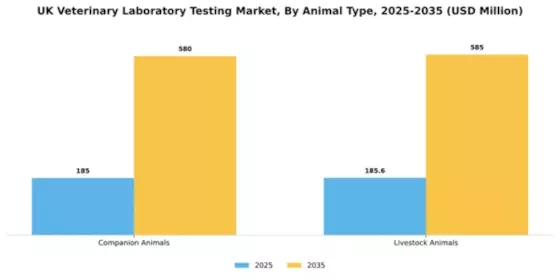
Companion Animals: Dominant vs. Livestock Animals: Emerging
Companion Animals are currently the dominant force in the UK veterinary laboratory-testing market, driven by a strong culture of pet ownership and an increasing demand for comprehensive healthcare solutions. This segment includes tests related to a variety of common pets such as dogs and cats, where early detection and preventive care are paramount. On the other hand, Livestock Animals represent an emerging segment that is rapidly gaining importance as farmers adopt more rigorous health standards and testing protocols. These animals, including cattle, sheep, and pigs, are now subject to stricter health regulations, increasing the need for reliable testing to ensure food safety and animal welfare. Both segments highlight the critical role of veterinary testing in enhancing the health and productivity of animals.
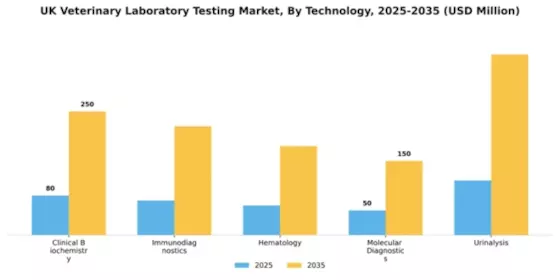
The UK veterinary laboratory-testing market exhibits diverse segment values, with Molecular Diagnostics leading the charge as the largest segment in terms of market presence. Following closely are Clinical Biochemistry and Immunodiagnostics, both of which share significant market shares. While Hematology and Urinalysis are also integral parts of the landscape, they display moderate contributions in comparison to the leading segments. As the market continues to evolve, understanding these dynamics becomes crucial for stakeholders. Growth trends within the UK veterinary laboratory-testing market show a robust trajectory, especially for Clinical Biochemistry, which is recognized as the fastest-growing segment. Driven by rising pet ownership and an increasing focus on animal health and wellness, the demand for advanced diagnostic solutions is accelerating. Furthermore, innovations in Molecular Diagnostics are reshaping testing protocols, underscoring the importance of technology in improving veterinary care outcomes.
Clinical Biochemistry (Dominant) vs. Urinalysis (Emerging)
Clinical Biochemistry represents a dominant force within the UK veterinary laboratory-testing market, offering comprehensive insights into metabolic and organ function through biochemical analysis. It serves as a critical tool for diagnosing various diseases in animals, allowing for timely interventions. In contrast, Urinalysis emerges as an essential segment that aids in non-invasive diagnostics, becoming increasingly popular due to its simplicity and effectiveness. As pet owners increasingly seek affordable diagnostic solutions, Urinalysis is expanding its reach, providing valuable health insights while complementing the dominant capabilities of Clinical Biochemistry.
In the UK veterinary laboratory-testing market, the segment values are predominantly led by consumables, which command a significant market share due to their essential role in various testing procedures. These products form the backbone of laboratory operations, encompassing a wide range of items such as test kits, reagents, and disposables. Instruments, while smaller in comparison, are vital for enhancing the precision and efficiency of tests, contributing to their growing importance in the market. As trends evolve, the instruments sector is witnessing dynamic growth, driven by advancements in technology and the increasing demand for automation in laboratories. Innovations in diagnostic tools and equipment are enhancing testing capabilities, making instruments the fastest-growing segment. Consequently, as veterinary practices emphasize the importance of accurate diagnostics, the reliance on sophisticated instruments is expected to rise, fostering a competitive landscape where both consumables and instruments play crucial roles.
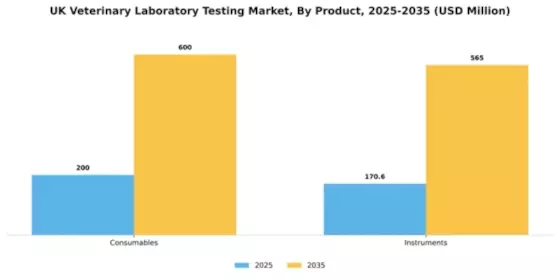
Consumables (Dominant) vs. Instruments (Emerging)
Consumables in the UK veterinary laboratory-testing market represent a dominant force due to their widespread usage and necessity in routine diagnostics and testing. They encompass essential items like reagents, test kits, and other disposable products that ensure the efficacy of lab operations. Their stability in demand is attributed to the continuous need for various tests. On the other hand, instruments are emerging as a key area of growth, spurred by innovation and technological advancements that streamline operations. These items, which include diagnostic machines and analytical tools, enhance the accuracy and speed of tests. The emerging role of instruments is becoming increasingly evident as veterinary practices seek to incorporate more sophisticated technology to improve patient outcomes.
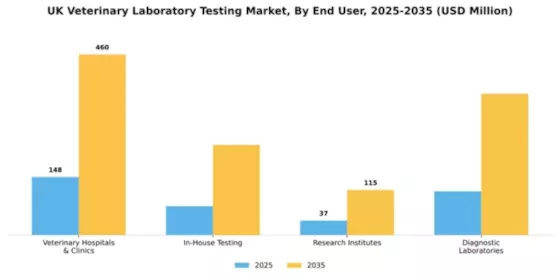
In the UK veterinary laboratory-testing market, Veterinary Hospitals & Clinics hold a significant share, dominating the sector due to their comprehensive diagnostic capabilities and the growing awareness among pet owners regarding animal health. Research Institutes and In-House Testing also contribute to the market, but to a lesser extent. The increasing number of veterinary practices has further enhanced their market presence, emphasizing their essential role in the broader veterinary healthcare system. The growth trends in this segment are noteworthy, with Diagnostic Laboratories emerging as the fastest-growing sector. This growth is driven by advancements in diagnostic technologies and a shift towards specialized testing services. Furthermore, the rising demand for timely and accurate diagnostic results is propelling the expansion of these laboratories, allowing them to cater to both veterinary practices and research needs effectively.
Veterinary Hospitals & Clinics (Dominant) vs. Research Institutes (Emerging)
Veterinary Hospitals & Clinics are the dominant players in the UK veterinary laboratory-testing market, characterized by their extensive service offerings and reliance on cutting-edge diagnostic equipment. They play a critical role in the health management of pets and livestock, driving demand for consistent and innovative testing solutions. In contrast, Research Institutes are viewed as an emerging segment, focusing on specialized research and development of new diagnostic methods. Their role is increasingly recognized as vital for enhancing veterinary science, bridging the gap between academic research and practical applications in veterinary clinics. This dynamic interplay between dominant and emerging segments shapes the competitive landscape of the market.
Get more detailed insights about UK Veterinary Laboratory Testing Market Request Free Sample
The veterinary laboratory-testing market in the UK is characterized by a competitive landscape that is increasingly shaped by innovation, strategic partnerships, and technological advancements. Key players such as Idexx Laboratories (US), Zoetis (US), and Randox Laboratories (GB) are at the forefront, leveraging their extensive research capabilities and product portfolios to enhance their market positions. Idexx Laboratories (US) focuses on digital transformation and the integration of advanced diagnostic technologies, which appears to be a significant driver of their growth. Meanwhile, Zoetis (US) emphasizes a strategy centered on expanding its product offerings through acquisitions and partnerships, thereby enhancing its competitive edge. Randox Laboratories (GB) is also notable for its commitment to innovation, particularly in developing new testing solutions that cater to the evolving needs of veterinary professionals.The business tactics employed by these companies reflect a concerted effort to optimize supply chains and localize manufacturing processes. The market structure is moderately fragmented, with a mix of established players and emerging companies vying for market share. This fragmentation allows for a diverse range of products and services, which collectively influences the competitive dynamics within the sector. The presence of multiple key players fosters an environment where innovation and customer-centric solutions are paramount.
In October Idexx Laboratories (US) announced the launch of a new suite of diagnostic tools aimed at enhancing the speed and accuracy of veterinary testing. This strategic move is likely to solidify Idexx's position as a leader in the market, as it addresses the growing demand for rapid and reliable testing solutions. The introduction of these tools not only reflects Idexx's commitment to innovation but also aligns with the broader trend of digitalization within the veterinary sector.
In September Zoetis (US) completed the acquisition of a biotechnology firm specializing in advanced diagnostic technologies. This acquisition is expected to bolster Zoetis's capabilities in the veterinary laboratory-testing market, allowing for the development of more sophisticated testing solutions. The strategic importance of this move lies in Zoetis's ability to integrate cutting-edge technologies into its existing product lines, thereby enhancing its competitive positioning.
In August Randox Laboratories (GB) entered into a partnership with a leading veterinary college to develop new testing methodologies. This collaboration is indicative of Randox's strategy to foster innovation through academic partnerships, which may lead to the creation of novel diagnostic solutions tailored to the needs of veterinary practitioners. Such initiatives not only enhance Randox's product offerings but also strengthen its reputation as a pioneer in veterinary diagnostics.
As of November the competitive trends within the veterinary laboratory-testing market are increasingly defined by digitalization, sustainability, and the integration of artificial intelligence (AI) into testing processes. Strategic alliances are playing a crucial role in shaping the landscape, as companies seek to leverage complementary strengths to drive innovation. Looking ahead, it appears that competitive differentiation will increasingly pivot from price-based strategies to a focus on technological advancements, innovation, and supply chain reliability. This shift underscores the importance of agility and responsiveness in meeting the evolving demands of the veterinary sector.

The UK Veterinary Laboratory Testing Market has seen significant developments, particularly with advancements in diagnostic technologies and an increased focus on animal health. Companies like IDEXX Laboratories and Zoetis continue to innovate, boosting their presence in the market through cutting-edge laboratory services. In recent months, the emergence of new testing methodologies has driven demand for comprehensive testing solutions, addressing various animal diseases.
The market has experienced growth, with an increased valuation attributed to heightened awareness of veterinary care and preventive measures among pet owners and livestock farmers. Notably, in April 2023, Neogen Corporation announced its acquisition of an advanced testing platform that enhances pathogen detection capabilities, although specific details remained undisclosed. Additionally, in July 2022, Charles River Laboratories expanded its portfolio by acquiring a veterinary diagnostics firm, confirming its strategy to strengthen its position within the veterinary sector.
The market landscape over the past two to three years has been further shaped by the COVID-19 pandemic, which spurred investment into veterinary services, leading to advancements in Remote Diagnostics and Telemedicine, thereby transforming the way veterinary care is delivered in the UK.
The Veterinary Laboratory Testing Market is projected to grow at a 10.97% CAGR from 2025 to 2035, driven by technological advancements, increased pet ownership, and rising awareness of animal health.
New opportunities lie in:
By 2035, the market is expected to achieve substantial growth, reflecting evolving industry dynamics.
| MARKET SIZE 2024 | 370.6(USD Million) |
| MARKET SIZE 2025 | 411.25(USD Million) |
| MARKET SIZE 2035 | 1165.0(USD Million) |
| COMPOUND ANNUAL GROWTH RATE (CAGR) | 10.97% (2025 - 2035) |
| REPORT COVERAGE | Revenue Forecast, Competitive Landscape, Growth Factors, and Trends |
| BASE YEAR | 2024 |
| Market Forecast Period | 2025 - 2035 |
| Historical Data | 2019 - 2024 |
| Market Forecast Units | USD Million |
| Key Companies Profiled | Idexx Laboratories (US), Zoetis (US), Neogen Corporation (US), Thermo Fisher Scientific (US), Virbac (FR), Heska Corporation (US), Randox Laboratories (GB), Boehringer Ingelheim (DE), MediVet (AU) |
| Segments Covered | Animal Type, Technology, Product, End User |
| Key Market Opportunities | Integration of advanced diagnostic technologies enhances efficiency in the veterinary laboratory-testing market. |
| Key Market Dynamics | Rising demand for advanced diagnostic tests drives innovation and competition in the veterinary laboratory-testing market. |
| Countries Covered | UK |
The market valuation was $370.6 Million in 2024.
The projected valuation for 2035 is $1165.0 Million.
The expected CAGR is 10.97% during the forecast period 2025 - 2035.
Key players include Idexx Laboratories, Zoetis, Neogen Corporation, and others.
Revenue for companion animals was $185.0 Million in 2024.
The projected revenue for clinical biochemistry is $250.0 Million by 2035.
The livestock animals segment generated $185.6 Million in revenue in 2024.
The expected revenue for consumables is $600.0 Million by 2035.
Revenue for veterinary hospitals and clinics was $148.0 Million in 2024.
The projected revenue for urinalysis is $365.0 Million by 2035.


Kindly complete the form below to receive a free sample of this Report

“This is really good guys. Excellent work on a tight deadline. I will continue to use you going forward and recommend you to others. Nice job”


“Thanks. It’s been a pleasure working with you, please use me as reference with any other Intel employees.”


“Thanks for sending the report it gives us a good global view of the Betaïne market.”


“Thank you, this will be very helpful for OQS.”


“We found the report very insightful! we found your research firm very helpful. I'm sending this email to secure our future business.”


“I am very pleased with how market segments have been defined in a relevant way for my purposes (such as "Portable Freezers & refrigerators" and "last-mile"). In general the report is well structured. Thanks very much for your efforts.”


“I have been reading the first document or the study, ,the Global HVAC and FP market report 2021 till 2026. Must say, good info! I have not gone in depth at all parts, but got a good indication of the data inside!”


“We got the report in time, we really thank you for your support in this process. I also thank to all of your team as they did a great job.”


“The Automotive 48V ECU Components Procurement Intelligence Study” was a complex project, but the Market Research Future (MRFR) team handled it with quality, agility, and customer-centricity. They delivered all requested data on time and within the agreed scope. The team, including Shubhendra Anand and Rahul Gotadki, was always readily available to clarify questions and swiftly implement necessary adjustments, driving the project to a successful conclusion within a very demanding timeframe.
I would also like to specifically commend Akshay Agarwal for his responsiveness and support at every stage—from our initial inquiry on May 6th through to final delivery on June 18th. His dedication made the entire process seamless.”



