Request Free Sample ×

Kindly complete the form below to receive a free sample of this Report

* Please use a valid business email

Leading companies partner with us for data-driven Insights

clients tt-cursor
Hero Background

Urinary Catheters Market

ID: MRFR/MED/1898-HCR
200 Pages
Satyendra Maurya, Rahul Gotadki
Last Updated: May 18, 2026
Urinary Catheters Market Research Report: Size, Share, Trend Analysis By Product Type (Intermittent Catheters, Foley Catheters, External Catheters, Condom Catheters), By Material (Latex Catheters, Silicone Catheters, PVC Catheters, Hydrophilic Coated Catheters), By End-user (Hospitals, Home Care Settings, Long-term Care Facilities, Ambulatory Surgical Centers), By Applications (Urinary Retention, Incontinence, Surgical Procedures, Diagnostic Procedures), and By Regional (North America, Europe, South America, Asia Pacific, Middle East and Africa) - Growth Outlook & Industry Forecast 2025 To 2035
Download PDF ×

We do not share your information with anyone. However, we may send you emails based on your report interest from time to time. You may contact us at any time to opt-out.

Urinary Catheters Market Summary

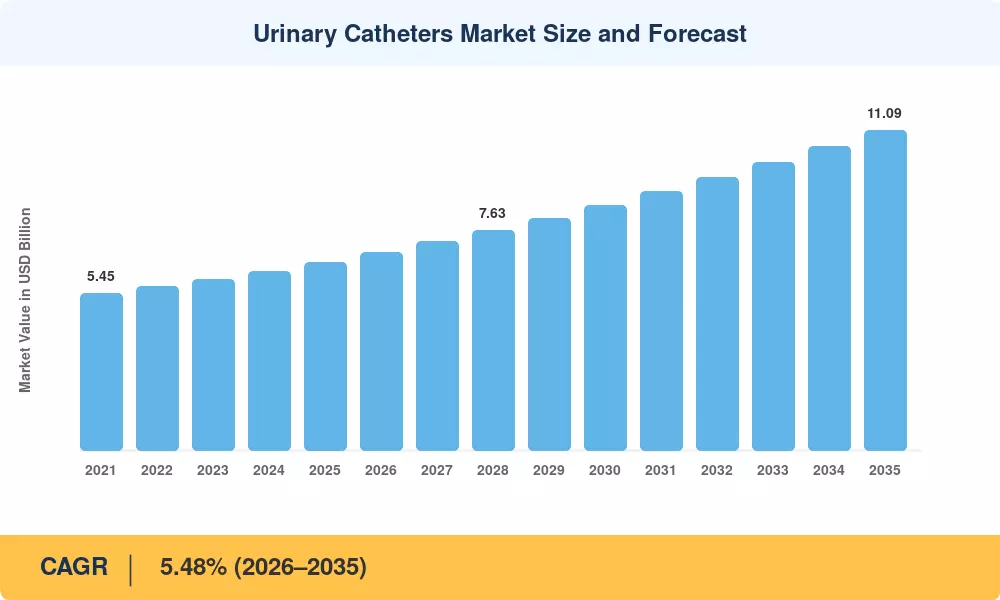
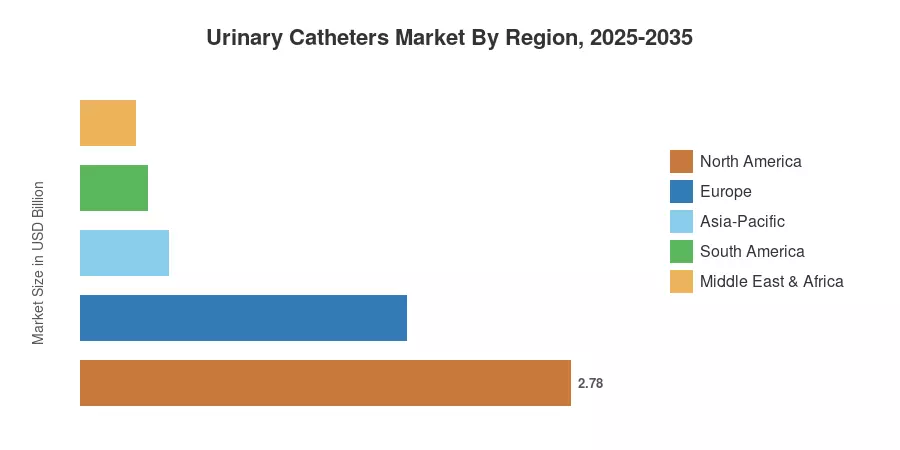
The Urinary Catheters Market size was valued at USD 5.73 Billion in 2024, and the market is projected to grow from USD 6.121 Billion in 2025 to USD 11.85 Billion by 2035, registering a CAGR of 6.83% during the forecast period 2025–2035. North America led the market with over 45% share, generating around USD 2.6 Billion in revenue.
 
Rising prevalence of urinary incontinence, kidney disorders, and hospital-acquired urinary complications is driving urinary catheter adoption. Increasing elderly population and growing demand for minimally invasive urological care are further accelerating global market expansion across hospitals and home healthcare settings.
 
According to the Centers for Disease Control and Prevention (CDC), catheter-associated urinary tract infections (CAUTIs) account for nearly 75% of all hospital-acquired UTIs, impacting hundreds of thousands of patients annually in the U.S. The World Health Organization (WHO) highlights that urinary incontinence affects over 400 million people globally, significantly increasing catheter demand in long-term care and surgical recovery settings. These conditions strongly support sustained market growth.

Key Market Trends & Highlights

The Urinary Catheters Market is experiencing robust growth driven by technological advancements and increasing demand for innovative solutions.

  • Technological innovations and antimicrobial coatings significantly reduce infection risk, improving catheter safety and clinical adoption rates worldwide.
  • Intermittent catheters gain rapid traction due to lower infection risks and rising preference for self-managed urinary care solutions.
  • Home healthcare expansion and aging demographics significantly boost demand for easy-to-use disposable urinary catheter products globally.
  • North America leads urinary catheter market with over 45% global revenue share driven by advanced healthcare infrastructure.
  • Europe urinary catheter market valued at USD 1.72 Billion in 2024, holding 30% global share position.

Market Size & Forecast

2024 Market Size 5.73 (USD Billion)
2035 Market Size 11.85 (USD Billion)
CAGR (2025 - 2035) 6.83%

Major Players

Companies such as Bard Medical (US), Coloplast (DK), Medtronic (US), Boston Scientific (US), Hollister (US), Teleflex (US), ConvaTec (GB), Smiths Medical (US), Amsino International (US) are some of the major participants in the global market.

Our Impact
Enabled $4.3B Revenue Impact for Fortune 500 and Leading Multinationals
Partnering with 2000+ Global Organizations Each Year
30K+ Citations by Top-Tier Firms in the Industry

Urinary Catheters Market Trends

The Urinary Catheters Market is currently experiencing notable transformations driven by advancements in technology and increasing awareness regarding patient care. Innovations in catheter materials and designs are enhancing comfort and reducing the risk of infections, which appears to be a primary concern among healthcare providers and patients alike.

Furthermore, the growing prevalence of urinary disorders and an aging population are contributing to a heightened demand for these medical devices. As healthcare systems evolve, the focus on minimizing complications associated with catheter use is becoming more pronounced, suggesting a shift towards more patient-centric solutions.

In addition, the market is likely to witness a rise in the adoption of intermittent catheters, which are perceived as safer alternatives compared to traditional options. This trend may be influenced by the increasing emphasis on quality of life for individuals requiring long-term catheterization.

Moreover, the integration of digital health technologies into catheter management could potentially streamline processes and improve patient outcomes. Overall, the global market landscape is evolving, with a clear inclination towards innovation and enhanced patient experiences.

Technological Advancements

The global market is seeing a surge in technological innovations that enhance the functionality and safety of catheters. New materials and designs are being developed to minimize discomfort and reduce infection risks, which is crucial for patient care.

  • According to the European Centre for Disease Prevention and Control (ECDC), healthcare-associated infection prevention technologies, including antimicrobial and hydrophilic catheter coatings, have contributed to reducing catheter-related infection risks by up to 30–50% in controlled hospital environments across Europe. These innovations improve patient safety and support wider clinical adoption of advanced catheter systems.

Rising Demand for Intermittent Catheters

There is a growing preference for intermittent catheters, as they are viewed as safer and more effective for long-term use. This trend reflects a broader focus on improving patient quality of life and reducing complications associated with continuous catheterization.

  • The World Health Organization (WHO) reports that long-term urinary retention conditions affect millions globally, particularly among aging populations, with prevalence increasing by over 20% in individuals above 60 years. Intermittent catheterization is widely recommended in clinical guidelines due to its lower infection risk compared to indwelling catheters.

Integration of Digital Health Solutions

The incorporation of digital health technologies into catheter management is emerging as a significant trend. These solutions may facilitate better monitoring and management of catheter use, potentially leading to improved patient outcomes and streamlined healthcare processes.

  • The Centers for Disease Control and Prevention (CDC) notes that digital monitoring systems in catheterized patients can help reduce catheter duration, which is a key factor in infection risk reduction, as prolonged catheter use increases CAUTI risk by 3–7% per day of catheterization. Digital health integration is improving patient tracking and reducing complications in hospitals.

Urinary Catheters Market Drivers

Aging Population

The increasing prevalence of urinary disorders among the aging population appears to be a significant driver for the global market. As individuals age, they often experience conditions such as urinary incontinence and benign prostatic hyperplasia, which necessitate the use of catheters. 
 
According to recent statistics, the population aged 65 and older is projected to reach 1.5 billion by 2050, indicating a growing market for urinary catheters. This demographic shift suggests that healthcare providers will likely need to adapt their services to accommodate the rising demand for urinary catheters, thereby propelling the global market forward.

Technological Innovations

Technological innovations in catheter design and materials are transforming the Urinary Catheters Industry. Advances such as the development of antimicrobial coatings and hydrophilic catheters are enhancing patient comfort and reducing the risk of infections. The introduction of smart catheters equipped with sensors for monitoring urinary output is also gaining traction. 
 
These innovations not only improve patient outcomes but also align with the increasing focus on patient-centered care. As healthcare providers seek to implement more effective solutions, the global industry for technologically advanced urinary catheters is likely to expand, reflecting a shift towards more sophisticated medical devices.

Increased Awareness and Education

Increased awareness and education regarding urinary health are driving growth in the Urinary Catheters Industry. Healthcare professionals are placing greater emphasis on educating patients about urinary incontinence and the available management options, including catheters. Campaigns aimed at reducing the stigma associated with urinary disorders are also contributing to this trend. 
 
As patients become more informed about their options, the likelihood of seeking catheterization increases. This heightened awareness is expected to lead to a greater acceptance of urinary catheters, thereby fostering market growth as more individuals opt for these devices as part of their treatment plans.

Rising Incidence of Chronic Diseases

The Urinary Catheters Industry is also influenced by the rising incidence of chronic diseases such as diabetes and neurological disorders. These conditions often lead to complications that require catheterization for effective management. For instance, diabetes can result in diabetic neuropathy, which may impair bladder function.
 
Reports indicate that the prevalence of diabetes is expected to rise significantly, with estimates suggesting that by 2045, approximately 700 million people will be affected. This trend indicates a potential increase in the demand for urinary catheters, as healthcare systems strive to provide adequate care for patients with chronic illnesses.

Regulatory Support and Reimbursement Policies

Regulatory support and favorable reimbursement policies are crucial factors influencing the Urinary Catheters Industry. Governments and health organizations are increasingly recognizing the importance of urinary catheters in managing various medical conditions. As a result, there has been a push for policies that ensure coverage for catheterization procedures and related products. 
 
This support not only alleviates the financial burden on patients but also encourages healthcare providers to adopt catheterization as a standard practice. The alignment of regulatory frameworks with market needs is likely to enhance the accessibility and affordability of urinary catheters, thereby stimulating market growth.

Market Segment Insights

By Type: Foley Catheters (Largest) vs. Intermittent Catheters (Fastest-Growing)

In the Urinary Catheters Market, Foley Catheters hold the largest market share of 64% due to their widespread usage in hospitals and long-term care facilities. These catheters are known for their effectiveness in managing urinary retention and are often used in patients undergoing surgery or those with chronic conditions. On the other hand, Intermittent Catheters are rapidly gaining market share, driven primarily by the growing prevalence of urinary incontinence and the increasing awareness of self-catheterization among patients. Growth trends in the urinary catheter segment highlight a shift towards less invasive catheterization methods, with rising demand for products that offer comfort and convenience. External Catheters and Condom Catheters are also emerging preferences, particularly among male patients, as they reduce the risk of urinary tract infections. Driven by technological advancements and improved materials, the global market is expected to see significant growth opportunities over the forecast period.

Foley Catheters (Dominant) vs. Intermittent Catheters (Emerging)

Foley Catheters are a dominant force in the urinary catheter market due to their effectiveness and versatility in both acute and chronic care settings. They are designed for prolonged use, offering comfort to patients and facilitating manageable urinary drainage. Conversely, Intermittent Catheters represent an emerging segment that appeals to a growing population looking for less invasive options. These catheters are especially favored by individuals who are able to self-catheterize, thus empowering them in their personal care routines. While Foley Catheters continue to dominate due to established usage patterns, Intermittent Catheters are rapidly expanding, supported by increased patient education and a shift in healthcare towards improved patient autonomy.

By Material: Silicone Catheters (Largest) vs. Hydrophilic Coated Catheters (Fastest-Growing)

The urinary catheters market showcases a diverse distribution across its material segments, particularly dominated by silicone catheters. Offering superior biocompatibility and comfort, silicone catheters hold the largest market share at 58% among their counterparts.On the other hand, hydrophilic coated catheters are gaining traction due to their ease of use and reduced friction during insertion, appealing to a growing consumer base looking for enhanced comfort and convenience. It is noteworthy that latex catheters are witnessing a decline due to growing awareness of latex allergies, causing a shift toward more patient-friendly materials. In terms of growth trends, the demand for hydrophilic coated catheters is expected to rise sharply as healthcare providers prioritize the adoption of products that minimize patient discomfort and reduce complication rates. The innovation in materials that enhance surface properties of urinary catheters is driving rapid advancements in this segment. Additionally, as awareness of chronic conditions requiring catheterization increases, there is a growing market for silicone catheters driven by their long-term usability and reliability in diverse clinical settings.

Silicone Catheters (Dominant) vs. PVC Catheters (Emerging)

Silicone catheters are the dominant players in the market due to their biocompatibility, making them safer for long-term use. They are preferred across various healthcare settings, ensuring patient comfort and reducing risks associated with latex exposure. These catheters are known for their flexibility and ease of insertion, enhancing the overall patient experience. Conversely, PVC catheters are emerging as an alternative that offers cost-effective solutions. Although they lack some of the benefits associated with silicone, advancements in PVC technology are being made to improve their performance, making them increasingly popular among budget-conscious healthcare facilities. As manufacturers continue to innovate, PVC catheters are positioning themselves as a viable option for certain patient demographics.

By End-user: Hospitals (Largest) vs. Home Care Settings (Fastest-Growing)

In the Urinary Catheters Market, hospitals remain the largest segment, accounting for a significant 62% share due to the high volume of surgical procedures and inpatient care.This setting demands sterile and reliable catheterization solutions to ensure patient safety and comfort. Conversely, home care settings are emerging rapidly, driven by the trend toward at-home healthcare services. As patients prefer receiving care in their homes, the demand for urinary catheters tailored for home use has surged, highlighting a shift in how care is administered. Growth trends in the market are largely influenced by technological advancements and increasing awareness of urological health. Hospitals continue to see stable demand, but home care settings are becoming the fastest-growing segment fueled by the aging population and the prevalence of chronic conditions. Moreover, the development of user-friendly, disposable catheters has made them more accessible for consumer use in home care, further driving market expansion in this category.

Hospitals (Dominant) vs. Long-term Care Facilities (Emerging)

The hospitals segment is characterized by its dominant market position, with ongoing investment in advanced therapeutic innovations and improved patient care protocols driving demand for urinary catheters. Hospitals require high-quality products that adhere to stringent regulatory standards, making them a focal point for manufacturers. In contrast, long-term care facilities are an emerging segment in this market. The growing elderly population necessitates effective, long-term care solutions, including urinary catheters designed for chronic conditions. These facilities often seek products that ensure comfort and reduce the risk of infections, which are critical factors influencing purchasing decisions. As a result, long-term care facilities are expanding their product portfolios, contributing to the growth of specialized catheters designed for extended use.

By Application: Urinary Retention (Largest) vs. Incontinence (Fastest-Growing)

The urinary catheters market shows a diverse distribution among its key applications, with urinary retention being the largest segment at 55%. This reflects a significant demand driven by both hospital and home care settings where chronic conditions necessitate the use of catheterization. In contrast, the incontinence segment is seeing rapid growth due to an aging population and increased awareness of personal health and hygiene, highlighting a shift in consumer needs and the expansion of available products.

Urinary Retention (Dominant) vs. Incontinence (Emerging)

The urinary retention segment dominates the application landscape of the global industry, primarily serving patients with conditions that prevent normal urination. This category benefits from established usage, particularly within clinical environments where prolonged catheterization is necessary. Conversely, the incontinence segment is emerging strongly, fueled by greater recognition of urinary incontinence as a prevalent issue, especially among the elderly. This growth is influenced by advancements in product technology, improving functionality and comfort, thus making catheters more appealing to a broader demographic.

Get more detailed insights about Urinary Catheters Market

Regional Insights

North America : Market Leader in Innovation

North America is the largest market for urinary catheters, accounting for approximately 45% of the global share. The region's growth is driven by an aging population, increasing prevalence of urinary disorders, and advancements in catheter technology. Regulatory support from agencies like the FDA further catalyzes market expansion, ensuring safety and efficacy in product offerings. The demand for both intermittent and indwelling catheters is on the rise, reflecting a shift towards minimally invasive procedures.

The United States stands as the leading country in this market, with significant contributions from key players such as Bard Medical, Medtronic, and Boston Scientific. The competitive landscape is characterized by continuous innovation and strategic partnerships among manufacturers. Canada also plays a vital role, contributing to the overall market dynamics with a growing healthcare infrastructure and increasing awareness about urinary health management.

  • According to the Centers for Disease Control and Prevention (CDC), catheter-associated urinary tract infections account for nearly 75% of hospital-acquired UTIs in the U.S., creating significant demand for safer catheter systems. Additionally, the region’s aging population—projected by the World Health Organization to reach 1 in 6 people aged 60+ globally by 2030—further accelerates catheter adoption in hospitals and long-term care facilities.

Europe : Emerging Market with Growth Potential

Europe is witnessing a significant increase in the market, holding approximately 30% of the global share. The growth is fueled by rising healthcare expenditures, an aging population, and increasing awareness of urinary health. Regulatory frameworks, such as the Medical Device Regulation (MDR), are enhancing product safety and efficacy, thereby boosting consumer confidence and market demand. Countries like Germany and France are leading this growth, driven by advanced healthcare systems and innovative medical technologies.

Germany is the largest market in Europe, followed closely by France and the UK. The competitive landscape features major players like Coloplast and Hollister, who are focusing on product innovation and expanding their distribution networks. The presence of strong healthcare infrastructure and increasing investments in medical technology further support market growth. The region is also seeing a rise in partnerships between manufacturers and healthcare providers to improve patient outcomes.

  • The European Centre for Disease Prevention and Control (ECDC) emphasizes infection prevention standards that support widespread adoption of safer catheter systems. Additionally, Eurostat data indicates that over 21% of the European population is aged 65 or older, significantly increasing demand for urinary management solutions and long-term catheter use across Germany, France, and the UK.

Asia-Pacific : Rapidly Growing Healthcare Sector

Asia-Pacific is emerging as a significant player in the market, accounting for approximately 20% of the global share. The region's growth is driven by increasing healthcare access, rising disposable incomes, and a growing elderly population. Countries like China and India are witnessing a surge in demand for urinary catheters due to the rising prevalence of urinary disorders and the need for improved healthcare facilities. Regulatory initiatives aimed at enhancing healthcare quality are also contributing to market expansion.

China is the largest market in the region, followed by India and Japan. The competitive landscape is marked by the presence of both global and local players, including Medtronic and Teleflex. Companies are focusing on product development and strategic collaborations to enhance their market presence. The increasing adoption of advanced medical technologies and growing awareness about urinary health are further propelling market growth in this dynamic region.

Middle East and Africa : Untapped Market with Opportunities

The Middle East and Africa region is gradually emerging in the market, holding approximately 5% of the global share. The growth is primarily driven by increasing healthcare investments, rising awareness of urinary health, and a growing patient population. Countries like South Africa and the UAE are leading this growth, supported by government initiatives to improve healthcare infrastructure and access. The region's regulatory environment is evolving, which is expected to enhance market dynamics in the coming years.

South Africa is the largest market in the region, with significant contributions from local and international players. The competitive landscape is characterized by a mix of established companies and new entrants, focusing on product innovation and affordability. The increasing prevalence of chronic diseases and the need for better healthcare solutions are driving demand for urinary catheters, presenting opportunities for growth in this untapped market.

Key Players and Competitive Insights

The Urinary Catheters Market is characterized by a competitive landscape that is increasingly shaped by innovation, strategic partnerships, and regional expansions. Key players such as Bard Medical (US), Coloplast (DK), and Medtronic (US) are actively pursuing strategies that enhance their market positioning. Bard Medical (US) focuses on product innovation, particularly in developing advanced catheter materials that reduce infection rates.
 
Coloplast (DK) emphasizes regional expansion, particularly in emerging markets, to capture a broader customer base. Medtronic (US) is leveraging digital transformation to enhance patient outcomes through connected devices, which collectively indicates a trend towards more patient-centric solutions in the global market.The business tactics employed by these companies reflect a moderately fragmented market structure, where local manufacturing and supply chain optimization are pivotal. 
 
Companies are increasingly localizing their production to mitigate supply chain disruptions and enhance responsiveness to regional demands. This strategy not only reduces costs but also allows for quicker adaptation to local market needs, thereby strengthening their competitive positions.
In August Bard Medical (US) announced the launch of a new line of antimicrobial catheters designed to significantly reduce the risk of urinary tract infections. This strategic move is crucial as it aligns with the growing demand for infection prevention in catheter use, potentially enhancing patient safety and satisfaction. The introduction of these products may also provide Bard Medical with a competitive edge in a market that is increasingly prioritizing health outcomes.
In September Coloplast (DK) entered into a partnership with a leading telehealth provider to integrate remote monitoring capabilities into their catheter products. This collaboration is strategically significant as it reflects a broader trend towards digital health solutions, enabling better patient management and adherence. By incorporating telehealth features, Coloplast is likely to enhance its value proposition, appealing to both healthcare providers and patients.
In July Medtronic (US) expanded its product portfolio by acquiring a startup specializing in AI-driven catheter management systems. This acquisition is indicative of Medtronic's commitment to integrating advanced technologies into its offerings, which could lead to improved patient outcomes and operational efficiencies. The move not only diversifies Medtronic's product range but also positions the company at the forefront of technological innovation in the market.
As of October the competitive trends in the global market are increasingly defined by digitalization, sustainability, and the integration of artificial intelligence. Strategic alliances are becoming more prevalent, as companies recognize the need to collaborate to enhance their technological capabilities and market reach. Looking ahead, competitive differentiation is likely to evolve from traditional price-based competition towards a focus on innovation, technology integration, and supply chain reliability, suggesting a transformative shift in how companies compete in this sector.

Industry Developments

With its omnidirectional tip, no-touch dry sleeve, and Triple-Action Coating Technology, Coloplast introduced the SpeediCath Flex Set catheter in the United States in November 2022 with the goal of lowering urinary tract infections and urethral trauma for users, particularly individuals with spinal cord injuries.

Hollister's Infyna Chic intermittent hydrophilic catheter, which was released in the United States in the beginning of 2023, improved intermittent catheter users' comfort and use. With a no-touch sleeve that decreased friction and enhanced cleanliness, a hydrophilic coating, and enhanced privacy, Coloplast extended their Compact Catheter for women throughout Europe in 2023.

By using recyclable packaging for its catheters in North America towards the end of 2023, Hollister reduced medical plastic waste by almost one-fifth and attracted eco-aware customers. Teleflex improved their range of no-touch catheters in early 2024 by adding more lubrication and grip to better serve patients with spinal cord injuries and attract urologists.

To enhance percutaneous operations, B. Braun unveiled ACCEL drainage catheters with TrueGlide hydrophilic coating in April 2025. At the same time, next-generation anti-infection prototyping was demonstrated via AI-driven geometric catheter designs that targeted bacterial suppression.

Prototypes of new active lubrication technologies for minimally invasive catheters that use ultrasonic vibrations to lessen tissue friction have shown notable improvements in procedural safety and friction reduction.

Future Outlook

Urinary Catheters Market Future Outlook

The Urinary Catheters Market size is projected to reach USD 11.85 Billion by 2035, growing at a CAGR of 6.83%, driven by technological advancements, increasing geriatric population, and rising prevalence of urinary disorders.

New opportunities lie in:

  • Development of smart catheters with integrated sensors for real-time monitoring.
  • Expansion into emerging markets with tailored product offerings.
  • Partnerships with healthcare providers for bundled catheterization services.

By 2035, the Urinary Catheters Market is expected to achieve substantial growth and innovation.

Market Segmentation

Urinary Catheters Market Type Outlook

  • Intermittent Catheters
  • Foley Catheters
  • External Catheters
  • Condom Catheters

Urinary Catheters Market End-user Outlook

  • Hospitals
  • Home Care Settings
  • Long-term Care Facilities
  • Ambulatory Surgical Centers

Urinary Catheters Market Material Outlook

  • Latex Catheters
  • Silicone Catheters
  • PVC Catheters
  • Hydrophilic Coated Catheters

Urinary Catheters Market Application Outlook

  • Urinary Retention
  • Incontinence
  • Surgical Procedures
  • Diagnostic Procedures

Report Scope

MARKET SIZE 2024 5.73(USD Billion)
MARKET SIZE 2025 6.121(USD Billion)
MARKET SIZE 2035 11.85(USD Billion)
COMPOUND ANNUAL GROWTH RATE (CAGR) 6.83% (2025 - 2035)
REPORT COVERAGE Revenue Forecast, Competitive Landscape, Growth Factors, and Trends
BASE YEAR 2024
Market Forecast Period 2025 - 2035
Historical Data 2019 - 2024
Market Forecast Units USD Billion
Key Companies Profiled Bard Medical (US), Coloplast (DK), Medtronic (US), Boston Scientific (US), Hollister (US), Teleflex (US), ConvaTec (GB), Smiths Medical (US), Amsino International (US)
Segments Covered Product Type, Material, End-user, Applications, Regional
Key Market Opportunities Integration of smart technology in urinary catheters enhances patient monitoring and comfort.
Key Market Dynamics Rising demand for advanced urinary catheters drives innovation and regulatory scrutiny in the healthcare sector.
Countries Covered North America, Europe, APAC, South America, MEA

FAQs

What is the projected market valuation of the industry by 2035?

The industry is projected to reach a valuation of 11.85 USD Billion by 2035.

What was the market valuation of the Urinary Catheters Market in 2024?

In 2024, the Urinary Catheters Market was valued at 5.73 USD Billion.

What is the expected CAGR for the Urinary Catheters Market during the forecast period 2025 - 2035?

The expected CAGR for the Urinary Catheters Market during the forecast period 2025 - 2035 is 6.83%.

Which segment of urinary catheters had the highest valuation in 2024?

Foley Catheters had the highest valuation in 2024, amounting to 2.0 USD Billion.

What are the key players in the Urinary Catheters Market?

Key players in the Urinary Catheters Market include Bard Medical, Coloplast, Medtronic, and Boston Scientific.

How much is the market for Intermittent Catheters expected to grow by 2035?

The market for Intermittent Catheters is expected to grow from 1.5 USD Billion in 2024 to 3.1 USD Billion by 2035.

What is the projected valuation for Silicone Catheters by 2035?

Silicone Catheters are projected to reach a valuation of 3.56 USD Billion by 2035.

Which end-user segment is expected to see the most growth by 2035?

The Hospitals segment is expected to grow significantly, from 2.87 USD Billion in 2024 to 5.85 USD Billion by 2035.

What application segment is projected to have the highest valuation by 2035?

The Incontinence application segment is projected to have the highest valuation, reaching 3.55 USD Billion by 2035.

What is the expected growth for the Home Care Settings segment by 2035?

The Home Care Settings segment is expected to grow from 1.14 USD Billion in 2024 to 2.35 USD Billion by 2035.
Author
Author
Author Profile
Satyendra Maurya LinkedIn
Research Analyst
An accomplished research analyst with high proficiency in market forecasting, data visualization, competitive benchmarking, and others. He holds a pronounced track record in research and consulting projects for sectors such as life sciences, medical devices, and healthcare IT. His capabilities in qualitative and quantitative analysis have resulted in positive client outcomes. Working on niche market trends, opportunities, sales, and forecasted value is part of his skill set.
Co-Author
Co-Author Profile
Rahul Gotadki LinkedIn
Research Manager
He holds an experience of about 9+ years in Market Research and Business Consulting, working under the spectrum of Life Sciences and Healthcare domains. Rahul conceptualizes and implements a scalable business strategy and provides strategic leadership to the clients. His expertise lies in market estimation, competitive intelligence, pipeline analysis, customer assessment, etc.
Leave a Comment
Download Free Sample

Kindly complete the form below to receive a free sample of this Report