Download Free Sample
Kindly complete the form below to receive a free sample of this Report
United States 3D Bioprinting Market Research Report: Size, Share, Trend Analysis - Growth & Industry Forecast 2025 To 2035
As per Market Research Future analysis, the US 3D Bioprinting Market Size was estimated at 803.6 USD Million in 2024. The US 3d bioprinting market is projected to grow from 884.04 USD Million in 2025 to 2294.6 USD Million by 2035, exhibiting a compound annual growth rate (CAGR) of 10.0% during the forecast period 2025 - 2035
The US 3D Bioprinting Market is poised for substantial growth driven by technological advancements and increasing demand for organ transplants.
| 2024 Market Size | 803.6 (USD Million) |
| 2035 Market Size | 2294.6 (USD Million) |
| CAGR (2025 - 2035) | 10.01% |
Organovo Holdings Inc (US), 3D Biotek LLC (US), Aspect Biosystems Ltd (CA), Regenhu SA (CH), CELLINK AB (SE), Allevi Inc (US), Biolife Sciences Inc (US), EnvisionTEC GmbH (DE)
Our Impact
Enabled $4.3B Revenue Impact for Fortune 500 and Leading Multinationals
Partnering with 2000+ Global Organizations Each Year
30K+ Citations by Top-Tier Firms in the Industry
The 3D Bioprinting Market is currently experiencing a transformative phase, driven by advancements in technology and increasing applications in various sectors. This market encompasses the use of 3d printing techniques to create biological tissues and organs, which holds the potential to revolutionize healthcare. The integration of biocompatible materials and innovative printing methods is enhancing the capabilities of this market, allowing for more complex and functional tissue structures. As research institutions and companies invest in this field, the prospects for personalized medicine and regenerative therapies appear promising. Moreover, the regulatory landscape is evolving to accommodate the unique challenges posed by bioprinting technologies. Regulatory bodies are beginning to establish guidelines that ensure safety and efficacy, which may foster greater confidence among stakeholders. The collaboration between academia and industry is also intensifying, leading to a surge in innovative solutions that address critical healthcare needs. As the 3d bioprinting market continues to mature, it is likely to play a pivotal role in shaping the future of medical treatments and patient care.
Recent innovations in bioprinting technologies are enhancing the precision and efficiency of tissue engineering. New materials and methods are being developed, which may allow for the creation of more complex biological structures. This trend indicates a shift towards more sophisticated applications in regenerative medicine.
The evolving regulatory framework surrounding bioprinting is becoming more defined, which could lead to increased market stability. Regulatory agencies are working to establish clear guidelines for the approval of bioprinted products, potentially accelerating their entry into the healthcare market.
There is a noticeable increase in partnerships between research institutions and private companies focused on bioprinting. These collaborations are likely to drive innovation and expedite the development of new applications, thereby expanding the market's reach and impact.
The development of advanced biomaterials is significantly influencing the 3d bioprinting market. Innovations in materials such as hydrogels, biopolymers, and composite materials enhance the functionality and compatibility of bioprinted tissues. These materials are crucial for mimicking the natural environment of human tissues, which is essential for successful bioprinting applications. The market for biomaterials is projected to grow at a CAGR of around 15% through 2025, indicating a robust interest in developing new materials that can be used in bioprinting. As researchers continue to explore novel biomaterials, the potential for creating complex tissue structures increases, thereby expanding the applications of 3d bioprinting in regenerative medicine and drug testing.
The increasing demand for organ transplants in the US is a pivotal driver for the 3D Bioprinting Market. With over 100,000 individuals on waiting lists for organ transplants, the need for innovative solutions is pressing. 3d bioprinting technology offers the potential to create bioengineered organs, which could alleviate the shortage of donor organs. The market is projected to grow as hospitals and research institutions invest in bioprinting capabilities. In 2025, the market for organ transplants is expected to reach approximately $40 billion, highlighting the financial incentives for advancements in this field. As the population ages and chronic diseases become more prevalent, the urgency for effective organ replacement solutions will likely drive further investment in the 3d bioprinting market.
The emergence of startups and innovation hubs focused on 3d bioprinting is a notable driver of market growth. These entities are often at the forefront of technological advancements, bringing fresh ideas and solutions to the industry. In 2025, the number of startups in the bioprinting sector is expected to rise significantly, fostering a competitive landscape that encourages innovation. These startups often collaborate with established companies and research institutions, creating synergies that enhance the development of new products and applications. As these innovation hubs proliferate, they contribute to a vibrant ecosystem that supports the growth of the 3d bioprinting market, potentially leading to breakthroughs that could redefine the field.
Investment in research and development (R&D) is a critical driver for the 3d bioprinting market. As academic institutions and private companies allocate more resources to explore the capabilities of bioprinting, the technology is advancing rapidly. In 2025, R&D spending in the bioprinting sector is expected to exceed $1 billion, reflecting the growing recognition of its potential. This influx of funding supports the development of new techniques, improved printing processes, and innovative applications in tissue engineering and regenerative medicine. The collaboration between universities and industry players further accelerates advancements, fostering an environment where groundbreaking discoveries can thrive. As R&D continues to flourish, the 3d bioprinting market is likely to witness transformative changes.
The 3d bioprinting market is experiencing growth due to its expanding applications in drug testing and development. Pharmaceutical companies are increasingly adopting bioprinted tissues for preclinical testing, which allows for more accurate predictions of drug efficacy and safety. This shift is driven by the need to reduce the reliance on animal testing and improve the drug development process. The market for bioprinted tissues in drug testing is projected to reach $2 billion by 2025, indicating a strong demand for these innovative solutions. As regulatory bodies encourage the use of human-relevant models, the adoption of 3d bioprinting in the pharmaceutical industry is likely to increase, further propelling market growth.
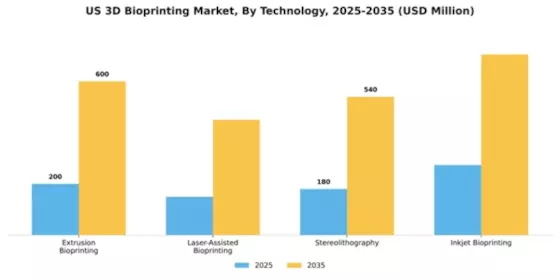
In the US 3D Bioprinting Market, Extrusion Bioprinting holds the largest share, driven by its applications in tissue engineering and regenerative medicine. This technology allows for the precise deposition of bioinks, offering a strong foundation for creating complex biological structures. Conversely, Laser-Assisted Bioprinting is gaining traction as the fastest-growing segment, thanks to advancements in laser technology that enhance printing accuracy and enable the creation of intricate tissue architectures. Increased investment in R&D and the rising demand for customized implants are propelling this segment's growth, reflecting a shift towards more sophisticated bioprinting solutions.
Technology: Extrusion Bioprinting (Dominant) vs. Laser-Assisted Bioprinting (Emerging)
Extrusion Bioprinting is characterized by its ability to effectively use various bioinks, making it a versatile choice for fabricating tissues. The method is well-established, with applications ranging from cartilage to organ models, positioning it as a dominant player in the market. On the other hand, Laser-Assisted Bioprinting, as an emerging technology, utilizes laser energy to facilitate a highly controlled printing process. This method is particularly notable for its precision and ability to work with high-viscosity inks, making it suitable for creating complex tissue structures that require detailed architecture. As innovation drives both segments, the landscape of the US 3d bioprinting market continues to evolve.
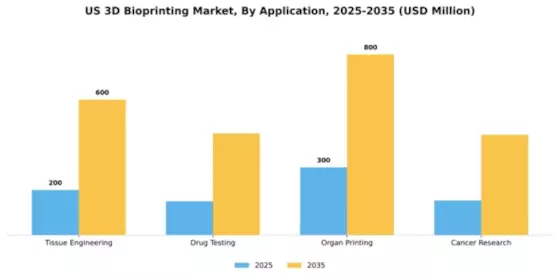
In the US 3D Bioprinting Market, Tissue Engineering holds the largest share, driven by an increasing demand for regenerative medicine and advancements in 3d printing technologies. This segment continues to thrive as researchers and medical professionals focus on creating functional tissues for transplants and treatments. Meanwhile, Drug Testing and Cancer Research are also significant but occupy smaller shares of the overall market, indicating a diversified interest in various bioprinting applications. Growth trends reveal that Organ Printing is emerging as the fastest-growing application, fueled by technological innovations and a rising need for customized organ solutions in transplantation medicine. This growth is largely attributed to ongoing research efforts and funding aimed at overcoming organ shortages, positioning Organ Printing as a vital segment in future health solutions. Additionally, Drug Testing is gaining traction due to the increasing regulatory demands for more effective and humane testing methods, which bolsters the bioprinting applications market.
Tissue Engineering (Dominant) vs. Organ Printing (Emerging)
Tissue Engineering is characterized by its dominance in the US 3d bioprinting market, primarily due to its extensive applications in regenerative medicine, aimed at creating human tissues for repair and reconstruction. The advancements in bioprinting techniques allow for the precise layering of cells to form complex tissue structures, making it a critical area of research. On the other hand, Organ Printing has emerged rapidly as a breakthrough application, leveraging innovative technologies to create viable organs tailored to patients' needs. This segment is driven by a significant increase in organ transplant requirements and a focus on personalized medicine, marking it as an essential component in the evolution of bioprinting technologies.
In the US 3D Bioprinting Market, Living Cells account for the largest share among material segments, indicating a strong preference for natural biological components in bioprinting applications. Hydrogels are gaining attention as versatile materials, contributing to a dynamic market landscape with their ability to mimic natural tissue properties. The combination of these segments showcases a diverse approach to bioprinting, allowing for innovation in tissue engineering and regenerative medicine. Growth trends in the material segment reveal increasing investments in research and development, driving advancements in bioprinting technologies. The demand for personalized medicine is a significant driver, as Living Cells offer highly specialized therapies while Hydrogels are recognized for their adaptability and ease of use in various applications. These factors position both segments for continued expansion, reflecting the evolving needs of the healthcare and biotechnology sectors.
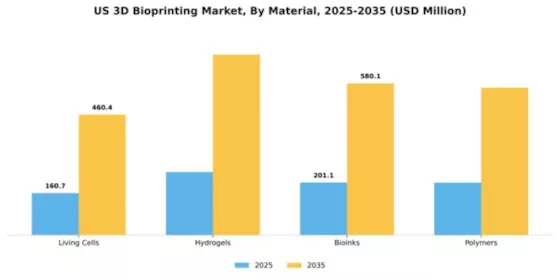
Living Cells (Dominant) vs. Hydrogels (Emerging)
Living Cells are the dominant material in the US 3d bioprinting market, recognized for their essential role in creating biological constructs that closely resemble human tissues. Their unique properties facilitate complex interactions within the body, making them invaluable for applications in regenerative medicine and drug testing. In contrast, Hydrogels are emerging as an innovative material, characterized by their ability to provide a supportive matrix for cell growth and their versatility across different bioprinting needs. This combination of stability and biocompatibility positions Hydrogels as a material of choice for developing bioinks, ultimately enhancing the feasibility of personalized healthcare solutions.
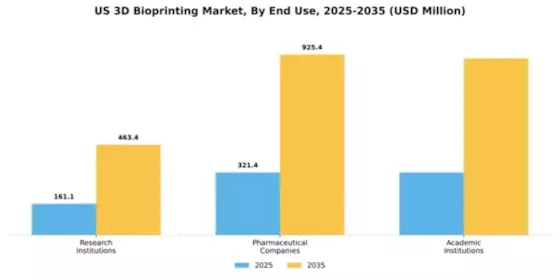
In the US 3D Bioprinting Market, the distribution of market share among the end-use segments highlights pharmaceutical companies as the dominant players. These entities leverage bioprinting technologies for drug testing and tissue engineering, making them critical to advancements in medical therapies. Meanwhile, research institutions are emerging strongly in this sector, focusing on innovative applications and collaborative projects with commercial entities, thus driving significant market interest. The growth trends for the US 3d bioprinting market reveal that pharmaceutical companies are fueling demand with their extensive R&D budgets and the increasing need for personalized medicine. On the other hand, research institutions are gaining traction as they explore novel bioprinting techniques and materials, contributing to the rapid expansion of this segment. This dual momentum highlights the dynamic nature of the market, where established players and fresh innovations coalesce.
Pharmaceutical Companies (Dominant) vs. Research Institutions (Emerging)
Pharmaceutical companies play a dominant role in the US 3d bioprinting market due to their substantial investments in development and production. These firms utilize bioprinting for efficient drug formulation processes, reducing time-to-market for new therapies. In contrast, research institutions represent the emerging segment, focusing on high-impact projects that push the boundaries of bioprinting technology. Their collaborative efforts with industry giants not only enhance the functionality of bioprinted products but also foster an ecosystem where innovation thrives. This relationship promotes knowledge transfer and accelerates the adoption of bioprinting across various applications, setting the stage for future advancements.
Get more detailed insights about US 3D Bioprinting Market Request Free Sample
The 3D bioprinting market is currently characterized by a dynamic competitive landscape, driven by technological advancements and increasing applications in regenerative medicine and drug development. Key players such as Organovo Holdings Inc (US), Allevi Inc (US), and CELLINK AB (SE) are at the forefront, each adopting distinct strategies to enhance their market positioning. Organovo Holdings Inc (US) focuses on innovation in bioprinting technologies, particularly in creating functional human tissues, which positions it as a leader in the field. Meanwhile, Allevi Inc (US) emphasizes user-friendly bioprinting solutions, catering to both research and clinical applications, thereby broadening its customer base. CELLINK AB (SE) has adopted a strategy of rapid expansion through acquisitions, enhancing its technological capabilities and market reach, which collectively shapes a competitive environment that is both collaborative and competitive.In terms of business tactics, companies are increasingly localizing manufacturing to reduce lead times and optimize supply chains. The market structure appears moderately fragmented, with several players vying for market share while also collaborating on research and development initiatives. This fragmentation allows for a diverse range of products and services, fostering innovation but also intensifying competition among key players.In October Organovo Holdings Inc (US) announced a partnership with a leading pharmaceutical company to develop bioprinted tissues for drug testing. This collaboration is strategically significant as it not only enhances Organovo's credibility in the pharmaceutical sector but also opens new revenue streams through the commercialization of its bioprinted tissues. Such partnerships are likely to accelerate the adoption of bioprinting technologies in drug development processes.In September Allevi Inc (US) launched a new bioprinter designed specifically for educational institutions, aiming to democratize access to bioprinting technology. This move is crucial as it positions Allevi as a pioneer in educational applications, potentially cultivating a new generation of bioprinting professionals. By targeting educational markets, Allevi may secure long-term customer loyalty and establish itself as a foundational player in the industry.In August CELLINK AB (SE) completed the acquisition of a startup specializing in bioinks, which are essential for 3D bioprinting. This acquisition is indicative of CELLINK's strategy to enhance its product offerings and maintain a competitive edge in the rapidly evolving market. By integrating innovative bioink technologies, CELLINK is likely to improve the performance and versatility of its bioprinting solutions, further solidifying its market leadership.As of November current trends in the 3D bioprinting market include a strong emphasis on digitalization, sustainability, and the integration of artificial intelligence (AI) in bioprinting processes. Strategic alliances are increasingly shaping the competitive landscape, enabling companies to pool resources and expertise for enhanced innovation. Looking ahead, competitive differentiation is expected to evolve, with a shift from price-based competition to a focus on technological innovation, reliability in supply chains, and sustainable practices. This transition may redefine market dynamics, compelling companies to innovate continuously to maintain their competitive positions.

The 3D Bioprinting Market is projected to grow at a 10.01% CAGR from 2025 to 2035, driven by advancements in technology, increasing demand for organ transplants, and rising investments in R&D.
New opportunities lie in:
By 2035, the market is expected to achieve substantial growth, positioning itself as a leader in biotechnological innovation.
| MARKET SIZE 2024 | 803.6(USD Million) |
| MARKET SIZE 2025 | 884.04(USD Million) |
| MARKET SIZE 2035 | 2294.6(USD Million) |
| COMPOUND ANNUAL GROWTH RATE (CAGR) | 10.01% (2025 - 2035) |
| REPORT COVERAGE | Revenue Forecast, Competitive Landscape, Growth Factors, and Trends |
| BASE YEAR | 2024 |
| Market Forecast Period | 2025 - 2035 |
| Historical Data | 2019 - 2024 |
| Market Forecast Units | USD Million |
| Key Companies Profiled | Organovo Holdings Inc (US), 3D Biotek LLC (US), Aspect Biosystems Ltd (CA), Regenhu SA (CH), CELLINK AB (SE), Allevi Inc (US), Biolife Sciences Inc (US), EnvisionTEC GmbH (DE) |
| Segments Covered | Technology, Application, Material, End Use |
| Key Market Opportunities | Advancements in personalized medicine and tissue engineering drive growth in the 3d bioprinting market. |
| Key Market Dynamics | Technological advancements drive innovation in 3D bioprinting, enhancing applications in regenerative medicine and tissue engineering. |
| Countries Covered | US |


Kindly complete the form below to receive a free sample of this Report

“This is really good guys. Excellent work on a tight deadline. I will continue to use you going forward and recommend you to others. Nice job”


“Thanks. It’s been a pleasure working with you, please use me as reference with any other Intel employees.”


“Thanks for sending the report it gives us a good global view of the Betaïne market.”


“Thank you, this will be very helpful for OQS.”


“We found the report very insightful! we found your research firm very helpful. I'm sending this email to secure our future business.”


“I am very pleased with how market segments have been defined in a relevant way for my purposes (such as "Portable Freezers & refrigerators" and "last-mile"). In general the report is well structured. Thanks very much for your efforts.”


“I have been reading the first document or the study, ,the Global HVAC and FP market report 2021 till 2026. Must say, good info! I have not gone in depth at all parts, but got a good indication of the data inside!”


“We got the report in time, we really thank you for your support in this process. I also thank to all of your team as they did a great job.”


“The Automotive 48V ECU Components Procurement Intelligence Study” was a complex project, but the Market Research Future (MRFR) team handled it with quality, agility, and customer-centricity. They delivered all requested data on time and within the agreed scope. The team, including Shubhendra Anand and Rahul Gotadki, was always readily available to clarify questions and swiftly implement necessary adjustments, driving the project to a successful conclusion within a very demanding timeframe.
I would also like to specifically commend Akshay Agarwal for his responsiveness and support at every stage—from our initial inquiry on May 6th through to final delivery on June 18th. His dedication made the entire process seamless.”



