Download Free Sample
Kindly complete the form below to receive a free sample of this Report
US APAC Baby Care Products Market
As per analysis, the US Baby Products Market is projected to grow from USD 10.91 Billion in 2024 to USD 14.32 Billion by 2035, exhibiting a compound annual growth rate (CAGR) of 2.51% during the forecast period (2025 - 2035).
The US Baby Products Market is experiencing a dynamic shift towards sustainability and technological integration.
| 2024 Market Size | 10.91 (USD Billion) |
| 2035 Market Size | 14.32 (USD Billion) |
| CAGR (2025 - 2035) | 2.51% |
Procter & Gamble (US), Kimberly-Clark (US), Johnson & Johnson (US), Nestle (US), Chicco (IT), Gerber (US), Mattel (US), Fisher-Price (US), BabyBjorn (SE), Graco (US)
Our Impact
Enabled $4.3B Revenue Impact for Fortune 500 and Leading Multinationals
Partnering with 2000+ Global Organizations Each Year
30K+ Citations by Top-Tier Firms in the Industry
The US Baby Products Market is currently experiencing a dynamic evolution, driven by changing consumer preferences and heightened awareness regarding child safety and health. Parents are increasingly inclined towards products that are eco-friendly, organic, and free from harmful chemicals. This shift reflects a broader societal trend towards sustainability and wellness, as caregivers seek to provide the best for their children while also considering environmental impacts. Furthermore, the rise of e-commerce has transformed purchasing behaviors, allowing parents to access a wider array of products conveniently. Online platforms not only offer competitive pricing but also provide detailed product information, enabling informed decision-making. In addition, the US Baby Products Market is witnessing a surge in innovation, particularly in technology-driven solutions. Smart baby monitors, wearable devices, and app-integrated products are becoming more prevalent, appealing to tech-savvy parents who value connectivity and real-time data. This trend suggests a potential for continued growth as manufacturers adapt to the evolving landscape of consumer expectations. Overall, the market appears poised for further expansion, with a focus on quality, safety, and technological advancement shaping its future trajectory.
The US Baby Products Market is experiencing a notable increase in birth rates, which appears to be a significant driver of market growth. According to recent data, the birth rate in the United States has shown a slight uptick, suggesting a potential resurgence in family planning and childbearing. This trend may lead to heightened demand for various baby products, including diapers, clothing, and feeding supplies. As more families welcome new children, the market is likely to see an influx of consumers seeking high-quality and innovative products tailored to infants and toddlers. Consequently, manufacturers and retailers in the US Baby Products Market may need to adapt their strategies to cater to this growing demographic, ensuring that they meet the evolving needs of new parents.
The expansion of e-commerce platforms is significantly influencing the US Baby Products Market. With the increasing reliance on online shopping, parents are turning to digital channels for their baby product needs. This shift is driven by the convenience of home delivery, a wider selection of products, and often competitive pricing. Data indicates that online sales of baby products have surged, with many consumers preferring to shop from the comfort of their homes rather than visiting brick-and-mortar stores. Retailers are responding by enhancing their online presence and optimizing their websites for a seamless shopping experience. This trend not only benefits consumers but also presents opportunities for brands to reach a broader audience, thereby driving sales and market growth in the US Baby Products Market.
Sustainability is emerging as a crucial factor in the US Baby Products Market. As environmental concerns gain prominence, consumers are increasingly seeking products that are eco-friendly and sustainable. This trend is evident in the rising popularity of biodegradable diapers, organic baby clothing, and sustainable feeding products. Companies that prioritize sustainable practices in their manufacturing processes are likely to resonate with environmentally conscious parents. Furthermore, regulatory bodies are beginning to implement policies that encourage sustainable practices within the industry, which may further drive this trend. As the market evolves, brands that successfully integrate sustainability into their product offerings may not only enhance their reputation but also capture a growing segment of consumers who prioritize environmental responsibility in their purchasing decisions.
Technological advancements are playing a pivotal role in shaping the US Baby Products Market. Innovations such as smart baby monitors, app-connected feeding devices, and automated diaper disposal systems are gaining traction among tech-savvy parents. These products not only enhance convenience but also provide peace of mind, as they often come equipped with features that monitor a baby's health and safety. The integration of technology into baby products is likely to attract a younger demographic of parents who prioritize connectivity and ease of use. As the market evolves, companies that invest in research and development to create cutting-edge solutions may find themselves at a competitive advantage, appealing to a growing segment of consumers who value innovation in their purchasing decisions.
Consumer awareness regarding the safety and quality of baby products is becoming increasingly pronounced within the US Baby Products Market. Parents today are more informed than ever about the potential hazards associated with certain materials and chemicals used in baby products. This heightened awareness is driving demand for organic, non-toxic, and eco-friendly options. As a result, manufacturers are compelled to innovate and provide products that align with these consumer preferences. The market for organic baby food, for instance, has expanded significantly, reflecting a shift towards healthier choices for infants. This trend not only influences purchasing decisions but also encourages brands to enhance transparency in their product offerings, thereby fostering trust and loyalty among consumers.
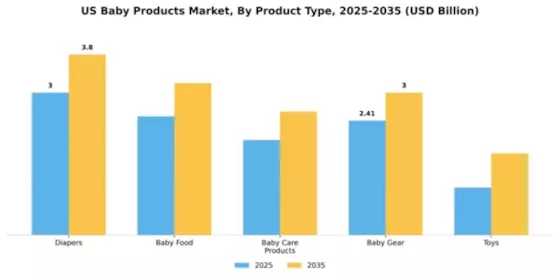
The US Baby Products Market showcases a diverse range of product types, with diapers leading the pack as the largest segment. Baby food, baby gear, and toys also hold significant market shares, reflecting the diverse needs of modern parents. Baby care products, while smaller in market size, have been rapidly catching up, indicating shifts in consumer preferences and increased spending on child wellbeing. Growth trends in the baby products sector are largely driven by rising disposable incomes and changing lifestyles, with parents seeking high-quality, safe, and convenient options for their children. Notably, the baby care products segment is witnessing accelerated growth as concerns for health and safety among parents increase. This trend is expected to continue as new innovations emerge in organic and eco-friendly product offerings.
Diapers: Dominant vs. Baby Care Products: Emerging
Diapers maintain a dominant position in the US Baby Products Market due to their essential nature and continuous innovation. Major brands focus on enhanced comfort, absorption capabilities, and environmental sustainability, appealing to a growing demographic of eco-conscious parents. Meanwhile, baby care products are emerging as a compelling segment, propelled by a trend toward organic and chemical-free options. Parents are increasingly prioritizing skin-friendly and hypoallergenic formulations to protect their babies' delicate skin. This shift in consumer behavior reflects broader health and wellness trends influencing buying decisions, and companies in this space are responding with a range of innovative offerings.
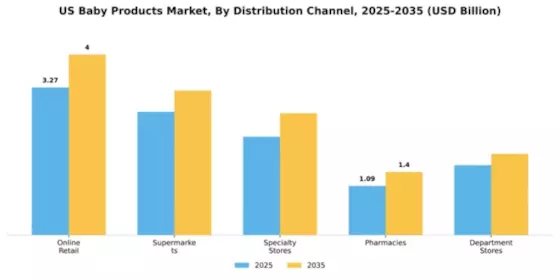
In the US Baby Products Market, distribution channels are diverse, with online retail commanding the largest share. The rise of e-commerce has revolutionized how parents shop for baby products, providing convenience and a broad selection. Supermarkets also play a significant role, catering to parents looking for essential baby items during their routine grocery shopping. Specialty stores and pharmacies follow, focusing on niche products, while department stores offer a more traditional shopping experience that is diminishing in relevance.
Online Retail: Dominant vs. Supermarkets: Emerging
Online retail occupies a dominant position in the US Baby Products Market, driven by the convenience of home delivery and the ability to compare prices across a vast range of products. Retailers like Amazon and Walmart have tailored their platforms to feature a comprehensive selection of baby products, making them go-to destinations for tech-savvy parents. Conversely, supermarkets are emerging as a vital distribution channel, especially for essential items. Their physical presence allows parents to purchase products on-the-go, making them a convenient option. The combination of online and supermarket sales is shaping shopping habits among parents, catering to various preferences from quick purchases to leisurely online shopping experiences.
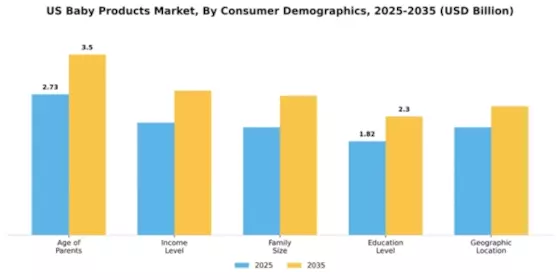
In the US Baby Products Market, consumer demographics play a crucial role in shaping purchasing behaviors. The largest share of consumers comprises parents aged 30-39, who have established careers and stable incomes, making them more inclined to invest in high-quality baby products. Additionally, families of 4-5 are becoming increasingly prevalent, as they represent a significant portion of the market driven by the desirability of larger families and the growing trend towards family-oriented products.
Age Group: 30-39 (Dominant) vs. Family Size: 4-5 (Emerging)
The age group of parents aged 30-39 is characterized by their financial stability and purchasing power, allowing them to prioritize premium baby products. This group often seeks out innovation and convenience, alongside traditional product needs, resulting in a strong affinity for versatile and multi-functional baby items. On the other hand, families of 4-5 are emerging as a dynamic demographic, fueled by cultural trends that celebrate family unity and togetherness. This family size seeks products that cater to varying needs within the household, leading to increased demand for products that promote convenience and multi-use benefits.
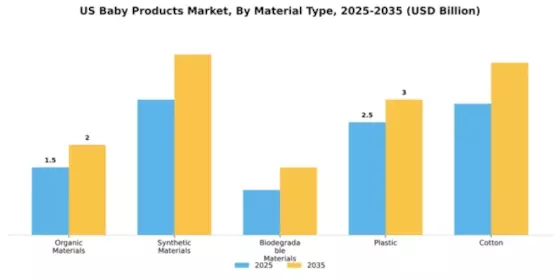
The US Baby Products Market is significantly influenced by the material types used in the manufacturing of products. Cotton holds the largest share among the segment values, appealing to parents due to its softness, breathability, and natural origin. In contrast, synthetic materials are rapidly gaining popularity due to their durability and ease of maintenance. This shift in consumer preference is indicative of changing lifestyles and increased demand for practical baby solutions that do not compromise functionality. Growth trends in the material types segment reflect a broader movement towards sustainable options alongside innovative synthetic products. Biodegradable materials are emerging as a notable alternative for eco-conscious consumers, while plastic continues to dominate due to its affordability and versatility. The interplay between sustainability and practicality will dictate future trends in material preferences within the US market for baby products.
Cotton (Dominant) vs. Organic Materials (Emerging)
Cotton has established itself as the dominant material in the US Baby Products Market, renowned for its high comfort level and hypoallergenic properties, making it a favorite among parents. Its prevalence in baby clothing, bedding, and accessories is a testament to its reliability and safety for infants. On the other hand, organic materials are emerging as an appealing option for environmentally conscious consumers, driven by a growing awareness of sustainability and chemical-free products. While still smaller in market share, organic baby products are gaining traction, appealing to a niche market that prioritizes eco-friendliness and ethical sourcing. This dual focus on comfort and sustainability signals a pivotal shift in consumer expectations in the industry.
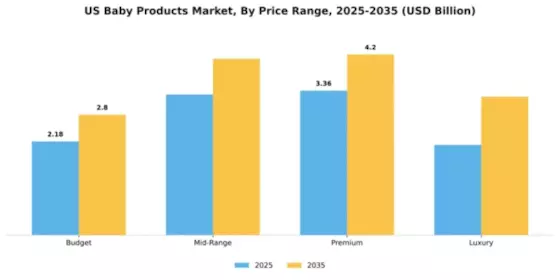
In the US Baby Products Market, the price range segment is predominantly composed of mid-range products, which hold a significant share compared to budget, premium, and luxury offerings. The mid-range category appeals to a large demographic of parents seeking a balance between quality and affordability. Following mid-range, the premium segment has emerged with notable traction, catering to parents who prioritize advanced features and brand reputation, thus reshaping spending habits within this market.
Mid-Range (Dominant) vs. Premium (Emerging)
The mid-range segment in the US Baby Products Market stands out as the dominant player, offering products that strike a harmonious balance between price and quality. Parents are increasingly favoring this range due to its wide array of choices that ensure safety, functionality, and comfort without excessive spending. Conversely, the premium segment is rapidly gaining attention as an emerging category, driven by shifting consumer preferences towards higher-quality items that offer enhanced safety features and eco-friendly materials. The popularity of premium brands is fueled by growing awareness about the importance of child safety and sustainable practices, making them highly appealing to health-conscious parents.
Get more detailed insights about US APAC Baby Care Products Market Request Free Sample
The Baby Products Market in the US is characterized by a dynamic competitive landscape, driven by innovation, consumer preferences for safety and sustainability, and the increasing demand for convenience. Major players such as Procter & Gamble (US), Kimberly-Clark (US), and Johnson & Johnson (US) are strategically positioned to leverage their extensive distribution networks and brand equity. Procter & Gamble (US) focuses on product innovation and sustainability, while Kimberly-Clark (US) emphasizes its commitment to eco-friendly products. Johnson & Johnson (US) continues to enhance its product offerings through research and development, particularly in health and wellness, which collectively shapes a competitive environment that is increasingly focused on meeting consumer expectations for quality and safety.
Key business tactics within the market include localizing manufacturing to reduce costs and optimize supply chains, which is particularly relevant given the current economic climate. The competitive structure of the Baby Products Market appears moderately fragmented, with a mix of large multinational corporations and smaller niche players. This fragmentation allows for diverse product offerings, yet the influence of key players remains substantial, as they set trends and standards that smaller companies often follow.
In December 2025, Procter & Gamble (US) announced a partnership with a leading tech firm to integrate AI into its product development processes. This strategic move is likely to enhance the company's ability to predict consumer trends and streamline product innovation, thereby maintaining its competitive edge in a rapidly evolving market. The integration of AI could also lead to more personalized marketing strategies, aligning with consumer preferences for tailored products.
In November 2025, Kimberly-Clark (US) launched a new line of biodegradable diapers, reflecting its commitment to sustainability. This initiative not only addresses growing environmental concerns among consumers but also positions the company as a leader in eco-friendly baby products. The introduction of such products may attract environmentally conscious parents, potentially increasing market share in a segment that is becoming increasingly important.
In October 2025, Johnson & Johnson (US) expanded its baby care product line with the introduction of a new organic range. This expansion is indicative of the company's strategy to cater to the rising demand for organic and natural products among health-conscious consumers. By diversifying its offerings, Johnson & Johnson (US) aims to capture a broader audience, thereby enhancing its market presence.
As of January 2026, current trends in the Baby Products Market indicate a strong shift towards digitalization, sustainability, and the integration of advanced technologies such as AI. Strategic alliances are increasingly shaping the competitive landscape, allowing companies to pool resources and expertise to innovate more effectively. Moving forward, competitive differentiation is likely to evolve from traditional price-based competition to a focus on innovation, technology, and supply chain reliability, as companies strive to meet the sophisticated demands of modern consumers.


The US Baby Products Market is projected to grow at a 2.51% CAGR from 2025 to 2035, driven by increasing birth rates, rising disposable incomes, and heightened consumer awareness of product safety.
New opportunities lie in:
By 2035, the market is expected to exhibit robust growth, reflecting evolving consumer preferences and innovative product offerings.
| MARKET SIZE 2024 | 10.91(USD Billion) |
| MARKET SIZE 2025 | 11.21(USD Billion) |
| MARKET SIZE 2035 | 14.32(USD Billion) |
| COMPOUND ANNUAL GROWTH RATE (CAGR) | 2.51% (2024 - 2035) |
| REPORT COVERAGE | Revenue Forecast, Competitive Landscape, Growth Factors, and Trends |
| BASE YEAR | 2024 |
| Market Forecast Period | 2025 - 2035 |
| Historical Data | 2019 - 2024 |
| Market Forecast Units | USD Billion |
| Key Companies Profiled | Procter & Gamble (US), Kimberly-Clark (US), Johnson & Johnson (US), Nestle (US), Chicco (IT), Gerber (US), Mattel (US), Fisher-Price (US), BabyBjorn (SE), Graco (US) |
| Segments Covered | Product Type, Distribution Channel, Consumer Demographics, Material Type, Price Range |
| Key Market Opportunities | Growing demand for eco-friendly and sustainable baby products in the US Baby Products Market. |
| Key Market Dynamics | Shifting consumer preferences towards eco-friendly baby products drive innovation and competition in the US Baby Products Market. |
| Countries Covered | US |
As of 2024, the US Baby Products Market was valued at 10.91 USD Billion.
The market is expected to reach a valuation of 14.32 USD Billion by 2035.
The expected CAGR for the US Baby Products Market from 2025 to 2035 is 2.51%.
Key players include Procter & Gamble, Kimberly-Clark, Johnson & Johnson, and Nestle, among others.
Main product segments include Diapers, Baby Food, Baby Care Products, Baby Gear, and Toys.
In 2024, the Diapers segment generated approximately 3.0 USD Billion.
Prominent distribution channels include Online Retail, Supermarkets, and Specialty Stores.
Demographic factors include Age of Parents, Income Level, Family Size, Education Level, and Geographic Location.
Common materials include Organic Materials, Synthetic Materials, Biodegradable Materials, Plastic, and Cotton.
The market offers products across various price ranges, including Budget, Mid-Range, Premium, and Luxury.


Kindly complete the form below to receive a free sample of this Report

“This is really good guys. Excellent work on a tight deadline. I will continue to use you going forward and recommend you to others. Nice job”


“Thanks. It’s been a pleasure working with you, please use me as reference with any other Intel employees.”


“Thanks for sending the report it gives us a good global view of the Betaïne market.”


“Thank you, this will be very helpful for OQS.”


“We found the report very insightful! we found your research firm very helpful. I'm sending this email to secure our future business.”


“I am very pleased with how market segments have been defined in a relevant way for my purposes (such as "Portable Freezers & refrigerators" and "last-mile"). In general the report is well structured. Thanks very much for your efforts.”


“I have been reading the first document or the study, ,the Global HVAC and FP market report 2021 till 2026. Must say, good info! I have not gone in depth at all parts, but got a good indication of the data inside!”


“We got the report in time, we really thank you for your support in this process. I also thank to all of your team as they did a great job.”


“The Automotive 48V ECU Components Procurement Intelligence Study” was a complex project, but the Market Research Future (MRFR) team handled it with quality, agility, and customer-centricity. They delivered all requested data on time and within the agreed scope. The team, including Shubhendra Anand and Rahul Gotadki, was always readily available to clarify questions and swiftly implement necessary adjustments, driving the project to a successful conclusion within a very demanding timeframe.
I would also like to specifically commend Akshay Agarwal for his responsiveness and support at every stage—from our initial inquiry on May 6th through to final delivery on June 18th. His dedication made the entire process seamless.”



