Download Free Sample
Kindly complete the form below to receive a free sample of this Report
US Aquatic Herbicide Market Size, Share, Industry Trend & Analysis Research Report By Spectrum Outlook ( Selective Herbicides, Non-selective Herbicides ), Application Outlook ( Rice Fields, Water Bodies, Aquatic Weeds, Ornamental Ponds ), Formulation Type Outlook ( Granular, Liquid, Water Soluble Concentrates, Emulsifiable Concentrates ), and Treatment Method Outlook ( Surface Application, Sub-surface Application, Drenching )forecast by 2035
As per Market Research Future analysis, the US aquatic herbicide market size was estimated at 522.07 USD Million in 2024. The US aquatic herbicide market is projected to grow from 544.57 USD Million in 2025 to 830.45 USD Million by 2035, exhibiting a compound annual growth rate (CAGR) of 4.3% during the forecast period 2025 - 2035
The US aquatic herbicide market is experiencing a shift towards sustainability and technological innovation.
| 2024 Market Size | 522.07 (USD Million) |
| 2035 Market Size | 830.45 (USD Million) |
| CAGR (2025 - 2035) | 4.31% |
BASF SE (DE), Syngenta AG (CH), Dow AgroSciences LLC (US), Nufarm Limited (AU), Nantong Jiangshan Chemical Co Ltd (CN), Adama Agricultural Solutions Ltd (IL), FMC Corporation (US), UPL Limited (IN)
Our Impact
Enabled $4.3B Revenue Impact for Fortune 500 and Leading Multinationals
Partnering with 2000+ Global Organizations Each Year
30K+ Citations by Top-Tier Firms in the Industry
The aquatic herbicide market is currently experiencing notable shifts. These shifts are driven by various factors, including environmental regulations, technological advancements, and changing consumer preferences. As awareness of ecological impacts grows, there is an increasing demand for herbicides that are both effective and environmentally friendly. This trend is prompting manufacturers to innovate and develop products that minimize harm to non-target species and aquatic ecosystems. Furthermore, the integration of precision application technologies is enhancing the efficiency of herbicide use, thereby reducing waste and improving overall effectiveness. In addition, the aquatic herbicide market is witnessing a rise in the adoption of integrated pest management (IPM) strategies. These approaches combine chemical and non-chemical methods to control aquatic weeds, reflecting a shift towards more sustainable practices. Stakeholders are increasingly recognizing the importance of balancing effective weed control with environmental stewardship. As a result, the market is likely to continue evolving, with a focus on products that align with regulatory standards and consumer expectations for sustainability.
There is a growing emphasis on developing herbicides that are environmentally friendly. Manufacturers are focusing on formulations that reduce toxicity to non-target organisms and minimize ecological disruption. This trend aligns with increasing regulatory scrutiny and consumer demand for sustainable agricultural practices.
The integration of advanced application technologies is transforming how herbicides are utilized. Precision application methods, such as drone technology and GPS-guided systems, are enhancing the accuracy and efficiency of herbicide delivery, leading to reduced waste and improved effectiveness.
The adoption of integrated pest management strategies is becoming more prevalent. This approach combines chemical and non-chemical methods to manage aquatic weeds, promoting a holistic view of pest control that emphasizes sustainability and environmental health.
The growing popularity of recreational activities in water bodies is significantly impacting the aquatic herbicide market. As more individuals engage in boating, fishing, and swimming, the demand for clean and safe water environments increases. This trend necessitates the effective management of aquatic weeds that can hinder recreational use. The market is expected to grow at a CAGR of around 5% over the next few years, as stakeholders invest in herbicides to ensure optimal conditions for recreational activities. Local governments and private entities are increasingly recognizing the importance of maintaining clear waterways, which in turn drives the demand for effective aquatic herbicides. The aquatic herbicide market was thus positioned to benefit from this rising trend, as it aligned with the need for enhanced water quality and user experience.
The aquatic herbicide market is experiencing growth due to the increasing stringency of water quality regulations in the US. Regulatory bodies are emphasizing the need for effective management of aquatic vegetation to maintain water quality in lakes, rivers, and reservoirs. This has led to a heightened demand for herbicides that can control invasive species while adhering to environmental standards. The market was projected to reach approximately $1.5 billion by 2026, driven by the need for compliance with these regulations. As municipalities and water management authorities seek solutions to prevent algal blooms and maintain ecosystem balance, The aquatic herbicide market was likely to see a surge in product development and application. This regulatory landscape creates opportunities for manufacturers to innovate and offer products that align with environmental sustainability goals.
The rising awareness of the impact of invasive aquatic species is driving the aquatic herbicide market. Invasive species can disrupt local ecosystems, leading to significant ecological and economic consequences. As stakeholders, including government agencies and environmental organizations, recognize the need for effective management strategies, the demand for aquatic herbicides is expected to rise. Educational campaigns and research initiatives are highlighting the importance of controlling these species to protect native biodiversity. The market is projected to expand as more resources are allocated to combat invasive species, with herbicides being a key tool in these efforts. This growing awareness is likely to foster collaboration between various sectors, further enhancing the aquatic herbicide market's growth potential.
Innovations in formulation technologies are playing a crucial role in shaping the aquatic herbicide market. The development of more effective and environmentally friendly formulations is becoming a priority for manufacturers. These advancements allow for targeted application, reducing the impact on non-target species and improving overall efficacy. For instance, the introduction of slow-release formulations and biodegradable options is gaining traction among consumers and regulatory bodies alike. This shift not only enhances the effectiveness of herbicides but also aligns with the growing demand for sustainable practices in agriculture and water management. As a result, the aquatic herbicide market is likely to see increased investment in research and development, leading to a broader range of products that meet both consumer needs and regulatory requirements.
Investment in water management infrastructure is a significant driver for the aquatic herbicide market. As municipalities and private entities allocate funds to improve water quality and manage aquatic ecosystems, the demand for effective herbicides is likely to increase. Infrastructure projects aimed at enhancing water treatment facilities and maintaining water bodies create a need for reliable herbicide solutions. The market was expected to benefit from these investments, as they often included provisions for controlling aquatic vegetation. Furthermore, the integration of herbicide application into broader water management strategies indicates a growing recognition of the importance of maintaining healthy aquatic environments. This trend suggests a promising outlook for the aquatic herbicide market as it aligns with the ongoing efforts to enhance water quality and ecosystem health.
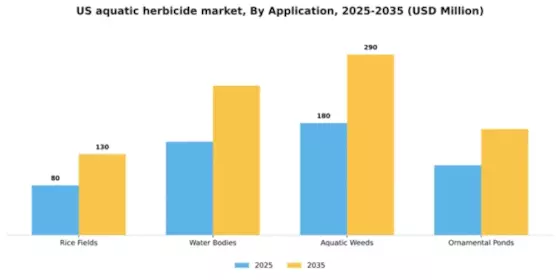
In the US aquatic herbicide market, the application segments showcase a diverse distribution of usage. Rice fields occupy a significant portion of the market, driven by extensive agricultural practices that necessitate effective weed control. Water bodies, while currently smaller in market share, demonstrate rapid adoption of aquatic herbicides to maintain ecological balance and clean recreational spaces. Meanwhile, ornamental ponds and aquatic weeds form essential parts of the market, catering to niche sectors with specific needs. Growth trends within the application segment are influenced by shifting agricultural practices, increased recreational water usage, and a growing awareness of environmental sustainability. The rice fields segment continues to thrive due to consistent cultivation requirements, while water bodies are emerging as the fastest-growing area. This shift is propelled by consumer demand for cleaner water bodies and enhanced regulations governing aquatic ecosystem management, which is driving innovation and investment in this space.
Rice Fields (Dominant) vs. Water Bodies (Emerging)
Rice fields represent a dominant application segment in the US aquatic herbicide market, primarily due to their importance in rice cultivation and the necessity for effective weed management. These fields require specific herbicide formulations that can mitigate weed growth without harming the crop. In contrast, water bodies are emerging as a significant focus area, where the cleanliness and health of aquatic ecosystems are becoming priorities. This segment addresses both recreational needs and ecosystem preservation, making it a critical component of market growth. Innovations in herbicide formulations tailored for water bodies are driving their increased adoption, reflecting a holistic approach to aquatic management that balances agricultural demands with environmental stewardship.
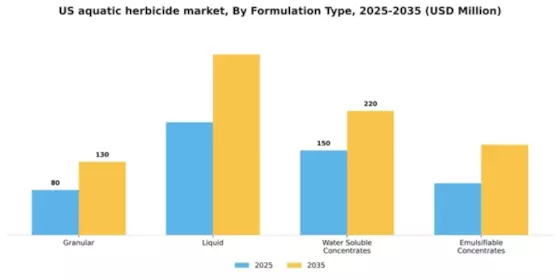
In the US aquatic herbicide market, the formulation type segment showcases a diverse distribution where Liquid formulations currently dominate with the largest market share among various options available. Granular and Water Soluble Concentrates hold considerable shares but trail behind Liquid in terms of overall acceptance. Emulsifiable Concentrates, while less common, have a niche market presence that caters to specific user needs, particularly in targeted applications. Growth trends in this segment are primarily driven by an increasing focus on environmentally friendly and efficient herbicide options, with Liquid formulations leading the way due to their ease of application and immediate effect. Granular formulations are emerging rapidly, favored for their lower volatility and longer residual action, appealing strongly to environmentally conscious consumers. This indicates a shift toward more sustainable practices in herbicide application across the market.
Liquid (Dominant) vs. Granular (Emerging)
Liquid formulations are the dominant choice in the formulation type segment due to their effectiveness and user-friendliness, making them popular amongst both commercial and residential users. These formulations provide quick action, allowing users to achieve immediate results in controlling aquatic weeds. On the other hand, Granular options are emerging as a strong alternative, offering benefits in terms of longevity and reduced environmental impact. Granular herbicides are gaining traction due to their ability to minimize runoff and enhance targeting efficiency. As consumer preferences shift towards sustainability, Granular formulations are positioned to capture more market share, complementing the established Liquid segment with innovative solutions that promote safer herbicide application.
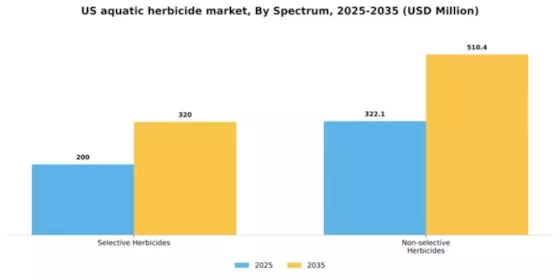
In the US aquatic herbicide market, the distribution of market share among treatment methods reveals that Surface Application holds the largest share due to its widespread adoption in various water bodies. Its effectiveness and ease of use in controlling aquatic weeds make it a preferred choice for many users. Conversely, Sub-surface Application is gaining traction, particularly among niche users focusing on targeted treatments, contributing to its rapid growth within the market. The growth trends for treatment methods indicate a shift towards more specialized applications. Increasing environmental regulations and a burgeoning demand for sustainable practices are driving the preference for more precise application techniques. Sub-surface Application is anticipated to expand considerably as legislation favors eco-friendly alternatives, thus allowing it to emerge as a significant player in the US aquatic herbicide market.
Surface Application (Dominant) vs. Drenching (Emerging)
Surface Application stands out as the dominant treatment method in the US aquatic herbicide market, characterized by its efficiency in coverage and effectiveness in controlling a variety of aquatic vegetation. Its broad usage across lakes, ponds, and reservoirs enables this method to cater to both large-scale and localized applications, making it a staple in various herbicide strategies. On the other hand, Drenching is emerging as a more specialized approach, particularly attractive for scenarios requiring specific targeting of aquatic plants. This method is gaining popularity due to its ability to minimize over-application and environmental impact. As users seek more tailored solutions for weed management, Drenching is poised to capture a larger share of the market.
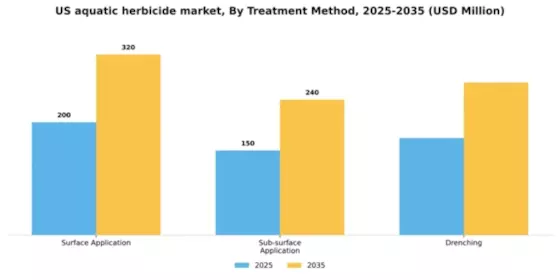
In the US aquatic herbicide market, the distribution of market share between selective and non-selective herbicides reveals significant insights. Selective herbicides dominate the market, preferred for their ability to target specific weeds without harming desirable aquatic plants. This segment has garnered a substantial share, driven by strict regulations and a growing focus on environmentally friendly solutions that promote aquatic ecosystem health. On the other hand, non-selective herbicides are witnessing rapid growth as they offer broad-spectrum control over a wide range of aquatic vegetation. The increasing prevalence of invasive species and the need for effective management solutions are key drivers behind the surge in popularity of non-selective products. This trend indicates a shift towards more aggressive measures in aquatic weed management, especially in large water bodies and industrial applications.
Herbicides: Selective (Dominant) vs. Non-selective (Emerging)
Selective herbicides are characterized by their targeted action, effectively controlling specific aquatic weeds while preserving the integrity of non-target species in the ecosystem. This makes them the preferred choice for environmentally conscious users, particularly in controlled aquatic settings like ornamental ponds and fisheries. In contrast, non-selective herbicides provide a versatile solution with the capability to eradicate a wide variety of aquatic plants. They are particularly useful in managing difficult invasive species in larger bodies of water where quick and comprehensive action is needed. The increasing adoption of these products reflects a dynamic shift in management strategies, balancing ecological considerations with the necessity to control nuisance species.
Get more detailed insights about US Aquatic Herbicide Market Request Free Sample
The aquatic herbicide market is currently characterized by a competitive landscape that is both dynamic and multifaceted. Key growth drivers include increasing environmental regulations, the rising need for effective aquatic weed management, and the growing awareness of sustainable agricultural practices. Major players such as BASF SE (DE), Syngenta AG (CH), and Dow AgroSciences LLC (US) are strategically positioned to leverage these trends. BASF SE (DE) focuses on innovation and sustainability, investing heavily in research and development to create environmentally friendly herbicides. Syngenta AG (CH) emphasizes partnerships and collaborations to enhance its product offerings, while Dow AgroSciences LLC (US) is concentrating on regional expansion and digital transformation to optimize its operations. Collectively, these strategies shape a competitive environment that is increasingly focused on sustainability and technological advancement.In terms of business tactics, companies are localizing manufacturing and optimizing supply chains to enhance efficiency and reduce costs. The market structure appears moderately fragmented, with several key players exerting significant influence. This fragmentation allows for a variety of product offerings, catering to diverse customer needs while fostering competition among established and emerging firms.
In October Syngenta AG (CH) announced a strategic partnership with a leading environmental organization to develop new aquatic herbicide formulations that minimize ecological impact. This collaboration is likely to enhance Syngenta's reputation as a leader in sustainable practices, potentially attracting environmentally conscious consumers and regulatory support. The strategic importance of this move lies in its alignment with global sustainability goals, which are increasingly influencing purchasing decisions in the agricultural sector.
In September BASF SE (DE) launched a new line of herbicides specifically designed for aquatic environments, incorporating advanced biotechnological methods. This product launch not only reinforces BASF's commitment to innovation but also positions the company to capture a larger market share in the growing segment of eco-friendly herbicides. The introduction of these products is expected to meet the rising demand for effective yet sustainable solutions in aquatic weed management.
In August Dow AgroSciences LLC (US) completed the acquisition of a regional competitor, enhancing its product portfolio and market reach. This acquisition is strategically significant as it allows Dow to consolidate its position in the market, streamline operations, and leverage synergies to improve profitability. The move reflects a broader trend of consolidation within the industry, as companies seek to enhance their competitive edge through scale and resource optimization.
As of November current competitive trends indicate a strong shift towards digitalization, sustainability, and the integration of artificial intelligence in product development and marketing strategies. Strategic alliances are increasingly shaping the landscape, enabling companies to pool resources and expertise to innovate more effectively. Looking ahead, competitive differentiation is likely to evolve from traditional price-based competition to a focus on innovation, technology, and supply chain reliability. This shift underscores the importance of adapting to changing market dynamics and consumer preferences, positioning companies for long-term success in the aquatic herbicide market.
The Aquatic Herbicide Market is projected to grow at a 4.31% CAGR from 2025 to 2035, driven by increasing demand for sustainable aquatic management solutions and regulatory support.
New opportunities lie in:
By 2035, the market is expected to achieve robust growth, driven by innovation and strategic partnerships.
| MARKET SIZE 2024 | 522.07(USD Million) |
| MARKET SIZE 2025 | 544.57(USD Million) |
| MARKET SIZE 2035 | 830.45(USD Million) |
| COMPOUND ANNUAL GROWTH RATE (CAGR) | 4.31% (2025 - 2035) |
| REPORT COVERAGE | Revenue Forecast, Competitive Landscape, Growth Factors, and Trends |
| BASE YEAR | 2024 |
| Market Forecast Period | 2025 - 2035 |
| Historical Data | 2019 - 2024 |
| Market Forecast Units | USD Million |
| Key Companies Profiled | BASF SE (DE), Syngenta AG (CH), Dow AgroSciences LLC (US), Nufarm Limited (AU), Nantong Jiangshan Chemical Co Ltd (CN), Adama Agricultural Solutions Ltd (IL), FMC Corporation (US), UPL Limited (IN) |
| Segments Covered | Application, Formulation Type, Treatment Method, Spectrum |
| Key Market Opportunities | Advancements in eco-friendly formulations drive growth in the aquatic herbicide market. |
| Key Market Dynamics | Regulatory changes and environmental concerns drive innovation in the aquatic herbicide market, influencing competitive dynamics. |
| Countries Covered | US |



Kindly complete the form below to receive a free sample of this Report

“This is really good guys. Excellent work on a tight deadline. I will continue to use you going forward and recommend you to others. Nice job”


“Thanks. It’s been a pleasure working with you, please use me as reference with any other Intel employees.”


“Thanks for sending the report it gives us a good global view of the Betaïne market.”


“Thank you, this will be very helpful for OQS.”


“We found the report very insightful! we found your research firm very helpful. I'm sending this email to secure our future business.”


“I am very pleased with how market segments have been defined in a relevant way for my purposes (such as "Portable Freezers & refrigerators" and "last-mile"). In general the report is well structured. Thanks very much for your efforts.”


“I have been reading the first document or the study, ,the Global HVAC and FP market report 2021 till 2026. Must say, good info! I have not gone in depth at all parts, but got a good indication of the data inside!”


“We got the report in time, we really thank you for your support in this process. I also thank to all of your team as they did a great job.”


“The Automotive 48V ECU Components Procurement Intelligence Study” was a complex project, but the Market Research Future (MRFR) team handled it with quality, agility, and customer-centricity. They delivered all requested data on time and within the agreed scope. The team, including Shubhendra Anand and Rahul Gotadki, was always readily available to clarify questions and swiftly implement necessary adjustments, driving the project to a successful conclusion within a very demanding timeframe.
I would also like to specifically commend Akshay Agarwal for his responsiveness and support at every stage—from our initial inquiry on May 6th through to final delivery on June 18th. His dedication made the entire process seamless.”



