Integration of Advanced Technologies
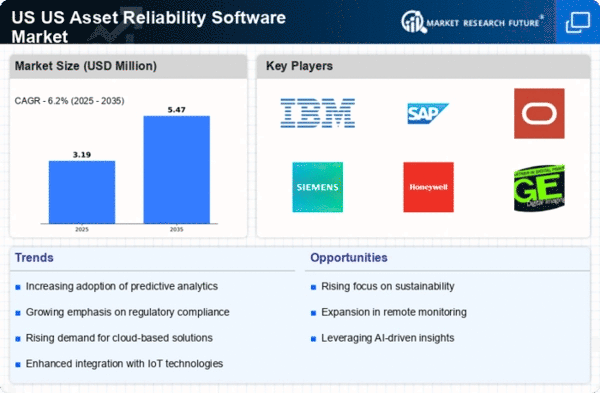
The integration of advanced technologies is a key driver in the US Asset Reliability Software Market. Technologies such as artificial intelligence, machine learning, and the Internet of Things (IoT) are being increasingly incorporated into asset management solutions. This integration allows for enhanced predictive maintenance capabilities, enabling organizations to anticipate failures before they occur. As a result, companies can significantly reduce unplanned downtime and maintenance costs. The market is expected to expand as more organizations adopt these technologies to improve asset reliability. For example, firms that have integrated IoT with asset reliability software have reported a 40% decrease in equipment failures, highlighting the potential benefits of this technological convergence.
Growing Demand for Operational Efficiency
The US Asset Reliability Software Market is experiencing a notable surge in demand for operational efficiency. Organizations across various sectors are increasingly recognizing the importance of optimizing asset performance to reduce downtime and enhance productivity. According to recent data, companies that implement asset reliability software can achieve up to a 30% reduction in maintenance costs. This trend is driven by the need to maximize asset utilization and minimize operational disruptions. As industries strive to remain competitive, the adoption of software solutions that facilitate real-time monitoring and predictive analytics is becoming essential. This growing emphasis on operational efficiency is likely to propel the market forward, as businesses seek to leverage technology to streamline processes and improve overall performance.
Rising Focus on Data-Driven Decision Making
In the US Asset Reliability Software Market, there is an increasing emphasis on data-driven decision making. Organizations are leveraging advanced analytics and machine learning capabilities to gain insights into asset performance and maintenance needs. This shift towards data-centric approaches enables companies to make informed decisions that enhance reliability and reduce costs. The market is projected to grow as businesses recognize the value of actionable insights derived from data. For instance, firms utilizing asset reliability software report a 25% improvement in decision-making speed. This trend indicates a broader movement towards integrating data analytics into operational strategies, which is likely to drive the adoption of asset reliability solutions in the coming years.
Increased Regulatory Compliance Requirements
The US Asset Reliability Software Market is also influenced by the rising regulatory compliance requirements across various sectors. Industries such as manufacturing, energy, and transportation are subject to stringent regulations that mandate the maintenance of asset reliability and safety standards. As compliance becomes more critical, organizations are turning to asset reliability software to ensure adherence to these regulations. This trend is likely to drive market growth, as companies seek solutions that facilitate compliance reporting and risk management. The demand for software that can automate compliance processes and provide real-time monitoring is expected to increase, further solidifying the role of asset reliability solutions in meeting regulatory demands.
Shift Towards Sustainability and Environmental Responsibility
The shift towards sustainability and environmental responsibility is emerging as a significant driver in the US Asset Reliability Software Market. Organizations are increasingly prioritizing sustainable practices, which include optimizing asset performance to reduce energy consumption and minimize waste. Asset reliability software plays a crucial role in this transition by enabling companies to monitor and manage their environmental impact effectively. The market is likely to benefit from this trend, as businesses seek solutions that align with their sustainability goals. For instance, companies that have adopted asset reliability software report a 20% reduction in energy usage, demonstrating the potential for software to contribute to both operational efficiency and environmental stewardship.