Download Free Sample
Kindly complete the form below to receive a free sample of this Report
United States Biosimilars Market Research Report: Size, Share, Trend Analysis - Growth Outlook & Industry Forecast 2025 To 2035
As per Market Research Future analysis, the US biosimilars market Size was estimated at 8.37 USD Billion in 2024. The US biosimilars market is projected to grow from 8.8 USD Billion in 2025 to 14.59 USD Billion by 2035, exhibiting a compound annual growth rate (CAGR) of 5.1% during the forecast period 2025 - 2035
The US biosimilars market is poised for substantial growth driven by regulatory advancements and increasing demand for cost-effective treatments.
| 2024 Market Size | 8.37 (USD Billion) |
| 2035 Market Size | 14.59 (USD Billion) |
| CAGR (2025 - 2035) | 5.18% |
Amgen (US), Sandoz (CH), Boehringer Ingelheim (DE), Pfizer (US), Mylan (US), Samsung Bioepis (KR), Celltrion (KR), Teva (IL), Eisai (JP)
Our Impact
Enabled $4.3B Revenue Impact for Fortune 500 and Leading Multinationals
Partnering with 2000+ Global Organizations Each Year
30K+ Citations by Top-Tier Firms in the Industry
The biosimilars market is currently experiencing a notable transformation, driven by various factors that influence its growth trajectory. Regulatory frameworks have evolved, allowing for a more streamlined approval process for biosimilars, which appears to enhance market accessibility. This shift is likely to encourage pharmaceutical companies to invest in biosimilar development, thereby increasing competition and potentially lowering treatment costs for patients. Furthermore, the rising prevalence of chronic diseases necessitates affordable treatment options, which biosimilars can provide. As healthcare systems seek to manage expenditures, the adoption of biosimilarsis expected to gain momentum, reflecting a broader trend towards cost-effective healthcare solutions. In addition, the increasing awareness among healthcare professionals and patients regarding the benefits of biosimilars contributes to their growing acceptance. Educational initiatives and outreach programs are likely to play a crucial role in dispelling misconceptions about biosimilars, fostering a more informed patient population. This trend suggests that as knowledge expands, the biosimilars market may witness a surge in utilization, ultimately benefiting both patients and healthcare providers. Overall, the current landscape indicates a promising future for biosimilars, characterized by innovation, affordability, and enhanced patient access to essential therapies.
Recent changes in regulatory policies have streamlined the approval process for biosimilars, potentially leading to increased market entry. This evolution may encourage more pharmaceutical companies to develop biosimilars, enhancing competition and driving down costs.
The growing prevalence of chronic diseases has created a pressing need for affordable treatment options. Biosimilars are positioned to meet this demand, as they offer similar therapeutic benefits at reduced prices, appealing to both healthcare providers and patients.
Educational initiatives aimed at healthcare professionals and patients are fostering greater understanding of biosimilars. As awareness grows, acceptance is likely to increase, potentially leading to higher utilization rates in clinical settings.
The increasing healthcare expenditure in the US is a pivotal driver for the biosimilars market. As healthcare costs continue to rise, stakeholders are seeking more affordable treatment options. In 2023, healthcare spending in the US reached approximately $4.3 trillion, accounting for nearly 18% of the GDP. This trend is likely to propel the adoption of biosimilars, which offer similar therapeutic benefits at a reduced cost compared to their reference biologics. The biosimilars market is expected to benefit from this shift as healthcare providers and payers prioritize cost-effective solutions to manage their budgets. Furthermore, the emphasis on value-based care is likely to enhance the market's growth, as biosimilars align with the goals of improving patient outcomes while controlling costs.
Supportive government policies and initiatives are fostering growth in the biosimilars market. The US Food and Drug Administration (FDA) has implemented a regulatory framework that encourages the development and approval of biosimilars, streamlining the process for manufacturers. Additionally, initiatives aimed at educating healthcare professionals and patients about biosimilars are likely to enhance acceptance and utilization. The FDA's Biosimilars Action Plan, introduced in 2018, aims to promote competition and reduce healthcare costs, which aligns with the goals of the biosimilars market. As these policies continue to evolve, they may create a more favorable environment for biosimilar manufacturers, potentially leading to increased market penetration and innovation.
The expiration of patents for several blockbuster biologics is a significant catalyst for the biosimilars market. As patents expire, biosimilar manufacturers can enter the market with their products, providing alternatives to expensive biologics. For instance, the patent for Humira, one of the highest-grossing biologics, expired in 2023, opening the door for multiple biosimilars. This influx of competition is expected to drive prices down, making treatments more accessible to patients. The biosimilars market is poised to experience substantial growth as more biosimilars gain approval and enter the market, potentially capturing a significant share of the revenue previously held by reference products. Analysts predict that the market could reach $20 billion by 2026, driven by these patent expirations.
The rising prevalence of chronic diseases in the US is a crucial driver for the biosimilars market. Conditions such as diabetes, cancer, and autoimmune disorders are becoming increasingly common, necessitating effective treatment options. The US Centers for Disease Control and Prevention (CDC) reports that 6 in 10 adults have a chronic disease, which underscores the demand for innovative therapies. Biosimilars, which can provide similar efficacy to existing biologics, are likely to play a vital role in managing these conditions. The biosimilars market is expected to expand as healthcare providers look for ways to treat chronic diseases more effectively while managing costs. This trend may lead to increased investment in biosimilar development and marketing, further enhancing the market's growth potential.
The growing demand for personalized medicine is influencing the biosimilars market. As healthcare shifts towards tailored treatment approaches, biosimilars are emerging as viable options for patients requiring specific therapies. Personalized medicine aims to optimize treatment efficacy based on individual patient characteristics, and biosimilars can provide cost-effective alternatives to traditional biologics. The biosimilars market is likely to benefit from this trend as healthcare providers increasingly incorporate biosimilars into personalized treatment plans. This shift may lead to enhanced patient outcomes and satisfaction, further driving the adoption of biosimilars in various therapeutic areas. The market could see a notable increase in biosimilar approvals and usage as personalized medicine continues to gain traction.
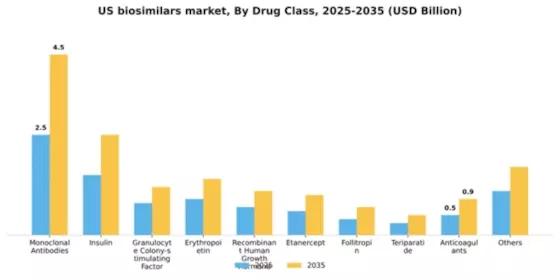
In the US biosimilars market, the distribution of market share among drug classes reveals that Monoclonal Antibodies dominate this segment, largely due to the increasing adoption of innovative therapies for chronic diseases and oncology. This category has established a strong foothold, benefiting from significant clinical data supporting their efficacy and safety, leading to wide acceptance among healthcare providers and patients alike. Conversely, the Insulin segment is marked as the fastest-growing class within the biosimilars landscape, driven by the rising prevalence of diabetes and the urgency for cost-effective alternatives. Increased awareness about biosimilars and their benefits, coupled with favorable regulatory environments for diabetes medications, provides essential stimuli for this growth. As these factors converge, Insulin could very well reshape market dynamics in the coming years.
Monoclonal Antibodies: Dominant vs. Insulin: Emerging
Monoclonal Antibodies represent a dominant force in the US biosimilars market, characterized by their critical role in treating a variety of diseases, particularly cancer and autoimmune disorders. Their clinical success has led to a robust pipeline and ongoing investments in research and development. Meanwhile, Insulin is an emerging category that is rapidly gaining traction, primarily due to its necessity in diabetes management. With a growing diabetic population and increasing healthcare costs, the demand for biosimilar insulins is surging. The emergence of these biosimilars is anticipated to provide a cost-effective option that promises to enhance patient access and adherence to essential diabetes therapies.
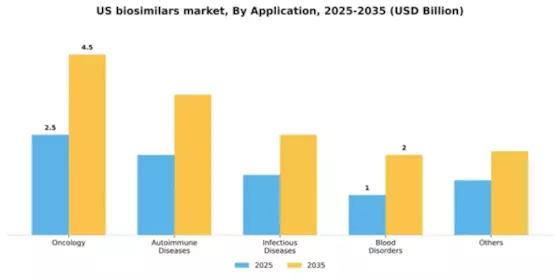
In the US biosimilars market, the application segment is largely dominated by Oncology, which accounts for a significant portion of the overall market share. Autoimmune Diseases follows as a notable segment, with both segments collectively highlighting the diversity of therapeutic applications for biosimilars. Blood Disorders and Infectious Diseases are also present, although they hold smaller shares in comparison to the leading segments, emphasizing the shift in treatment focus towards chronic and complex diseases. Growth trends reveal that the oncology segment remains robust due to continuous advancements in cancer treatments and increasing patient needs. Conversely, the Autoimmune Diseases segment is recognized as the fastest-growing, propelled by rising incidences of autoimmune conditions and a growing demand for alternative treatment options. Investments in research and development are further enhancing opportunities within both segments, signaling a positive outlook for biosimilars across various applications.
Oncology (Dominant) vs. Autoimmune Diseases (Emerging)
Oncology biosimilars have established a dominant position within the US biosimilars market due to the high prevalence of cancer and a strong pipeline of biosimilar therapies aimed at improving patient access to treatment. The competitive landscape is characterized by several key players focusing on developing innovatively similar products that target specific cancer types. In contrast, the Autoimmune Diseases segment, while emerging, showcases rapid growth backed by increasing awareness and management programs for autoimmune disorders. This segment benefits from ongoing clinical trials and the introduction of new biosimilars, targeting not just established diseases but also expanding towards rare and newly identified conditions, thereby broadening its market appeal.
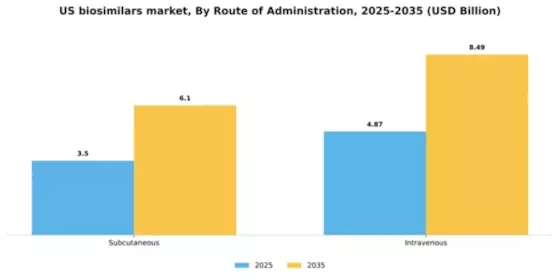
In the US biosimilars market, the distribution of market share among routes of administration reveals that subcutaneous administration holds a significant lead, capturing the largest percentage of the market. This preference can be attributed to the convenience and ease of administration associated with subcutaneous treatments, making them particularly appealing to both healthcare providers and patients. Conversely, intravenous administration is recognized as the fastest-growing segment within this domain. The rise in intravenous biosimilars can be linked to their increasing application in more complex treatment regimens, particularly in hospital settings where patients may require immediate and controlled drug delivery. Factors such as enhanced efficacy and the ability to administer higher doses contribute to the growth of this segment.
Administration Route: Subcutaneous (Dominant) vs. Intravenous (Emerging)
Subcutaneous administration remains the dominant route in the US biosimilars market due to its patient compliance and ease of self-administration, which are crucial in chronic disease management. Patients prefer this method as it allows for flexibility and comfort, minimizing the need for frequent hospital visits. As a result, drugs administered via subcutaneous methods often see wider acceptance and usage in therapeutic areas like immunology. On the other hand, intravenous administration is considered an emerging route, witnessing rapid adoption driven by the demand for immediate action and higher control over drug delivery. Its ability to support biologics that need to be administered in a controlled environment speaks to its growing appeal, particularly in oncology and specialized treatments.
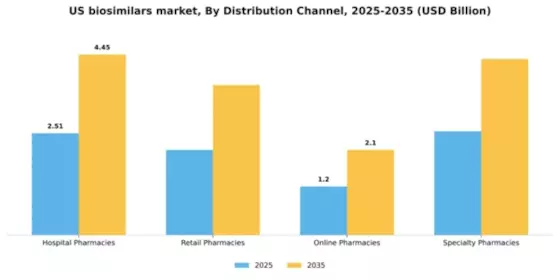
In the US biosimilars market, the distribution of market share among channels reveals that hospital pharmacies hold the largest share, significantly impacting the overall accessibility of biosimilars to patients. Retail pharmacies follow closely, serving as a common access point but with a lesser share compared to hospitals. Online pharmacies are gaining traction, offering convenience and flexibility, while specialty pharmacies, although currently smaller, are rapidly expanding their presence due to the increasing demand for specialized medication management. The growth trends across these distribution channels indicate a shift towards online and specialty pharmacies, driven by consumer preferences for convenience and enhanced services. Specialty pharmacies are emerging as critical players, with their ability to provide personalized care and support for biologic therapies. As healthcare systems evolve, the dynamics of distribution are likely to change, with rising investments in digital health solutions and patient-centric care models enhancing the role of these distribution outlets.
Hospital Pharmacies: Dominant vs. Specialty Pharmacies: Emerging
Hospital pharmacies represent the dominant force in the distribution of biosimilars, leveraging their established infrastructure and patient relationship management to ensure high levels of accessibility and support. They play a pivotal role in the management of complex therapeutic protocols and are integral to hospital formulary systems. In contrast, specialty pharmacies are emerging as vital players, focusing on high-cost therapies and providing specialized care that caters to unique patient needs. This segment is gaining momentum due to their ability to navigate complex insurance processes and offer tailored patient management solutions, which are increasingly valued in the landscape of personalized medicine. Their growth is fueling interest in the biosimilars market, as they confront the challenges posed by therapeutic complexity and enhance patient adherence.
Get more detailed insights about US Biosimilars Market Request Free Sample
The biosimilars market exhibits a dynamic competitive landscape characterized by rapid growth and innovation. Key players such as Amgen (US), Sandoz (CH), and Pfizer (US) are actively shaping the market through strategic initiatives aimed at enhancing their product portfolios and expanding market reach. Amgen (US) has focused on leveraging its extensive experience in biologics to develop high-quality biosimilars, while Sandoz (CH) emphasizes its commitment to affordability and accessibility, positioning itself as a leader in the biosimilars segment. Pfizer (US), on the other hand, is investing heavily in research and development to innovate and diversify its biosimilar offerings, thereby enhancing its competitive edge in this evolving market. The business tactics employed by these companies reflect a concerted effort to optimize operations and enhance market presence. Localizing manufacturing and optimizing supply chains are prevalent strategies that not only reduce costs but also improve responsiveness to market demands. The competitive structure of the biosimilars market appears moderately fragmented, with several players vying for market share. However, the collective influence of major companies like Amgen (US) and Sandoz (CH) suggests a trend towards consolidation, as these firms seek to leverage synergies and enhance their competitive positioning. In October 2025, Amgen (US) announced a strategic partnership with a leading healthcare provider to enhance the distribution of its biosimilar products across the United States. This collaboration is expected to streamline access to biosimilars, thereby increasing market penetration and reinforcing Amgen's commitment to improving patient access to affordable therapies. The strategic importance of this partnership lies in its potential to significantly expand Amgen's market footprint while addressing the growing demand for cost-effective treatment options. In September 2025, Sandoz (CH) launched a new biosimilar product aimed at treating autoimmune diseases, marking a significant expansion of its therapeutic portfolio. This launch not only underscores Sandoz's commitment to innovation but also highlights its strategic focus on addressing unmet medical needs in the biosimilars market. The introduction of this product is likely to enhance Sandoz's competitive positioning by attracting a broader patient base and reinforcing its reputation as a leader in the biosimilars space. In August 2025, Pfizer (US) unveiled a new digital platform designed to facilitate the education and engagement of healthcare professionals regarding its biosimilar offerings. This initiative reflects Pfizer's recognition of the importance of digital transformation in enhancing market access and improving stakeholder engagement. By investing in digital tools, Pfizer aims to differentiate itself in a crowded market, potentially leading to increased adoption of its biosimilar products. As of November 2025, the biosimilars market is increasingly defined by trends such as digitalization, sustainability, and the integration of artificial intelligence (AI) in product development and marketing strategies. Strategic alliances among key players are shaping the competitive landscape, fostering innovation and collaboration. Looking ahead, it appears that competitive differentiation will evolve from traditional price-based competition to a focus on innovation, technological advancements, and supply chain reliability. This shift may ultimately redefine how companies position themselves in the biosimilars market, emphasizing the importance of quality and accessibility in meeting the needs of patients and healthcare providers.

The Biosimilars Market is projected to grow at a 5.18% CAGR from 2025 to 2035, driven by increasing healthcare costs, patent expirations, and rising demand for affordable biologics.
New opportunities lie in:
By 2035, the biosimilars market is expected to achieve substantial growth and increased market penetration.
| MARKET SIZE 2024 | 8.37(USD Billion) |
| MARKET SIZE 2025 | 8.8(USD Billion) |
| MARKET SIZE 2035 | 14.59(USD Billion) |
| COMPOUND ANNUAL GROWTH RATE (CAGR) | 5.18% (2025 - 2035) |
| REPORT COVERAGE | Revenue Forecast, Competitive Landscape, Growth Factors, and Trends |
| BASE YEAR | 2024 |
| Market Forecast Period | 2025 - 2035 |
| Historical Data | 2019 - 2024 |
| Market Forecast Units | USD Billion |
| Key Companies Profiled | Amgen (US), Sandoz (CH), Boehringer Ingelheim (DE), Pfizer (US), Mylan (US), Samsung Bioepis (KR), Celltrion (KR), Teva (IL), Eisai (JP) |
| Segments Covered | Drug Class, Application, Route of Administration, Distribution Channel |
| Key Market Opportunities | Growing demand for cost-effective biologics drives innovation in the biosimilars market. |
| Key Market Dynamics | Regulatory advancements and competitive pricing strategies drive growth in the biosimilars market. |
| Countries Covered | US |
The overall market valuation was $8.37 Billion in 2024.
The projected valuation for 2035 is $14.59 Billion.
The expected CAGR for the market during this period is 5.18%.
The Monoclonal Antibodies segment had the highest valuation at $2.5 Billion in 2024.
The projected valuation for the Granulocyte Colony-stimulating Factor segment is $1.2 Billion by 2035.
The Oncology application segment is expected to grow to $4.5 Billion by 2035.
The Specialty Pharmacies distribution channel is projected to reach $4.34 Billion by 2035.
Amgen is one of the key players in the US biosimilars market.
The projected valuation for the Insulin segment is $2.5 Billion by 2035.
The Intravenous route of administration segment is expected to grow to $8.49 Billion by 2035.


Kindly complete the form below to receive a free sample of this Report

“This is really good guys. Excellent work on a tight deadline. I will continue to use you going forward and recommend you to others. Nice job”


“Thanks. It’s been a pleasure working with you, please use me as reference with any other Intel employees.”


“Thanks for sending the report it gives us a good global view of the Betaïne market.”


“Thank you, this will be very helpful for OQS.”


“We found the report very insightful! we found your research firm very helpful. I'm sending this email to secure our future business.”


“I am very pleased with how market segments have been defined in a relevant way for my purposes (such as "Portable Freezers & refrigerators" and "last-mile"). In general the report is well structured. Thanks very much for your efforts.”


“I have been reading the first document or the study, ,the Global HVAC and FP market report 2021 till 2026. Must say, good info! I have not gone in depth at all parts, but got a good indication of the data inside!”


“We got the report in time, we really thank you for your support in this process. I also thank to all of your team as they did a great job.”


“The Automotive 48V ECU Components Procurement Intelligence Study” was a complex project, but the Market Research Future (MRFR) team handled it with quality, agility, and customer-centricity. They delivered all requested data on time and within the agreed scope. The team, including Shubhendra Anand and Rahul Gotadki, was always readily available to clarify questions and swiftly implement necessary adjustments, driving the project to a successful conclusion within a very demanding timeframe.
I would also like to specifically commend Akshay Agarwal for his responsiveness and support at every stage—from our initial inquiry on May 6th through to final delivery on June 18th. His dedication made the entire process seamless.”


.png?v=1784799939)
