US Blended Fibers Market Overview:
As per MRFR analysis, the US Blended Fibers Market Size was estimated at 7.47 (USD Billion) in 2023. The US Blended Fibers Market Industry is expected to grow from 7.87(USD Billion) in 2024 to 14.45 (USD Billion) by 2035. The US Blended Fibers Market CAGR (growth rate) is expected to be around 5.684% during the forecast period (2025 - 2035).
Key US Blended Fibers Market Trends Highlighted
The US Blended Fibers Market is experiencing notable trends driven by a combination of consumer preferences, technological advancements, and sustainability initiatives. A key market driver is the increasing demand for eco-friendly products, as consumers are becoming more environmentally conscious. This shift has led to a rise in innovations surrounding recycling and the incorporation of organic fibers into blended fabrics. Additionally, the apparel industry in the US is focusing on performance and functionality, leading to the development of blended fibers that enhance comfort, durability, and moisture management. Opportunities in the US market include the potential for growth in performance wear and activewear segments, which often use blended fibers to combine the benefits of different materials.Furthermore, the rise of online retailing and direct-to-consumer brands provides an avenue for companies to promote blended fiber products effectively, reaching a wider audience. The growing popularity of athleisure wear is also significant, as it continues to blend casual and athletic garments, driving demand for versatile blended fibers. Recent times show a trend toward customization and personalization in fabrics, where consumers seek unique blends that fit their specific needs. The US textile industry is increasingly embracing technology, particularly in manufacturing processes, to create innovative blended fibers with advanced properties.As collaboration between brands and manufacturers intensifies, the focus is also shifting toward transparent supply chains, ensuring ethical sourcing of materials. In summary, the US Blended Fibers Market is evolving rapidly, driven by sustainability, consumer preferences, and technological advancements.
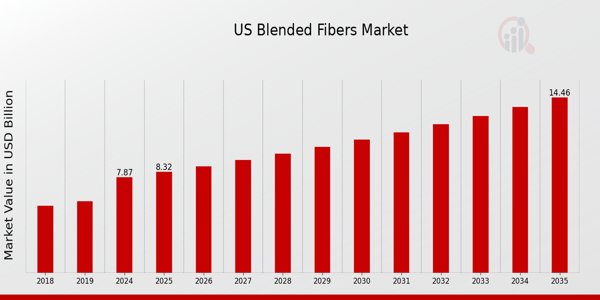
Source: Primary Research, Secondary Research, MRFR Database and Analyst Review
US Blended Fibers Market Drivers
Growing Demand for Sustainable Textiles
The rising awareness of sustainability among consumers is significantly driving growth in the US Blended Fibers Market Industry. A survey conducted by the American Apparel and Footwear Association found that approximately 66% of consumers prefer brands that are environmentally conscious. This shift towards sustainability is leading to increased production of blended fibers that utilize recycled materials. Established players like Nike and Patagonia are investing heavily in sustainable fabric technologies and transparent supply chains to meet this demand.The US government is also promoting sustainability through initiatives like the Sustainable Apparel Coalition, which encourages companies to adopt sustainable practices in manufacturing and sourcing.
Versatility and Performance of Blended Fibers
Blended fibers offer enhanced properties such as improved durability, wrinkle resistance, and moisture-wicking capabilities compared to pure fibers. The American Textile Manufacturers Institute reported that blended fibers account for over 60% of the textile produced in the US, which underlines their growing acceptance due to their functional benefits. Key manufacturers, like DuPont and Invista, are focusing on Research and Development (R&D) to innovate new blends that cater to specific applications, particularly in activewear and fashion, thus expanding market reach.
Increase in Technological Advancements
Technological advancements are propelling the growth of the US Blended Fibers Market Industry by facilitating the production of high-performance blended fibers. Innovations in spinning technologies and the introduction of new polymer blends enable manufacturers to create fabrics that meet diverse consumer needs. The National Council of Textile Organizations has indicated that investment in textile technology has grown by 20% over the last five years, enhancing production capacities and efficiency.Companies like Lenzing are leading the way by incorporating smart textiles into their product lines, further driving adoption and sales.
US Blended Fibers Market Segment Insights:
Blended Fibers Market Source Insights
The US Blended Fibers Market has shown considerable growth, focusing heavily on its Source segment, which can be bifurcated into Synthetic and Natural categories. The increasing demand for blended fibers is fueled by the versatility and adaptability of these materials across various industries, from textiles to composites. As end-users seek fabrics that offer enhanced durability, reduced weight, and improved comfort, the importance of high-performance synthetic fibers is becoming increasingly clear. These fibers, often engineered for specific application requirements, provide excellent moisture-wicking properties and resistance to wear, making them essential in active wear and specialized garments. Conversely, natural fibers are gaining traction due to a growing preference for sustainable and environmentally friendly products. This reflects the rising consumer awareness around ecological impacts and sustainability factors. Natural fibers, typically derived from plant and animal sources, offer various benefits, including breathability and biodegradability, which appeal to a segment of environmentally conscious consumers. The appeal of blending synthetic and natural fibers lies in their ability to combine the best of both worlds, creating hybrid materials that showcase improved quality while meeting the demands for functionality. In recent years, trends such as the rise of athleisure and a growing demand for sustainable textiles are shaping the landscape within the US Blended Fibers Market. Innovations in fiber technology are also driving the market forward, whereby manufacturers are increasingly experimenting with new blends and processing techniques to improve performance characteristics. However, challenges exist, including costs associated with sourcing high-quality natural fibers and the environmental implications of synthetic fiber production. Moreover, regulatory pressures related to sustainability and waste management are pushing industry players to reevaluate their supply chains and sourcing strategies. Hence, while the Synthetic segment holds a significant share, the growing emphasis on sustainability is making the Natural segment increasingly relevant in the overall market dynamics. As the US continues to emphasize eco-friendly practices, further exploration of blended solutions will remain integral to both segments, marking a transformative phase in the US Blended Fibers Market.
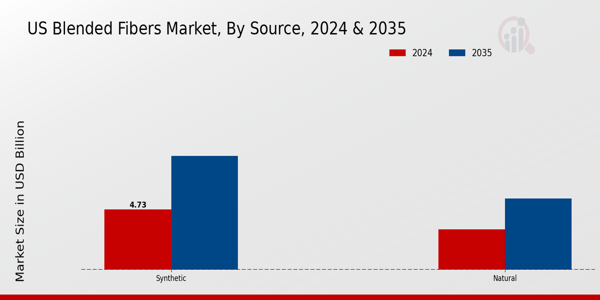
Source: Primary Research, Secondary Research, MRFR Database and Analyst Review
Blended Fibers Market Product Insights
The US Blended Fibers Market exhibits a diversified Product segmentation that significantly influences its overall dynamics and growth trajectory. The Cotton/Polyester blend is particularly essential due to its cost-effectiveness and durability, making it a staple in the apparel industry. Meanwhile, the Cotton/Polyester/Cellulose combination appeals to eco-conscious consumers, offering comfort along with sustainable attributes. In the realm of function, the Nylon/Wool blend provides excellent insulation, rendering it popular for colder climates, while the Elastane/Nylon/Cotton blend is increasingly favored for its stretchability and comfort, especially in activewear.As consumer preferences shift towards versatile and sustainable fabrics, these blends play a pivotal role in addressing market demands. The growing awareness of fiber characteristics and sustainability trends underscores the importance of each blend in different applications, further supporting trends identified in the US Blended Fibers Market data and statistics. Overall, the varied Product offerings in the market ecosystem cater to specific consumer needs, thereby reinforcing the market's resilience and adaptability in a competitive landscape.
Blended Fibers Market Application Insights
The US Blended Fibers Market is evolving significantly, particularly within the Application segment which encompasses Apparel, Home Furnishing, and Technical categories. The Apparel sector is notably influential due to the growing consumer demand for sustainable and versatile fabrics that provide comfort and functionality. This is driven by increased awareness around fashion sustainability, encouraging brands to experiment with blended fibers that offer both aesthetic appeal and enhanced durability. In Home Furnishing, blended fibers play a crucial role in enhancing the quality and longevity of fabric products such as curtains, upholstery, and bedding, contributing to overall aesthetic value and robustness in home decor.The Technical segment is becoming increasingly important, catering to industries requiring specialized textiles that offer unique performance characteristics, such as moisture resistance, breathability, and strength, primarily in sectors like automotive, healthcare, and sportswear. As the market continues to grow, these segments are poised to capture a larger share, driven by changing consumer preferences and advancements in textile technology. Overall, the US Blended Fibers Market segmentation reveals diverse applications with strong growth potential, influenced by evolving trends and consumer behaviors.
US Blended Fibers Market Key Players and Competitive Insights:
The US Blended Fibers Market is characterized by a dynamic landscape where various players are continually striving to maintain a competitive edge. This sector comprises manufacturers and suppliers who combine natural fibers like cotton with synthetic fibers such as polyester to create versatile textiles that cater to a wide range of applications in fashion, home textiles, and industrial sectors. The competition in this market is driven by innovation, sustainability, and the rising demand for functional textiles, which requires companies to adapt swiftly to consumer preferences and technological advancements. The market is not only influenced by domestic players but also by international companies that bring innovative products and production techniques aimed at optimizing performance and reducing environmental impact.Lenzing AG has established a significant presence in the US Blended Fibers Market through its commitment to sustainability and innovation in fiber production. Known for its expertise in producing high-quality cellulose fibers, Lenzing AG's strengths lie in its environmentally friendly manufacturing processes and relentless focus on research and development. The company's fiber solutions are widely recognized for their excellent moisture management and biodegradability, catering to the increasing demand for eco-conscious products in the US textile industry. Lenzing AG has successfully positioned itself as a leader within this space by capitalizing on trends towards sustainable fashion, thereby appealing to both manufacturers and end consumers who prioritize environmentally responsible textiles.Mitsubishi Chemical Corporation is another formidable player in the US Blended Fibers Market, with a robust portfolio that includes a variety of synthetic fibers and polymers designed to meet diverse textile needs. The company's market presence is bolstered by its advanced technology in fiber manufacturing and a strong commitment to innovation, which allows it to remain competitive in this evolving industry. Key products offered by Mitsubishi Chemical include polyester fibers that are known for their durability and versatility, making them ideal for blending. The company is also recognized for its strategic mergers and acquisitions, which have enabled it to expand its product offerings and improve its market reach. Through these initiatives, Mitsubishi Chemical Corporation continues to enhance its operational strength and footprint within the US Blended Fibers Market, positioning itself as a key contributor to the sector's growth while responding effectively to the changing demands of the market landscape.
Key Companies in the US Blended Fibers Market Include:
Lenzing AG
Mitsubishi Chemical Corporation
Invista
BASF SE
Unifi, Inc.
SABIC
DuPont
Teijin Limited
Solvay
Eastman Chemical Company
W. L. Gore and Associates
Carleton College
Covestro AG
Huntsman Corporation
US Blended Fibers Market Industry Developments
Recent developments in the US Blended Fibers Market have been influenced by a surge in sustainable practices among major companies like Lenzing AG and DuPont, focusing on eco-friendly fiber production. Mitsubishi Chemical Corporation and BASF SE are actively investing in advanced fiber technologies to enhance product offerings. In terms of financial growth, Unifi, Inc. reported a significant increase in market valuation due to robust demand for their blended products, indicating a strong recovery in the industry post-pandemic.In terms of mergers and acquisitions, Eastman Chemical Company announced in July 2023 the acquisition of a smaller tech firm specializing in fiber innovations to expand its portfolio. Similarly, in June 2023, Huntsman Corporation acquired a stake in a leading textile manufacturer, aiming to enhance its sustainability initiatives. Major happenings include a collaborative initiative launched in September 2022 among companies like Sabic and Teijin Limited to promote circular economy practices within the fiber industry. These strategic movements underline the growing focus on sustainability and innovation in the blended fibers market across the United States.
US Blended Fibers Market Segmentation Insights
Blended Fibers Market Source Outlook
Synthetic
Natural
Blended Fibers Market Product Outlook
Cotton/Polyester
Cotton/Polyester/Cellulose
Nylon/Wool
Elastane/Nylon/Cotton
Blended Fibers Market Application Outlook
Apparel
Home Furnishing
Technical