Growth in End-User Industries
The growth in end-user industries is a significant driver for the cryolite market. Industries such as glass manufacturing, ceramics, and metallurgy are increasingly utilizing cryolite for its unique properties. The glass industry, in particular, is projected to expand at a CAGR of around 3.2% through 2025, which could lead to heightened demand for cryolite as a fluxing agent. Additionally, the ceramics sector is recognizing the benefits of cryolite in enhancing product quality and reducing production costs. As these end-user industries continue to grow, the cryolite market is likely to experience a corresponding increase in demand, driven by the need for high-quality materials and efficient production processes.
Expansion of Mining Activities
The expansion of mining activities in the US is significantly impacting the cryolite market. As mining operations increase, the demand for cryolite as a mineral processing agent is likely to rise. Cryolite is utilized in the extraction of various metals, including aluminum and rare earth elements, which are essential for modern technologies. The US Geological Survey has reported a steady increase in mining output, with a focus on sustainable practices. This trend suggests that mining companies are increasingly recognizing the value of cryolite in enhancing recovery rates and reducing environmental impact. Consequently, the growth of the mining sector is expected to create new opportunities for the cryolite market, as companies seek to improve operational efficiency and product yield.
Rising Demand in Aluminum Production
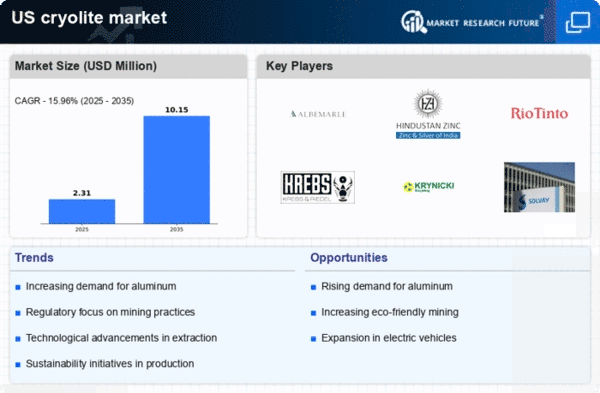
The cryolite market is experiencing a notable increase in demand driven by the aluminum production sector. Cryolite serves as a crucial flux in the electrolytic reduction of aluminum oxide, enhancing the efficiency of the smelting process. In the US, the aluminum industry has been projected to grow at a CAGR of approximately 4.5% through 2025, which directly influences the cryolite market. As aluminum production ramps up, the need for cryolite is expected to rise correspondingly, thereby bolstering market growth. Furthermore, the increasing applications of aluminum in various industries, including automotive and aerospace, further amplify the demand for cryolite. This trend indicates a robust future for the cryolite market, as manufacturers seek to optimize production processes and meet the growing needs of end-users.
Technological Innovations in Processing
Technological innovations in processing techniques are poised to influence the cryolite market positively. Advances in mineral processing technologies, such as improved flotation and leaching methods, are enhancing the efficiency of cryolite usage in various applications. These innovations allow for better recovery rates and lower operational costs, making cryolite a more attractive option for manufacturers. The US market is witnessing a shift towards more efficient and environmentally friendly processing methods, which could lead to increased adoption of cryolite in industrial applications. As companies invest in research and development to optimize their processes, the cryolite market is likely to benefit from these advancements, potentially leading to a surge in demand and market growth.
Increased Focus on Environmental Regulations
The increased focus on environmental regulations in the US is shaping the cryolite market. Regulatory bodies are implementing stricter guidelines regarding the use of chemicals in industrial processes, prompting manufacturers to seek alternatives that comply with these regulations. Cryolite, being a naturally occurring mineral, is often viewed as a more environmentally friendly option compared to synthetic alternatives. This shift towards sustainable practices is likely to drive demand for cryolite, as industries strive to meet compliance standards while minimizing their ecological footprint. The cryolite market may see a rise in applications across various sectors, including glass and ceramics, as companies adapt to the evolving regulatory landscape and prioritize sustainable materials.






















Leave a Comment