Download Free Sample
Kindly complete the form below to receive a free sample of this Report
US Distillers Grains Market Size, Share, Industry Trend & Analysis Research Report BY Type (Wet Distillers' Grains, Dried Distillers' Grains with Solubles, Dried Distillers' Grains),BY Source (Wheat, Corn) and BY Application (Animal Feed, Others) Forecast Till 2035
As per Market Research Future analysis, the US distillers grains market Size was estimated at 2500.0 USD Million in 2024. The US distillers grains market is projected to grow from 2623.5 USD Million in 2025 to 4250.0 USD Million by 2035, exhibiting a compound annual growth rate (CAGR) of 4.9% during the forecast period 2025 - 2035
The US distillers grains market is experiencing a robust upward trajectory driven by sustainability and nutritional advantages.
| 2024 Market Size | 2500.0 (USD Million) |
| 2035 Market Size | 4250.0 (USD Million) |
| CAGR (2025 - 2035) | 4.94% |
POET LLC (US), Green Plains Inc. (US), Valero Energy Corporation (US), Archer Daniels Midland Company (US), The Andersons Inc. (US), Cargill Inc. (US), Bunge Limited (US), Pacific Ethanol Inc. (US)
Our Impact
Enabled $4.3B Revenue Impact for Fortune 500 and Leading Multinationals
Partnering with 2000+ Global Organizations Each Year
30K+ Citations by Top-Tier Firms in the Industry
The distillers grains market is currently experiencing notable shifts driven by various factors, including evolving agricultural practices and increasing demand for sustainable feed options. As livestock producers seek cost-effective alternatives to traditional feed, distillers grains have emerged as a viable solution. This byproduct of ethanol production is rich in protein and energy, making it an attractive choice for animal nutrition. Furthermore, the growing emphasis on reducing carbon footprints in agriculture is likely to enhance the appeal of distillers grains, as they contribute to a more sustainable livestock production system. In addition to sustainability, the distillers grains market is influenced by fluctuations in grain prices and the overall health of the ethanol industry. As the demand for renewable energy sources continues to rise, the production of ethanol is expected to remain robust, thereby supporting the availability of distillers grains. Moreover, the increasing awareness among livestock producers regarding the nutritional benefits of distillers grains may further drive their adoption. Overall, the market appears poised for growth, with potential opportunities for innovation and expansion in the coming years.
The distillers grains market is witnessing a surge in demand as livestock producers increasingly prioritize sustainable feed options. This trend is driven by a growing awareness of environmental impacts and the need for cost-effective alternatives to traditional feed sources.
Producers are becoming more aware of the nutritional advantages offered by distillers grains. Rich in protein and energy, these byproducts are being recognized as valuable components in animal diets, potentially enhancing livestock performance.
The stability of the ethanol production sector plays a crucial role in the distillers grains market. As renewable energy initiatives gain traction, the consistent output of ethanol is likely to ensure a steady supply of distillers grains for livestock feed.
The distillers grains market is closely linked to the ethanol production industry, which has seen a resurgence in recent years. In 2025, ethanol production in the United States is expected to reach around 16 billion gallons, leading to an increase in the availability of distillers grains as a byproduct. This relationship is crucial, as distillers grains serve as a valuable feed resource for livestock. The growth in ethanol production not only supports the distillers grains market but also contributes to the overall agricultural economy. As producers seek to maximize the utilization of corn and other feedstocks for ethanol, the distillers grains market is likely to thrive, providing essential nutrients to livestock while promoting sustainable agricultural practices.
The distillers grains market is experiencing growth due to the rising livestock production in the United States. As the demand for meat, dairy, and eggs continues to escalate, livestock producers are seeking cost-effective and nutritious feed options. Distillers grains, a byproduct of ethanol production, provide a high-protein alternative that supports animal growth and health. In 2025, the livestock sector is projected to expand by approximately 2.5%, further driving the need for distillers grains. This trend indicates a robust market for distillers grains, as producers increasingly incorporate these feed ingredients to enhance the nutritional profile of their livestock diets. The distillers grains market is thus positioned to benefit from this upward trajectory in livestock production, as it aligns with the industry's focus on sustainable and efficient feeding practices.
The economic advantages of using distillers grains in livestock feed are becoming increasingly apparent. With feed costs representing a significant portion of livestock production expenses, the distillers grains market offers a cost-effective alternative. In 2025, the price of distillers grains is projected to remain competitive, potentially around $150 per ton, compared to traditional feed sources. This affordability, combined with the high nutritional value of distillers grains, makes them an attractive option for livestock producers. The distillers grains market is thus likely to see heightened demand as producers look to optimize their feed rations while managing costs. This trend underscores the importance of distillers grains in enhancing the profitability of livestock operations across the United States.
The distillers grains market is benefiting from the broader sustainability initiatives within the agricultural sector. As consumers increasingly demand sustainably produced food, livestock producers are under pressure to adopt environmentally friendly practices. Distillers grains, being a byproduct of ethanol production, contribute to waste reduction and resource efficiency. In 2025, the emphasis on sustainable agriculture is expected to intensify, with many producers looking to incorporate distillers grains into their feed strategies. This trend aligns with the goals of reducing the carbon footprint of livestock production. The distillers grains market is thus likely to see growth as it supports the transition towards more sustainable agricultural practices, appealing to both producers and consumers who prioritize environmental responsibility.
The nutritional profile of distillers grains is gaining recognition among livestock producers, contributing to the growth of the distillers grains market. Rich in protein, fiber, and essential nutrients, distillers grains are increasingly viewed as a superior feed option. In 2025, the market is expected to witness a shift as more producers incorporate distillers grains into their feeding programs, recognizing their benefits for animal health and productivity. This trend is particularly relevant in the context of the growing emphasis on animal welfare and performance. The distillers grains market is thus poised to capitalize on this shift, as producers seek to enhance the quality of their livestock feed while ensuring optimal growth and health outcomes.
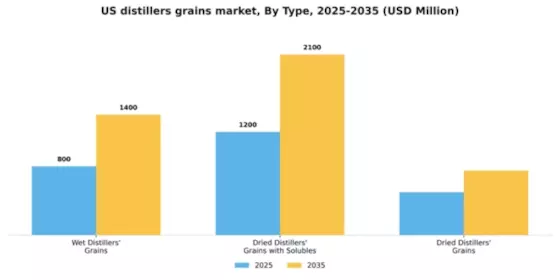
The distribution of the US distillers grains market by type reveals that Wet Distillers' Grains hold a significant market share, being the largest segment due to its high moisture content and nutritional value, which make it a preferred choice, especially in livestock feed. Conversely, Dried Distillers' Grains with Solubles and Dried Distillers' Grains follow, catering to different demands in the animal nutrition sector, yet they continue to gain traction as producers seek more efficient and economical feed solutions. Growth in the US distillers grains market is driven by a rising demand for high-protein animal feed amidst increasing livestock production. The shift towards Dried Distillers' Grains indicates a trend towards efficiency, as they are becoming a more popular choice for major feed manufacturers looking to optimize their supply chains. Both Dried Distillers' Grains and Dried Distillers' Grains with Solubles are emerging rapidly, largely due to innovations in drying technology and rising awareness of sustainable feeding solutions.
Wet Distillers' Grains (Dominant) vs. Dried Distillers' Grains (Emerging)
Wet Distillers' Grains are characterized by their high moisture content, usually around 65-70%, making them highly palatable and nutritious for livestock. This makes them the dominant choice in the US distillers grains market, especially for dairy and beef cattle, where moisture content enhances feed intake. Meanwhile, Dried Distillers' Grains, known for their stability and long shelf life, are becoming an emerging option as feed producers look for high energy and protein concentration without the constraints of moisture. These segments reflect the market's shifting dynamics, with Wet Distillers' Grains leading in consumption, while Dried Distillers' Grains show substantial potential for future growth.
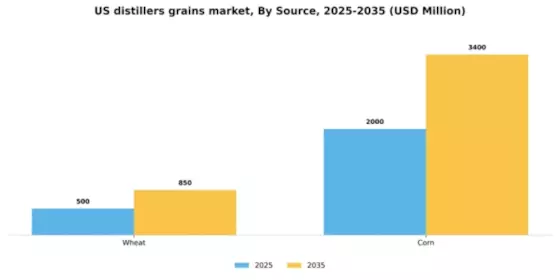
In the US distillers grains market, corn dominates the source segment, holding a significant share due to its widespread availability and the efficiency of conversion into distillers grains. In contrast, while wheat has a smaller market share, its use is increasing rapidly, driven by a rise in demand for alternative sources of livestock feed and its unique nutritional profile. The growth trends for this segment indicate a robust future for both sources. Corn's entrenched position benefits from established supply chains, while wheat is gaining traction as an emerging alternative. Factors contributing to this growth include an increase in livestock production, shifts in feed preferences towards high-protein options, and favorable agricultural conditions that boost wheat availability.
Corn: Dominant vs. Wheat: Emerging
Corn serves as the dominant source for distillers grains thanks to its high yield and low production cost, making it a staple for livestock feed. Its dominance is characterized by established production processes that maximize efficiency, ensuring a consistent supply to meet growing demand. On the other hand, wheat, while currently an emerging source, is notable for its high protein and energy content, making it appealing for livestock nutrition. Its increasing popularity can be attributed to a growing demand for alternative feed that promotes better growth rates and overall health in livestock. As the demand for diverse feed sources rises, wheat's role in the market is likely to expand.
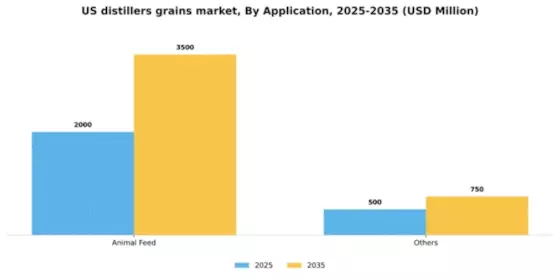
Animal feed dominates the US distillers grains market, capturing a significant share due to its high demand in livestock nutrition. This segment effectively utilizes the nutritional benefits of distillers grains, providing essential protein and energy to various livestock species, which supports its leading position in the market. On the other hand, the 'Others' category, although smaller in market share, is rapidly expanding thanks to innovations in processing and increasing awareness of distillers grains' versatility in other applications. The growth trends in the US distillers grains market are driven by the rising demand for sustainable and cost-effective feed solutions. Animal feed is favored for its proven efficacy in enhancing growth and productivity in livestock, while the 'Others' segment benefits from emerging applications in food products, biofuels, and pharmaceuticals. Increasing investments in research and development are propelling both segments, fostering innovations that meet evolving consumer needs and environmental considerations.
Animal Feed (Dominant) vs. Others (Emerging)
The Animal Feed segment is established as the market leader due to its essential role in livestock nutrition, characterized by high protein content and digestibility, making it an attractive option for farmers. This segment provides a reliable nutrient source for cattle, poultry, and swine, thereby reinforcing its dominance in the market. In contrast, the 'Others' segment represents an emerging market, exploring alternative uses for distillers grains, including opportunities in human food products and renewable energy sources. This segment is gaining traction as manufacturers recognize the potential for distillers grains to be repurposed, tapping into the demand for sustainable practices. The contrasting positions highlight a dynamic market landscape, with each segment influencing the overall growth of the US distillers grains market.
Get more detailed insights about US Distillers Grains Market Request Free Sample
The distillers grains market exhibits a dynamic competitive landscape characterized by a blend of innovation, sustainability, and strategic partnerships. Key players such as POET LLC (US), Green Plains Inc. (US), and Archer Daniels Midland Company (US) are at the forefront, each adopting distinct strategies to enhance their market positioning. POET LLC (US) focuses on technological advancements in biofuel production, which indirectly bolsters its distillers grains output. Meanwhile, Green Plains Inc. (US) emphasizes sustainability through its commitment to reducing carbon emissions, thereby appealing to environmentally conscious consumers. Archer Daniels Midland Company (US) leverages its extensive supply chain network to optimize distribution, ensuring a steady flow of distillers grains to various sectors, including livestock feed and biofuel production. Collectively, these strategies contribute to a competitive environment that prioritizes innovation and sustainability. The business tactics employed by these companies reflect a concerted effort to localize manufacturing and optimize supply chains. The market structure appears moderately fragmented, with several players vying for market share while also collaborating on sustainability initiatives. This fragmentation allows for a diverse range of products and services, catering to the varying needs of end-users. The influence of key players is significant, as their operational strategies often set industry standards and drive competitive dynamics. In October 2025, POET LLC (US) announced a partnership with a leading agricultural technology firm to develop advanced fermentation processes aimed at enhancing the efficiency of distillers grains production. This strategic move is likely to bolster POET's competitive edge by improving yield and reducing production costs, thereby positioning the company favorably in a market that increasingly values efficiency and sustainability. In September 2025, Green Plains Inc. (US) unveiled a new initiative focused on carbon capture technology, which aims to reduce the carbon footprint of its distillers grains production facilities. This initiative not only aligns with global sustainability trends but also enhances the company's reputation as a leader in environmentally responsible practices. Such actions may attract investment and partnerships, further solidifying Green Plains' market position. In August 2025, Archer Daniels Midland Company (US) expanded its distillers grains distribution network by acquiring a regional logistics firm. This acquisition is expected to streamline operations and enhance the company's ability to meet growing demand in the livestock feed sector. By improving logistics, Archer Daniels Midland can ensure timely delivery of its products, which is crucial in maintaining customer satisfaction and loyalty. As of November 2025, the distillers grains market is increasingly shaped by trends such as digitalization, sustainability, and the integration of artificial intelligence in production processes. Strategic alliances among key players are fostering innovation and enhancing operational efficiencies. The competitive landscape is shifting from traditional price-based competition to a focus on technological advancements and supply chain reliability. This evolution suggests that companies that prioritize innovation and sustainability will likely emerge as leaders in the market, setting new benchmarks for performance and customer engagement.






The Distillers Grains Market is projected to grow at a 4.94% CAGR from 2025 to 2035, driven by increasing demand for animal feed and biofuel production.
New opportunities lie in:
By 2035, the distillers grains market is expected to achieve robust growth and increased market share.
| MARKET SIZE 2024 | 2500.0(USD Million) |
| MARKET SIZE 2025 | 2623.5(USD Million) |
| MARKET SIZE 2035 | 4250.0(USD Million) |
| COMPOUND ANNUAL GROWTH RATE (CAGR) | 4.94% (2025 - 2035) |
| REPORT COVERAGE | Revenue Forecast, Competitive Landscape, Growth Factors, and Trends |
| BASE YEAR | 2024 |
| Market Forecast Period | 2025 - 2035 |
| Historical Data | 2019 - 2024 |
| Market Forecast Units | USD Million |
| Key Companies Profiled | POET LLC (US), Green Plains Inc. (US), Valero Energy Corporation (US), Archer Daniels Midland Company (US), The Andersons Inc. (US), Cargill Inc. (US), Bunge Limited (US), Pacific Ethanol Inc. (US) |
| Segments Covered | Type, Source, Application |
| Key Market Opportunities | Growing demand for sustainable animal feed solutions drives innovation in the distillers grains market. |
| Key Market Dynamics | Rising demand for sustainable animal feed drives innovation and competition in the distillers grains market. |
| Countries Covered | US |
The overall market valuation was $2500.0 Million in 2024.
The projected valuation for 2035 is $4250.0 Million.
The expected CAGR during the forecast period 2025 - 2035 is 4.94%.
Dried Distillers' Grains with Solubles had the highest valuation at $1200.0 Million in 2024.
The primary application is Animal Feed, which had a valuation of $2000.0 Million in 2024.
Corn was the leading source, contributing $2000.0 Million in 2024.
Key players include POET LLC, Green Plains Inc., and Valero Energy Corporation.
Wet Distillers' Grains had a valuation of $800.0 Million in 2024.
Dried Distillers' Grains with Solubles is projected to grow to $2100.0 Million by 2035.
The valuation range for Dried Distillers' Grains is between $500.0 Million and $750.0 Million.



Kindly complete the form below to receive a free sample of this Report

“This is really good guys. Excellent work on a tight deadline. I will continue to use you going forward and recommend you to others. Nice job”


“Thanks. It’s been a pleasure working with you, please use me as reference with any other Intel employees.”


“Thanks for sending the report it gives us a good global view of the Betaïne market.”


“Thank you, this will be very helpful for OQS.”


“We found the report very insightful! we found your research firm very helpful. I'm sending this email to secure our future business.”


“I am very pleased with how market segments have been defined in a relevant way for my purposes (such as "Portable Freezers & refrigerators" and "last-mile"). In general the report is well structured. Thanks very much for your efforts.”


“I have been reading the first document or the study, ,the Global HVAC and FP market report 2021 till 2026. Must say, good info! I have not gone in depth at all parts, but got a good indication of the data inside!”


“We got the report in time, we really thank you for your support in this process. I also thank to all of your team as they did a great job.”


“The Automotive 48V ECU Components Procurement Intelligence Study” was a complex project, but the Market Research Future (MRFR) team handled it with quality, agility, and customer-centricity. They delivered all requested data on time and within the agreed scope. The team, including Shubhendra Anand and Rahul Gotadki, was always readily available to clarify questions and swiftly implement necessary adjustments, driving the project to a successful conclusion within a very demanding timeframe.
I would also like to specifically commend Akshay Agarwal for his responsiveness and support at every stage—from our initial inquiry on May 6th through to final delivery on June 18th. His dedication made the entire process seamless.”



