×
Request Free Sample ×

Kindly complete the form below to receive a free sample of this Report

* Please use a valid business email

Leading companies partner with us for data-driven Insights

clients tt-cursor
Hero Background

US Fireproof Insulation Market

ID: MRFR/CnM/14448-HCR
111 Pages
Chitranshi Jaiswal
October 2025

US Fireproof Insulation Market Research Report By Material (Mineral Wool, Plastic Foam, Glass Wool, Others) and By Application (Residential, Commercial, Industrial, Others) - Forecast to 2035

Share:
Download PDF ×

We do not share your information with anyone. However, we may send you emails based on your report interest from time to time. You may contact us at any time to opt-out.

US Fireproof Insulation Market Infographic
Purchase Options

US Fireproof Insulation Market Summary

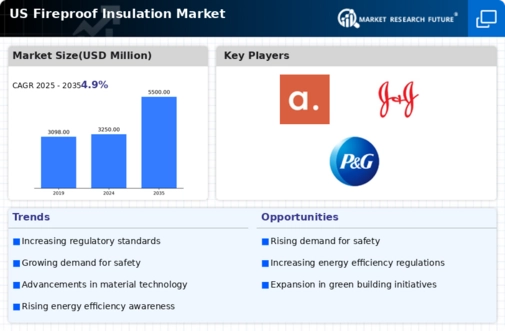
As per analysis, the US fireproof insulation market is projected to grow from USD 2.68 Billion in 2025 to USD 3.85 Billion by 2035, exhibiting a compound annual growth rate (CAGR) of 3.68% during the forecast period (2025 - 2035).

Key Market Trends & Highlights

The US fireproof insulation market is poised for growth driven by regulatory compliance and technological advancements.

  • The building insulation segment remains the largest contributor to the market, reflecting a steady demand for fire safety solutions.
  • Fireproof coatings are emerging as the fastest-growing segment, driven by innovations in material technology.
  • The residential sector continues to dominate the market, while the commercial sector is experiencing rapid growth.
  • Key market drivers include increased construction activities and a growing awareness of fire safety among consumers.

Market Size & Forecast

2024 Market Size 2.59 (USD Billion)
2035 Market Size 3.85 (USD Billion)
CAGR (2025 - 2035) 3.68%

Major Players

Owens Corning (US), Rockwool International (US), Johns Manville (US), CertainTeed (US), Mineral Wool (US), Knauf Insulation (US), Thermafiber (US), BASF (US), 3M (US)

US Fireproof Insulation Market Trends

The US fireproof insulation market is currently experiencing a notable transformation, driven by increasing awareness of fire safety regulations and the need for enhanced building protection. As urbanization continues to rise, the demand for fire-resistant materials in both residential and commercial construction appears to be escalating. This trend is further supported by stringent building codes and standards that emphasize the importance of fire safety in new developments. Consequently, manufacturers are innovating to create advanced insulation products that not only provide thermal efficiency but also meet fire resistance requirements. Moreover, the growing emphasis on sustainability and energy efficiency in construction practices is influencing the US fireproof insulation market. Eco-friendly materials that offer fire resistance are gaining traction, as builders and architects seek to balance safety with environmental considerations. This shift towards sustainable solutions may lead to the development of new materials that combine fireproofing with reduced environmental impact. Overall, the market seems poised for growth as stakeholders increasingly recognize the critical role of fireproof insulation in safeguarding lives and property.

Regulatory Compliance and Standards

The US fireproof insulation market is significantly influenced by evolving regulations and building codes. Authorities are implementing stricter fire safety standards, compelling manufacturers to adapt their products accordingly. This trend indicates a growing recognition of the importance of fire-resistant materials in construction, which may lead to increased demand for compliant insulation solutions.

Sustainable Fireproofing Solutions

There is a noticeable shift towards sustainable materials within the US fireproof insulation market. Manufacturers are exploring eco-friendly options that not only provide fire resistance but also minimize environmental impact. This trend suggests a potential alignment between fire safety and sustainability, appealing to environmentally conscious consumers and builders.

Technological Advancements in Insulation Materials

Innovations in material science are driving the development of advanced fireproof insulation products. The US market is witnessing the introduction of new technologies that enhance the performance of insulation materials, improving their fire resistance capabilities. This trend indicates a proactive approach by manufacturers to meet the growing demands for safety and efficiency in construction.

Market Segment Insights

By Application: Building Insulation (Largest) vs. Fireproof Coatings (Fastest-Growing)

In the US fireproof insulation market, application segments exhibit varying shares, with Building Insulation leading significantly due to its extensive use in residential, commercial, and industrial construction. Following closely, Industrial Insulation is prominent in manufacturing sectors needing high-temperature resistance. Fireproof Coatings emerge as a vital segment, witnessing rapid growth due to increasing safety regulations, while Pipe Insulation is essential for energy efficiency in HVAC systems. As building codes tighten and the demand for safety escalates, the distribution reflects how critical each application is to overall fire safety. The construction and renovation boom is further driving the adoption of fireproof materials, revealing a clear preference for technologically advanced and effective insulation solutions.

Building Insulation (Dominant) vs. Fireproof Coatings (Emerging)

Building Insulation is at the forefront of the US fireproof insulation market due to its substantial incorporation in structural designs. It provides crucial thermal efficiency and fire resistance, making it indispensable in both new constructions and renovation projects. Conversely, Fireproof Coatings have emerged as an innovative solution for safety compliance and are gaining popularity quickly among builders. Their versatility in application and ability to enhance the fire resistance of existing structures make them particularly attractive. As regulations become more stringent, Fireproof Coatings are becoming a go-to for projects aiming for durability and safety enhancement. Both segments reflect a growing trend towards integrating safety features in construction processes to mitigate fire hazards.

By End Use: Residential (Largest) vs. Commercial (Fastest-Growing)

In the US fireproof insulation market, the segment distribution reflects a significant concentration in residential applications, capturing the largest market share. This dominance can be attributed to the rising need for safety in residential buildings, driven by stricter building regulations and an increasing awareness of fire hazards. Following the residential segment, the commercial sector emerges as a rapidly growing area, fueled by the surge in new commercial construction and renovations that prioritize fire safety standards. Growth trends within the US fireproof insulation market are largely influenced by the escalating demand for energy-efficient and fire-resistant materials across all end-use sectors. The commercial segment, in particular, is witnessing rapid expansion as businesses invest in safer environments amid rising insurance costs and regulatory requirements. Additionally, the industrial and automotive segments are also contributing to the market's evolution, characterized by advancements in technology that enhance fireproof insulation performance and compliance with evolving industry standards.

Residential: Dominant vs. Automotive: Emerging

The residential end-use segment of the US fireproof insulation market is characterized by its established dominance, largely due to the consistent demand for enhanced fire safety in homes. This segment benefits from a robust regulatory framework that mandates the use of fireproof materials in residential construction. On the other hand, the automotive segment represents an emerging market, driven by the automotive industry's shift towards safer, lightweight materials that also provide fire resistance. As manufacturers seek to improve vehicle safety and comply with regulations on fire hazards, the automotive segment is expected to witness notable growth, albeit from a smaller base compared to the well-entrenched residential segment. Together, these segments illustrate the diverse applications of fireproof insulation across different sectors.

By Material Type: Mineral Wool (Largest) vs. Fiberglass (Fastest-Growing)

The US fireproof insulation market is notably segmented by material type, with mineral wool currently holding a substantial share as the largest segment. On the other hand, fiberglass is emerging rapidly, gaining popularity for its efficient thermal performance and lightweight properties, which appeal to both residential and commercial projects. Other materials like cellulose and polystyrene play significant roles, ensuring diverse application possibilities across various insulation needs.

Material Type: Mineral Wool (Dominant) vs. Fiberglass (Emerging)

Mineral wool, known for its excellent fire resistance and soundproofing capabilities, remains a dominant force in the US fireproof insulation market. Its robust performance attributes make it a preferred choice across industries, especially in construction sectors requiring stringent safety standards. Meanwhile, fiberglass insulation is recognized as an emerging choice due to its advantageous properties such as low thermal conductivity and lightweight nature. As environmental considerations grow, cellulose, with its recycled content, and polystyrene, valued for its moisture-resistance qualities, also show promise, indicating a dynamic evolution in insulation material preferences.

By Installation Method: Spray Foam (Largest) vs. Board Insulation (Fastest-Growing)

In the US fireproof insulation market, the installation methods play a crucial role in addressing differing consumer needs and preferences. Spray Foam insulation holds the largest share due to its excellent air-sealing capabilities and superior insulation properties. In contrast, Board Insulation and Blanket Insulation cater to specific applications, thus occupying smaller but notable portions of the market. Rigid Insulation, while less prominent, still finds usage in certain applications that demand durability and strength.

Installation Method: Spray Foam (Dominant) vs. Board Insulation (Emerging)

Spray Foam insulation is recognized for its dominant position in the fireproof insulation market, driven by its efficiency in increasing thermal resistance and preventing air leaks. This versatile installation method is well-suited for both residential and commercial buildings, showcasing adaptability in various climatic conditions. Board Insulation, on the other hand, is emerging rapidly, favored for its easy handling and installation processes. With its growing demand, particularly in retrofitting projects and new constructions, Board Insulation presents a compelling solution for those seeking effective thermal protection combined with fire resistance. The competition between these methods highlights a dynamic market reflective of evolving user preferences.

By Regulatory Compliance: Building Codes (Largest) vs. Fire Safety Standards (Fastest-Growing)

In the US fireproof insulation market, regulatory compliance is dominated by building codes, which set the essential standards that must be met for safety and construction quality. These codes, established by various local and national authorities, dictate the necessary fire resistance levels required for different types of buildings. Following close behind, fire safety standards, particularly those dictated by national organizations like NFPA and ICC, are becoming increasingly critical, driving compliance demands and influencing the market's dynamics.

Building Codes (Dominant) vs. Fire Safety Standards (Emerging)

Building codes represent the cornerstone of regulatory compliance in the fireproof insulation sector, laying the groundwork for acceptable construction practices that prioritize safety. These codes are strictly enforced and widely recognized, ensuring various structures meet fire resistance requirements. Conversely, fire safety standards are emerging as vital benchmarks, influenced by advancements in materials technology and a growing emphasis on safety innovation. As the market prioritizes higher safety margins amidst increasing regulatory oversight, fire safety standards are achieving more prominence, reflecting evolving public concerns about fire risks and environmental sustainability. This shift is fostering a competitive landscape where compliance to both codes and standards is pivotal for market players.

Get more detailed insights about US Fireproof Insulation Market

Key Players and Competitive Insights

The fireproof insulation market in the US is characterized by a competitive landscape that is increasingly shaped by innovation, sustainability, and strategic partnerships. Key players such as Owens Corning (US), Rockwool International (US), and Johns Manville (US) are actively pursuing strategies that emphasize product development and market expansion. Owens Corning (US), for instance, has focused on enhancing its product portfolio with advanced materials that meet stringent fire safety standards, thereby positioning itself as a leader in innovation. Meanwhile, Rockwool International (US) has been expanding its manufacturing capabilities to meet growing demand, indicating a strategic focus on regional supply chain optimization. Collectively, these strategies contribute to a dynamic competitive environment where differentiation is increasingly based on technological advancements and sustainability initiatives.

In terms of business tactics, companies are localizing manufacturing to reduce lead times and enhance responsiveness to market demands. The market structure appears moderately fragmented, with several key players holding substantial market shares while also facing competition from smaller, niche manufacturers. This fragmentation allows for a diverse range of products and innovations, although the influence of major players remains significant in shaping market trends and consumer preferences.

In November 2025, Owens Corning (US) announced a partnership with a leading technology firm to develop smart insulation solutions that integrate IoT capabilities. This strategic move is likely to enhance the company's product offerings, allowing for real-time monitoring of insulation performance and energy efficiency. Such innovations not only cater to the growing demand for smart building solutions but also reinforce Owens Corning's commitment to sustainability and energy conservation.

In October 2025, Rockwool International (US) launched a new line of eco-friendly insulation products made from recycled materials. This initiative aligns with the increasing consumer preference for sustainable building materials and positions Rockwool as a forward-thinking player in the market. The strategic importance of this launch lies in its potential to attract environmentally conscious consumers and meet regulatory requirements for sustainable construction practices.

In September 2025, Johns Manville (US) expanded its production facility in Texas to increase output of its fire-resistant insulation products. This expansion is indicative of the company's strategy to capitalize on the growing demand for fireproof insulation in both residential and commercial sectors. By enhancing production capacity, Johns Manville aims to solidify its market position and respond effectively to the rising needs of its customer base.

As of December 2025, the competitive trends in the fireproof insulation market are increasingly defined by digitalization, sustainability, and the integration of advanced technologies such as AI. Strategic alliances among key players are shaping the landscape, fostering innovation and enhancing product offerings. The shift from price-based competition to a focus on technological differentiation and supply chain reliability is evident, suggesting that companies will need to continuously innovate to maintain a competitive edge in this evolving market.


Key Companies in the US Fireproof Insulation Market market include

Industry Developments

The US Fireproof Insulation Market has witnessed significant developments recently, with a focus on enhancing safety and sustainability. Companies like CertainTeed and Owens Corning have been ramping up their production capacities to meet the increasing demand driven by the construction sector and stringent building regulations. In terms of mergers and acquisitions, BASF announced its acquisition of a fire-resistant insulation technology firm in May 2023, reflecting its commitment to expanding its product portfolio. Paroc Group and Knauf Insulation have collaborated on research initiatives aimed at improving the ecological footprint of insulation materials. Moreover, regulations from the U.S.

Environmental Protection Agency are pushing manufacturers towards more eco-friendly insulation solutions, while Rockwool International continues to invest heavily in technology to meet compliance standards. Over the past few years, from 2021 to 2023, there has been a marked growth in market valuation attributed to the increasing awareness of fire safety and energy efficiency in buildings, with the market projected to continue this upward trend in line with infrastructure development in the US. The combined efforts of these leading companies are vital in shaping not only industry standards but also addressing consumer safety concerns effectively.

Future Outlook

US Fireproof Insulation Market Future Outlook

The US fireproof insulation market is projected to grow at a 3.68% CAGR from 2024 to 2035, driven by increasing safety regulations and demand for energy efficiency.

New opportunities lie in:

  • Development of advanced fire-resistant materials for high-rise buildings.
  • Integration of smart technology in insulation systems for real-time monitoring.
  • Expansion into renewable energy sectors with fireproof insulation solutions.

By 2035, the market is expected to be robust, driven by innovation and regulatory compliance.

Market Segmentation

US Fireproof Insulation Market End Use Outlook

  • Residential
  • Commercial
  • Industrial
  • Automotive

US Fireproof Insulation Market Application Outlook

  • Building Insulation
  • Industrial Insulation
  • Fireproof Coatings
  • Pipe Insulation

US Fireproof Insulation Market Material Type Outlook

  • Mineral Wool
  • Fiberglass
  • Cellulose
  • Polystyrene

US Fireproof Insulation Market Installation Method Outlook

  • Spray Foam
  • Board Insulation
  • Blanket Insulation
  • Rigid Insulation

US Fireproof Insulation Market Regulatory Compliance Outlook

  • Building Codes
  • Fire Safety Standards
  • Environmental Regulations

Report Scope

MARKET SIZE 20242.59(USD Billion)
MARKET SIZE 20252.68(USD Billion)
MARKET SIZE 20353.85(USD Billion)
COMPOUND ANNUAL GROWTH RATE (CAGR)3.68% (2024 - 2035)
REPORT COVERAGERevenue Forecast, Competitive Landscape, Growth Factors, and Trends
BASE YEAR2024
Market Forecast Period2025 - 2035
Historical Data2019 - 2024
Market Forecast UnitsUSD Billion
Key Companies ProfiledOwens Corning (US), Rockwool International (US), Johns Manville (US), CertainTeed (US), Mineral Wool (US), Knauf Insulation (US), Thermafiber (US), BASF (US), 3M (US)
Segments CoveredApplication, End Use, Material Type, Installation Method, Regulatory Compliance
Key Market OpportunitiesGrowing demand for sustainable fireproof insulation solutions driven by regulatory changes and consumer preferences.
Key Market DynamicsRising regulatory standards drive demand for advanced fireproof insulation solutions in the US construction sector.
Countries CoveredUS

Leave a Comment

FAQs

What is the expected market size of the US Fireproof Insulation Market in 2024?

The US Fireproof Insulation Market is expected to be valued at 3.5 billion USD in 2024.

What is the projected market size of the US Fireproof Insulation Market by 2035?

By 2035, the US Fireproof Insulation Market is projected to reach a value of 5.1 billion USD.

What is the estimated CAGR for the US Fireproof Insulation Market from 2025 to 2035?

The estimated CAGR for the US Fireproof Insulation Market from 2025 to 2035 is 3.482%.

Which material segment is expected to dominate the US Fireproof Insulation Market by 2035?

The Mineral Wool segment is expected to dominate with a market value of 2.0 billion USD by 2035.

What is the market valuation of Plastic Foam in the US Fireproof Insulation Market for 2024?

Plastic Foam is valued at 0.9 billion USD in the US Fireproof Insulation Market for the year 2024.

Who are the key players in the US Fireproof Insulation Market?

Key players in the US Fireproof Insulation Market include CertainTeed, BASF, Paroc Group, Isolatek International, and Owens Corning.

What is the market value of Glass Wool in 2024?

The market value of Glass Wool in the US Fireproof Insulation Market is set at 1.0 billion USD for 2024.

What growth drivers are influencing the US Fireproof Insulation Market?

Growth drivers include increased construction activities and rising awareness of fire safety regulations.

What challenges does the US Fireproof Insulation Market face?

Challenges include fluctuating raw material prices and stringent government regulations.

How is the competitive landscape of the US Fireproof Insulation Market expected to evolve?

The competitive landscape will likely see emerging innovations and stronger market positions from leading companies by 2035.

Download Free Sample

Kindly complete the form below to receive a free sample of this Report

Compare Licence

×
Features License Type
Single User Multiuser License Enterprise User
Price $4,950 $5,950 $7,250
Maximum User Access Limit 1 User Upto 10 Users Unrestricted Access Throughout the Organization
Free Customization
Direct Access to Analyst
Deliverable Format
Platform Access
Discount on Next Purchase 10% 15% 15%
Printable Versions