Download Free Sample
Kindly complete the form below to receive a free sample of this Report
US Glaucoma Surgery Market Research Report By Target (Trabecular meshwork, Suprachoroidal space, Others), By Type of surgery (Angle closure glaucoma surgery, Aqueous shunt surgery, laser surgery, Others) and By End User (Hospital, Ambulatory surgery centers, Others) - Growth & Industry Forecast 2025 To 2035
As per analysis, the US glaucoma surgery market is projected to grow from USD 178.85 Million in 2024 to USD 343.0 Million by 2035, exhibiting a compound annual growth rate (CAGR) of 6.1% during the forecast period (2025 - 2035).
The US glaucoma surgery market is experiencing a shift towards innovative and patient-centric approaches.
| 2024 Market Size | 178.85 (USD Million) |
| 2035 Market Size | 343.0 (USD Million) |
| CAGR (2025 - 2035) | 6.1% |
Alcon (CH), AbbVie (US), Bausch + Lomb (CA), Glaukos (US), Carl Zeiss (DE), Santen (JP), Johnson & Johnson (US), Merck (US), Novartis (CH)
Our Impact
Enabled $4.3B Revenue Impact for Fortune 500 and Leading Multinationals
Partnering with 2000+ Global Organizations Each Year
30K+ Citations by Top-Tier Firms in the Industry
The US glaucoma surgery market is currently experiencing a notable evolution, driven by advancements in surgical techniques and an increasing prevalence of glaucoma among the aging population. As the understanding of this eye condition deepens, healthcare providers are adopting innovative approaches to treatment, which may enhance patient outcomes. The integration of minimally invasive surgical options appears to be gaining traction, potentially offering patients reduced recovery times and fewer complications. Furthermore, the emphasis on personalized medicine suggests that tailored treatment plans could become more prevalent, aligning with the unique needs of individual patients. In addition, the regulatory landscape surrounding glaucoma treatments is evolving, with agencies focusing on ensuring safety and efficacy. This regulatory scrutiny may lead to the introduction of new technologies and therapies that could reshape the market. The collaboration between ophthalmic device manufacturers and healthcare providers seems to be fostering an environment conducive to innovation, which may ultimately benefit patients. As the US glaucoma surgery market continues to develop, stakeholders must remain vigilant in monitoring trends and adapting to the changing dynamics of this critical healthcare sector.
The trend towards minimally invasive surgical techniques is becoming increasingly prominent in the US glaucoma surgery market. These methods, which often involve smaller incisions and reduced tissue trauma, may lead to quicker recovery times and less postoperative discomfort for patients. As surgeons gain experience with these techniques, their adoption is likely to rise, potentially transforming standard practices in glaucoma management.
There is a growing emphasis on personalized treatment strategies within the US glaucoma surgery market. This trend suggests that healthcare providers are increasingly recognizing the need to tailor interventions based on individual patient characteristics, such as the severity of the disease and overall health. Such an approach may enhance treatment efficacy and patient satisfaction.
The regulatory environment surrounding glaucoma treatments is evolving, with agencies focusing on the approval of new technologies and therapies. This trend indicates a potential increase in the availability of innovative surgical options, which could significantly impact the US glaucoma surgery market. Enhanced regulatory frameworks may facilitate faster access to cutting-edge treatments for patients.
The US glaucoma surgery market is significantly influenced by the aging population, as the prevalence of glaucoma increases with age. According to the National Eye Institute, the number of Americans aged 40 and older with glaucoma is projected to reach 3.6 million by 2030. This demographic shift necessitates a greater demand for surgical interventions, as older adults are more likely to experience vision loss due to glaucoma. Consequently, healthcare providers are increasingly focusing on developing and implementing surgical techniques tailored to this age group. The growing awareness of glaucoma and its potential consequences among older adults further drives the need for effective surgical solutions, thereby propelling the US glaucoma surgery market forward.
Technological advancements play a pivotal role in shaping the US glaucoma surgery market. Innovations such as minimally invasive surgical techniques and advanced imaging technologies have revolutionized the treatment landscape. For instance, the introduction of devices like the iStent and the CyPass Micro-Stent has enabled surgeons to perform procedures with reduced recovery times and improved patient outcomes. The market for glaucoma surgical devices is projected to grow at a compound annual growth rate (CAGR) of approximately 5.5% from 2021 to 2028, indicating a robust demand for these advanced solutions. As technology continues to evolve, the US glaucoma surgery market is likely to witness further enhancements in surgical efficacy and safety.
Rising healthcare expenditure in the United States is another critical driver of the US glaucoma surgery market. With healthcare spending projected to reach nearly $6 trillion by 2027, there is a growing investment in advanced medical technologies and surgical procedures. This increase in funding allows for the development and adoption of innovative glaucoma surgical techniques, enhancing patient access to necessary treatments. Furthermore, insurance coverage for glaucoma surgeries is expanding, making these procedures more financially accessible to patients. As healthcare expenditure continues to rise, the US glaucoma surgery market is likely to benefit from increased investment in surgical advancements and patient care.
Increased awareness and screening initiatives are driving growth in the US glaucoma surgery market. Public health campaigns aimed at educating individuals about the importance of regular eye examinations have led to earlier detection of glaucoma. The American Academy of Ophthalmology recommends that individuals over 40 undergo comprehensive eye exams every two years, which has resulted in a higher number of diagnosed cases. This proactive approach not only facilitates timely surgical interventions but also encourages patients to seek treatment options sooner. As awareness continues to rise, the demand for glaucoma surgeries is expected to increase, further propelling the US glaucoma surgery market.
Regulatory support and favorable reimbursement policies are essential drivers of the US glaucoma surgery market. The Food and Drug Administration (FDA) has streamlined the approval process for new glaucoma devices, facilitating quicker access to innovative surgical options. Additionally, Medicare and private insurers are increasingly covering glaucoma surgeries, which enhances patient access to these critical treatments. This supportive regulatory environment encourages manufacturers to invest in research and development, leading to the introduction of new surgical techniques and devices. As reimbursement policies continue to evolve favorably, the US glaucoma surgery market is expected to experience sustained growth.
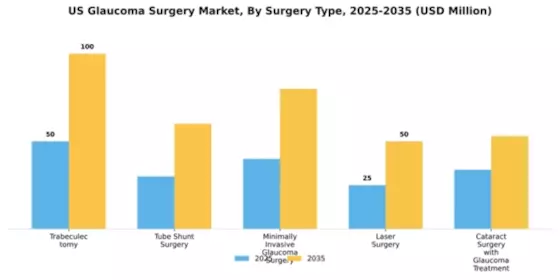
The US glaucoma surgery market showcases a diverse array of procedures, with Trabeculectomy emerging as the dominant surgical choice due to its established efficacy and widespread acceptance among ophthalmic surgeons. Other techniques such as Tube Shunt Surgery, Laser Surgery, and Cataract Surgery with Glaucoma Treatment also play significant roles, catering to different patient needs but commanding smaller shares of the market. In contrast, Minimally Invasive Glaucoma Surgery is rapidly gaining traction, appealing to both patients and surgeons who prefer less invasive options with quicker recovery times.
Surgery Type: Trabeculectomy (Dominant) vs. Minimally Invasive Glaucoma Surgery (Emerging)
Trabeculectomy remains the cornerstone of glaucoma surgery, characterized by its effectiveness in lowering intraocular pressure and its longevity in clinical practice. This procedure involves creating a filtration bleb to facilitate aqueous humor drainage. On the other hand, Minimally Invasive Glaucoma Surgery (MIGS) is an emerging alternative, designed to reduce surgical risks and maximize patient comfort. MIGS techniques include procedures that utilize micro-catheters and other novel instruments to improve drainage while maintaining eye integrity. The shift towards MIGS reflects the evolving preferences in the surgical community, where faster recovery and fewer complications are paramount.
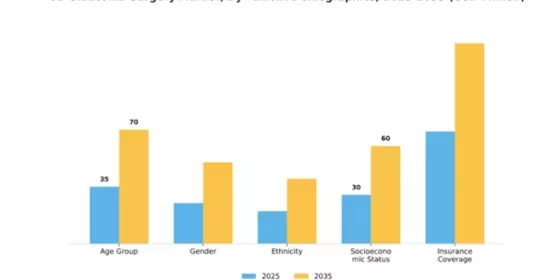
In the US glaucoma surgery market, the demographics largely skew towards older adults, particularly those aged 65 and above, who constitute the largest age group undergoing these procedures. This trend is reflective of the increasing prevalence of glaucoma in the aging population. In contrast, younger demographics, including individuals aged 45-64, are emerging as a significant segment with increasing engagement in eye health, even leading to a surge in minimally invasive surgical options.
Age Group: 65+ (Dominant) vs. Gender: Female (Emerging)
The dominant age group for glaucoma surgery is individuals aged 65 and older, primarily due to the higher incidence of glaucoma in older populations. This demographic often presents with more advanced stages of the disease, necessitating surgical intervention. On the other hand, females are emerging as a significant segment within the market, potentially driven by a higher awareness of eye health issues and proactive healthcare behaviors. This dual focus on older patients and an increasing number of younger females engaging in preventive measures positions the market uniquely to cater to diverse patient needs.
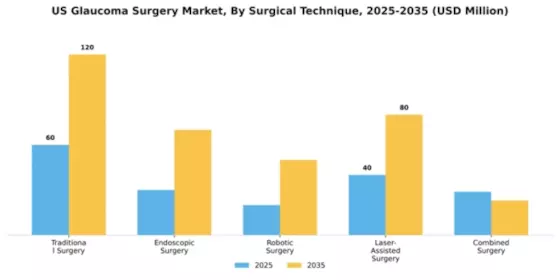
In the US glaucoma surgery market, Traditional Surgery holds the largest share among the various surgical techniques employed. This established method continues to be the go-to choice for many practitioners, primarily due to its reliability and proven track record for effectively managing glaucoma. Contrarily, Laser-Assisted Surgery is emerging rapidly, capturing the attention of both surgeons and patients for its innovative, less invasive approach that can lead to quicker recovery times and reduced overall risks. The growth trends in this segment are significantly influenced by advancements in technology and an increasing prevalence of glaucoma cases among the aging population. Healthcare providers are increasingly recognizing the benefits of integrating newer techniques like Laser-Assisted Surgery into their practice. This shift not only enhances patient outcomes but also aligns with the growing demand for minimally invasive procedures, making Laser-Assisted Surgery the fastest-growing segment in the market.
Traditional Surgery: Dominant vs. Laser-Assisted Surgery: Emerging
Traditional Surgery remains the dominant technique in the US glaucoma surgery market due to its long-standing acceptance and effectiveness. It often involves procedures like trabeculectomy and is favored for its controlled outcomes and comprehensive surgical intervention properties. On the other hand, Laser-Assisted Surgery is carving out an emerging niche, characterized by its focus on precision and patient-centered care. This method utilizes advanced laser technology to reduce intraocular pressure with minimal disruption to surrounding tissues. As trends shift towards patient preference for less invasive options, Laser-Assisted Surgery is increasingly positioned as a viable alternative, growing rapidly in adoption due to its benefits in terms of reduced recovery time and enhanced safety profiles.
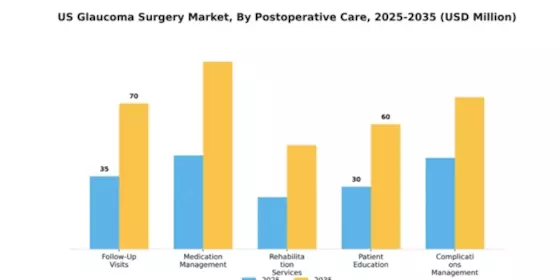
In the US glaucoma surgery market, postoperative care encompasses several critical components, notably Follow-Up Visits and Medication Management, which hold the largest market shares. Follow-Up Visits remain a cornerstone of the postoperative care process, ensuring that patients' recovery is closely monitored, thus facilitating timely adjustments in treatment plans. Meanwhile, Medication Management is rapidly gaining traction, highlighted by its increased importance as therapies evolve and require sophisticated management protocols to optimize patient outcomes.
Follow-Up Visits (Dominant) vs. Medication Management (Emerging)
Follow-Up Visits are paramount in the postoperative care of glaucoma surgery patients, representing a well-established practice essential for monitoring recovery progress and addressing any emerging issues. This segment usually includes routine assessments of IOP (Intraocular Pressure), visual field tests, and overall ocular health evaluations. On the other hand, Medication Management is becoming increasingly relevant in this landscape as glaucoma treatments become more complex, necessitating tailored medication regimens. The growth in this area is driven by an aging population and better awareness of chronic disease management, which encourages regular medication adherence and optimal health outcomes.
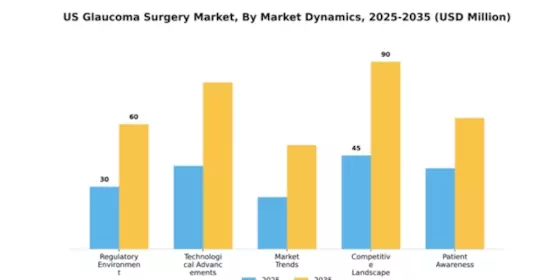
In the US glaucoma surgery market, the Regulatory Environment is currently the largest segment due to stringent rules and guidelines that govern medical practices and technologies. This segment plays a pivotal role in shaping market behavior, as adherence to regulations ensures product safety and efficacy. In contrast, Technological Advancements, while smaller in market share, are the fastest-growing segment, driven by innovations in surgical techniques and equipment that enhance patient outcomes and operational efficiencies.
Regulatory Environment: Dominant vs. Technological Advancements: Emerging
The Regulatory Environment stands out as the dominant segment in the US glaucoma surgery market, primarily due to the comprehensive guidelines set forth by authorities like the FDA, which ensure that medical procedures and devices meet safety and effectiveness criteria. This framework helps instill patient and healthcare provider confidence in glaucoma treatments. Conversely, Technological Advancements, recognized as an emerging segment, are rapidly shaping the landscape by introducing minimally invasive surgical options and advanced diagnostic tools. These innovations not only improve patient care and satisfaction but also create new growth opportunities for manufacturers and healthcare providers, positioning them favorably in a competitive market.
Get more detailed insights about US Glaucoma Surgery Market Request Free Sample
The US glaucoma surgery market is characterized by a competitive landscape that is increasingly shaped by innovation, strategic partnerships, and a focus on patient-centric solutions. Key players such as Alcon (CH), Glaukos (US), and AbbVie (US) are actively pursuing strategies that emphasize technological advancements and operational efficiencies. Alcon (CH), for instance, has positioned itself as a leader in surgical devices, focusing on the development of minimally invasive techniques that enhance patient outcomes. Meanwhile, Glaukos (US) has carved out a niche in the market with its innovative micro-invasive glaucoma surgery (MIGS) solutions, which are gaining traction due to their effectiveness and reduced recovery times. AbbVie (US), leveraging its strong pharmaceutical background, is integrating surgical solutions with its existing product lines, thereby enhancing its competitive edge in the market.The business tactics employed by these companies reflect a concerted effort to optimize supply chains and localize manufacturing processes. The market appears moderately fragmented, with several players vying for market share, yet the influence of major companies is palpable. Their collective strategies not only drive competition but also foster an environment where innovation is paramount. This dynamic is further enhanced by the increasing demand for advanced surgical options that promise better patient outcomes and lower healthcare costs.In December 2025, Alcon (CH) announced the launch of its latest surgical platform, which integrates advanced imaging technology to assist surgeons during glaucoma procedures. This strategic move is likely to enhance surgical precision and improve patient safety, thereby reinforcing Alcon's position as a market leader. The introduction of such technology underscores the importance of innovation in maintaining competitive advantage in the glaucoma surgery sector.In November 2025, Glaukos (US) expanded its product portfolio by acquiring a promising startup focused on AI-driven diagnostic tools for glaucoma. This acquisition not only diversifies Glaukos's offerings but also positions the company at the forefront of integrating artificial intelligence into glaucoma management. The strategic importance of this move lies in its potential to enhance early detection and treatment, which could significantly improve patient outcomes and solidify Glaukos's market presence.In October 2025, AbbVie (US) entered into a strategic partnership with a leading technology firm to develop a digital platform aimed at streamlining patient management in glaucoma care. This collaboration is indicative of a broader trend towards digitalization in healthcare, where technology plays a crucial role in enhancing patient engagement and treatment adherence. The implications of this partnership are profound, as it may lead to improved patient outcomes and increased operational efficiencies for AbbVie.As of January 2026, the competitive trends in the glaucoma surgery market are increasingly defined by digital transformation, sustainability initiatives, and the integration of AI technologies. Strategic alliances are becoming more prevalent, as companies recognize the value of collaboration in driving innovation and enhancing service delivery. Looking ahead, it is anticipated that competitive differentiation will evolve, with a shift from price-based competition to a focus on technological innovation, supply chain reliability, and patient-centric solutions. This evolution suggests that companies that prioritize these aspects will likely emerge as leaders in the market.


Recent developments in the US Glaucoma Surgery Market have shown significant activity among key players. Companies such as Alcon and Glaukos have advanced their Research and Development initiatives to innovate new surgical techniques and devices aimed at improving patient outcomes.
Aerie Pharmaceuticals has reported growth in its product pipeline, while Novartis continues to expand its therapeutic options for managing glaucoma. In terms of mergers and acquisitions, Santen Pharmaceutical announced the acquisition of a portfolio of assets from a private firm in September 2023, which is expected to bolster its presence in the US market.
Additionally, Bausch Health has made strategic investments to enhance its product offerings, reinforcing its position in the competitive landscape. The heightened focus on minimally invasive surgical options is driving industry growth, as patient demand for less invasive procedures increases.
In the past two years, the industry has witnessed substantial funding allocated towards technological advancements and collaborations among major companies like Johnson and Johnson and Heidelberg Engineering, influencing the market dynamics.
Overall, the US Glaucoma Surgery Market is experiencing a robust expansion, underpinned by continuous innovation and strategic alignments among leading firms.
The US glaucoma surgery market is projected to grow at a 6.1% CAGR from 2025 to 2035, driven by technological advancements, increasing prevalence, and enhanced patient awareness.
New opportunities lie in:
By 2035, the market is expected to be robust, driven by innovation and strategic partnerships.
| MARKET SIZE 2024 | 178.85(USD Million) |
| MARKET SIZE 2025 | 191.1(USD Million) |
| MARKET SIZE 2035 | 343.0(USD Million) |
| COMPOUND ANNUAL GROWTH RATE (CAGR) | 6.1% (2024 - 2035) |
| REPORT COVERAGE | Revenue Forecast, Competitive Landscape, Growth Factors, and Trends |
| BASE YEAR | 2024 |
| Market Forecast Period | 2025 - 2035 |
| Historical Data | 2019 - 2024 |
| Market Forecast Units | USD Million |
| Key Companies Profiled | Alcon (CH), AbbVie (US), Bausch + Lomb (CA), Glaukos (US), Carl Zeiss (DE), Santen (JP), Johnson & Johnson (US), Merck (US), Novartis (CH) |
| Segments Covered | Surgery Type, Patient Demographics, Surgical Technique, Postoperative Care, Market Dynamics |
| Key Market Opportunities | Integration of advanced minimally invasive surgical techniques in the us glaucoma surgery market. |
| Key Market Dynamics | Technological advancements and regulatory changes drive innovation in the US glaucoma surgery market. |
| Countries Covered | US |
The US glaucoma surgery market was valued at approximately 178.85 USD Million in 2024.
The market is expected to reach a valuation of 343.0 USD Million by 2035.
The expected CAGR for the US glaucoma surgery market from 2025 to 2035 is 6.1%.
Key players include Alcon, AbbVie, Bausch + Lomb, Glaukos, Carl Zeiss, Santen, Johnson & Johnson, Merck, and Novartis.
The primary types of surgeries include Trabeculectomy, Tube Shunt Surgery, Minimally Invasive Glaucoma Surgery, Laser Surgery, and Cataract Surgery with Glaucoma Treatment.
Patient demographics, including age, gender, ethnicity, socioeconomic status, and insurance coverage, significantly impact market dynamics, with insurance coverage valued between 68.85 and 123.0 USD Million.
Surgical techniques encompass Traditional Surgery, Endoscopic Surgery, Robotic Surgery, Laser-Assisted Surgery, and Combined Surgery, with Traditional Surgery valued between 60.0 and 120.0 USD Million.
Postoperative care services include Follow-Up Visits, Medication Management, Rehabilitation Services, Patient Education, and Complications Management, with Medication Management valued between 45.0 and 90.0 USD Million.
Market dynamics are influenced by the Regulatory Environment, Technological Advancements, Market Trends, Competitive Landscape, and Patient Awareness, with Technological Advancements valued between 40.0 and 80.0 USD Million.
The competitive landscape is characterized by the presence of major players like Johnson & Johnson and Merck, which may drive innovation and market growth.



Kindly complete the form below to receive a free sample of this Report

“This is really good guys. Excellent work on a tight deadline. I will continue to use you going forward and recommend you to others. Nice job”


“Thanks. It’s been a pleasure working with you, please use me as reference with any other Intel employees.”


“Thanks for sending the report it gives us a good global view of the Betaïne market.”


“Thank you, this will be very helpful for OQS.”


“We found the report very insightful! we found your research firm very helpful. I'm sending this email to secure our future business.”


“I am very pleased with how market segments have been defined in a relevant way for my purposes (such as "Portable Freezers & refrigerators" and "last-mile"). In general the report is well structured. Thanks very much for your efforts.”


“I have been reading the first document or the study, ,the Global HVAC and FP market report 2021 till 2026. Must say, good info! I have not gone in depth at all parts, but got a good indication of the data inside!”


“We got the report in time, we really thank you for your support in this process. I also thank to all of your team as they did a great job.”


“The Automotive 48V ECU Components Procurement Intelligence Study” was a complex project, but the Market Research Future (MRFR) team handled it with quality, agility, and customer-centricity. They delivered all requested data on time and within the agreed scope. The team, including Shubhendra Anand and Rahul Gotadki, was always readily available to clarify questions and swiftly implement necessary adjustments, driving the project to a successful conclusion within a very demanding timeframe.
I would also like to specifically commend Akshay Agarwal for his responsiveness and support at every stage—from our initial inquiry on May 6th through to final delivery on June 18th. His dedication made the entire process seamless.”



