×
Request Free Sample ×

Kindly complete the form below to receive a free sample of this Report

* Please use a valid business email

Leading companies partner with us for data-driven Insights

clients tt-cursor
Hero Background

US Glutaraldehyde Market

ID: MRFR/CnM/15819-HCR
100 Pages
Chitranshi Jaiswal
October 2025

US Glutaraldehyde Market Research Report: By Application (Disinfectant, Water Treatment, Tanning, Animal Husbandry, Electron & Light Microscopy) and By End User (Healthcare, Wastewater Treatment, Research & Development Laboratories) - Forecast to 2035

Share:
Download PDF ×

We do not share your information with anyone. However, we may send you emails based on your report interest from time to time. You may contact us at any time to opt-out.

US Glutaraldehyde Market Infographic
Purchase Options

US Glutaraldehyde Market Summary

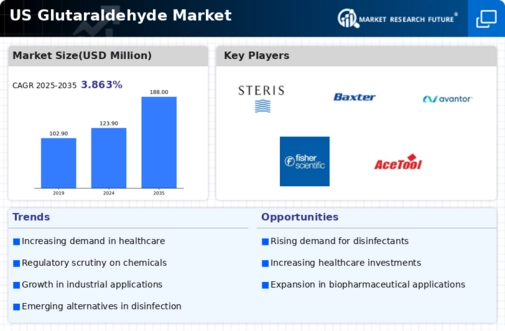
As per analysis, the US glutaraldehyde market is projected to grow from USD 123.9 Million in 2024 to USD 183.64 Million by 2035, exhibiting a compound annual growth rate (CAGR) of 3.64% during the forecast period (2025 - 2035).

Key Market Trends & Highlights

The US glutaraldehyde market is experiencing a robust growth trajectory driven by increasing demand in healthcare and industrial applications.

  • The healthcare segment remains the largest consumer of glutaraldehyde, primarily due to its extensive use as a disinfectant.
  • The industrial segment is currently the fastest-growing, reflecting a rising need for effective sterilization solutions in various manufacturing processes.
  • Technological advancements in formulations are enhancing the efficacy and safety of glutaraldehyde products, thereby expanding their applications.
  • Key market drivers include the rising demand in the healthcare sector and increasing awareness of infection control, which are propelling market growth.

Market Size & Forecast

2024 Market Size 123.9 (USD Million)
2035 Market Size 183.64 (USD Million)
CAGR (2025 - 2035) 3.64%

Major Players

BASF SE (DE), Huntsman Corporation (US), The Dow Chemical Company (US), SABIC (SA), AkzoNobel N.V. (NL), Merck KGaA (DE), Fisher Scientific (US), Avantor, Inc. (US)

US Glutaraldehyde Market Trends

The US glutaraldehyde market is characterized by its diverse applications, particularly in healthcare and industrial sectors. This chemical compound serves as a potent disinfectant and sterilizing agent, widely utilized in medical facilities for the sterilization of surgical instruments and equipment. The increasing emphasis on infection control and the rising number of surgical procedures contribute to the growing demand for glutaraldehyde in the healthcare sector. Furthermore, its application in the manufacturing of resins and adhesives highlights its significance in various industrial processes. As environmental regulations become more stringent, the market is likely to witness a shift towards safer alternatives, which may influence the overall demand dynamics. In addition to healthcare, the US glutaraldehyde market finds relevance in water treatment processes, where it acts as a biocide. The need for effective water treatment solutions, driven by concerns over water quality and safety, suggests a potential growth avenue for glutaraldehyde. Moreover, the ongoing research into the development of more efficient formulations may further enhance its market presence. Overall, the US glutaraldehyde market appears poised for evolution, shaped by regulatory changes, technological advancements, and shifting consumer preferences.

Rising Demand in Healthcare Sector

The US glutaraldehyde market experiences heightened demand primarily due to its extensive use in healthcare settings. As hospitals and clinics prioritize sterilization and infection control, the reliance on glutaraldehyde for disinfecting medical instruments becomes increasingly critical. This trend is likely to continue as the healthcare industry evolves, necessitating effective sterilization solutions.

Environmental Regulations Impacting Usage

The US glutaraldehyde market faces challenges from evolving environmental regulations aimed at reducing hazardous substances. As regulatory bodies impose stricter guidelines, manufacturers may need to adapt their formulations or seek alternative disinfectants. This shift could reshape market dynamics, influencing both production practices and consumer preferences.

Technological Advancements in Formulations

Innovations in chemical formulations are anticipated to play a pivotal role in the US glutaraldehyde market. Research and development efforts focused on enhancing the efficacy and safety of glutaraldehyde products may lead to the introduction of improved formulations. Such advancements could potentially expand its applications and appeal to a broader range of industries.

Market Segment Insights

By Application: Disinfectant (Largest) vs. Sterilant (Fastest-Growing)

In the US glutaraldehyde market, the application segments showcase a diverse distribution, with disinfectants taking the largest share. This dominance is attributed to their extensive use in healthcare and laboratory settings where infection control is paramount. Following this, preservatives, sterilants, and fixatives each hold a smaller yet significant share, reflecting the varied applications of glutaraldehyde across industries such as pharmaceuticals and cosmetics. Current growth trends indicate a rising demand for sterilants, positioning them as the fastest-growing segment. This is driven by heightened hygiene awareness and increased healthcare investments. Moreover, the pharmaceutical industry’s expansion, alongside an uptick in surgical procedures requiring sterilization, further bolsters the position of sterilants in the market, contributing to a dynamic shift in application preferences.

Disinfectant (Dominant) vs. Fixative (Emerging)

The disinfectant segment of the US glutaraldehyde market remains dominant due to its critical role in infection prevention in medical facilities and laboratories. Characterized by its efficacy against a broad spectrum of pathogens, disinfectants are essential in surgical instrument sterilization processes, thus fostering consistent demand. Conversely, the fixative application is emerging as a valuable segment, particularly in histology and preservation of biological specimens. While currently smaller in market share, the increasing emphasis on research and preservation techniques is propelling fixatives into a more competitive position, suggesting potential growth opportunities as research initiatives expand and synthetic biology sectors gain traction.

By End Use: Healthcare (Largest) vs. Industrial (Fastest-Growing)

In the US glutaraldehyde market, the healthcare segment holds the largest share, driven by its widespread application in disinfection and sterilization processes. Facilities such as hospitals utilization glutaraldehyde due to its effectiveness in eliminating pathogens, ensuring a safe environment for patients and medical staff alike. The laboratory segment follows suit, as numerous research and clinical laboratories employ glutaraldehyde for various analytical and preservation purposes. On the other hand, the industrial segment is recognized as the fastest-growing segment, fueled by increasing demand from manufacturing processes that require stringent sanitation measures. The agricultural sector, while smaller, is witnessing a steady increase in the use of glutaraldehyde for disinfection of equipment and surfaces, driven by the rising emphasis on biosecurity and hygiene in farming practices.

Healthcare: Dominant vs. Industrial: Emerging

The healthcare segment of the US glutaraldehyde market remains dominant due to its critical role in medical and dental settings, where sterilization is a non-negotiable aspect of patient care. Hospitals and clinics leverage glutaraldehyde for its potent antimicrobial properties, employing it in sterilizing surgical instruments and medical devices. Meanwhile, the industrial segment is emerging rapidly as manufacturers recognize the advantages of glutaraldehyde in ensuring cleanliness and preventing contamination in production environments. This segment is gaining traction particularly in sectors like food processing and manufacturing, where the hygiene drive is becoming paramount. The demand for effective disinfection solutions is propelling industrial usage, making it a key area of growth in the market.

By Formulation Type: Liquid (Largest) vs. Powder (Fastest-Growing)

In the US glutaraldehyde market, the formulation type segment is primarily dominated by the liquid form, which holds the largest share due to its widespread application in healthcare and industrial sectors. The liquid formulation is preferred for its ease of use and effectiveness in disinfection processes, making it an essential component in various sanitization practices. In contrast, the powder formulation is emerging as a significant player, increasingly favored for its longer shelf life and ease of storage, which resonates well with consumer preferences for convenience and efficiency. The growth trends within the formulation type segment indicate a rising demand for powdered glutaraldehyde as businesses and industries seek cost-effective and efficient solutions. The powder form is gaining traction, particularly in specialized applications where controlled dosage and minimal waste are critical. Additionally, the push towards sustainability and the need for versatile products are driving innovation in formulation types that accommodate varying consumer needs, from hospital sterilization environments to industrial cleaning. This evolving landscape suggests that both liquid and powder formulations will continue to coexist, each catering to distinct market requirements and driving incremental growth in their respective domains.

Liquid (Dominant) vs. Powder (Emerging)

The liquid formulation of glutaraldehyde stands as the dominant choice in the US market, largely attributed to its direct application efficiency and quick-action disinfection capabilities. It is predominantly used in healthcare settings, where sterility is crucial, and its effectiveness against a wide range of pathogens solidifies its reputation as a go-to solution. On the other hand, the powder formulation is seen as an emerging alternative that is steadily gaining market attention. Its advantages include longer shelf life, ease of transport, and reduced waste, making it attractive to industries that value flexibility and efficiency. As user preferences evolve, the competition between liquid and powder formulations is likely to drive innovation and diversification within the market.

By Distribution Channel: Direct Sales (Largest) vs. Online Sales (Fastest-Growing)

In the US glutaraldehyde market, the distribution of sales channels reveals that direct sales dominate the landscape. This channel accounts for the majority of transactions, allowing manufacturers and suppliers to establish strong relationships with their clients. On the other hand, online sales represent a growing segment, increasingly capturing the attention of consumers who favor convenience and accessibility. These dynamics underline a significant shift in purchasing behavior among end-users in various industries that utilize glutaraldehyde.

Direct Sales (Dominant) vs. Online Sales (Emerging)

Direct sales are characterized by personal interactions and tailored services between suppliers and customers, providing a stable revenue stream in the US glutaraldehyde market. This approach enables manufacturers to showcase their products effectively and address client needs directly. Conversely, online sales are emerging rapidly as consumers seek more convenient purchasing options. Digital platforms are expanding their reach and eliminating geographical barriers. This trend is supported by a growing preference for e-commerce among businesses, as well as increased internet penetration and digital marketing efforts by suppliers, enhancing the competitive landscape.

By Grade: Industrial Grade (Largest) vs. Research Grade (Fastest-Growing)

In the US glutaraldehyde market, the distribution among different grades reveals that Industrial Grade holds the largest share, primarily driven by widespread usage in various industrial applications, including sterilization processes in healthcare and manufacturing environments. Pharmaceutical Grade is also significant, catering to stringent regulations in the pharmaceutical sector, while Research Grade, though smaller in terms of market share, is rapidly gaining traction especially among academic and private research institutions for specialized applications. Growth trends are being propelled by increasing demand from healthcare and pharmaceutical sectors, which emphasize effective disinfection solutions. The Industrial Grade's dominance is further supported by continuous advancements and innovations in production methods, enhancing effectiveness and safety. Meanwhile, Research Grade is expanding quickly due to rising investments in biotechnology and pharmaceuticals, along with heightened awareness around hygiene and safety protocols in research environments.

Industrial Grade (Dominant) vs. Pharmaceutical Grade (Emerging)

Industrial Grade glutaraldehyde is primarily utilized for its high efficacy as a disinfectant and sterilant across various industries, including healthcare facilities and laboratories. Its extensive applications in cleaning, sterilizing medical instruments, and equipment maintenance contribute significantly to its dominant market position. On the other hand, Pharmaceutical Grade represents an emerging value in the market, characterized by its compliance with stringent industry standards to ensure safety and effectiveness in pharmaceutical applications. This grade is increasingly utilized in the manufacture of medicines, vaccines, and diagnostic products, reflecting the ongoing emphasis on product purity and regulatory compliance. The synergy between these segments points to a balanced market dynamic where industrial applications continue to hold a strong lead while pharmaceutical usage expands concurrently.

Get more detailed insights about US Glutaraldehyde Market

Key Players and Competitive Insights

The glutaraldehyde market exhibits a competitive landscape characterized by a blend of established players and emerging entities, driven by increasing demand across various sectors, including healthcare and industrial applications. Key players such as BASF SE (DE), Huntsman Corporation (US), and The Dow Chemical Company (US) are strategically positioned to leverage their extensive product portfolios and technological capabilities. These companies focus on innovation and sustainability, which are becoming pivotal in shaping market dynamics. Their collective strategies not only enhance their competitive edge but also contribute to a more robust market environment, where differentiation is increasingly based on product quality and environmental impact.

In terms of business tactics, companies are increasingly localizing manufacturing to reduce lead times and optimize supply chains. The market structure appears moderately fragmented, with several players vying for market share. This fragmentation allows for a diverse range of products and services, yet the influence of major players remains significant, as they set benchmarks for quality and innovation that smaller companies often strive to meet.

In November 2025, BASF SE (DE) announced the launch of a new line of glutaraldehyde products designed specifically for the healthcare sector, emphasizing biocompatibility and reduced environmental impact. This strategic move not only aligns with the growing trend towards sustainable practices but also positions BASF to capture a larger share of the healthcare market, which is increasingly prioritizing eco-friendly solutions. The introduction of these products is likely to enhance BASF's reputation as a leader in sustainable chemical solutions.

In October 2025, Huntsman Corporation (US) expanded its production capacity for glutaraldehyde at its facility in Texas. This expansion is indicative of Huntsman's commitment to meeting rising demand in the industrial sector, particularly in applications such as water treatment and textile manufacturing. By increasing production capacity, Huntsman aims to solidify its market position and respond more effectively to customer needs, thereby enhancing its competitive stance in a growing market.

In September 2025, The Dow Chemical Company (US) entered into a strategic partnership with a leading biotechnology firm to develop innovative glutaraldehyde formulations that utilize bio-based feedstocks. This collaboration underscores Dow's focus on integrating sustainability into its product offerings, which is becoming increasingly important in the current market landscape. The partnership is expected to yield products that not only meet regulatory standards but also appeal to environmentally conscious consumers, thereby expanding Dow's market reach.

As of December 2025, the glutaraldehyde market is witnessing trends that emphasize digitalization, sustainability, and the integration of advanced technologies such as AI. Strategic alliances are becoming more prevalent, as companies recognize the need to collaborate to enhance innovation and efficiency. The competitive differentiation is likely to evolve from traditional price-based competition to a focus on technological advancements, product innovation, and supply chain reliability. This shift suggests that companies that prioritize these aspects will be better positioned to thrive in an increasingly competitive environment.


Key Companies in the US Glutaraldehyde Market market include

Industry Developments

The US Glutaraldehyde Market has witnessed significant developments recently, with companies such as Dow Chemical and Baxter International focusing on expanding their product applications in healthcare and industrial sectors. In August 2023, Shandong Jiahua Chemical announced a strategic investment to enhance its production capabilities in the US, reflecting the increasing demand for chemical disinfectants.

Steris has also been active, ramping up its Research and Development efforts to innovate in the field of sterilization processes to meet rising market needs. Moreover, mergers and acquisitions have shaped the competitive landscape, as Lonza Group completed an acquisition of a niche player in July 2023 to broaden its product portfolio.

Although no major mergers were reported in October 2023, companies are keenly watching market dynamics tied to environmental regulations and the movement towards eco-friendly chemical solutions. The Glutaraldehyde market valuation has grown notably, with industry forecasts predicting continual demand increase, especially in the healthcare sector driven by rising surgical procedures.

This intensifying market activity underscores the strategic importance of glutaraldehyde in disinfection and sterilization applications within the US.

Future Outlook

US Glutaraldehyde Market Future Outlook

The US glutaraldehyde market is projected to grow at a 3.64% CAGR from 2024 to 2035, driven by increasing demand in healthcare and industrial applications.

New opportunities lie in:

  • Expansion into biodegradable glutaraldehyde formulations for eco-conscious markets.
  • Development of automated disinfection systems utilizing glutaraldehyde.
  • Strategic partnerships with healthcare facilities for bulk supply agreements.

By 2035, the glutaraldehyde market is expected to solidify its position as a key player in various industries.

Market Segmentation

US Glutaraldehyde Market Grade Outlook

  • Industrial Grade
  • Pharmaceutical Grade
  • Research Grade

US Glutaraldehyde Market End Use Outlook

  • Healthcare
  • Laboratories
  • Industrial
  • Agriculture

US Glutaraldehyde Market Application Outlook

  • Disinfectant
  • Preservative
  • Sterilant
  • Fixative

US Glutaraldehyde Market Formulation Type Outlook

  • Liquid
  • Powder
  • Concentrate

US Glutaraldehyde Market Distribution Channel Outlook

  • Direct Sales
  • Online Sales
  • Distributors

Report Scope

MARKET SIZE 2024123.9(USD Million)
MARKET SIZE 2025128.41(USD Million)
MARKET SIZE 2035183.64(USD Million)
COMPOUND ANNUAL GROWTH RATE (CAGR)3.64% (2024 - 2035)
REPORT COVERAGERevenue Forecast, Competitive Landscape, Growth Factors, and Trends
BASE YEAR2024
Market Forecast Period2025 - 2035
Historical Data2019 - 2024
Market Forecast UnitsUSD Million
Key Companies ProfiledBASF SE (DE), Huntsman Corporation (US), The Dow Chemical Company (US), SABIC (SA), AkzoNobel N.V. (NL), Merck KGaA (DE), Fisher Scientific (US), Avantor, Inc. (US)
Segments CoveredApplication, End Use, Formulation Type, Distribution Channel, Grade
Key Market OpportunitiesGrowing demand for eco-friendly disinfectants in healthcare drives innovation in the US glutaraldehyde market.
Key Market DynamicsRegulatory changes and technological advancements drive innovation and competition in the US glutaraldehyde market.
Countries CoveredUS

Leave a Comment

FAQs

What is the expected market size of the US Glutaraldehyde Market in 2024?

The US Glutaraldehyde Market is expected to be valued at 123.9 million USD in 2024.

What will the market size of the US Glutaraldehyde Market be by 2035?

By 2035, the market size is anticipated to reach 188.0 million USD.

What is the expected compound annual growth rate (CAGR) of the US Glutaraldehyde Market from 2025 to 2035?

The expected CAGR for the US Glutaraldehyde Market from 2025 to 2035 is 3.863%.

Which application will dominate the US Glutaraldehyde Market in 2024?

The disinfectant application is projected to dominate the market with a valuation of 48.0 million USD in 2024.

What will the value of the water treatment application be in 2035?

The water treatment application is expected to be valued at 45.0 million USD by 2035.

Who are the key players in the US Glutaraldehyde Market?

Major players include Dow Chemical, Steris, Lonza Group, and Hubei Chuyuan Technology, among others.

What is the anticipated value of the tanning application in 2024?

The tanning application is anticipated to be valued at 24.0 million USD in 2024.

How much is the animal husbandry application expected to grow by 2035?

By 2035, the animal husbandry application is expected to increase to 18.0 million USD.

What challenges might the US Glutaraldehyde Market face in the coming years?

Potential challenges include regulatory changes and increased competition in the market.

What impact do emerging trends have on the US Glutaraldehyde Market?

Emerging trends indicate a growing demand for diverse applications such as electron and light microscopy, which is valued at 15.0 million USD by 2035.

Download Free Sample

Kindly complete the form below to receive a free sample of this Report

Compare Licence

×
Features License Type
Single User Multiuser License Enterprise User
Price $4,950 $5,950 $7,250
Maximum User Access Limit 1 User Upto 10 Users Unrestricted Access Throughout the Organization
Free Customization
Direct Access to Analyst
Deliverable Format
Platform Access
Discount on Next Purchase 10% 15% 15%
Printable Versions