×
Request Free Sample ×

Kindly complete the form below to receive a free sample of this Report

* Please use a valid business email

Leading companies partner with us for data-driven Insights

clients tt-cursor
Hero Background

US Green Steel Market

ID: MRFR/CnM/12428-HCR
111 Pages
Chitranshi Jaiswal
October 2025

US Green Steel Market Research Report Information By Production Technology (Renewable – Electric Arc Furnace (R-EAF), Hydrogen Direct Reduced Iron (DRI) – EAF, and Molten Oxide Electrolysis (MOE)), By Application (Building & Construction, Automotive, Renewable Energy Infrastructure, Home Appliances, and Others), - Market Forecast Till 2035.

Share:
Download PDF ×

We do not share your information with anyone. However, we may send you emails based on your report interest from time to time. You may contact us at any time to opt-out.

US Green Steel Market Infographic
Purchase Options

US Green Steel Market Summary

As per analysis, the US green steel market is projected to grow from USD 104.56 Million in 2024 to USD 222.21 Million by 2025, exhibiting a compound annual growth rate (CAGR) of 112.52% during the forecast period (2025 - 2035).

Key Market Trends & Highlights

The US green steel market is poised for substantial growth driven by technological advancements and regulatory support.

  • Technological advancements in production are enhancing the efficiency and sustainability of green steel manufacturing.
  • The construction segment remains the largest consumer of green steel, while the automotive segment is experiencing the fastest growth.
  • Shifts in consumer preferences towards sustainable products are influencing market dynamics across various sectors.
  • Government policies and rising demand for sustainable products are key drivers propelling the green steel market forward.

Market Size & Forecast

2024 Market Size 104.56 (USD Million)
2035 Market Size 417607.68 (USD Million)
CAGR (2025 - 2035) 112.52%

Major Players

Nucor Corporation (US), Steel Dynamics, Inc. (US), Cleveland-Cliffs Inc. (US), United States Steel Corporation (US), Commercial Metals Company (US), TimkenSteel Corporation (US), Gerdau Ameristeel Corporation (US), BlueScope Steel Limited (US)

US Green Steel Market Trends

The US green steel market is currently experiencing a transformative phase, driven by increasing environmental awareness and regulatory pressures. The shift towards sustainable practices in steel production is becoming more pronounced, as stakeholders recognize the need to reduce carbon emissions and enhance energy efficiency. This market is characterized by the adoption of innovative technologies, such as hydrogen-based direct reduction processes and electric arc furnaces, which are pivotal in minimizing the carbon footprint associated with traditional steelmaking methods. Furthermore, the alignment of industry goals with national climate objectives appears to foster collaboration among manufacturers, policymakers, and environmental organizations, thereby accelerating the transition to greener alternatives. In addition, consumer demand for sustainable products is influencing the US green steel market. Industries such as automotive and construction are increasingly prioritizing materials that align with their sustainability goals. This trend suggests a potential shift in procurement strategies, where companies may favor suppliers that demonstrate a commitment to environmentally friendly practices. As the market evolves, it is likely that the integration of circular economy principles will further enhance the appeal of green steel, promoting resource efficiency and waste reduction. Overall, the US green steel market is poised for growth, driven by technological advancements and changing consumer preferences.

Technological Advancements in Production

The US green steel market is witnessing a surge in technological innovations aimed at reducing carbon emissions. Techniques such as hydrogen direct reduction and advanced electric arc furnaces are gaining traction, enabling manufacturers to produce steel with significantly lower environmental impact. These advancements not only enhance efficiency but also align with national sustainability goals.

Regulatory Support and Incentives

Government policies are increasingly favoring the US green steel market through various incentives and regulations. Initiatives aimed at reducing greenhouse gas emissions are encouraging steel producers to adopt cleaner technologies. This regulatory landscape is likely to stimulate investment in sustainable practices, fostering a more competitive market.

Shifts in Consumer Preferences

There is a noticeable shift in consumer behavior towards sustainable products, which is impacting the US green steel market. Industries such as construction and automotive are prioritizing materials that meet environmental standards. This trend suggests that companies may increasingly seek suppliers committed to sustainable practices, thereby driving demand for green steel.

US Green Steel Market Drivers

Global Supply Chain Resilience

The US Green Steel Market is also affected by the need for global supply chain resilience. Recent disruptions have highlighted vulnerabilities in traditional supply chains, prompting manufacturers to seek more sustainable and reliable sources of raw materials. This shift is leading to an increased focus on local sourcing and the development of circular economy practices. By utilizing recycled materials and reducing dependency on imported steel, the industry can enhance its sustainability profile. This trend not only supports the growth of the US Green Steel Market but also aligns with broader efforts to create a more resilient and sustainable economy.

Government Regulations and Policies

The US Green Steel Market is significantly influenced by government regulations and policies aimed at reducing carbon emissions. Legislative measures, such as the Clean Air Act and various state-level initiatives, are pushing steel manufacturers to adopt greener practices. The Biden administration's commitment to achieving net-zero emissions by 2050 further underscores the urgency for the industry to transition towards sustainable practices. Financial incentives, such as tax credits for low-carbon steel production, are also being introduced to encourage investment in green technologies. This regulatory environment is likely to accelerate the shift towards greener steel production methods.

Technological Innovations in Steel Production

The US Green Steel Market is experiencing a surge in technological innovations that enhance the efficiency and sustainability of steel production. Advanced methods such as electric arc furnaces and hydrogen-based reduction processes are gaining traction. These technologies not only reduce carbon emissions but also improve energy efficiency. For instance, the adoption of electric arc furnaces can lead to a reduction of up to 75% in greenhouse gas emissions compared to traditional blast furnaces. As these technologies become more mainstream, they are likely to reshape the competitive landscape of the US Green Steel Market, making it more attractive for investors and manufacturers alike.

Consumer Preferences for Eco-Friendly Products

The US Green Steel Market is witnessing a shift in consumer preferences towards eco-friendly products. As awareness of climate change and environmental issues grows, consumers are increasingly demanding sustainable options in various sectors, including construction and automotive. This trend is compelling manufacturers to source green steel, which is produced with lower carbon footprints. Market Research Future indicates that nearly 70% of consumers are willing to pay a premium for products made from sustainable materials. This consumer behavior is likely to drive the demand for green steel, thereby influencing the dynamics of the US Green Steel Market.

Increasing Investment in Sustainable Infrastructure

The US Green Steel Market is poised for growth due to increasing investments in sustainable infrastructure. The Biden administration's infrastructure plan allocates substantial funding for green projects, which includes the use of green steel in construction and manufacturing. This investment is expected to create a robust demand for low-carbon steel products, as stakeholders seek to meet sustainability goals. According to estimates, the demand for green steel could reach 20 million tons by 2030, driven by infrastructure projects that prioritize environmentally friendly materials. This trend indicates a promising future for the US Green Steel Market.

Market Segment Insights

By Application: Construction (Largest) vs. Automotive (Fastest-Growing)

The US green steel market is increasingly segmented by applications, with construction emerging as the most significant component. This sector consumes a considerable portion of the green steel produced, driven by the rising demand for sustainable building materials and eco-friendly infrastructure projects. Automotive follows closely, as manufacturers gradually shift towards greener alternatives to meet stringent regulations and consumer preferences for sustainability. The rapid growth of the automotive sector can be attributed to the surge in electric vehicle production and advancements in vehicle lightweighting, promoting the use of green steel. Innovations in green technologies are further propelling this shift, aligning with broader trends in sustainability and renewable resource investment across various industries.

Construction (Dominant) vs. Automotive (Emerging)

The construction segment in the US green steel market stands out as the dominant player, primarily due to its extensive use of steel in buildings, bridges, and infrastructure projects, aligning with the shift towards sustainable development practices. Construction projects benefit from the lifecycle advantages of green steel, including reduced carbon footprint and energy efficiency during production. On the other hand, the automotive sector is rapidly emerging, driven by technological advancements and increased consumer awareness regarding sustainability. Automakers are actively integrating green steel to meet regulatory standards for emissions and enhance vehicle efficiency. The competition between these segments showcases the broader transition towards sustainability in various economic activities while reflecting their unique challenges and growth opportunities.

By End Use: Building Materials (Largest) vs. Renewable Energy Infrastructure (Fastest-Growing)

In the US green steel market, Building Materials holds a significant share, driven by the growing demand for sustainable construction practices. This segment benefits from a heightened focus on eco-friendly building materials, as construction firms turn toward greener options. In contrast, Renewable Energy Infrastructure is rapidly gaining traction, propelled by federal incentives and investment in sustainable energy projects, making it an increasingly vital component of the market landscape. The growth trends in the End Use segment are influenced by multiple factors, including regulatory pressures, consumer preferences for sustainability, and technological advancements in green steel production. Automotive Components also play a pivotal role, as manufacturers seek to reduce carbon footprints aligned with environmental standards. Conversely, sectors like Heavy Equipment and Packaging are evolving, influenced by their commitment to reducing environmental impacts in their operations.

Building Materials: Dominant vs. Renewable Energy Infrastructure: Emerging

The Building Materials segment remains dominant in the US green steel market, fueled by an increasing demand for energy-efficient and environmentally responsible construction. This segment includes various applications such as residential and commercial properties, which increasingly prioritize sustainability. On the other hand, Renewable Energy Infrastructure is emerging as a key segment driven by the surge in renewable energy sources like solar and wind. As infrastructure investments grow, this segment is becoming crucial, offering opportunities for green steel to replace traditional materials, thus supporting a transition towards a low-carbon economy. The competitive landscape indicates that both segments will increasingly intersect, as construction projects incorporate renewable energy technologies, reinforcing the importance of green steel.

By Production Method: Electric Arc Furnace (Largest) vs. Hydrogen Reduction (Fastest-Growing)

In the US green steel market, the Electric Arc Furnace (EAF) method dominates, accounting for a significant portion of production due to its efficiency and lower carbon emissions compared to traditional methods. Following EAF, the Hydrogen Reduction method is emerging, appealing to manufacturers focused on minimizing their environmental impact. Other methods like Direct Reduced Iron, Recycling, and Biomass Reduction, while relevant, hold smaller shares in the current market dynamics. As sustainability continues to garner attention, key drivers for growth in this segment include advancements in technology and increased investment into alternative methods such as Hydrogen Reduction. While EAF remains a staple due to established processes, the expansion of renewable energy sources supports Hydrogen as a viable option, contributing to the overall shift toward greener practices in steel production.

Electric Arc Furnace (Dominant) vs. Hydrogen Reduction (Emerging)

The Electric Arc Furnace (EAF) method is renowned for its efficiency in utilizing scrap metal, making it a dominant force in the US green steel market. It leverages electricity as its primary energy source, significantly reducing carbon emissions during production. The established infrastructure allows for robust production capabilities and recyclability. Conversely, the Hydrogen Reduction method is gaining traction as an emerging technology, which promises a greener alternative by using hydrogen as a reducing agent instead of carbon. This method is particularly attractive to environmentally conscious manufacturers, as it aligns with global decarbonization efforts. Consumption of renewable hydrogen can enhance its sustainability profile, positioning it as a potentially pivotal player in the future landscape of green steel production.

By Material Type: Steel (Largest) vs. Alloys (Fastest-Growing)

In the US green steel market, the material type segment is diverse, with steel dominating a significant portion of the market share, displaying its longstanding dominance in the industry. Following steel, alloys are emerging rapidly, being recognized for their enhanced properties, which draw a considerable demand from various sectors. Reinforced steel, flat steel products, and long steel products also contribute to the market dynamics, though they hold smaller shares compared to steel and alloys.

Steel (Dominant) vs. Alloys (Emerging)

Steel remains the cornerstone of the US green steel market, celebrated for its versatility and strength. This material type is extensively used in construction, automotive, and manufacturing, ensuring its continued dominance. Alloys, particularly those incorporating recycled materials, are advancing as an emerging alternative, offering superior characteristics like increased strength and resistance to corrosion. They are becoming increasingly popular in high-performance applications, driven by trends toward sustainability and performance enhancement. This evolution reflects a shift toward innovative materials and an emphasis on eco-friendly manufacturing practices, signifying a promising future for alloys within the green steel landscape.

By Customer Type: Manufacturers (Largest) vs. Construction Firms (Fastest-Growing)

In the US green steel market, the distribution of market share among the customer types reveals that manufacturers hold the largest share, driven by their significant need for sustainable materials in production processes. Distributors and retailers follow, playing a crucial role in the supply chain by connecting manufacturers with end-users. Construction firms and energy companies are also integral, showcasing a diversified demand for green steel across various industries. The competitive landscape is further highlighted by the emergence of new players and innovations that cater specifically to the green steel segment, aligning with sustainability goals and regulatory pressures. Growth trends in the US green steel market indicate a robust future, particularly for construction firms, which are recognized as the fastest-growing customer type. This surge can be attributed to increasing construction activities focused on sustainability and green buildings. The growing awareness among consumers and regulatory frameworks favoring eco-friendly materials are driving demand. Additionally, energy companies are leveraging green steel to enhance the sustainability of their infrastructure projects, contributing to an overall growth trajectory in this segment as the market adapts to evolving energy policies and climate objectives.

Manufacturers (Dominant) vs. Energy Companies (Emerging)

Manufacturers are positioned as the dominant customer type in the US green steel market due to their established relationships and reliance on sustainable materials for production. They are increasingly adopting green steel to meet regulatory requirements and customer preferences for environmentally friendly products. In contrast, energy companies, while currently emerging, are rapidly integrating green steel into their projects to support their sustainability initiatives. This trend is driven by the need for energy infrastructure improvements and alignment with global climate goals. As both segments evolve, manufacturers will continue to play a vital role, while energy companies are expected to gain traction through innovative partnerships and sustainable practices.

Get more detailed insights about US Green Steel Market

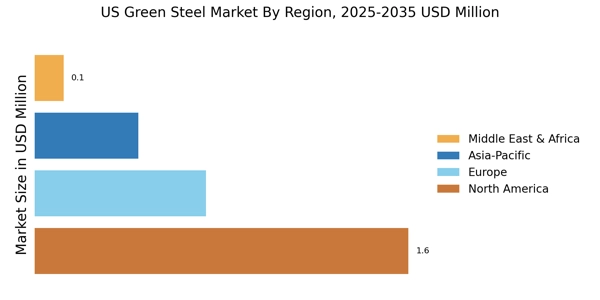
Regional Insights

North America : Green Steel Innovation Hub

The North American green steel market is driven by increasing demand for sustainable manufacturing practices and stringent environmental regulations. The U.S. holds the largest market share at approximately 65%, followed by Canada at around 20%. Key drivers include government incentives for carbon reduction and investments in renewable energy sources, which are catalyzing growth in the sector. The push for decarbonization is further supported by initiatives from the Biden administration aimed at reducing greenhouse gas emissions. The competitive landscape is dominated by major players such as Nucor Corporation, Steel Dynamics, and United States Steel Corporation, which are investing heavily in green technologies. These companies are focusing on electric arc furnace (EAF) technology to produce steel with lower carbon footprints. The presence of these key players, along with ongoing research and development, positions North America as a leader in the green steel market.

Europe : Sustainable Steel Leadership

Europe is emerging as a The US Green Steel Market, driven by ambitious climate goals and regulatory frameworks aimed at reducing carbon emissions. The European Union's Green Deal and Fit for 55 package are pivotal in shaping the market, with the EU aiming for a 55% reduction in emissions by 2030. Germany and Sweden are the largest markets, holding approximately 30% and 25% shares, respectively. The regulatory environment is fostering innovation and investment in green technologies, making Europe a hub for sustainable steel production. Leading countries in this region include Germany, Sweden, and Finland, where companies like SSAB and Thyssenkrupp are pioneering green steel initiatives. The competitive landscape is characterized by collaborations between steel producers and technology firms to develop hydrogen-based steelmaking processes. This collaborative approach is expected to enhance the region's capacity to meet future steel demands sustainably, positioning Europe at the forefront of the green steel transition.

Asia-Pacific : Emerging Green Steel Market

The Asia-Pacific region is witnessing a burgeoning interest in green steel, driven by rapid industrialization and increasing environmental awareness. Countries like Japan and South Korea are leading the charge, with market shares of approximately 25% and 20%, respectively. The region's growth is fueled by government initiatives promoting sustainable practices and investments in clean technologies. Regulatory frameworks are gradually evolving to support the transition towards greener steel production, although challenges remain in terms of infrastructure and technology adoption. The competitive landscape features key players such as POSCO and Nippon Steel, which are exploring innovative methods to reduce carbon emissions in steel production. Collaborations between governments and private sectors are essential for advancing green steel technologies. As the region continues to prioritize sustainability, the demand for green steel is expected to rise significantly, aligning with global trends towards decarbonization.

Middle East and Africa : Resource-Rich Steel Potential

The Middle East and Africa region is at the nascent stage of developing a green steel market, driven by abundant natural resources and a growing focus on sustainability. Countries like South Africa and the UAE are beginning to explore green steel initiatives, with market shares of approximately 15% and 10%, respectively. The region's growth is supported by government policies aimed at diversifying economies and reducing carbon footprints. However, the market faces challenges such as limited technological infrastructure and investment in green technologies. Key players in this region include ArcelorMittal and Emirates Steel, which are exploring sustainable practices in steel production. The competitive landscape is evolving, with increasing interest from international investors looking to tap into the region's potential. As awareness of environmental issues grows, the demand for green steel is expected to rise, paving the way for future developments in the sector.

US Green Steel Market Regional Image

Key Players and Competitive Insights

The green steel market is currently characterized by a dynamic competitive landscape, driven by increasing demand for sustainable manufacturing practices and stringent regulatory frameworks aimed at reducing carbon emissions. Key players such as Nucor Corporation (US), Steel Dynamics, Inc. (US), and Cleveland-Cliffs Inc. (US) are actively positioning themselves through innovation and strategic partnerships. Nucor Corporation (US) has focused on expanding its electric arc furnace (EAF) capabilities, which are pivotal for producing low-emission steel. Meanwhile, Steel Dynamics, Inc. (US) emphasizes regional expansion and has invested in new facilities to enhance its production capacity, thereby solidifying its market presence. Collectively, these strategies indicate a shift towards more sustainable production methods, shaping a competitive environment that prioritizes environmental responsibility alongside profitability.

In terms of business tactics, companies are increasingly localizing manufacturing to reduce transportation emissions and optimize supply chains. The market appears moderately fragmented, with several players vying for market share while also collaborating on sustainability initiatives. This collective influence of key players fosters a competitive structure that encourages innovation and efficiency, as companies seek to differentiate themselves through advanced technologies and sustainable practices.

In November 2025, Nucor Corporation (US) announced a partnership with a leading renewable energy provider to power its EAFs with 100% renewable energy. This strategic move not only enhances Nucor's sustainability credentials but also positions the company to meet the growing demand for green steel from environmentally conscious consumers and industries. The partnership is expected to significantly reduce operational carbon emissions, aligning with global sustainability goals.

In October 2025, Steel Dynamics, Inc. (US) unveiled plans to invest $500 million in a new facility dedicated to producing green steel using hydrogen-based technologies. This investment underscores the company's commitment to innovation and positions it as a leader in the transition towards cleaner steel production. The facility is anticipated to create numerous jobs and stimulate local economies, while also contributing to the reduction of greenhouse gas emissions in the steel manufacturing process.

In September 2025, Cleveland-Cliffs Inc. (US) launched a new product line of low-carbon steel, which is designed to meet the stringent requirements of the automotive and construction sectors. This initiative reflects the company's strategic focus on product differentiation and sustainability, catering to clients who prioritize environmentally friendly materials. The introduction of this product line is likely to enhance Cleveland-Cliffs' competitive edge in a market increasingly driven by sustainability considerations.

As of December 2025, current trends in the green steel market indicate a strong emphasis on digitalization, sustainability, and the integration of artificial intelligence (AI) in production processes. Strategic alliances among companies are shaping the landscape, fostering collaboration on research and development initiatives aimed at enhancing efficiency and reducing emissions. Looking ahead, competitive differentiation is expected to evolve, with a notable shift from price-based competition to a focus on innovation, technology, and supply chain reliability. This transition suggests that companies that prioritize sustainable practices and technological advancements will likely emerge as leaders in the green steel market.

Key Companies in the US Green Steel Market market include

Industry Developments

The US Green Steel Market has experienced significant developments recently, particularly with an emphasis on sustainability and carbon reduction. Companies like Nucor and Steel Dynamics have ramped up investments in green technologies, focusing on electric arc furnace steel production, which drastically lowers carbon emissions compared to traditional blast furnace methods. In September 2023, U.S. Steel announced plans to enhance its electric arc furnace capabilities, aligning with its commitment to reduce carbon emissions by 20% by 2030. Alcoa, recognized for its innovations in low-carbon aluminum production, is also exploring synergies between aluminum and steel manufacturing for enhanced sustainability.

Regarding mergers and acquisitions, in August 2023, ClevelandCliffs completed its acquisition of a significant Ohio steel facility, which aims to bolster its position in the green steel sector. Meanwhile, Novelis has been expanding its recycling capabilities to support the circular economy model in steel production. Over the past two years, key developments include the groundbreaking of several new green steel plants and initiatives led by the American Iron and Steel Institute to promote advanced steelmaking technologies. The market is becoming increasingly competitive, with a strong focus on environmentally responsible production methods in line with government regulations and industry standards.

Future Outlook

US Green Steel Market Future Outlook

The US green steel market is projected to grow at a remarkable 112.52% CAGR from 2024 to 2035, driven by sustainability initiatives, technological advancements, and regulatory support.

New opportunities lie in:

  • Investment in carbon capture technologies for steel production
  • Development of green steel supply chain partnerships
  • Expansion into renewable energy-powered steel manufacturing facilities

By 2035, the green steel market is poised for substantial growth, establishing a robust and sustainable industry presence.

Market Segmentation

US Green Steel Market End Use Outlook

  • Building Materials
  • Automotive Components
  • Renewable Energy Infrastructure
  • Heavy Equipment
  • Packaging

US Green Steel Market Application Outlook

  • Construction
  • Automotive
  • Energy
  • Consumer Goods
  • Machinery

US Green Steel Market Customer Type Outlook

  • Manufacturers
  • Distributors
  • Retailers
  • Construction Firms
  • Energy Companies

US Green Steel Market Material Type Outlook

  • Steel
  • Alloys
  • Reinforced Steel
  • Flat Steel Products
  • Long Steel Products

US Green Steel Market Production Method Outlook

  • Electric Arc Furnace
  • Hydrogen Reduction
  • Direct Reduced Iron
  • Recycling
  • Biomass Reduction

Report Scope

MARKET SIZE 2024104.56(USD Million)
MARKET SIZE 2025222.21(USD Million)
MARKET SIZE 2035417607.68(USD Million)
COMPOUND ANNUAL GROWTH RATE (CAGR)112.52% (2024 - 2035)
REPORT COVERAGERevenue Forecast, Competitive Landscape, Growth Factors, and Trends
BASE YEAR2024
Market Forecast Period2025 - 2035
Historical Data2019 - 2024
Market Forecast UnitsUSD Million
Key Companies ProfiledNucor Corporation (US), Steel Dynamics, Inc. (US), Cleveland-Cliffs Inc. (US), United States Steel Corporation (US), Commercial Metals Company (US), TimkenSteel Corporation (US), Gerdau Ameristeel Corporation (US), BlueScope Steel Limited (US)
Segments CoveredApplication, End Use, Production Method, Material Type, Customer Type
Key Market OpportunitiesIncreasing demand for sustainable construction materials drives growth in the US green steel market.
Key Market DynamicsRising regulatory pressures and technological advancements drive growth in the US green steel market.
Countries CoveredUS

Market Highlights

Author
Chitranshi Jaiswal
Research Analyst Level I

In her 3 years of experience in the market research field, she has handled critical cross-domain projects. She has an in-depth knowledge of market estimation & analysis, problem-solving, primary as well as secondary research, and team management.She holds an engineering degree and is an MBA professional from a well-known university, capable of evaluating the market and competitive conditions. An exceptional strategist with excellent communication skills and a passion for delivering cutting-edge & practical insights for the market. Proficient in multi-tasking, and can successfully deal with competing demands, while maintaining complete confidentiality. Generated business through active client and project development, networking, and high-quality responses. Her knowledge and skills have helped in making solid business decisions, securing funding from investors, and avoiding business failures.

Leave a Comment

FAQs

What is the projected market valuation of the US Green Steel Market by 2035?

The projected market valuation for the US Green Steel Market is 214.14 USD Million by 2035.

What was the overall market valuation of the US Green Steel Market in 2024?

The overall market valuation of the US Green Steel Market was 2.386 USD Million in 2024.

What is the expected CAGR for the US Green Steel Market during the forecast period 2025 - 2035?

The expected CAGR for the US Green Steel Market during the forecast period 2025 - 2035 is 50.5%.

Which companies are considered key players in the US Green Steel Market?

Key players in the US Green Steel Market include Nucor Corporation, Steel Dynamics, Inc., and United States Steel Corporation.

What production methods are utilized in the US Green Steel Market?

Production methods in the US Green Steel Market include Hydrogen-Based Reduction, Electrolysis, Biomass Direct Reduction, and Recycling.

What are the primary end-use industries for green steel in the US?

The primary end-use industries for green steel in the US are Construction, Automotive, Manufacturing, and Energy.

What forms of steel are produced in the US Green Steel Market?

The forms of steel produced in the US Green Steel Market include Flat Steel, Long Steel, and Steel Products.

What quality grades of steel are available in the US Green Steel Market?

Quality grades of steel available in the US Green Steel Market include High Strength Steel, Low Alloy Steel, and Stainless Steel.

How does the market valuation of green steel in 2024 compare to that projected for 2035?

The market valuation of green steel in 2024 was 2.386 USD Million, which is expected to increase to 214.14 USD Million by 2035.

What trends are influencing the growth of the US Green Steel Market?

Trends influencing the growth of the US Green Steel Market include increasing demand for sustainable production methods and advancements in steel recycling technologies.

What is the market size for Electrolysis in 2024?

Electrolysis is valued at 80.0 million USD in the US Green Steel Market for the year 2024.

What growth opportunities exist within the US Green Steel Market?

Opportunities in the US Green Steel Market are driven by increasing demand for sustainable steel production methods.

What challenges does the US Green Steel Market face?

Challenges within the US Green Steel Market include the high production costs associated with green steel technologies.

How does the US Green Steel Market growth compare regionally?

The US Green Steel Market is experiencing rapid growth, likely reflecting trends in sustainable practices and regulations in the region.

Which production method in the US Green Steel Market is expected to have the highest valuation in 2035?

Hydrogen-Based Reduction is expected to have the highest valuation of 1200.0 million USD in 2035.

Who are the major players in the US Green Steel Market?

Key players in the US Green Steel Market include Gerdau, ArcelorMittal, Steel Dynamics, and Nucor among others.

What market size is attributed to the Recycling method of production in 2024?

The Recycling method of production in the US Green Steel Market is valued at 109.2 million USD in 2024.

What forecasted growth rate is expected for the Biomass Direct Reduction method through 2035?

The Biomass Direct Reduction method is anticipated to grow to a market value of 800.0 million USD by 2035.

What challenges does the US Green Steel Market currently face?

The US Green Steel Market faces challenges related to production technology costs and market volatility.

How does the current global scenario impact the US Green Steel Market?

The current global scenario impacts the US Green Steel Market through heightened demand for sustainable production practices.

Download Free Sample

Kindly complete the form below to receive a free sample of this Report

Compare Licence

×
Features License Type
Single User Multiuser License Enterprise User
Price $4,950 $5,950 $7,250
Maximum User Access Limit 1 User Upto 10 Users Unrestricted Access Throughout the Organization
Free Customization
Direct Access to Analyst
Deliverable Format
Platform Access
Discount on Next Purchase 10% 15% 15%
Printable Versions