Expansion of Smart City Initiatives
The high brightness LED market will benefit significantly from the expansion of smart city initiatives across the United States. Urban areas are increasingly adopting smart technologies to enhance infrastructure, improve public safety, and promote sustainability. High brightness LEDs play a crucial role in this transformation, providing efficient and adaptable lighting solutions for streetlights, public spaces, and transportation systems. The integration of smart lighting systems allows for real-time monitoring and control, optimizing energy usage and reducing operational costs. As cities invest in smart infrastructure, the demand for high brightness LEDs is expected to rise, with projections indicating a potential market growth of over 15% by 2028. This trend not only enhances urban living but also positions the high brightness-led market as a key player in the future of urban development.
Growing Demand for Energy Efficiency
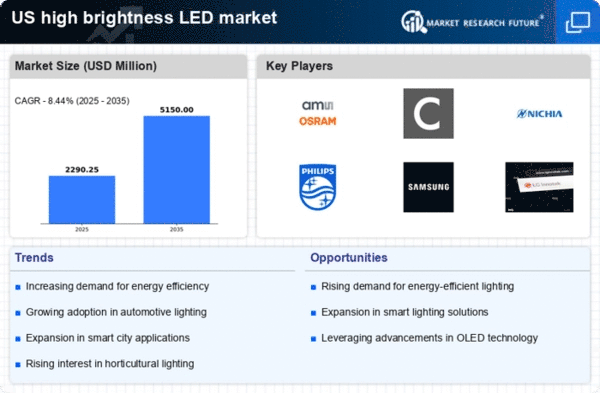
The high brightness-led market is experiencing a notable surge in demand driven by the increasing emphasis on energy efficiency. As energy costs continue to rise, consumers and businesses alike are seeking solutions that reduce energy consumption while maintaining high-quality lighting. High brightness LEDs offer a compelling alternative, consuming up to 80% less energy compared to traditional lighting solutions. This shift is particularly evident in commercial sectors, where energy-efficient lighting can lead to substantial cost savings. According to recent estimates, the energy-efficient lighting market is projected to grow at a CAGR of approximately 10% through 2027, indicating a robust opportunity for the high brightness-led market. As regulations become stricter regarding energy consumption, the adoption of high brightness LEDs is likely to accelerate, further propelling the industry's growth.
Increased Adoption in Automotive Lighting
The automotive sector is increasingly adopting high brightness LEDs, significantly impacting the high brightness-led market. With the growing trend towards electric vehicles (EVs) and advanced driver-assistance systems (ADAS), high brightness LEDs are becoming essential for vehicle lighting applications. These LEDs provide superior brightness, energy efficiency, and longer lifespans compared to traditional lighting technologies. The automotive lighting market is projected to reach approximately $30 billion by 2026, with high brightness LEDs accounting for a substantial share. This shift is driven by consumer preferences for enhanced visibility and safety features in vehicles. As automotive manufacturers continue to innovate and integrate high brightness LEDs into their designs, the high brightness LED market will likely experience robust growth, reflecting the evolving landscape of automotive technology.
Government Incentives for Energy-Efficient Lighting
Government incentives aimed at promoting energy-efficient lighting solutions are significantly influencing the high brightness-led market. Various federal and state programs offer rebates, tax credits, and grants to encourage the adoption of energy-efficient technologies. These initiatives are designed to reduce energy consumption and greenhouse gas emissions, aligning with broader sustainability goals. As a result, businesses and consumers are increasingly motivated to invest in high brightness LEDs, which not only provide energy savings but also qualify for these incentives. Recent data suggests that the market for energy-efficient lighting is expected to grow by approximately 20% over the next five years, driven in part by these government initiatives. This supportive regulatory environment is likely to enhance the attractiveness of the high brightness-led market, fostering further innovation and adoption.
Rising Interest in Architectural and Decorative Lighting
The high brightness LED market is seeing a surge in interest for architectural and decorative lighting applications. As aesthetics become increasingly important in both residential and commercial spaces, designers and architects are turning to high brightness LEDs for their versatility and design flexibility. These LEDs can create dynamic lighting effects, enhance architectural features, and contribute to energy savings. The architectural lighting market is expected to grow at a CAGR of around 12% through 2025, indicating a strong demand for innovative lighting solutions. This trend is particularly pronounced in urban environments, where high brightness LEDs are utilized in public art installations, building facades, and landscape lighting. As the focus on design and ambiance continues to evolve, the high brightness-led market is well-positioned to capitalize on these emerging opportunities.
























Leave a Comment