×
Request Free Sample ×

Kindly complete the form below to receive a free sample of this Report

* Please use a valid business email

Leading companies partner with us for data-driven Insights

clients tt-cursor
Hero Background

US Hydrofluoric Acid Market

ID: MRFR/CnM/12312-HCR
100 Pages
Garvit Vyas
October 2025

US Hydrofluoric Acid Market

Share:
Download PDF ×

We do not share your information with anyone. However, we may send you emails based on your report interest from time to time. You may contact us at any time to opt-out.

US Hydrofluoric Acid Market Infographic
Purchase Options

US Hydrofluoric Acid Market Summary

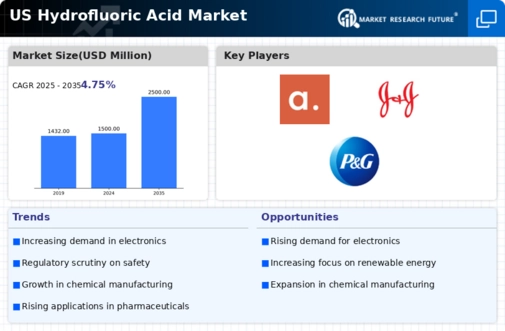
As per analysis, the US hydrofluoric acid market is projected to grow from USD 581.75 Million in 2025 to USD 983.4 Million by 2035, exhibiting a compound annual growth rate (CAGR) of 5.39% during the forecast period (2025 - 2035).

Key Market Trends & Highlights

The US hydrofluoric acid market is poised for growth driven by technological advancements and increasing demand across various sectors.

  • The metal processing segment remains the largest consumer of hydrofluoric acid, reflecting its critical role in metal etching and cleaning processes.
  • Electronics manufacturing is the fastest-growing segment, propelled by the rising demand for semiconductors and advanced electronic components.
  • Sustainability initiatives and regulatory compliance are shaping production processes, pushing manufacturers towards greener alternatives.
  • Growing demand in electronics manufacturing and the chemical industry serves as a major driver for the hydrofluoric acid market, indicating robust future prospects.

Market Size & Forecast

2024 Market Size 552.0 (USD Million)
2035 Market Size 983.4 (USD Million)
CAGR (2025 - 2035) 5.39%

Major Players

Honeywell International Inc (US), DuPont de Nemours Inc (US), Solvay SA (US), Mitsubishi Chemical Corporation (US), BASF SE (US), KMG Chemicals Inc (US), Fluor Corporation (US), Arkema SA (US), Linde PLC (US)

US Hydrofluoric Acid Market Trends

The US hydrofluoric acid market is characterized by its essential role in various industrial applications, particularly in the production of fluorinated compounds. This chemical is widely utilized in sectors such as petrochemicals, aluminum production, and electronics manufacturing. The demand for hydrofluoric acid is closely linked to the performance of these industries, which have shown resilience and adaptability in recent years. As environmental regulations become more stringent, manufacturers are increasingly focusing on sustainable practices, which may influence the production and consumption patterns of hydrofluoric acid in the United States. Furthermore, advancements in technology and process optimization are likely to enhance the efficiency of hydrofluoric acid usage, potentially leading to reduced waste and improved safety measures. In addition to industrial applications, the US hydrofluoric acid market is also impacted by fluctuations in raw material availability and pricing. The ongoing efforts to develop alternative fluorinated products may pose challenges to traditional hydrofluoric acid usage. However, the unique properties of hydrofluoric acid, such as its ability to etch glass and metals, ensure its continued relevance in specialized applications. As the market evolves, stakeholders must remain vigilant to emerging trends and regulatory changes that could shape the future landscape of hydrofluoric acid in the United States. Overall, the US hydrofluoric acid market appears poised for gradual growth, driven by innovation and a commitment to sustainability.

Sustainability Initiatives

The US hydrofluoric acid market is witnessing a shift towards sustainability, as companies increasingly adopt eco-friendly practices. This trend is driven by regulatory pressures and consumer demand for greener products. Manufacturers are exploring methods to minimize waste and enhance safety in hydrofluoric acid production and usage, which may lead to the development of more sustainable alternatives.

Technological Advancements

Technological innovations are playing a crucial role in the US hydrofluoric acid market. Enhanced production techniques and process optimizations are likely to improve efficiency and reduce environmental impact. These advancements may also facilitate the safe handling and application of hydrofluoric acid, addressing safety concerns associated with its use.

Market Diversification

The US hydrofluoric acid market is experiencing diversification as industries seek to expand their applications. Beyond traditional uses, hydrofluoric acid is finding new roles in emerging sectors such as renewable energy and advanced materials. This diversification could potentially stabilize demand and open new avenues for growth in the market.

Market Segment Insights

By Application: Metal Processing (Largest) vs. Electronics Manufacturing (Fastest-Growing)

In the US hydrofluoric acid market, the application segment is diversified across various industries, with metal processing holding the largest market share due to its extensive use in aluminum and steel production processes. Glass etching and chemical synthesis also play significant roles, but both are overshadowed by the dominance of metal processing. Electronics manufacturing, while currently smaller, is rapidly emerging as a key application, driven by innovations in semiconductor technology and increasing demand for electronic components that require hydrofluoric acid for cleaning and etching.

Metal Processing (Dominant) vs. Electronics Manufacturing (Emerging)

Metal processing remains the dominant sector in the US hydrofluoric acid market, primarily driven by its essential role in the treatment of metals, enhancing durability and surface quality. This segment benefits from established industrial practices, advanced technologies, and high demand for metallurgical applications. In contrast, electronics manufacturing is an emerging segment, characterized by rapid technological advancements and increased integration of hydrofluoric acid in processes such as circuit board production. The growth of this segment is further fueled by the expansion of the electronics market and a shift towards more advanced and efficient manufacturing techniques, positioning it for robust growth in the coming years.

By End Use Industry: Pharmaceuticals (Largest) vs. Semiconductors (Fastest-Growing)

The US hydrofluoric acid market segments primarily include Pharmaceuticals, Agriculture, Semiconductors, Automotive, and Cleaning Agents. Among these, the Pharmaceuticals sector holds the largest market share due to its critical role in drug manufacturing and the production of fluorine-containing compounds. Meanwhile, the Semiconductors segment, vital for electronic components and devices, is experiencing rapid growth as technology advances and demand for high-performance materials increases. Growth trends in the US hydrofluoric acid market are being driven by the increasing advancements in healthcare and the electronics industry. The Pharmaceuticals segment is driven by the continuous development of innovative drugs and treatments, while the Semiconductors segment benefits from the escalating demand for electronic devices and the trend towards miniaturization. These factors collectively contribute to a robust growth outlook for hydrofluoric acid in these key industries.

Pharmaceuticals: Dominant vs. Semiconductors: Emerging

In the US hydrofluoric acid market, the Pharmaceuticals segment remains the dominant force, leveraging its strong dependence on hydrofluoric acid for the synthesis of active pharmaceutical ingredients and specialty chemicals. This segment benefits from ongoing investments in pharmaceutical research and development, which continues to fuel its market presence. In contrast, the Semiconductors segment is emerging rapidly, driven by technological advancements and an increasing demand for integrated circuits and chips in consumer electronics. As the push for digitalization continues, the need for high-purity hydrofluoric acid in this sector is surging, reflecting its burgeoning reliance on this chemical for etching and cleaning semiconductor wafers.

By Form: Aqueous Hydrofluoric Acid (Largest) vs. Anhydrous Hydrofluoric Acid (Fastest-Growing)

In the US hydrofluoric acid market, the distribution of share among various forms reveals that aqueous hydrofluoric acid holds the largest market share. Its broad application in industries such as chemical manufacturing and metal etching significantly contributes to its dominance. Conversely, anhydrous hydrofluoric acid is gaining traction due to its concentrated form, making it ideal for specific industrial processes that require high purity, thus showing robust growth against its counterparts.

Aqueous Hydrofluoric Acid (Dominant) vs. Anhydrous Hydrofluoric Acid (Emerging)

Aqueous hydrofluoric acid serves as the dominant form in the market, particularly preferred for its versatility and effectiveness in various applications ranging from semiconductor manufacturing to glass etching. It is accessible and safer for handling compared to its anhydrous counterpart. On the other hand, anhydrous hydrofluoric acid, though currently less prevalent, is emerging rapidly due to its higher purity levels that cater to specialized processes, showcasing a strong growth trend in sectors demanding stringent purity standards. This evolving landscape reflects the adaptability of the hydrofluoric acid segment to meet diverse industrial needs.

By Distribution Channel: Direct Sales (Largest) vs. Distributors (Fastest-Growing)

In the US hydrofluoric acid market, Direct Sales hold the largest share, benefiting from established relationships between manufacturers and end-users. This channel offers convenience and reliability, particularly for industries requiring large volumes of hydrofluoric acid such as petrochemicals and metal processing. Distributors, on the other hand, are gaining traction due to their ability to provide localized services and quick delivery times, addressing the immediate needs of smaller-scale users. Online Sales, while a growing channel, remain less significant compared to the other two, yet they cater to a segment increasingly reliant on e-commerce solutions for chemical procurement. The growth trends for distribution channels in the hydrofluoric acid market are driven by increasing demand across various industries, as well as advancements in logistics and e-commerce technology. Direct Sales continue to thrive due to strong customer loyalty and beneficial agreements with large industry players. Meanwhile, Distributors are emerging fastest in the market, capitalizing on the need for flexibility and rapid access to product supplies, an essential requirement in today’s fast-paced business environment. Meanwhile, Online Sales are expected to rise, particularly among small to medium enterprises looking for competitive pricing and convenience in purchasing chemicals.

Direct Sales (Dominant) vs. Distributors (Emerging)

In the US hydrofluoric acid market, Direct Sales are considered the dominant distribution channel. This channel is particularly favored by large industries that require consistent, high-volume supply due to its direct relationship with manufacturers, ensuring product quality and reliability. On the contrary, Distributors are recognized as the emerging channel, geared towards smaller businesses that prioritize fast access to products and localized service. Distributors also provide value-added services such as technical support and just-in-time delivery, making them attractive in a market where speed and efficiency are crucial. As the demand for hydrofluoric acid continues to grow, both channels are poised to adapt and evolve, each serving specific segments of the market.

By Purity Level: Industrial Grade (Largest) vs. Reagent Grade (Fastest-Growing)

In the US hydrofluoric acid market, the purity level segment is predominantly occupied by Industrial Grade hydrofluoric acid, which commands the largest market share due to its widespread applications across various sectors, including metallurgy and chemical processing. In contrast, the Reagent Grade hydrofluoric acid, while smaller in market share, is witnessing rapid growth driven by increased demand in laboratory settings and research activities. The Electronic Grade is also present but caters more specifically to the semiconductor industry.

Purity Level: Industrial Grade (Dominant) vs. Reagent Grade (Emerging)

Industrial Grade hydrofluoric acid is marked by its broad applicability, predominantly serving industries where cost-effectiveness is crucial. Due to factors like supply chains in the automotive and manufacturing sectors, it remains the dominant force in the market. On the other hand, Reagent Grade hydrofluoric acid is emerging rapidly, particularly in educational institutions and laboratories, where high purity and reliability are essential for chemical reactions and analyses. While it offers numerous applications in research, the overall growth is propelled by innovation and advancements in scientific research methodologies.

Get more detailed insights about US Hydrofluoric Acid Market

Key Players and Competitive Insights

The hydrofluoric acid market exhibits a competitive landscape characterized by a blend of established players and emerging innovators. Key growth drivers include the increasing demand for fluorinated compounds in various applications, such as electronics, pharmaceuticals, and agrochemicals. Major companies like Honeywell International Inc (US), DuPont de Nemours Inc (US), and BASF SE (US) are strategically positioned to leverage their extensive research and development capabilities, focusing on innovation and sustainability. Their operational focus on enhancing production efficiency and reducing environmental impact collectively shapes a competitive environment that emphasizes technological advancement and regulatory compliance.

In terms of business tactics, companies are increasingly localizing manufacturing to mitigate supply chain disruptions and optimize logistics. The market structure appears moderately fragmented, with a few dominant players exerting considerable influence. This fragmentation allows for niche players to thrive, yet the collective strength of key players like Mitsubishi Chemical Corporation (US) and KMG Chemicals Inc (US) suggests a competitive dynamic that is both collaborative and competitive, particularly in terms of pricing and product offerings.

In November 2025, Honeywell International Inc (US) announced the launch of a new line of eco-friendly hydrofluoric acid products aimed at reducing carbon emissions during production. This strategic move not only aligns with global sustainability trends but also positions Honeywell as a leader in environmentally responsible manufacturing practices. The introduction of these products is likely to enhance their market share while appealing to environmentally conscious consumers and industries.

In October 2025, DuPont de Nemours Inc (US) expanded its production capacity for hydrofluoric acid at its facility in Texas. This expansion is significant as it reflects DuPont's commitment to meeting the growing demand in the semiconductor industry, where hydrofluoric acid is a critical component. By increasing capacity, DuPont is poised to strengthen its competitive edge and ensure a reliable supply chain for its customers, particularly in high-tech applications.

In September 2025, BASF SE (US) entered into a strategic partnership with a leading technology firm to develop advanced applications for hydrofluoric acid in the renewable energy sector. This collaboration is indicative of a broader trend where traditional chemical companies are seeking to diversify their portfolios and explore new markets. The partnership is expected to yield innovative solutions that could redefine the use of hydrofluoric acid in energy applications, thereby enhancing BASF's competitive positioning.

As of December 2025, the hydrofluoric acid market is witnessing trends that emphasize digitalization, sustainability, and the integration of artificial intelligence in production processes. Strategic alliances are increasingly shaping the competitive landscape, allowing companies to pool resources and expertise. The shift from price-based competition to a focus on innovation and technology is evident, as firms prioritize supply chain reliability and product differentiation. Looking ahead, competitive differentiation is likely to evolve further, driven by advancements in technology and a growing emphasis on sustainable practices.


Key Companies in the US Hydrofluoric Acid Market market include

Future Outlook

US Hydrofluoric Acid Market Future Outlook

The US hydrofluoric acid market is projected to grow at a 5.39% CAGR from 2024 to 2035, driven by increasing demand in electronics and chemical manufacturing.

New opportunities lie in:

  • Expansion of specialty hydrofluoric acid applications in semiconductor manufacturing.
  • Development of eco-friendly hydrofluoric acid production methods.
  • Investment in advanced safety and handling technologies for hydrofluoric acid.

By 2035, the hydrofluoric acid market is expected to achieve robust growth and enhanced market positioning.

Market Segmentation

US Hydrofluoric Acid Market Form Outlook

  • Anhydrous Hydrofluoric Acid
  • Aqueous Hydrofluoric Acid
  • Hydrofluoric Acid Solutions

US Hydrofluoric Acid Market Application Outlook

  • Metal Processing
  • Glass Etching
  • Electronics Manufacturing
  • Chemical Synthesis
  • Oil Refining

US Hydrofluoric Acid Market Purity Level Outlook

  • Industrial Grade
  • Reagent Grade
  • Electronic Grade

US Hydrofluoric Acid Market End Use Industry Outlook

  • Pharmaceuticals
  • Agriculture
  • Semiconductors
  • Automotive
  • Cleaning Agents

US Hydrofluoric Acid Market Distribution Channel Outlook

  • Direct Sales
  • Distributors
  • Online Sales

Report Scope

MARKET SIZE 2024552.0(USD Million)
MARKET SIZE 2025581.75(USD Million)
MARKET SIZE 2035983.4(USD Million)
COMPOUND ANNUAL GROWTH RATE (CAGR)5.39% (2024 - 2035)
REPORT COVERAGERevenue Forecast, Competitive Landscape, Growth Factors, and Trends
BASE YEAR2024
Market Forecast Period2025 - 2035
Historical Data2019 - 2024
Market Forecast UnitsUSD Million
Key Companies ProfiledHoneywell International Inc (US), DuPont de Nemours Inc (US), Solvay SA (US), Mitsubishi Chemical Corporation (US), BASF SE (US), KMG Chemicals Inc (US), Fluor Corporation (US), Arkema SA (US), Linde PLC (US)
Segments CoveredApplication, End Use Industry, Form, Distribution Channel, Purity Level
Key Market OpportunitiesGrowing demand for high-purity hydrofluoric acid in semiconductor manufacturing presents a key opportunity.
Key Market DynamicsRegulatory changes and technological advancements drive competitive dynamics in the US hydrofluoric acid market.
Countries CoveredUS

Leave a Comment

Download Free Sample

Kindly complete the form below to receive a free sample of this Report

Compare Licence

×
Features License Type
Single User Multiuser License Enterprise User
Price $4,950 $5,950 $7,250
Maximum User Access Limit 1 User Upto 10 Users Unrestricted Access Throughout the Organization
Free Customization
Direct Access to Analyst
Deliverable Format
Platform Access
Discount on Next Purchase 10% 15% 15%
Printable Versions