×
Request Free Sample ×

Kindly complete the form below to receive a free sample of this Report

* Please use a valid business email

Leading companies partner with us for data-driven Insights

clients tt-cursor
Hero Background

US Integrated Marine Automation System Market

ID: MRFR/AD/17058-HCR
100 Pages
Garvit Vyas
October 2025

US Integrated Marine Automation System Market Research Report: By Solution (Power Management System, Vessel Management System, Process Control and Safety System), By Ship Type (Commercial, Defense), By End User (OEM, Aftermarket) and By Component (Product, Service) - Forecast to 2035

Share:
Download PDF ×

We do not share your information with anyone. However, we may send you emails based on your report interest from time to time. You may contact us at any time to opt-out.

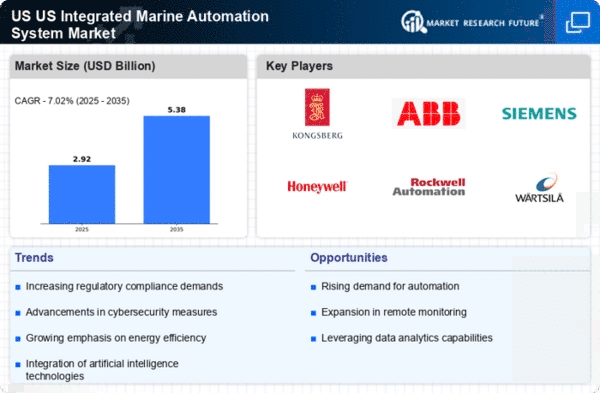
US Integrated Marine Automation System Market Infographic
Purchase Options

US Integrated Marine Automation System Market Summary

As per analysis, the US integrated marine automation system market is projected to grow from USD 2.91 Billion in 2025 to USD 5.74 Billion by 2035, exhibiting a compound annual growth rate (CAGR) of 6.99% during the forecast period (2025 - 2035).

Key Market Trends & Highlights

The US integrated marine automation system market is poised for growth driven by technological advancements and regulatory support.

  • The navigation segment remains the largest contributor to the market, reflecting a strong demand for advanced positioning systems.
  • The monitoring segment is currently the fastest-growing area, indicating a shift towards enhanced operational oversight.
  • Commercial vessels dominate the market, showcasing the critical need for automation in large-scale maritime operations.
  • Key market drivers include increased investment in maritime infrastructure and a rising demand for enhanced safety and security.

Market Size & Forecast

2024 Market Size 2.73 (USD Billion)
2035 Market Size 5.74 (USD Billion)
CAGR (2025 - 2035) 6.99%

Major Players

Honeywell International Inc (US), Siemens AG (DE), Kongsberg Gruppen ASA (NO), General Electric Company (US), Rockwell Automation Inc (US), ABB Ltd (CH), Wärtsilä Corporation (FI), Thales Group (FR), Raytheon Technologies Corporation (US)

US Integrated Marine Automation System Market Trends

The US integrated marine automation system market is currently experiencing a notable evolution, driven by advancements in technology and increasing demand for efficiency in maritime operations. The integration of automation systems is becoming essential for enhancing safety, reducing operational costs, and improving overall vessel performance. As the maritime industry continues to embrace digital transformation, stakeholders are increasingly recognizing the value of integrated solutions that streamline processes and facilitate real-time data analysis. This shift is likely to foster innovation and encourage the adoption of cutting-edge technologies, such as artificial intelligence and machine learning, within the sector. Moreover, regulatory frameworks in the United States are evolving to support the implementation of advanced automation systems. The US Coast Guard and other regulatory bodies are focusing on enhancing safety standards and operational efficiency, which may lead to increased investments in integrated marine automation solutions. As environmental concerns gain prominence, the market is also witnessing a push towards sustainable practices, prompting companies to seek automation systems that not only optimize performance but also minimize environmental impact. This multifaceted approach suggests a promising trajectory for the US integrated marine automation system market, as it adapts to the changing landscape of maritime operations and regulatory requirements.

Technological Advancements

The US integrated marine automation system market is witnessing rapid technological advancements that enhance operational efficiency. Innovations in sensor technology, data analytics, and communication systems are enabling vessels to operate more autonomously. This trend is likely to improve decision-making processes and reduce human error, thereby increasing safety and reliability in maritime operations.

Regulatory Support

Regulatory bodies in the United States are increasingly supporting the adoption of integrated marine automation systems. New regulations aimed at improving safety and environmental standards are encouraging maritime operators to invest in advanced automation technologies. This regulatory environment may drive growth in the market as companies seek compliance while enhancing operational capabilities.

Sustainability Focus

There is a growing emphasis on sustainability within the US integrated marine automation system market. Companies are increasingly seeking automation solutions that not only enhance efficiency but also reduce environmental impact. This trend reflects a broader commitment to sustainable practices in the maritime industry, potentially leading to the development of greener technologies and practices.

Market Segment Insights

By Application: Navigation (Largest) vs. Monitoring (Fastest-Growing)

In the US integrated marine automation system market, the application segment showcases distinct differentiation among its values. Navigation holds the largest market share, primarily due to its essential role in safe vessel operation, GPS advancements, and autonomous ship development. Following navigation, communication and monitoring applications are also significant, with monitoring gaining traction rapidly as technology evolves. Monitoring systems now integrate sophisticated analytics, enhancing operational efficiency and safety management in marine systems. Growth trends in the application segment reflect a shift towards increased automation and advanced technological integration. Drivers for this growth include the rising demand for safety measures, efficient data management systems, and regulatory compliance in vessel operations. Investments in smart technology and IoT applications are set to fuel monitoring solutions, marking them as the fastest-growing segment in the application space. As advancements continue, these trends will likely reshape operational methodologies in the marine sector.

Monitoring (Dominant) vs. Control (Emerging)

The monitoring application is currently dominant within the US integrated marine automation system market, reflecting the industry's transition towards real-time data utilization and enhanced safety protocols. Monitoring systems encompass various functionalities including performance tracking, environmental monitoring, and predictive maintenance capabilities. With maritime safety regulations becoming increasingly stringent, the demand for these systems is on the rise. Conversely, control systems, though emerging, are pivotal for ensuring stability and operational efficiency in maritime environments. Control applications are advancing with the adoption of cutting-edge technologies, including AI and machine learning, which enhance decision-making processes and streamline vessel operations. As more maritime operators prioritize automation and efficiency, both monitoring and control applications will be critical in shaping the future dynamics of marine operations.

By End Use: Commercial Vessels (Largest) vs. Yachts (Fastest-Growing)

The integrated marine automation system market in the US showcases varied applications across different vessels, with commercial vessels holding the largest share. This sector includes container ships, cargo ships, and tankers, which are heavily investing in automation to enhance operational efficiency and safety. Following commercial vessels, fishing vessels and naval vessels also contribute to the market, though to a lesser extent. Yachts represent the emerging segment, increasingly adopting advanced automation systems to improve luxury and operational features.

Commercial Vessels: Dominant vs. Yachts: Emerging

In the US market for integrated marine automation systems, commercial vessels remain dominant, characterized by significant investments in technology to streamline operations, enhance safety, and comply with stringent regulations. Their large scale of operations necessitates comprehensive automation solutions that manage everything from navigation to engine performance. Conversely, yachts are emerging rapidly as a key segment, driven by a growing demand for high-end features and luxury experiences. Yacht owners are increasingly seeking automation to facilitate navigation, enhance onboard comfort, and incorporate entertainment systems, positioning them as a trend-setting purchaser group. This growth in yachts reflects a shift towards luxury and technology in recreational boating.

By System Type: Engine Control System (Largest) vs. Integrated Bridge System (Fastest-Growing)

In the US integrated marine automation system market, the Engine Control System holds the largest share, reflecting its critical role in optimizing vessel performance and compliance with safety regulations. Following closely, the Integrated Bridge System showcases a growing adoption rate due to its seamless integration capabilities and efficiency improvements in navigation and operational management. Cargo Management Systems and Power Management Systems, while pivotal, represent smaller segments in terms of share but are essential for their respective functions.

Integration: Engine Control System (Dominant) vs. Integrated Bridge System (Emerging)

The Engine Control System is the dominant segment in the US integrated marine automation market, renowned for its pivotal role in managing propulsion and power distribution efficiently. It ensures safety and compliance through advanced control features, making it indispensable for vessels. Conversely, the Integrated Bridge System is an emerging segment characterized by rapid technological advancements and integration, streamlining navigation and operational processes. As vessels become more sophisticated, the demand for Integrated Bridge Systems is surging, driven by improvements in monitoring, control, and data sharing across various onboard systems. Together, these segments represent a critical evolution in marine automation, balancing established functionality with innovative growth.

By Technology: Control Technology (Largest) vs. Automation Technology (Fastest-Growing)

In the US integrated marine automation system market, Control Technology holds the largest share, benefiting from its critical role in ensuring seamless operations and safety in marine environments. Conversely, Automation Technology is rapidly gaining traction, fueled by the ongoing shift towards more efficient and intelligent systems. This segment is becoming increasingly essential as maritime operators seek to optimize their operations through advanced automation processes, thereby improving productivity and operational efficiency. The growth trends in the technology segment are significantly influenced by advancements in IoT and AI technologies, which are reshaping how integrated marine systems function. The integration of smart sensors and communication technology with automation frameworks is driving greater adoption in the industry. Additionally, regulatory pressures for safety and efficiency are pushing adoption further, making Automation Technology a promising area for investment and innovation in the marine sector.

Control Technology: (Dominant) vs. Automation Technology (Emerging)

Control Technology plays a dominant role in the US integrated marine automation system market by providing essential functionalities that ensure the safety and efficiency of marine operations. This segment encompasses various control frameworks and software that enable operators to monitor and manage marine assets effectively. It is characterized by its established presence in the market, signifying its importance in operations. On the other hand, Automation Technology is emerging as a game changer in the industry, leveraging advancements in artificial intelligence and machine learning to enhance operational efficiency and reduce human error. This segment is quickly gaining attention for its potential to offer innovative solutions aimed at optimizing maritime processes. These technologies are increasingly intertwining to form a cohesive approach to enhancing performance and reliability.

By Component Type: Hardware (Largest) vs. Software (Fastest-Growing)

The US integrated marine automation system market is predominantly driven by the hardware component, which captures the largest share of the segment, given its critical role in the operational functionality of marine systems. Hardware, including sensors, controllers, and various physical devices, forms the backbone of the automation systems, ensuring reliable performance and durability in maritime environments. Following hardware, software has emerged as a rapidly growing segment, emphasizing the increasing reliance on advanced software solutions for monitoring, control, and data analytics.

Software (Emerging) vs. User Interface (Dominant)

In the analysis of the integrated marine automation systems, the user interface is recognized as a dominant segment, playing a vital role in enhancing user experience and operational efficiency. It encompasses touchscreens, dashboards, and interactive displays that provide essential information at a glance, making it indispensable for crew members. Conversely, the software segment is classified as emerging, reflecting its fast-paced evolution driven by innovations in artificial intelligence and machine learning. As software solutions become more advanced, they integrate seamlessly with hardware and user interfaces to facilitate real-time decision-making and operational optimization.

Get more detailed insights about US Integrated Marine Automation System Market

Key Players and Competitive Insights

The integrated marine automation system market is characterized by a dynamic competitive landscape, driven by technological advancements and increasing demand for operational efficiency in maritime operations. Key players such as Honeywell International Inc (US), Siemens AG (DE), and General Electric Company (US) are at the forefront, each adopting distinct strategies to enhance their market positioning. Honeywell International Inc (US) focuses on innovation through the development of advanced automation solutions that integrate AI and IoT technologies, thereby improving vessel performance and safety. Siemens AG (DE) emphasizes digital transformation, leveraging its expertise in automation and digitalization to offer comprehensive solutions that optimize marine operations. General Electric Company (US) is strategically investing in partnerships to enhance its service offerings, particularly in predictive maintenance and data analytics, which are crucial for modern maritime operations.

The business tactics employed by these companies include localizing manufacturing and optimizing supply chains to enhance responsiveness to market demands. The market structure appears moderately fragmented, with several players competing for market share while also collaborating through strategic alliances. This collective influence of key players fosters a competitive environment that encourages innovation and efficiency.

In November 2025, Kongsberg Gruppen ASA (NO) announced a strategic partnership with a leading maritime technology firm to develop next-generation autonomous vessel systems. This collaboration is poised to enhance Kongsberg's capabilities in automation, positioning the company as a leader in the emerging autonomous shipping sector. The strategic importance of this partnership lies in its potential to accelerate the development of innovative solutions that meet the evolving needs of the maritime industry.

In October 2025, Rockwell Automation Inc (US) unveiled a new suite of integrated marine automation solutions designed to enhance operational efficiency and reduce environmental impact. This launch reflects Rockwell's commitment to sustainability and innovation, aligning with the industry's shift towards greener technologies. The introduction of these solutions is likely to strengthen Rockwell's competitive edge in a market increasingly focused on environmental responsibility.

In September 2025, Wärtsilä Corporation (FI) expanded its digital services portfolio by acquiring a software company specializing in marine data analytics. This acquisition is expected to enhance Wärtsilä's capabilities in providing data-driven insights to optimize vessel performance. The strategic move underscores the growing importance of data analytics in the marine sector, as companies seek to leverage information for improved decision-making and operational efficiency.

As of December 2025, current competitive trends in the integrated marine automation system market are heavily influenced by digitalization, sustainability, and AI integration. Strategic alliances are increasingly shaping the landscape, enabling companies to pool resources and expertise to drive innovation. The competitive differentiation is likely to evolve from traditional price-based competition towards a focus on technological innovation, reliability in supply chains, and sustainable practices. This shift indicates a transformative phase in the market, where companies that prioritize innovation and adaptability will likely emerge as leaders.

Key Companies in the US Integrated Marine Automation System Market market include

Industry Developments

The US Integrated Marine Automation System Market has seen significant developments recently, with key players like Emerson Electric, Raytheon Technologies, and ABB enhancing their technological offerings. In June 2023, Emerson Electric announced the acquisition of a marine automation technology firm to bolster its position in the market, which is expected to improve operational efficiency for clients by integrating advanced automation solutions. Concurrently, Raytheon Technologies continues to innovate by introducing next-generation integrated systems designed to enhance ship performance and safety.

Furthermore, the market valuation for Integrated Marine Automation Systems has been witnessing a steady increase, driven by the growing emphasis on regulatory compliance and energy efficiency improvements in marine operations. For instance, Kongsberg Gruppen and Wärtsilä have reported advancements in their metaverse technology for maritime applications in the last two years, allowing for superior simulation and training. The demand for integrated automation systems aligns with the increasing complexities of maritime operations, necessitating modern solutions that enhance decision-making capabilities.

These developments indicate a robust trajectory for growth in the US market, emphasizing the importance of continuous innovation and strategic partnerships among leading companies in the sector.

Future Outlook

US Integrated Marine Automation System Market Future Outlook

The US integrated marine automation system market is projected to grow at a 6.99% CAGR from 2024 to 2035, driven by technological advancements, regulatory compliance, and increasing demand for operational efficiency.

New opportunities lie in:

  • Development of AI-driven predictive maintenance solutions
  • Integration of IoT for real-time monitoring and analytics
  • Expansion of cybersecurity measures for marine automation systems

By 2035, the market is expected to achieve robust growth, positioning itself as a leader in marine technology.

Market Segmentation

US Integrated Marine Automation System Market End Use Outlook

  • Commercial Vessels
  • Naval Vessels
  • Fishing Vessels
  • Yachts

US Integrated Marine Automation System Market Technology Outlook

  • Automation Technology
  • Sensor Technology
  • Communication Technology
  • Control Technology

US Integrated Marine Automation System Market Application Outlook

  • Navigation
  • Communication
  • Monitoring
  • Control
  • Safety

US Integrated Marine Automation System Market System Type Outlook

  • Integrated Bridge System
  • Engine Control System
  • Cargo Management System
  • Power Management System

US Integrated Marine Automation System Market Component Type Outlook

  • Hardware
  • Software
  • Networking Equipment
  • User Interface

Report Scope

MARKET SIZE 20242.73(USD Billion)
MARKET SIZE 20252.91(USD Billion)
MARKET SIZE 20355.74(USD Billion)
COMPOUND ANNUAL GROWTH RATE (CAGR)6.99% (2024 - 2035)
REPORT COVERAGERevenue Forecast, Competitive Landscape, Growth Factors, and Trends
BASE YEAR2024
Market Forecast Period2025 - 2035
Historical Data2019 - 2024
Market Forecast UnitsUSD Billion
Key Companies ProfiledHoneywell International Inc (US), Siemens AG (DE), Kongsberg Gruppen ASA (NO), General Electric Company (US), Rockwell Automation Inc (US), ABB Ltd (CH), Wärtsilä Corporation (FI), Thales Group (FR), Raytheon Technologies Corporation (US)
Segments CoveredApplication, End Use, System Type, Technology, Component Type
Key Market OpportunitiesAdoption of advanced artificial intelligence in the US integrated marine automation system market enhances operational efficiency.
Key Market DynamicsRising demand for automation in maritime operations drives innovation and competition in the US integrated marine automation system market.
Countries CoveredUS

Leave a Comment

FAQs

What is the projected market size of the US Integrated Marine Automation System Market in 2024?

The US Integrated Marine Automation System Market is expected to be valued at 420.0 million USD in 2024.

What is the expected market valuation for the US Integrated Marine Automation System Market by 2035?

By 2035, the US Integrated Marine Automation System Market is projected to reach 760.0 million USD.

What is the compound annual growth rate (CAGR) for the US Integrated Marine Automation System Market from 2025 to 2035?

The expected CAGR for the US Integrated Marine Automation System Market is 5.539% from 2025 to 2035.

Which key players dominate the US Integrated Marine Automation System Market?

Major players in the market include Emerson Electric, Raytheon Technologies, TechnipFMC, ABB, and Thales Group among others.

What is the market value for the Power Management System segment in 2024?

The Power Management System segment of the market is valued at 150.0 million USD in 2024.

How much is the Vessel Management System segment expected to be valued in 2035?

The Vessel Management System segment is anticipated to be valued at 220.0 million USD by 2035.

What is the expected market value for the Process Control and Safety System segment in 2024?

In 2024, the Process Control and Safety System segment is valued at 150.0 million USD.

What are the significant opportunities driving growth in the US Integrated Marine Automation System Market?

Key growth drivers include advancements in technology, increasing maritime safety regulations, and rising demand for energy efficiency.

What are some challenges faced by the US Integrated Marine Automation System Market?

Challenges include high initial investment costs and the need for skilled personnel to operate advanced systems.

How do emerging trends affect the US Integrated Marine Automation System Market?

Emerging trends such as digitalization and the use of artificial intelligence are positively impacting the market's growth trajectory.

Download Free Sample

Kindly complete the form below to receive a free sample of this Report

Compare Licence

×
Features License Type
Single User Multiuser License Enterprise User
Price $4,950 $5,950 $7,250
Maximum User Access Limit 1 User Upto 10 Users Unrestricted Access Throughout the Organization
Free Customization
Direct Access to Analyst
Deliverable Format
Platform Access
Discount on Next Purchase 10% 15% 15%
Printable Versions