×
Request Free Sample ×

Kindly complete the form below to receive a free sample of this Report

* Please use a valid business email

Leading companies partner with us for data-driven Insights

clients tt-cursor
Hero Background

US Jerky Market

ID: MRFR/FnB/19663-HCR
200 Pages
Snehal Singh
October 2025

US Jerky Market Research Report: By Source (Beef, Pork, Poultry) and By Distribution channel (Store-Based, Non-Store-Based) - Forecast to 2035

Share:
Download PDF ×

We do not share your information with anyone. However, we may send you emails based on your report interest from time to time. You may contact us at any time to opt-out.

US Jerky Market Infographic
Purchase Options

US Jerky Market Summary

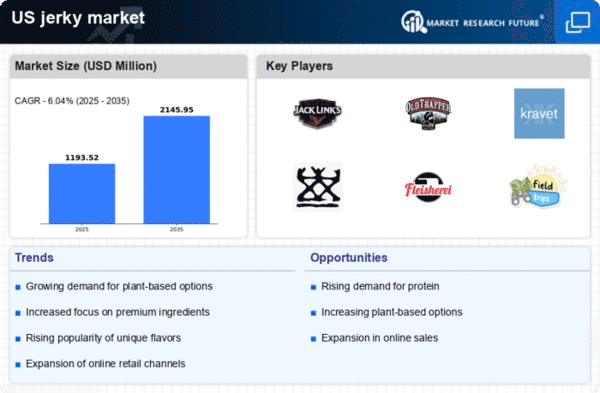
As per MRFR analysis, the US jerky market Size was estimated at 1125.54 USD Million in 2024. The US jerky market is projected to grow from 1193.52 USD Million in 2025 to 2145.95 USD Million by 2035, exhibiting a compound annual growth rate (CAGR) of 6.04% during the forecast period 2025 - 2035.

Key Market Trends & Highlights

The US jerky market is experiencing a dynamic shift towards health-conscious and innovative offerings.

  • The health and wellness focus continues to drive consumer preferences for high-protein snacks, particularly in the largest segment of traditional beef jerky.
  • Flavor innovation is becoming increasingly prominent, with consumers seeking unique and exotic flavors that enhance their snacking experience.
  • Sustainability and ethical sourcing practices are gaining traction, appealing to environmentally conscious consumers in the fastest-growing segment of plant-based jerky.
  • Rising demand for protein snacks and the expansion of e-commerce channels are key drivers propelling the market forward.

Market Size & Forecast

2024 Market Size 1125.54 (USD Million)
2035 Market Size 2145.95 (USD Million)
CAGR (2025 - 2035) 6.04%

Major Players

Jack Link's (US), Old Trapper (US), Krave (US), Epic Provisions (US), Biltong (ZA), Field Trip (US), The Jerky Co. (US), Wild Bill's (US)

US Jerky Market Trends

The jerky market in the United States is currently experiencing a notable evolution, driven by changing consumer preferences and an increasing demand for convenient, protein-rich snacks. As health-conscious individuals seek alternatives to traditional snack foods, jerky products are gaining traction due to their high protein content and perceived nutritional benefits. This shift appears to be influenced by a broader trend towards clean eating and the desire for minimally processed foods. Furthermore, the rise of e-commerce platforms has facilitated greater accessibility to a diverse range of jerky options, allowing consumers to explore various flavors and types, including plant-based alternatives. In addition, the jerky market is witnessing innovation in product offerings, with manufacturers experimenting with unique flavor profiles and ingredients. This trend suggests a growing interest in gourmet and artisanal jerky, appealing to consumers who are willing to pay a premium for high-quality snacks. The emphasis on sustainability and ethical sourcing is also becoming more pronounced, as brands strive to align with the values of environmentally conscious consumers. Overall, the current landscape of the jerky market reflects a dynamic interplay of health, convenience, and innovation, positioning it for continued growth in the coming years.

Health and Wellness Focus

The jerky market is increasingly aligned with health and wellness trends. Consumers are gravitating towards snacks that offer nutritional benefits, particularly high protein content. This shift indicates a preference for products that support active lifestyles and dietary goals.

Flavor Innovation

Manufacturers are actively exploring new flavor profiles and ingredients to attract diverse consumer tastes. This trend highlights a move towards gourmet and artisanal jerky, appealing to those seeking unique and high-quality snack options.

Sustainability and Ethical Sourcing

There is a growing emphasis on sustainability within the jerky market. Brands are prioritizing ethical sourcing and environmentally friendly practices, reflecting the values of consumers who are increasingly concerned about the impact of their food choices.

US Jerky Market Drivers

Expansion of E-commerce Channels

The jerky market is witnessing a significant transformation due to the expansion of e-commerce channels. With the increasing reliance on online shopping, jerky brands are leveraging digital platforms to reach a broader audience. Data suggests that online sales of snacks, including jerky, have surged, accounting for nearly 30% of total snack sales in recent years. This shift allows consumers to access a wider variety of products, including niche and artisanal jerky brands that may not be available in traditional retail outlets. Furthermore, the convenience of online shopping, coupled with targeted marketing strategies, enhances brand visibility and consumer engagement. As e-commerce continues to grow, it is likely to play a pivotal role in shaping the future of the jerky market, providing opportunities for both established and emerging brands.

Rising Demand for Protein Snacks

The jerky market is experiencing a notable surge in demand for high-protein snacks, driven by changing consumer preferences towards healthier eating habits. As individuals increasingly seek convenient and nutritious options, jerky products, which are rich in protein and low in carbohydrates, have gained popularity. Recent data indicates that the protein snack segment is projected to grow at a CAGR of approximately 8% through 2026. This trend is particularly pronounced among fitness enthusiasts and health-conscious consumers, who view jerky as a suitable on-the-go snack. Consequently, manufacturers are expanding their product lines to include various flavors and types of jerky, catering to diverse dietary needs. This growing inclination towards protein-rich snacks is likely to bolster the jerky market, as brands innovate to meet consumer demands.

Increased Interest in Exotic Flavors

The jerky market is experiencing a notable trend towards the incorporation of exotic flavors, reflecting consumers' evolving taste preferences. As palates become more adventurous, brands are experimenting with unique flavor profiles, such as spicy sriracha, teriyaki, and even sweet variations like maple bacon. This diversification not only appeals to a broader audience but also encourages trial among consumers who may not have previously considered jerky as a snack option. Market analysis indicates that products featuring innovative flavors are likely to capture a larger share of the market, as they stand out on retail shelves. The emphasis on flavor innovation is expected to drive growth within the jerky market, as brands seek to engage consumers through exciting and novel taste experiences.

Advent of Innovative Packaging Solutions

The jerky market is increasingly influenced by the advent of innovative packaging solutions that enhance product appeal and convenience. Modern packaging technologies, such as resealable pouches and vacuum-sealed bags, not only improve shelf life but also cater to the on-the-go lifestyle of consumers. Research indicates that packaging plays a crucial role in consumer purchasing decisions, with approximately 70% of shoppers influenced by packaging design. As brands strive to differentiate themselves in a competitive market, they are investing in eye-catching and functional packaging that communicates product benefits effectively. This focus on packaging innovation is likely to attract new customers and retain existing ones, thereby contributing to the growth of the jerky market.

Growing Popularity of Plant-Based Alternatives

The jerky market is witnessing a growing popularity of plant-based alternatives, reflecting a broader trend towards vegetarian and vegan diets. As consumers become more health-conscious and environmentally aware, the demand for meat alternatives has surged. Recent statistics indicate that the plant-based snack segment is projected to grow at a CAGR of around 10% over the next few years. This shift is prompting traditional jerky brands to explore plant-based formulations, utilizing ingredients such as soy, mushrooms, and pea protein. By diversifying their product offerings, companies can cater to a wider demographic, including those who prefer meatless options. The rise of plant-based jerky is likely to reshape the jerky market, as it aligns with consumer values and dietary preferences.


Market Segment Insights

US Jerky Market Segment Insights:

US Jerky Market Segment Insights:

Jerky Market Source Insights

Jerky Market Source Insights

The US Jerky Market, particularly focusing on the Source segment, showcases a diverse variety of protein types that contribute significantly to its overall dynamics. The adherence to unique protein sources such as Beef, Pork, and Poultry is instrumental in defining market trends and preferences among consumers. The dominance of beef jerky emerges from consumer inclination towards its rich flavor and higher protein content, making it a preferred choice for many health-conscious individuals seeking convenient snack options.

The versatility of pork as a snack option also plays a pivotal role, drawing in customers with diverse taste preferences, while poultry provides substantial benefits in terms of lower fat content, capturing the attention of a health-oriented audience.Additionally, the growing trend of health and wellness, particularly among consumers in the US, has driven an increase in demand for jerky made from these varied sources. Factors including busy lifestyles and the on-the-go consumption culture further fuel the market's growth, as jerky products offer a perfect blend of convenience and nutrition.

The expansion of gourmet jerky variants made from premium quality beef, pork, and poultry has created opportunities for brands to differentiate themselves, catering to a niche market that emphasizes quality and unique flavor profiles.Overall, the Source segment serves as a critical foundation of the US Jerky Market landscape, highlighting the importance of protein type not only from a nutritional perspective but also in shaping consumer choices and market evolution. The ongoing developments in production techniques and flavor innovations within these protein categories are expected to keep the market dynamic and aligned with evolving consumer preferences.

The alignment of these factors with market growth drivers such as rising snack consumption among the US population ensures that the Source segment remains a focal point of strategy and investment for stakeholders in the US Jerky Market.With changes in consumer behavior and increasing awareness surrounding food choices, the Source segment will continue to evolve, potentially impacting the overall US Jerky Market statistics as it navigates through emerging trends and consumer demands.

Jerky Market Distribution channel Insights

Jerky Market Distribution channel Insights

The US Jerky Market's distribution channel plays a pivotal role in shaping consumer access and overall market performance. With the market projected to witness continuous growth, the distribution landscape is primarily segmented into Store-Based and Non-Store-Based channels. Store-Based channels, encompassing convenience stores, supermarkets, and specialty shops, are significant in influencing purchasing behavior due to their accessibility and variety of options.

Meanwhile, Non-Store-Based channels, including online retail and direct sales, are increasingly gaining traction, driven by the rise of e-commerce and changing consumer preferences for online shopping.The growing trend of health consciousness among consumers is also impacting these channels, with many opting for jerky products perceived as high-protein snacks. Market statistics suggest that both distribution channels are crucial in catering to the diverse consumer base, providing various purchasing avenues that can enhance market reach. Additionally, the evolving retail environment, coupled with the convenience of home delivery services, continues to shape the dynamics within the US Jerky Market distribution channel.

This segmentation helps identify opportunities for growth and innovation in product offerings, thus positioning the market favorably for the future.

Get more detailed insights about US Jerky Market

Key Players and Competitive Insights

The jerky market exhibits a dynamic competitive landscape characterized by a blend of innovation, strategic partnerships, and a focus on health-conscious consumer trends. Key players such as Jack Link's (US), Old Trapper (US), and Krave (US) are at the forefront, each employing distinct strategies to capture market share. Jack Link's (US) emphasizes product innovation, frequently launching new flavors and healthier options to cater to evolving consumer preferences. Old Trapper (US) focuses on regional expansion, enhancing its distribution channels to reach a broader audience. Meanwhile, Krave (US) positions itself as a premium brand, leveraging high-quality ingredients and sustainable sourcing to appeal to health-oriented consumers. Collectively, these strategies contribute to a competitive environment that is increasingly driven by consumer demand for quality and variety.

In terms of business tactics, companies are localizing manufacturing and optimizing supply chains to enhance efficiency and reduce costs. The market structure appears moderately fragmented, with several key players holding substantial market shares while numerous smaller brands also compete. This fragmentation allows for diverse product offerings, catering to various consumer segments, from traditional jerky lovers to those seeking gourmet or health-focused alternatives.

In October 2025, Jack Link's (US) announced a partnership with a leading health food retailer to launch a new line of protein-packed snacks aimed at fitness enthusiasts. This strategic move not only expands Jack Link's product portfolio but also aligns with the growing trend of health-conscious eating, potentially increasing its market penetration. The collaboration is likely to enhance brand visibility and attract a new customer base, reinforcing Jack Link's position as a market leader.

In September 2025, Old Trapper (US) unveiled a new distribution agreement with a major grocery chain, significantly increasing its retail presence across the Midwest. This expansion is crucial for Old Trapper as it seeks to capitalize on the rising demand for jerky products in mainstream grocery outlets. By enhancing accessibility, the company may experience a notable uptick in sales, further solidifying its competitive stance in the market.

In August 2025, Krave (US) launched an innovative marketing campaign that leverages social media influencers to promote its premium jerky products. This initiative not only targets younger demographics but also emphasizes the brand's commitment to quality and sustainability. By engaging with consumers through relatable content, Krave aims to strengthen brand loyalty and drive sales, reflecting a broader trend of digital engagement in the food industry.

As of November 2025, the jerky market is increasingly influenced by trends such as digitalization, sustainability, and the integration of AI in supply chain management. Strategic alliances are becoming more prevalent, allowing companies to pool resources and expertise to enhance product offerings and market reach. Looking ahead, competitive differentiation is likely to evolve, shifting from price-based competition to a focus on innovation, technology, and supply chain reliability. Companies that can effectively leverage these trends will likely emerge as leaders in the market.

Key Companies in the US Jerky Market market include

Industry Developments

The US Jerky Market has recently witnessed significant developments, particularly surrounding key players such as Hormel Foods, Jack Links, and Krave Jerky. In September 2023, Trail's End announced an expansion of their product line, incorporating organic and healthier jerky options, reflecting the growing consumer demand for healthier snacks. Epic Provisions has also gained traction by introducing a line of high-protein jerky made from sustainably sourced meats. The increasing focus on health and wellness has resulted in a market valuation surge, with estimates indicating nearly a 10 percent growth in the sector over the last year.

Additionally, Hormel Foods acquired the USDA-certified organic jerky brand, Field Trip Jerky, in November 2022, enhancing its portfolio in the Premium Snack segment. On the acquisition front, Oberto Sausage Company completed a deal to purchase Chomps in August 2023, emphasizing the trend towards high-quality, protein-rich snack options. Market trends show that brands are increasingly innovating to cater to the evolving preferences of health-conscious consumers, further propelling the jerky market's growth trajectory in the United States.

Future Outlook

US Jerky Market Future Outlook

The Jerky Market is projected to grow at a 6.04% CAGR from 2024 to 2035, driven by increasing demand for protein-rich snacks and innovative flavors.

New opportunities lie in:

  • Expansion of plant-based jerky product lines to capture health-conscious consumers.
  • Development of subscription box services for regular jerky deliveries.
  • Partnerships with fitness centers for co-branded jerky products targeting active lifestyles.

By 2035, the jerky market is expected to achieve robust growth, solidifying its position as a leading snack category.

Market Segmentation

US Jerky Market Source Outlook

  • Beef
  • Pork
  • Poultry

US Jerky Market Distribution Channel Outlook

  • Store-Based
  • Non-Store-Based

Report Scope

MARKET SIZE 2024 1125.54(USD Million)
MARKET SIZE 2025 1193.52(USD Million)
MARKET SIZE 2035 2145.95(USD Million)
COMPOUND ANNUAL GROWTH RATE (CAGR) 6.04% (2024 - 2035)
REPORT COVERAGE Revenue Forecast, Competitive Landscape, Growth Factors, and Trends
BASE YEAR 2024
Market Forecast Period 2025 - 2035
Historical Data 2019 - 2024
Market Forecast Units USD Million
Key Companies Profiled Jack Link's (US), Old Trapper (US), Krave (US), Epic Provisions (US), Biltong (ZA), Field Trip (US), The Jerky Co. (US), Wild Bill's (US)
Segments Covered Source, Distribution Channel
Key Market Opportunities Growing demand for plant-based jerky options reflects shifting consumer preferences towards healthier snacks.
Key Market Dynamics Rising consumer demand for high-protein snacks drives innovation and competition in the jerky market.
Countries Covered US

Leave a Comment

FAQs

What is the expected market size of the US Jerky Market in 2024?

The US Jerky Market is expected to be valued at 1.2 billion USD in 2024.

What will the market size of the US Jerky Market be in 2035?

By 2035, the US Jerky Market is projected to reach a valuation of 2.5 billion USD.

What is the expected CAGR for the US Jerky Market from 2025 to 2035?

The expected compound annual growth rate (CAGR) for the US Jerky Market is 6.9% for the period from 2025 to 2035.

Which segment of the US Jerky Market holds the largest market share?

The beef segment of the US Jerky Market is set to dominate, with a valuation of 0.6 billion USD in 2024 and 1.3 billion USD in 2035.

What are the major players in the US Jerky Market?

Key players in the US Jerky Market include Hormel Foods, Epic Provisions, Trail's End, Krave Jerky, and Jack Links among others.

How much is the pork segment valued at in 2024 and what is its growth by 2035?

The pork segment is valued at 0.4 billion USD in 2024 and is expected to grow to 0.9 billion USD by 2035.

What is the expected value of the poultry segment in the US Jerky Market by 2035?

The poultry segment is anticipated to grow from 0.2 billion USD in 2024 to 0.3 billion USD by 2035.

What are the key trends and opportunities driving growth in the US Jerky Market?

Trends of increasing snacking convenience and preference for protein-rich diets are driving growth in the US Jerky Market.

How does competition impact the US Jerky Market?

Intense competition among established brands influences product innovation and marketing strategies within the US Jerky Market.

What challenges might the US Jerky Market face in the coming years?

The US Jerky Market may encounter challenges such as fluctuating meat prices and changing consumer preferences towards health and wellness.

Download Free Sample

Kindly complete the form below to receive a free sample of this Report

Compare Licence

×
Features License Type
Single User Multiuser License Enterprise User
Price $4,950 $5,950 $7,250
Maximum User Access Limit 1 User Upto 10 Users Unrestricted Access Throughout the Organization
Free Customization
Direct Access to Analyst
Deliverable Format
Platform Access
Discount on Next Purchase 10% 15% 15%
Printable Versions