Increased Research Funding
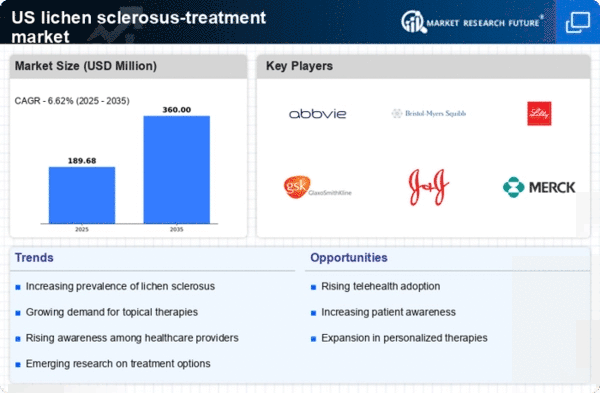
The lichen sclerosus-treatment market is benefiting from increased research funding aimed at understanding the etiology and treatment of lichen sclerosus. Government and private organizations are allocating substantial resources to investigate the underlying mechanisms of this condition, which is expected to yield new insights and therapeutic approaches. For instance, funding for clinical trials has seen a notable rise, with millions of dollars being invested in studies that explore novel treatment modalities. This influx of financial support is likely to accelerate the development of effective therapies, thereby enhancing the lichen sclerosus-treatment market. Additionally, as research progresses, it may lead to the identification of biomarkers that can aid in early diagnosis and personalized treatment strategies, further driving market growth. The commitment to advancing knowledge in this area suggests a promising future for both patients and healthcare providers.
Enhanced Patient Support Programs
This market is benefiting from enhanced patient support programs that aim to improve treatment adherence and patient outcomes. These programs often provide education, resources, and counseling to patients, helping them navigate their treatment journey. As healthcare providers recognize the importance of patient engagement, they are increasingly implementing support initiatives that address the unique challenges faced by individuals with lichen sclerosus. This focus on patient-centered care is likely to lead to improved treatment adherence, which can positively impact the overall effectiveness of therapies. Moreover, as more patients become aware of available support resources, the demand for treatments may increase, further driving the lichen sclerosus-treatment market. The integration of these programs into standard care practices reflects a commitment to enhancing the patient experience and optimizing treatment outcomes.
Rising Incidence of Lichen Sclerosus
The lichen sclerosus-treatment market is experiencing growth due to the increasing incidence of lichen sclerosus among the population. Recent studies indicate that the prevalence of this condition is rising, particularly among postmenopausal women, which may account for approximately 1 in 30 women affected. This growing patient population necessitates the development and availability of effective treatment options, thereby driving market expansion. As awareness of the condition increases, more individuals are seeking medical advice, leading to higher diagnosis rates. Consequently, healthcare providers are focusing on improving treatment protocols, which is likely to enhance the lichen sclerosus-treatment market. Furthermore, the rising incidence may prompt pharmaceutical companies to invest in research and development, potentially leading to innovative therapies that cater to the specific needs of patients suffering from this condition.
Regulatory Support for New Treatments
This market is poised for growth due to increasing regulatory support for the approval of new treatments. Regulatory agencies are streamlining the approval process for innovative therapies, which may expedite the availability of effective treatment options for patients. This supportive environment encourages pharmaceutical companies to invest in research and development, as they can bring new products to market more efficiently. Recent initiatives by the FDA to promote the development of therapies for rare diseases, including lichen sclerosus, are indicative of this trend. As a result, the lichen sclerosus-treatment market is likely to see a surge in new product launches, enhancing treatment options for patients. This regulatory landscape not only fosters innovation but also instills confidence in investors, potentially leading to increased funding for research and development in this area.
Growing Demand for Personalized Medicine
The lichen sclerosus-treatment market is increasingly influenced by the growing demand for personalized medicine. Patients are seeking tailored treatment options that consider their unique genetic and environmental factors. This trend is prompting healthcare providers to adopt more individualized approaches to treatment, which may enhance patient outcomes. As a result, pharmaceutical companies are likely to focus on developing targeted therapies that address the specific needs of lichen sclerosus patients. The market for personalized medicine is projected to reach $2.4 trillion by 2025, indicating a significant opportunity for growth within the lichen sclerosus-treatment market. Furthermore, advancements in genomics and biotechnology are facilitating the development of customized therapies, which could revolutionize treatment paradigms. This shift towards personalized care may not only improve patient satisfaction but also drive market expansion as more effective treatment options become available.





















Leave a Comment