Download Free Sample
Kindly complete the form below to receive a free sample of this Report
US Sleep Aids Market Research Report: Size, Share, Trend Analysis By Product (Mattresses & Pillows, Medications, Sleep Apnea Devices, Others) and By Sleep-Disorder (Insomnia, Sleep Apnea, Restless Legs Syndrome, Narcolepsy, Sleep Walking, Other Sleep Disorders) - Growth Outlook & Industry Forecast 2025 To 2035
As per Market Research Future analysis, the US sleep aids market size was estimated at 15.0 USD Billion in 2024. The US sleep aids market is projected to grow from 16.11 USD Billion in 2025 to 33.0 USD Billion by 2035, exhibiting a compound annual growth rate (CAGR) of 7.4% during the forecast period 2025 - 2035
The US sleep aids market is experiencing a transformative shift towards natural solutions and technological advancements.
| 2024 Market Size | 15.0 (USD Billion) |
| 2035 Market Size | 33.0 (USD Billion) |
| CAGR (2025 - 2035) | 7.43% |
Johnson & Johnson (US), Pfizer Inc (US), Procter & Gamble Co (US), Sanofi (FR), Reckitt Benckiser Group plc (GB), Sleep Number Corporation (US), Zzzquil (US), Melatonin (US)
Our Impact
Enabled $4.3B Revenue Impact for Fortune 500 and Leading Multinationals
Partnering with 2000+ Global Organizations Each Year
30K+ Citations by Top-Tier Firms in the Industry
The sleep aids market is currently experiencing notable transformations driven by evolving consumer preferences and increasing awareness of sleep health. As individuals become more conscious of the importance of quality sleep, there is a growing demand for various products designed to enhance sleep quality. This shift is reflected in the rising popularity of both natural and synthetic sleep aids, as consumers seek effective solutions to combat sleep disorders and improve overall well-being. Furthermore, the integration of technology into sleep aids, such as smart devices and applications, appears to be reshaping the landscape, offering personalized solutions that cater to individual sleep patterns and preferences. In addition, the sleep aids market is witnessing a surge in innovation, with manufacturers focusing on developing new formulations and delivery methods. This trend is likely to be influenced by ongoing research into the effects of sleep on health, which suggests that better sleep can lead to improved physical and mental health outcomes. As a result, companies are increasingly investing in research and development to create products that not only promote sleep but also address underlying issues such as anxiety and stress. Overall, the current trajectory of the sleep aids market indicates a dynamic environment characterized by consumer-driven changes and technological advancements.
There is a noticeable shift towards natural sleep aids as consumers become more health-conscious. Products containing herbal ingredients, such as melatonin and valerian root, are gaining traction. This trend reflects a broader preference for organic and holistic solutions, as individuals seek alternatives to synthetic medications.
The incorporation of technology into sleep aids is becoming increasingly prevalent. Smart devices, sleep tracking applications, and connected products are emerging, providing users with personalized insights and recommendations. This trend indicates a move towards data-driven approaches to enhance sleep quality.
The sleep aids market is increasingly addressing the connection between sleep and mental health. Products designed to alleviate anxiety and stress are gaining popularity, as consumers recognize the impact of mental well-being on sleep quality. This trend suggests a holistic approach to sleep solutions.
The aging demographic in the US is a significant driver for the sleep aids market. As individuals age, they often experience changes in sleep patterns, leading to a higher incidence of sleep disturbances. Reports indicate that nearly 50% of older adults experience insomnia, which propels the demand for sleep aids. The sleep aids market is adapting to this demographic shift by offering products tailored to the needs of older consumers, such as melatonin supplements and sleep-enhancing devices. This trend is expected to contribute to a compound annual growth rate (CAGR) of 6% in the sleep aids market over the next five years, reflecting the increasing focus on sleep health among the elderly.
The rapid expansion of e-commerce platforms is transforming the way consumers access sleep aids in the US. With the convenience of online shopping, consumers are more inclined to explore a variety of sleep aid options from the comfort of their homes. The sleep aids market is capitalizing on this trend by enhancing online visibility and offering direct-to-consumer sales. Reports indicate that online sales of sleep aids have increased by 25% in the past year, reflecting a shift in consumer purchasing behavior. This growth in e-commerce is expected to continue, potentially leading to a more competitive landscape within the sleep aids market.
The escalating stress levels among the US population are likely to have a profound impact on the sleep aids market. Factors such as work-related pressures, financial concerns, and social dynamics contribute to heightened anxiety, which in turn affects sleep quality. Studies indicate that around 30% of adults report difficulty sleeping due to stress. Consequently, the sleep aids market is witnessing a surge in demand for products designed to alleviate stress and promote relaxation, including herbal teas, aromatherapy, and sleep-inducing supplements. This trend suggests a potential growth in the market as consumers increasingly seek solutions to combat stress-related sleep issues.
The prevalence of sleep disorders in the US appears to be on the rise, with estimates suggesting that approximately 70 million individuals are affected. This growing concern for sleep health is likely to drive demand within the sleep aids market. As awareness of conditions such as insomnia and sleep apnea increases, consumers are seeking effective solutions. The sleep aids market is responding with a diverse range of products, including over-the-counter medications, herbal supplements, and advanced sleep technology. The market is projected to reach a valuation of $100 billion by 2026, indicating a robust growth trajectory fueled by the increasing incidence of sleep-related issues.
There is a growing awareness of the importance of sleep health among the US population, which is likely to drive the sleep aids market. Educational campaigns and health initiatives are emphasizing the benefits of quality sleep, leading consumers to seek out products that can enhance their sleep experience. The sleep aids market is responding by developing innovative solutions, such as sleep tracking devices and personalized sleep programs. This heightened awareness is expected to result in a 15% increase in market demand over the next few years, as consumers prioritize sleep as a critical component of overall health and well-being.
In the US sleep aids market, segment values such as Mattresses & Pillows hold the largest market share, reflecting consumer preference for comfort and support during sleep. Medications and Sleep Apnea Devices also contribute significantly, with medications being widely utilized for quick relief from sleep disorders. However, the growing awareness of sleep apnea has led to an increased adoption of Sleep Apnea Devices, which is rapidly gaining ground in the market. Growth trends in the US sleep aids market are being driven by an increased focus on health and wellness. The rising prevalence of sleep disorders and the aging population create a robust demand for effective sleep solutions. Furthermore, technological advancements in Sleep Apnea Devices and consumer education programs are accelerating market growth, with innovative products entering the market to address specific sleep-related issues.
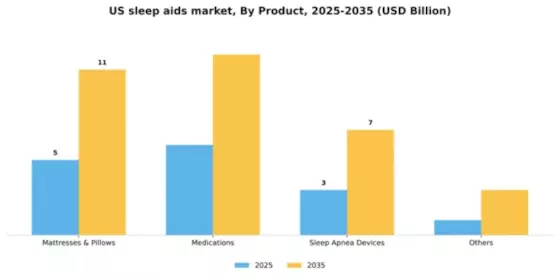
Mattresses & Pillows (Dominant) vs. Sleep Apnea Devices (Emerging)
The Mattresses & Pillows segment stands out as the dominant force in the US sleep aids market as consumers prioritize comfort and sleep quality. This segment includes a range of products from memory foam mattresses to ergonomic pillows designed to enhance sleep posture. The continuous innovation and improvements in materials play a crucial role in attracting consumers. In contrast, the Sleep Apnea Devices segment is considered an emerging player, gaining momentum due to increased diagnosis rates of sleep apnea. Innovations in this segment, such as portable and more user-friendly equipment, are opening up new customer segments, and as health awareness rises, the demand for these products is set to grow significantly.
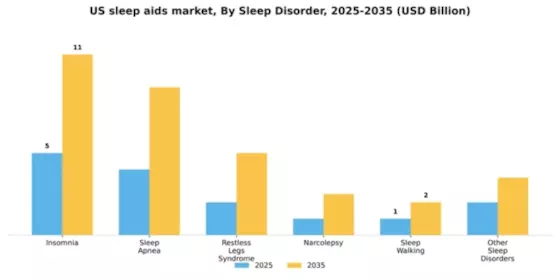
In the US sleep aids market, insomnia remains the largest segment, capturing significant market share due to its prevalence among the population. Following closely, sleep apnea is gaining traction, accounting for a rapidly growing share as awareness of the disorder increases. Other notable segments include restless legs syndrome and narcolepsy, each contributing to the diverse landscape of sleep disorders among consumers. Together, these segments illustrate the varying sleep challenges faced by individuals seeking relief from sleep-related issues. The growth trends within the sleep disorder segment are largely driven by rising awareness and education about sleep-related health issues. Factors such as increasing stress levels, lifestyle changes, and the aging population contribute significantly to the demand for sleep aids. Additionally, innovations in sleep technology and greater accessibility to treatment options support the growing interest in effective management solutions for both insomnia and sleep apnea, setting the stage for continued expansion in the market.
Insomnia (Dominant) vs. Sleep Apnea (Emerging)
Insomnia is recognized as the dominant challenge within the US sleep aids market, characterized by difficulty in falling and staying asleep. This segment attracts significant attention owing to its widespread impact on mental and physical health, making it a primary focus for treatment options. In contrast, sleep apnea is an emerging concern, often going undiagnosed but rapidly gaining recognition. As new treatments and technologies are introduced, the market for sleep apnea solutions is expanding, driven by improved awareness of its dangerous implications. Both segments highlight the critical need for effective sleep management, with insomnia leading in prevalence while sleep apnea shows promising growth potential.
Get more detailed insights about US Sleep Aids Market Request Free Sample
The sleep aids market exhibits a dynamic competitive landscape characterized by a blend of established pharmaceutical giants and innovative consumer brands. Key growth drivers include an increasing prevalence of sleep disorders, heightened consumer awareness regarding sleep health, and a growing inclination towards natural and over-the-counter solutions. Major players such as Johnson & Johnson (US), Pfizer Inc (US), and Procter & Gamble Co (US) are strategically positioned to leverage their extensive distribution networks and brand recognition. Their operational focus appears to center on innovation and product diversification, with an emphasis on developing new formulations and enhancing existing product lines to cater to evolving consumer preferences.In terms of business tactics, companies are increasingly localizing manufacturing and optimizing supply chains to enhance efficiency and responsiveness to market demands. The competitive structure of the market is moderately fragmented, with a mix of large corporations and smaller niche players. This fragmentation allows for a variety of product offerings, yet the collective influence of key players like Sanofi (FR) and Reckitt Benckiser Group plc (GB) shapes market dynamics significantly, as they often set trends that smaller companies follow.In October Johnson & Johnson (US) announced the launch of a new line of sleep aids that incorporate advanced sleep technology, aiming to enhance user experience through personalized solutions. This strategic move underscores the company's commitment to innovation and positions it to capture a larger share of the growing market for tech-integrated health solutions. By leveraging data analytics and consumer feedback, Johnson & Johnson (US) is likely to refine its offerings further, aligning with consumer demands for tailored health products.In September Pfizer Inc (US) expanded its portfolio by acquiring a promising sleep aid startup focused on natural ingredients. This acquisition not only diversifies Pfizer's product range but also reflects a broader industry trend towards natural and holistic health solutions. The integration of this startup's innovative formulations into Pfizer's existing product lines could enhance its competitive edge, particularly among health-conscious consumers seeking alternatives to traditional pharmaceuticals.In August Procter & Gamble Co (US) launched a marketing campaign aimed at promoting its sleep aid products, emphasizing the importance of sleep hygiene and overall wellness. This initiative appears to be part of a larger trend where companies are not only selling products but also educating consumers about the benefits of quality sleep. By positioning itself as a thought leader in sleep health, Procter & Gamble Co (US) is likely to strengthen brand loyalty and drive sales in a competitive market.As of November current competitive trends indicate a significant shift towards digitalization, sustainability, and the integration of artificial intelligence in product development and marketing strategies. Strategic alliances among companies are increasingly shaping the landscape, fostering innovation and enhancing market reach. Looking ahead, competitive differentiation is expected to evolve, with a pronounced shift from price-based competition to a focus on innovation, technology, and supply chain reliability. Companies that can effectively harness these trends are likely to secure a competitive advantage in the sleep aids market.


Recent developments in the US Sleep Aids Market have reflected a growing consumer focus on sleep health and wellness. Companies like Neurohacker Collective and Natrol are innovating with natural sleep aids, responding to increased awareness around sleep-related disorders exacerbated by the pandemic. In September 2023, Pfizer launched a new product in collaboration with ResMed to address sleep apnea, marking a significant expansion in their sleep-related offerings. Additionally, Johnson and Johnson has increased investment in Research and Development for its sleep aid products, acknowledging the rising consumer demand for effective solutions.
On the merger and acquisition front, September 2023 saw Procter and Gamble acquire Healthwell, enhancing their portfolio of sleep aid products and boosting their market presence. Meanwhile, Sleep Number is also experiencing growth, reporting substantial increases in their revenue due to heightened interest in sleep technology mattresses. The market has witnessed a valuation boost as consumers increasingly prioritize better sleep hygiene, fostering a competitive landscape among prominent players such as GSK and Bayer, who are both investing in innovative sleep solutions to capture greater market share.
The Sleep Aids Market is projected to grow at a 7.43% CAGR from 2025 to 2035, driven by increasing sleep disorders, consumer awareness, and technological advancements.
New opportunities lie in:
By 2035, the sleep aids market is expected to achieve substantial growth and diversification.
| MARKET SIZE 2024 | 15.0(USD Billion) |
| MARKET SIZE 2025 | 16.11(USD Billion) |
| MARKET SIZE 2035 | 33.0(USD Billion) |
| COMPOUND ANNUAL GROWTH RATE (CAGR) | 7.43% (2025 - 2035) |
| REPORT COVERAGE | Revenue Forecast, Competitive Landscape, Growth Factors, and Trends |
| BASE YEAR | 2024 |
| Market Forecast Period | 2025 - 2035 |
| Historical Data | 2019 - 2024 |
| Market Forecast Units | USD Billion |
| Key Companies Profiled | Johnson & Johnson (US), Pfizer Inc (US), Procter & Gamble Co (US), Sanofi (FR), Reckitt Benckiser Group plc (GB), Sleep Number Corporation (US), Zzzquil (US), Melatonin (US) |
| Segments Covered | Product, Sleep Disorder |
| Key Market Opportunities | Integration of digital health solutions enhances consumer engagement in the sleep aids market. |
| Key Market Dynamics | Rising consumer awareness drives demand for natural sleep aids, influencing market dynamics and competitive strategies. |
| Countries Covered | US |
The market valuation of the US sleep aids market was $15.0 Billion in 2024.
The projected market valuation for the US sleep aids market is $33.0 Billion by 2035.
The expected CAGR for the US sleep aids market during the forecast period 2025 - 2035 is 7.43%.
In 2024, the Medications segment had the highest valuation at $6.0 Billion.
The projected valuation for the Sleep Apnea Devices segment is $7.0 Billion by 2035.
Johnson & Johnson is one of the key players in the US sleep aids market.
The valuation of the Mattresses & Pillows segment was $5.0 Billion in 2024.
The Insomnia segment is projected to grow to $11.0 Billion by 2035.
In 2024, the Restless Legs Syndrome segment had a valuation of $2.0 Billion, which is lower than Insomnia and Sleep Apnea.
The Others segment is expected to grow to $3.0 Billion by 2035.



Kindly complete the form below to receive a free sample of this Report

“This is really good guys. Excellent work on a tight deadline. I will continue to use you going forward and recommend you to others. Nice job”


“Thanks. It’s been a pleasure working with you, please use me as reference with any other Intel employees.”


“Thanks for sending the report it gives us a good global view of the Betaïne market.”


“Thank you, this will be very helpful for OQS.”


“We found the report very insightful! we found your research firm very helpful. I'm sending this email to secure our future business.”


“I am very pleased with how market segments have been defined in a relevant way for my purposes (such as "Portable Freezers & refrigerators" and "last-mile"). In general the report is well structured. Thanks very much for your efforts.”


“I have been reading the first document or the study, ,the Global HVAC and FP market report 2021 till 2026. Must say, good info! I have not gone in depth at all parts, but got a good indication of the data inside!”


“We got the report in time, we really thank you for your support in this process. I also thank to all of your team as they did a great job.”


“The Automotive 48V ECU Components Procurement Intelligence Study” was a complex project, but the Market Research Future (MRFR) team handled it with quality, agility, and customer-centricity. They delivered all requested data on time and within the agreed scope. The team, including Shubhendra Anand and Rahul Gotadki, was always readily available to clarify questions and swiftly implement necessary adjustments, driving the project to a successful conclusion within a very demanding timeframe.
I would also like to specifically commend Akshay Agarwal for his responsiveness and support at every stage—from our initial inquiry on May 6th through to final delivery on June 18th. His dedication made the entire process seamless.”



