×
Request Free Sample ×

Kindly complete the form below to receive a free sample of this Report

* Please use a valid business email

Leading companies partner with us for data-driven Insights

clients tt-cursor
Hero Background

US Stretch Packaging Market

ID: MRFR/PCM/16033-HCR
100 Pages
Garvit Vyas
October 2025

US Stretch Packaging Market Research Report By End-Use (Food and Beverages, Healthcare, Electronics, Consumer Products), By Thickness (Below 15 Microns, 15–25 Microns, 26–40 Microns, Above 40 Microns), By Application (Food Packaging, Beverage Packaging, Industrial Packaging, Consumer Goods Packaging), and By Material Type (Polyethylene, Polypropylene, PVC, Others) – Forecast to 2035.

Share:
Download PDF ×

We do not share your information with anyone. However, we may send you emails based on your report interest from time to time. You may contact us at any time to opt-out.

US Stretch Packaging Market Infographic
Purchase Options

US Stretch Packaging Market Summary

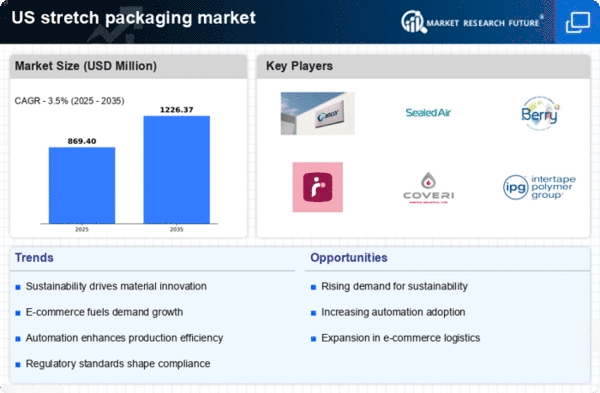
As per MRFR analysis, the US stretch packaging market Size was estimated at 840.0 USD Million in 2024. The US stretch packaging market is projected to grow from 869.4 USD Million in 2025 to 1226.37 USD Million by 2035, exhibiting a compound annual growth rate (CAGR) of 3.5% during the forecast period 2025 - 2035.

Key Market Trends & Highlights

The US stretch packaging market is experiencing a robust shift towards sustainability and technological innovation.

  • Sustainability initiatives are increasingly shaping the US stretch packaging market, reflecting a broader trend towards eco-friendly solutions.
  • Technological advancements are driving efficiency and performance in stretch packaging, particularly in the food and beverage sector.
  • Automation in packaging processes is becoming more prevalent, enhancing productivity and reducing labor costs in the industry.
  • The rising demand for e-commerce packaging and cost efficiency in packaging solutions are key drivers propelling market growth.

Market Size & Forecast

2024 Market Size 840.0 (USD Million)
2035 Market Size 1226.37 (USD Million)
CAGR (2025 - 2035) 3.5%

Major Players

Amcor (AU), Sealed Air (US), Berry Global (US), Mondi (GB), Coveris (AT), Intertape Polymer Group (CA), AEP Industries (US), Sigma Plastics Group (US), Novolex (US)

US Stretch Packaging Market Trends

The stretch packaging market is currently experiencing notable growth, driven by increasing demand for efficient packaging solutions across various industries. This growth is largely attributed to the rising need for product protection during transportation and storage. Companies are increasingly adopting stretch packaging due to its ability to reduce material waste while ensuring the safety of goods. Furthermore, advancements in technology are enhancing the performance of stretch films, making them more versatile and suitable for a wider range of applications. As sustainability becomes a priority, manufacturers are exploring eco-friendly materials, which may reshape the market landscape in the coming years. In addition, the trend towards automation in packaging processes is influencing the stretch packaging market. Automated systems are being integrated into production lines, allowing for faster and more efficient packaging operations. This shift not only improves productivity but also reduces labor costs. The growing e-commerce sector is further propelling the demand for stretch packaging, as businesses seek reliable solutions to protect products during shipping. Overall, the stretch packaging market appears poised for continued expansion, with innovations and changing consumer preferences playing a crucial role in its evolution.

Sustainability Initiatives

There is a growing emphasis on sustainability within the stretch packaging market. Companies are increasingly seeking eco-friendly materials and practices to reduce their environmental impact. This trend is likely to drive innovation in biodegradable and recyclable films, aligning with consumer preferences for sustainable products.

Technological Advancements

Technological progress is significantly influencing the stretch packaging market. Innovations in film production and application techniques are enhancing the performance and efficiency of stretch films. These advancements may lead to improved durability and versatility, catering to diverse packaging needs.

Automation in Packaging

The integration of automation in packaging processes is transforming the stretch packaging market. Automated systems are being adopted to streamline operations, increase efficiency, and reduce labor costs. This trend is particularly relevant as businesses adapt to the demands of a rapidly evolving market.

US Stretch Packaging Market Drivers

Cost Efficiency in Packaging Solutions

Cost considerations play a crucial role in the decision-making process for businesses in the stretch packaging market. Companies are increasingly looking for ways to reduce packaging costs while maintaining product integrity. Stretch film, known for its ability to secure products tightly, reduces the amount of material needed, thereby lowering overall packaging expenses. In 2025, the average cost of stretch film is expected to remain competitive, making it an attractive option for manufacturers. This focus on cost efficiency is particularly relevant in industries such as food and beverage, where margins are often tight. As businesses strive to optimize their supply chains, the stretch packaging market is likely to benefit from this emphasis on cost-effective solutions.

Growth in the Food and Beverage Sector

The food and beverage industry is a significant driver of the stretch packaging market, as it requires reliable and efficient packaging solutions to ensure product safety and freshness. In 2025, the food and beverage sector is projected to represent over 30% of the total demand for stretch packaging in the US. This growth is attributed to the increasing consumer preference for packaged foods and the need for longer shelf life. Stretch packaging provides an effective barrier against moisture and contaminants, making it ideal for perishable goods. As the industry continues to evolve, the stretch packaging market is expected to adapt by offering specialized solutions that cater to the unique requirements of food and beverage products.

Rising Demand for E-commerce Packaging

The surge in e-commerce activities in the US has led to an increased demand for efficient packaging solutions. The stretch packaging market is experiencing growth as businesses seek to protect products during transit while minimizing material usage. In 2025, the e-commerce sector is projected to account for approximately 20% of total retail sales in the US, driving the need for innovative packaging solutions. Stretch packaging offers advantages such as lightweight materials and flexibility, which are essential for shipping a variety of products. This trend indicates that companies are prioritizing packaging that not only secures items but also enhances the unboxing experience for consumers. As a result, the stretch packaging market is likely to expand significantly to meet the evolving needs of e-commerce businesses.

Technological Innovations in Packaging

Technological advancements are reshaping the landscape of the stretch packaging market, enabling companies to enhance efficiency and reduce waste. Innovations such as automated stretch wrapping machines and advanced film materials are becoming more prevalent. In 2025, the integration of smart technology in packaging processes is expected to increase, allowing for real-time monitoring and adjustments. This trend suggests that businesses are investing in technology to improve operational efficiency and reduce labor costs. As automation and smart solutions become more accessible, the stretch packaging market is likely to experience a shift towards more sophisticated packaging systems that cater to the demands of modern supply chains.

Regulatory Compliance and Safety Standards

Regulatory compliance is becoming increasingly important in the stretch packaging market, particularly in industries such as pharmaceuticals and food. Stricter safety standards and regulations are driving companies to adopt packaging solutions that meet these requirements. In 2025, it is anticipated that compliance-related costs will influence packaging decisions, with businesses seeking materials that are not only safe but also environmentally friendly. The stretch packaging market is likely to see innovations aimed at meeting these regulatory demands, such as the development of biodegradable stretch films. This focus on compliance not only enhances product safety but also aligns with consumer expectations for sustainable practices.


Market Segment Insights

By Material Type: Polyethylene (Largest) vs. Polypropylene (Fastest-Growing)

In the US stretch packaging market, Polyethylene holds the largest share, dominating due to its versatility, cost-effectiveness, and wide range of applications. Polypropylene follows, showing significant market presence due to its strength and clarity, making it a preferred choice in specific packaging solutions. PVC and Other materials comprise the remaining share, appealing to niche markets with specialized applications.

Polyethylene (Dominant) vs. Polypropylene (Emerging)

Polyethylene, with its robust market position, is favored for its flexibility and durability, making it ideal for various applications in the US stretch packaging market. This material's compatibility with different sealing technologies further enhances its appeal, resulting in consistent demand. In contrast, Polypropylene is carving out a significant niche; its lighter weight and higher clarity make it an attractive option for products requiring greater visibility and aesthetic appeal. As sustainability becomes a growing concern, both materials are adapting, with manufacturers exploring bio-based alternatives to meet eco-friendly demands while enhancing functionality.

By Application: Food Packaging (Largest) vs. Beverage Packaging (Fastest-Growing)

In the US stretch packaging market, Food Packaging holds the largest market share, driven by the rising demand for convenience foods and packaged goods. It significantly outpaces other segments, highlighting consumers' preference for ready-to-eat and processed foods. Beverage Packaging, while smaller, is rapidly gaining traction due to the increasing consumption of bottled drinks and a push for sustainable packaging solutions among manufacturers. Growth trends indicate that the Beverage Packaging segment is the fastest-growing subset, influenced by shifts toward healthier drink options and eco-friendly packaging materials. As consumers become more environmentally conscious, brands are innovating to include recyclable and biodegradable stretch films. Additionally, the rising e-commerce sector propels demand for efficient and durable packaging solutions in both Food and Beverage segments.

Food Packaging: Dominant vs. Industrial Packaging: Emerging

Food Packaging continues to be the dominant force in the US stretch packaging market, characterized by its versatility and wide-ranging applications across various food products. This segment leverages innovations in materials that enhance freshness and extend shelf life, alongside aesthetic designs that attract consumers. In contrast, Industrial Packaging is emerging, focusing on bulk packaging for goods such as components and machinery. It addresses the specific needs of industries by providing robust solutions for the safe transit of products. This contrast highlights the resilience and adaptability of Food Packaging amidst evolving consumer preferences, while Industrial Packaging seeks to carve out its space by emphasizing functionality and efficiency.

By Thickness: 26-40 Microns (Largest) vs. Below 15 Microns (Fastest-Growing)

In the US stretch packaging market, the thickness segment distribution shows that 26-40 microns leads with the largest share, thanks to its optimal balance of strength and flexibility for various applications. Meanwhile, the below 15 microns category is gaining traction, driven by its lightweight nature and cost-effectiveness, catering to sectors where reduced material usage is prioritized. The growth trends indicate a rising demand for thinner films, primarily due to the push for sustainability and reducing packaging waste. Innovations in materials have allowed manufacturers to produce thinner stretch films without compromising on performance. This trend will likely continue as businesses seek to minimize costs while enhancing efficiency, correlated with consumer preference for eco-friendly packaging solutions.

26-40 Microns (Dominant) vs. Below 15 Microns (Emerging)

The 26-40 microns thickness segment is characterized by its robust performance and versatility, making it the dominant choice in heavy-duty applications that require high stretchability and load-bearing capacity. Industries such as e-commerce and food packaging are increasingly relying on these films to secure their products effectively. Conversely, the below 15 microns segment is emerging rapidly, appealing to cost-sensitive sectors aiming for lightweight and economical packaging options. This segment fosters innovation, particularly in biodegradable and recyclable materials, aligning with trends towards sustainability and environmental stewardship in packaging.

By End-Use: Food and Beverages (Largest) vs. Healthcare (Fastest-Growing)

In the US stretch packaging market, the Food and Beverages segment holds the largest market share, driven by the increasing demand for packaged food products and convenience among consumers. The Healthcare sector follows, emphasizing the need for secure and sanitary packaging solutions for pharmaceuticals and medical supplies, contributing to its significant share in the overall market. Growth trends indicate that the Healthcare segment is the fastest-growing due to rising health concerns and the growing aging population requiring more medical products. Additionally, the Food and Beverages segment continues to thrive as consumer preferences shift towards packaged goods, offering functionality and freshness. This trend is further encouraged by the growing e-commerce sector, enhancing the demand for reliable stretch packaging solutions in both segments.

Food and Beverages (Dominant) vs. Healthcare (Emerging)

The Food and Beverages segment is characterized by its dominance in the US stretch packaging market, fueled by consumer demand for fresh and convenient packaging solutions. Products within this segment benefit from innovative packaging technologies that enhance shelf life and appeal to environmentally conscious consumers. Conversely, the Healthcare segment emerges with its unique requirements for sterile, secure, and tamper-evident packaging solutions. This is particularly crucial in safeguarding pharmaceuticals and ensuring patient safety. As health awareness grows, the Healthcare segment is expected to expand rapidly, prompting producers to adopt advanced stretch packaging methods that cater to evolving industry standards and regulatory requirements.

Get more detailed insights about US Stretch Packaging Market

Key Players and Competitive Insights

The stretch packaging market is currently characterized by a dynamic competitive landscape, driven by increasing demand for efficient and sustainable packaging solutions. Key players such as Sealed Air (US), Berry Global (US), and Amcor (AU) are actively shaping the market through strategic initiatives focused on innovation and sustainability. Sealed Air (US) emphasizes its commitment to reducing plastic waste, while Berry Global (US) leverages advanced manufacturing technologies to enhance product performance. Amcor (AU) positions itself as a leader in sustainable packaging, aiming to achieve 100% recyclable or reusable packaging by 2025. Collectively, these strategies foster a competitive environment that prioritizes sustainability and technological advancement.

In terms of business tactics, companies are increasingly localizing manufacturing to enhance supply chain efficiency and reduce lead times. The market structure appears moderately fragmented, with several key players holding substantial market shares. This fragmentation allows for a diverse range of products and innovations, while the collective influence of major companies drives industry standards and practices.

In October 2025, Sealed Air (US) announced the launch of its new EcoWrap technology, which utilizes 30% less plastic compared to traditional stretch films. This strategic move not only aligns with the growing consumer demand for sustainable packaging but also positions Sealed Air (US) as a frontrunner in eco-friendly solutions. The introduction of EcoWrap is likely to enhance the company's market share and appeal to environmentally conscious consumers.

In September 2025, Berry Global (US) expanded its production capabilities by investing $20 million in a new manufacturing facility in Texas. This expansion is indicative of Berry Global's strategy to meet the increasing demand for stretch packaging in the region. By enhancing its production capacity, the company aims to improve supply chain responsiveness and cater to a broader customer base, thereby solidifying its competitive position.

In August 2025, Amcor (AU) entered into a strategic partnership with a leading technology firm to integrate AI-driven analytics into its production processes. This collaboration is expected to optimize manufacturing efficiency and reduce waste, further supporting Amcor's sustainability goals. The integration of AI technology may also provide Amcor (AU) with a competitive edge in terms of operational excellence and product innovation.

As of November 2025, the competitive trends in the stretch packaging market are increasingly defined by digitalization, sustainability, and technological integration. Strategic alliances among key players are shaping the landscape, fostering innovation and enhancing supply chain reliability. The shift from price-based competition to a focus on innovation and technology is evident, suggesting that companies will need to differentiate themselves through advanced solutions and sustainable practices to thrive in this evolving market.

Key Companies in the US Stretch Packaging Market market include

Future Outlook

US Stretch Packaging Market Future Outlook

The stretch packaging market is projected to grow at a 3.5% CAGR from 2024 to 2035, driven by increased demand for sustainable packaging solutions and automation in packaging processes.

New opportunities lie in:

  • Development of biodegradable stretch films for eco-conscious consumers.
  • Integration of smart technology in packaging for real-time monitoring.
  • Expansion of e-commerce packaging solutions to meet rising online shopping demands.

By 2035, the stretch packaging market is expected to achieve robust growth, driven by innovation and evolving consumer preferences.

Market Segmentation

US Stretch Packaging Market End-Use Outlook

  • Food and Beverages
  • Healthcare
  • Electronics
  • Consumer Products

US Stretch Packaging Market Thickness Outlook

  • Below 15 Microns
  • 15-25 Microns
  • 26-40 Microns
  • Above 40 Microns

US Stretch Packaging Market Application Outlook

  • Food Packaging
  • Beverage Packaging
  • Industrial Packaging
  • Consumer Goods Packaging

US Stretch Packaging Market Material Type Outlook

  • Polyethylene
  • Polypropylene
  • PVC
  • Others

Report Scope

MARKET SIZE 2024 840.0(USD Million)
MARKET SIZE 2025 869.4(USD Million)
MARKET SIZE 2035 1226.37(USD Million)
COMPOUND ANNUAL GROWTH RATE (CAGR) 3.5% (2024 - 2035)
REPORT COVERAGE Revenue Forecast, Competitive Landscape, Growth Factors, and Trends
BASE YEAR 2024
Market Forecast Period 2025 - 2035
Historical Data 2019 - 2024
Market Forecast Units USD Million
Key Companies Profiled Amcor (AU), Sealed Air (US), Berry Global (US), Mondi (GB), Coveris (AT), Intertape Polymer Group (CA), AEP Industries (US), Sigma Plastics Group (US), Novolex (US)
Segments Covered Material Type, Application, Thickness, End-Use
Key Market Opportunities Adoption of sustainable materials in the stretch packaging market enhances environmental compliance and consumer appeal.
Key Market Dynamics Rising demand for sustainable materials drives innovation in stretch packaging solutions across various industries.
Countries Covered US

Leave a Comment

Download Free Sample

Kindly complete the form below to receive a free sample of this Report

Compare Licence

×
Features License Type
Single User Multiuser License Enterprise User
Price $4,950 $5,950 $7,250
Maximum User Access Limit 1 User Upto 10 Users Unrestricted Access Throughout the Organization
Free Customization
Direct Access to Analyst
Deliverable Format
Platform Access
Discount on Next Purchase 10% 15% 15%
Printable Versions