Download Free Sample
Kindly complete the form below to receive a free sample of this Report
Vehicle Customization and Tuning Research Report Information Vehicle-Customization-And-Tuning Vehicle Type (Passenger Vehicles, Commercial Vehicles, Motorcycles, Off-Road Vehicles) Vehicle-Customization-And-Tuning Customization Type (Performance Tuning, Aesthetic Modifications, Functional Enhancements, Interior Customization) Vehicle-Customization-And-Tuning Customization Method (Diy Modifications, Professional Services, Online Customization Tools, Community-Based Customization) Vehicle-Customization-And-Tuning Consumer Demographics (Age Group, Income Level, Gender, Lifestyle Preferences) Vehicle-Customization-And-Tuning Purpose Of Customization (Personalization, Performance Improvement, Safety Enhancements, Resale Value Increase) And By Region (North America, Europe, Asia-Pacific, And Rest Of The World) – Market Forecast Till 2035.
As per MRFR analysis, the Vehicle Customization and Tuning Market Size was estimated at 12.5 North America. in 2024. The Vehicle Customization and Tuning industry is projected to grow from 13.16 North America. in 2025 to 22.0 North America. by 2035, exhibiting a compound annual growth rate (CAGR) of 5.27% during the forecast period 2025 - 2035.
The vehicle customization and tuning market is experiencing a dynamic shift towards personalization and technological integration.
| 2024 Market Size | 12.5 (12.5 (North America.)) |
| 2035 Market Size | 22.0 (22.0 (USD Billion)) |
| CAGR (2025 - 2035) | 5.27% |
Hennessey Performance Engineering (US), Roush Performance (US), ABT Sportsline (DE), Brabus (DE), Mugen (JP), Oettinger (DE), TechArt (DE), Liberty Walk (JP), Aston Martin Works (GB)
Our Impact
Enabled $4.3B Revenue Impact for Fortune 500 and Leading Multinationals
Partnering with 2000+ Global Organizations Each Year
30K+ Citations by Top-Tier Firms in the Industry
The landscape of Vehicle Customization and Tuning is evolving, driven by a confluence of consumer preferences and technological advancements. As individuals increasingly seek to personalize their vehicles, the market reflects a growing demand for unique aesthetics and enhanced performance. This trend is not merely about visual appeal; it encompasses a broader desire for individuality and self-expression. Customization options range from exterior modifications to interior upgrades, allowing owners to create a vehicle that resonates with their personal style. Furthermore, advancements in technology have facilitated the integration of sophisticated tuning solutions, enabling enhanced performance and efficiency. In December 2025, the Vehicle Customization and Tuning market appears to be characterized by a blend of traditional practices and modern innovations. Consumers are more informed than ever, often researching extensively before making modifications. This shift towards informed decision-making suggests a potential increase in demand for high-quality, reliable products and services. Additionally, the rise of online platforms has transformed how enthusiasts connect, share ideas, and access customization resources. As the market continues to mature, it is likely that sustainability will also play a pivotal role, with eco-friendly options gaining traction among environmentally conscious consumers.
There is a noticeable shift towards sustainable practices within the Vehicle Customization and Tuning sector. Consumers are increasingly interested in eco-friendly materials and modifications that reduce environmental impact. This trend reflects a broader societal movement towards sustainability, influencing choices in both products and services.
The incorporation of cutting-edge technology into Vehicle Customization and Tuning is becoming more prevalent. Features such as smart systems, advanced diagnostics, and performance-enhancing software are gaining traction. This trend indicates a growing consumer preference for vehicles that not only look unique but also offer enhanced functionality.
The emergence of online platforms dedicated to Vehicle Customization and Tuning has transformed the way enthusiasts interact. These communities provide spaces for sharing ideas, showcasing projects, and accessing resources. This trend suggests that social connectivity is becoming a vital component of the customization experience.
The Vehicle Customization and Tuning Industry is significantly impacted by automotive shows and events that showcase the latest trends and innovations in vehicle modifications. These events serve as platforms for enthusiasts to gather, share ideas, and discover new products. Attendance at such events has been steadily increasing, with major shows attracting thousands of visitors each year. This growing interest not only highlights the passion for vehicle customization but also stimulates demand for new products and services. Businesses participating in these events often report increased sales and brand visibility, as they connect directly with potential customers. Consequently, the influence of automotive shows and events continues to play a crucial role in shaping the direction of the Vehicle Customization and Tuning Industry.
The Vehicle Customization and Tuning Industry is witnessing a transformation with the emergence of online marketplaces dedicated to custom parts and accessories. These platforms provide consumers with easy access to a wide array of products, ranging from aesthetic enhancements to performance upgrades. Recent statistics indicate that online sales of automotive parts have increased by over 30 percent in the past year, reflecting a shift in consumer purchasing behavior. This trend not only simplifies the buying process but also fosters a sense of community among enthusiasts who share their experiences and recommendations online. As a result, businesses in the Vehicle Customization and Tuning Industry are increasingly leveraging e-commerce strategies to reach a broader audience and enhance customer engagement.
The Vehicle Customization and Tuning Industry experiences a notable surge in consumer interest as individuals seek to express their unique identities through their vehicles. This trend is driven by a growing desire for personalization, with consumers increasingly willing to invest in modifications that reflect their personal style. According to recent data, approximately 60 percent of vehicle owners express a preference for customized features, indicating a robust market potential. This inclination towards personalization not only enhances the aesthetic appeal of vehicles but also contributes to a sense of ownership and pride among consumers. As a result, businesses within the Vehicle Customization and Tuning Industry are adapting their offerings to cater to this demand, providing a diverse range of customization options that resonate with the evolving preferences of consumers.
The Vehicle Customization and Tuning Industry is experiencing growth due to an increasing awareness among consumers regarding the performance benefits of vehicle modifications. Many vehicle owners are now more informed about how specific tuning and customization can enhance their driving experience, improve fuel efficiency, and increase overall vehicle longevity. Research indicates that nearly 40 percent of consumers consider performance upgrades as essential to their vehicle ownership experience. This heightened awareness is prompting consumers to seek professional tuning services and aftermarket parts, thereby driving demand within the industry. As a result, businesses are focusing on educating consumers about the advantages of tuning and customization, positioning themselves as experts in the Vehicle Customization and Tuning Industry.
The Vehicle Customization and Tuning Industry is significantly influenced by rapid technological advancements that facilitate innovative modifications. The integration of cutting-edge technologies, such as advanced engine tuning software and smart vehicle systems, allows for enhanced performance and efficiency. For instance, the adoption of aftermarket tuning chips has been shown to improve engine performance by up to 20 percent, appealing to performance enthusiasts. Furthermore, the rise of 3D printing technology enables the production of bespoke parts, catering to niche markets within the industry. As consumers increasingly seek high-performance vehicles, the demand for technologically advanced modifications is likely to grow, prompting businesses to invest in research and development to stay competitive in the Vehicle Customization and Tuning Industry.
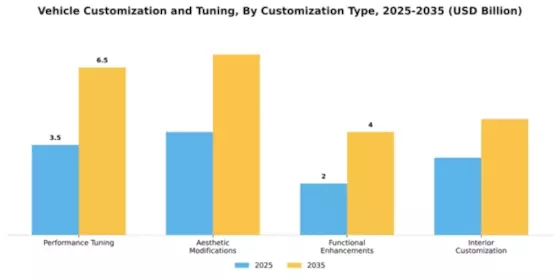
The vehicle customization and tuning market is characterized by diverse segments, with performance tuning being the most prominent, commanding a significant share. Aesthetic modifications, while smaller in comparison, are rapidly gaining traction among consumers looking to personalize their vehicles, contributing to a dynamic market landscape. Functional enhancements and interior customization also play vital roles, although they collectively garner less attention than the leading segments, highlighting a rich tapestry of consumer preferences in the sector.
Performance Tuning: Dominant vs. Aesthetic Modifications: Emerging
Performance tuning remains a dominant force in the vehicle customization market, appealing to enthusiasts seeking enhanced speed, power, and overall vehicle performance. This segment focuses on engine modifications, exhaust upgrades, and tuning software, often leading to substantial upgrades in vehicle capabilities. On the other hand, aesthetic modifications represent an emerging trend, attracting a broader audience as consumers increasingly prioritize personal expression through vehicle design. This includes custom paint jobs, body kits, and rim changes, fostering a culture of creativity among vehicle owners. Both segments are interconnected, as functional enhancements may also provide aesthetic benefits, enriching the overall customization experience.
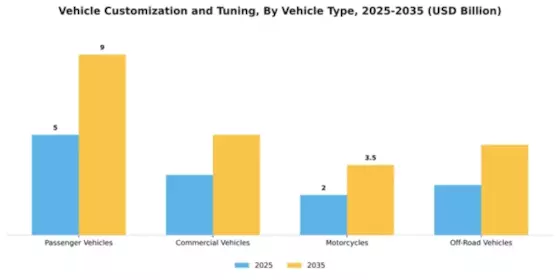
The Vehicle Customization and Tuning market has a diverse distribution among numerous vehicle types. Passenger vehicles lead in market share, primarily driven by the growing trend of personalizing individual cars for improved aesthetics and performance. This segment caters to a wide audience, offering various tuning solutions ranging from aesthetic modifications to performance enhancements. Commercial vehicles, while trailing behind in sheer volume, are quickly catching up as businesses recognize the benefits of customization for operational efficiency and brand visibility.
Passenger Vehicles (Dominant) vs. Commercial Vehicles (Emerging)
Passenger vehicles are at the forefront of the vehicle customization and tuning market, driven by the desire for individualized style and improved performance among consumers. These vehicles often undergo extensive modifications, including altered suspension systems, custom body kits, and enhanced engine performance. On the other hand, commercial vehicles represent an emerging segment, increasingly valued by businesses for customization options that enhance functionality and visibility. This includes modifications like cargo area enhancements, branding graphics, and performance upgrades tailored to specific operational needs, making them essential for fleet management and logistics.
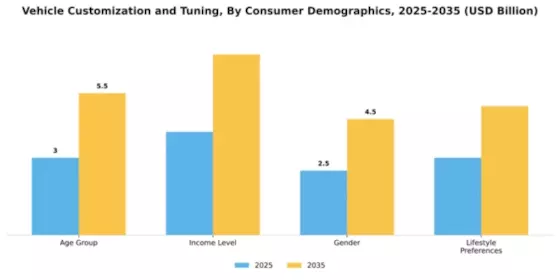
In the Vehicle Customization and Tuning market, age group consumers play a significant role, with millennials representing the largest demographic segment. They are followed closely by Generation Z, which is quickly gaining traction in the customization space. This shift indicates an evolving consumer base that is increasingly driven by personal identity and expression through their vehicles. Concurrently, lifestyle preferences have emerged as a robust sector, characterized by consumers seeking customization that aligns with personal interests such as outdoor activities, technology integration, and eco-friendliness. The growth trends within this segment are propelled by a younger generation's desire for unique vehicle experiences, as well as a growing awareness of sustainability and performance enhancements. Millennial and Gen Z consumers prioritize customization options that reflect their values and aspirations, indicating a profound shift in market dynamics. Additionally, advances in technology and customization options, including software integrations for enhanced performance, have contributed to this robust growth, particularly among lifestyle-oriented consumers looking to make personal statements through their vehicle modifications.
Age Group: Millennials (Dominant) vs. Lifestyle Preferences: Outdoor Enthusiasts (Emerging)
Millennials dominate the Vehicle Customization and Tuning market, characterized by their desire for personalization and technology integration in their vehicles. This demographic is known for embracing innovative modifications, from aesthetic enhancements to performance upgrades. Their preferences often reflect current trends, such as eco-conscious choices and state-of-the-art technology. Meanwhile, outdoor enthusiasts represent an emerging segment within lifestyle preferences, seeking customizations that cater to their adventurous activities. This group prioritizes features that enhance functionality for off-road experiences, such as rugged accessories and performance tuning. As the market continues to evolve, both segments impact trends, pushing brands to innovate and cater to a diverse range of customization demands.
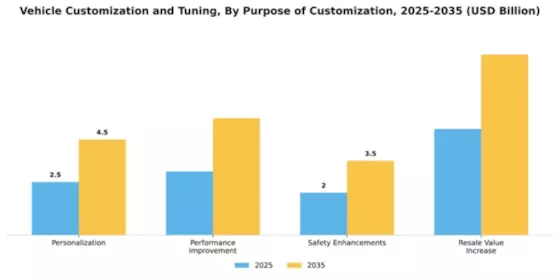
The Vehicle Customization and Tuning market is increasingly segmented by the purpose of customization, with personalization being the largest driver of market share. Personalization encompasses a broad range of modifications aimed at making vehicles more unique and tailored to individual tastes, thereby enjoying significant popularity among consumers. In contrast, performance improvement is capturing attention as the fastest-growing segment, reflecting a trend where drivers seek enhanced power, speed, and overall driving experiences through various aftermarket enhancements.
Personalization (Dominant) vs. Performance Improvement (Emerging)
Personalization stands out as a dominant segment in the Vehicle Customization and Tuning market, frequently involving aesthetic modifications such as custom paint jobs, interior upgrades, and unique accessories that reflect the owner’s identity. This trend is particularly strong among younger demographics who value self-expression. Emerging rapidly, performance improvement focuses on tuning and modifying vehicle mechanics to boost horsepower, torque, and overall efficiency. As high-performance vehicles gain popularity, consumers are increasingly inclined to invest in upgrades that enhance their driving experience, showcasing a significant shift towards performance-focused customizations.
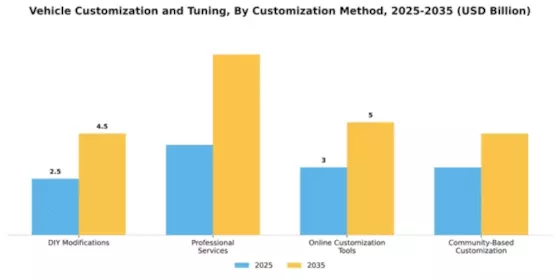
In the Vehicle Customization and Tuning market, the DIY Modifications segment holds the largest share, appealing to car enthusiasts who enjoy personalizing their vehicles on their own. This segment is characterized by a wide range of aftermarket parts and resources that empower individuals to implement modifications at their convenience. Conversely, Professional Services are rapidly gaining traction, particularly among consumers looking for expert quality and guaranteed results. This shift indicates a growing preference for professionally executed customization, leading to a significant rise in consumer demand for these services.
DIY Modifications (Dominant) vs. Professional Services (Emerging)
DIY Modifications represent a dominant force in the vehicle customization landscape, appealing to a dedicated segment of car enthusiasts who prefer hands-on involvement in their projects. This category includes a vast array of resources, including guides, parts, and community support, that facilitate personalized modifications. On the other hand, Professional Services are emerging as a preferred choice for a broader range of consumers, driven by the demand for high-quality finishes and complex modifications that require specialized skills. The increasing complexity of vehicle technology and the desire for unique, standout enhancements are propelling professional services to become an attractive option for many, signaling a notable trend within the customization market.
Get more detailed insights about Vehicle Customization and Tuning Market Request Free Sample
North America continues to lead the vehicle customization and tuning market, holding a significant share of 5.0 in 2024. The growth is driven by a strong automotive culture, increasing disposable incomes, and a rising demand for personalized vehicles. Regulatory support for aftermarket modifications further fuels this trend, allowing consumers to enhance performance and aesthetics legally. The market is also benefiting from technological advancements in automotive parts and accessories. The competitive landscape is robust, with key players like Hennessey Performance Engineering and Roush Performance leading the charge. The U.S. is the primary market, characterized by a high concentration of customization shops and a vibrant community of automotive enthusiasts. This region's focus on innovation and quality ensures that it remains at the forefront of vehicle tuning, attracting both domestic and international customers.
Europe's vehicle customization and tuning market is valued at 3.5, showcasing a growing interest in bespoke automotive solutions. The region benefits from stringent regulations that promote safety and environmental standards, encouraging manufacturers to innovate. The demand for electric vehicle (EV) customization is also on the rise, driven by the EU's commitment to sustainability. This regulatory landscape is a catalyst for growth, pushing companies to develop eco-friendly tuning options. Germany, the UK, and France are leading countries in this sector, with companies like ABT Sportsline and Brabus setting high standards for quality and performance. The competitive environment is marked by a blend of traditional tuning firms and new entrants focusing on EVs. The presence of established automotive brands enhances the market's credibility, making Europe a hub for high-quality vehicle customization.
The Asia-Pacific region, with a market size of 3.0, is rapidly emerging as a significant player in vehicle customization and tuning. The growth is fueled by increasing urbanization, rising disposable incomes, and a growing interest in automotive personalization among younger consumers. Regulatory frameworks are gradually adapting to accommodate aftermarket modifications, which is expected to further stimulate market growth. The demand for high-performance vehicles is also on the rise, particularly in countries like Japan and China. Japan stands out as a leader in this market, with companies like Mugen and Liberty Walk pushing the boundaries of customization. The competitive landscape is diverse, featuring both established brands and local tuners. As the region embraces technological advancements, the customization market is expected to flourish, attracting investments and fostering innovation in automotive design and performance.
The Middle East and Africa region, with a market size of 1.0, is witnessing a gradual increase in interest for vehicle customization and tuning. Factors such as rising disposable incomes, a growing automotive culture, and a demand for luxury vehicles are driving this trend. Regulatory frameworks are still developing, but there is a noticeable shift towards accommodating aftermarket modifications, which is expected to enhance market growth. The region's unique automotive preferences also play a role in shaping customization trends. Countries like the UAE and South Africa are at the forefront of this emerging market, with a mix of local and international players. The presence of luxury brands and a growing number of automotive events are fostering a community of enthusiasts. As the market matures, opportunities for innovation and investment in vehicle customization are likely to expand, making this region an exciting frontier for automotive tuning.
The Vehicle Customization and Tuning market is characterized by a dynamic competitive landscape, driven by consumer demand for personalization and performance enhancement. Key players such as Hennessey Performance Engineering (US), Roush Performance (US), and Brabus (DE) are strategically positioned to capitalize on these trends. Hennessey, known for its high-performance modifications, focuses on innovation and technological advancements, while Roush emphasizes partnerships with automotive manufacturers to expand its reach. Brabus, on the other hand, leverages its luxury branding to attract affluent customers, indicating a diverse approach among these competitors that collectively shapes the market's competitive environment.The market structure appears moderately fragmented, with numerous players vying for market share. Key business tactics include localizing manufacturing to reduce costs and optimize supply chains, which is essential in a sector where customization often requires rapid turnaround times. The influence of major players is significant, as their strategies not only set benchmarks but also drive smaller firms to innovate and adapt to changing consumer preferences.In November Roush Performance (US) announced a strategic partnership with a leading electric vehicle manufacturer to develop performance tuning solutions for electric models. This move is pivotal as it positions Roush at the forefront of the electric vehicle tuning segment, which is expected to grow substantially in the coming years. By aligning with an electric vehicle manufacturer, Roush not only diversifies its offerings but also enhances its brand relevance in a rapidly evolving market.In October Brabus (DE) unveiled a new line of eco-friendly performance upgrades for its luxury vehicles, showcasing a commitment to sustainability. This initiative is particularly significant as it aligns with global trends towards environmentally conscious consumerism. By integrating sustainable practices into its product offerings, Brabus not only appeals to a broader customer base but also strengthens its market position as a leader in luxury vehicle customization.In December Hennessey Performance Engineering (US) launched a new digital platform that allows customers to customize their vehicles online, enhancing user experience and engagement. This digital transformation is crucial in today's market, as it caters to the growing demand for convenience and personalization. By leveraging technology, Hennessey is likely to attract a younger demographic, thereby expanding its customer base and reinforcing its competitive edge.As of December current trends in the Vehicle Customization and Tuning market include a pronounced shift towards digitalization, sustainability, and the integration of artificial intelligence in customization processes. Strategic alliances are increasingly shaping the competitive landscape, enabling companies to pool resources and expertise. Looking ahead, competitive differentiation is expected to evolve, with a greater emphasis on innovation and technology rather than price-based competition. The ability to offer unique, high-quality customization options while ensuring supply chain reliability will likely become the cornerstone of success in this vibrant market.


The Vehicle Customization and Tuning market is projected to grow at a 5.27% CAGR from 2025 to 2035, driven by technological advancements, consumer preferences, and regulatory changes.
New opportunities lie in:
By 2035, the market is expected to be robust, reflecting evolving consumer demands and innovative solutions.
| MARKET SIZE 2024 | 12.5(USD Billion) |
| MARKET SIZE 2025 | 13.16(USD Billion) |
| MARKET SIZE 2035 | 22.0(USD Billion) |
| COMPOUND ANNUAL GROWTH RATE (CAGR) | 5.27% (2025 - 2035) |
| REPORT COVERAGE | Revenue Forecast, Competitive Landscape, Growth Factors, and Trends |
| BASE YEAR | 2024 |
| Market Forecast Period | 2025 - 2035 |
| Historical Data | 2019 - 2024 |
| Market Forecast Units | USD Billion |
| Key Companies Profiled | Hennessey Performance Engineering (US), Roush Performance (US), ABT Sportsline (DE), Brabus (DE), Mugen (JP), Oettinger (DE), TechArt (DE), Liberty Walk (JP), Aston Martin Works (GB) |
| Segments Covered | Customization Type, Vehicle Type, Consumer Demographics, Purpose of Customization, Customization Method |
| Key Market Opportunities | Integration of advanced digital technologies in Vehicle Customization and Tuning enhances personalization and user experience. |
| Key Market Dynamics | Rising consumer demand for personalized vehicles drives innovation and competition in vehicle customization and tuning markets. |
| Countries Covered | North America, Europe, APAC, South America, MEA |
The market valuation for Vehicle Customization and Tuning is projected to reach 22.0 USD Billion by 2035.
The overall market valuation for Vehicle Customization and Tuning was 12.5 USD Billion in 2024.
The expected CAGR for the Vehicle Customization and Tuning market during the forecast period 2025 - 2035 is 5.27%.
Key players in the Vehicle Customization and Tuning market include Hennessey Performance Engineering, Roush Performance, ABT Sportsline, and Brabus.
The main segments by customization type include Performance Tuning, Aesthetic Modifications, Functional Enhancements, and Interior Customization.
The Performance Tuning segment was valued at 3.5 USD Billion in 2024 and is projected to reach 6.5 USD Billion.
The Aesthetic Modifications segment was valued at 4.0 USD Billion in 2024 and is expected to grow to 7.0 USD Billion.
Demographic factors influencing the market include Age Group, Income Level, Gender, and Lifestyle Preferences.
The DIY Modifications segment is projected to reach a valuation of 4.5 USD Billion by 2035.
The primary purposes of vehicle customization include Personalization, Performance Improvement, Safety Enhancements, and Resale Value Increase.


Kindly complete the form below to receive a free sample of this Report

“This is really good guys. Excellent work on a tight deadline. I will continue to use you going forward and recommend you to others. Nice job”


“Thanks. It’s been a pleasure working with you, please use me as reference with any other Intel employees.”


“Thanks for sending the report it gives us a good global view of the Betaïne market.”


“Thank you, this will be very helpful for OQS.”


“We found the report very insightful! we found your research firm very helpful. I'm sending this email to secure our future business.”


“I am very pleased with how market segments have been defined in a relevant way for my purposes (such as "Portable Freezers & refrigerators" and "last-mile"). In general the report is well structured. Thanks very much for your efforts.”


“I have been reading the first document or the study, ,the Global HVAC and FP market report 2021 till 2026. Must say, good info! I have not gone in depth at all parts, but got a good indication of the data inside!”


“We got the report in time, we really thank you for your support in this process. I also thank to all of your team as they did a great job.”


“The Automotive 48V ECU Components Procurement Intelligence Study” was a complex project, but the Market Research Future (MRFR) team handled it with quality, agility, and customer-centricity. They delivered all requested data on time and within the agreed scope. The team, including Shubhendra Anand and Rahul Gotadki, was always readily available to clarify questions and swiftly implement necessary adjustments, driving the project to a successful conclusion within a very demanding timeframe.
I would also like to specifically commend Akshay Agarwal for his responsiveness and support at every stage—from our initial inquiry on May 6th through to final delivery on June 18th. His dedication made the entire process seamless.”



