×
Request Free Sample ×

Kindly complete the form below to receive a free sample of this Report

* Please use a valid business email

Leading companies partner with us for data-driven Insights

clients tt-cursor
Hero Background

Vitreous Detachment Treatment Market

ID: MRFR/HC/38205-HCR
100 Pages
Rahul Gotadki
October 2025

Vitreous Detachment Treatment Market Research Report By Treatment Type (Surgery, Medication, Laser Therapy), By Indication (Symptomatic Vitreous Detachment, Non-Symptomatic Vitreous Detachment, Prevention of Complications), By Mode of Administration (Invasive, Non-Invasive), By End User (Hospitals, Specialized Clinics, Research Laboratories) and By Regional (North America, Europe, South America, Asia Pacific, Middle East and Africa) - Forecast to 2035

Share:
Download PDF ×

We do not share your information with anyone. However, we may send you emails based on your report interest from time to time. You may contact us at any time to opt-out.

Vitreous Detachment Treatment Market Infographic
Purchase Options

Vitreous Detachment Treatment Market Summary

As per MRFR analysis, the Vitreous Detachment Treatment Market Size was estimated at 3698.03 USD Million in 2024. The vitreous detachment treatment industry is projected to grow from 3872.65 in 2025 to 6143.11 by 2035, exhibiting a compound annual growth rate (CAGR) of 4.72 during the forecast period 2025 - 2035.

Key Market Trends & Highlights

The Vitreous Detachment Treatment Market is experiencing notable growth driven by technological advancements and increasing patient awareness.

  • Technological advancements in treatment are enhancing the efficacy and safety of vitreous detachment procedures.
  • North America remains the largest market, while the Asia-Pacific region is emerging as the fastest-growing area for vitreous detachment treatments.
  • Surgical treatment continues to dominate the market, whereas laser treatment is rapidly gaining traction due to its minimally invasive nature.
  • The rising incidence of eye disorders and advancements in surgical techniques are key drivers propelling market growth.

Market Size & Forecast

2024 Market Size 3698.03 (USD Million)
2035 Market Size 6143.11 (USD Million)
CAGR (2025 - 2035) 4.72%

Major Players

Alcon (CH), Bausch Health (CA), Carl Zeiss (DE), CooperVision (US), Hoya Corporation (JP), Novartis (CH), Regeneron Pharmaceuticals (US), Santen Pharmaceutical (JP), Synergetics USA (US)

Vitreous Detachment Treatment Market Trends

The Vitreous Detachment Treatment Market is currently experiencing a notable evolution, driven by advancements in medical technology and an increasing understanding of ocular health. As the population ages, the prevalence of vitreous detachment is likely to rise, prompting a greater demand for effective treatment options. Innovations in minimally invasive procedures and enhanced diagnostic tools appear to be reshaping the landscape of this market. Furthermore, the integration of telemedicine into ophthalmology may facilitate access to care, allowing patients to receive timely consultations and follow-ups, which could potentially improve outcomes. In addition, the growing awareness of eye health among consumers seems to be influencing market dynamics. Educational initiatives and outreach programs are likely to play a crucial role in informing individuals about the symptoms and risks associated with vitreous detachment. This heightened awareness may lead to earlier diagnosis and treatment, ultimately benefiting patient health. As the Vitreous Detachment Treatment Market continues to evolve, stakeholders must remain vigilant to emerging trends and adapt their strategies accordingly to meet the changing needs of patients and healthcare providers.

Technological Advancements in Treatment

Recent innovations in surgical techniques and equipment are transforming the Vitreous Detachment Treatment Market. Minimally invasive procedures, such as vitrectomy, are gaining traction due to their potential for reduced recovery times and improved patient outcomes. These advancements may encourage more healthcare providers to adopt new technologies, thereby expanding treatment options available to patients.

Increased Focus on Patient Education

There is a growing emphasis on educating patients about vitreous detachment and its implications. Awareness campaigns and informational resources are likely to empower individuals to seek timely medical attention. This trend may lead to earlier diagnoses and interventions, ultimately enhancing the effectiveness of treatments and improving overall patient satisfaction.

Integration of Telemedicine

The incorporation of telemedicine into the Vitreous Detachment Treatment Market appears to be on the rise. Remote consultations and follow-up appointments may provide patients with greater access to specialists, particularly in underserved areas. This trend could facilitate timely interventions and ongoing management of vitreous detachment, potentially leading to better health outcomes.

Vitreous Detachment Treatment Market Drivers

Market Growth Projections

The Global Vitreous Detachment Treatment Market Industry is projected to experience robust growth over the coming years. With an estimated market value of 3.7 USD Billion in 2024, it is anticipated to reach 6.15 USD Billion by 2035. This growth trajectory suggests a compound annual growth rate (CAGR) of 4.72% from 2025 to 2035. Such projections indicate a strong demand for vitreous detachment treatments, driven by factors such as technological advancements, an aging population, and increased awareness of eye health. The market's expansion reflects the ongoing commitment to improving patient care and treatment options.

Increased Awareness and Education

Raising awareness about vitreous detachment and its potential complications plays a crucial role in driving the market. Educational campaigns by healthcare organizations and advocacy groups aim to inform the public about the symptoms and risks associated with vitreous detachment. This heightened awareness encourages individuals to seek timely medical intervention, thereby increasing the demand for treatment options. The Global Vitreous Detachment Treatment Market Industry benefits from this trend, as more patients become proactive about their eye health. As awareness continues to grow, the market is likely to expand, supported by a more informed patient population.

Rising Prevalence of Eye Disorders

The increasing incidence of eye disorders globally drives the demand for vitreous detachment treatment. Conditions such as diabetic retinopathy and age-related macular degeneration contribute significantly to this trend. In 2024, the Global Vitreous Detachment Treatment Market Industry is projected to reach 3.7 USD Billion, reflecting a growing need for effective therapeutic options. As populations age and lifestyle-related eye issues become more prevalent, healthcare systems are compelled to enhance their ophthalmic services. This trend is expected to continue, with the market likely expanding as more individuals seek treatment for vitreous detachment and associated complications.

Expansion of Healthcare Infrastructure

The expansion of healthcare infrastructure in emerging economies is a significant driver of the vitreous detachment treatment market. As countries invest in healthcare facilities and services, access to ophthalmic care improves, leading to increased patient volumes. The Global Vitreous Detachment Treatment Market Industry stands to benefit from this trend, as enhanced healthcare systems facilitate the delivery of advanced treatment options. With more patients able to access care, the market is likely to witness substantial growth, aligning with global efforts to improve healthcare access and outcomes.

Aging Population and Demographic Shifts

The global demographic shift towards an aging population significantly impacts the vitreous detachment treatment market. As individuals age, the risk of developing vitreous detachment and related eye conditions increases. This trend is particularly pronounced in developed countries, where the proportion of elderly individuals is rising. The Global Vitreous Detachment Treatment Market Industry is expected to grow in response to this demographic change, with projections indicating a compound annual growth rate (CAGR) of 4.72% from 2025 to 2035. This growth reflects the increasing need for specialized ophthalmic care tailored to the aging population.

Technological Advancements in Treatment Options

Innovations in medical technology are transforming the landscape of vitreous detachment treatment. The introduction of minimally invasive surgical techniques and advanced imaging technologies enhances the efficacy and safety of procedures. These advancements not only improve patient outcomes but also reduce recovery times, making treatments more appealing. The Global Vitreous Detachment Treatment Market Industry is poised for growth as these technologies become more widely adopted. As healthcare providers increasingly incorporate cutting-edge solutions, the market may experience a surge in demand, potentially leading to a market valuation of 6.15 USD Billion by 2035.
Market Segment Insights

By Treatment Type: Surgical Treatment (Largest) vs. Laser Treatment (Fastest-Growing)

The Vitreous Detachment Treatment Market showcases distinct preferences among treatment types. Surgical treatment leads the segment, capturing the largest share due to its effectiveness in addressing severe cases of vitreous detachment. In contrast, while pharmacological and observation methods play roles in management, they remain secondary choices. Laser treatment has been emerging as a popular alternative, gaining traction for its minimally invasive nature and safety profile, appealing to both patients and practitioners alike. Growth trends indicate a robust demand for surgical treatments driven by increasing incidences of vitreous detachment. Concurrently, laser treatment is witnessing rapid expansion, fueled by advances in technology and a growing inclination towards non-invasive procedures. The rise in geriatric populations who are more susceptible to these conditions contributes to the heightened need for effective and innovative treatment options.

Surgical Treatment (Dominant) vs. Laser Treatment (Emerging)

Surgical treatment remains the dominant approach in managing vitreous detachment, characterized by surgical vitrectomy or techniques that directly address the detachment, offering reliable outcomes for patients with severe conditions. This method is particularly well-established and preferred among healthcare professionals aiming for clear and immediate results. Meanwhile, laser treatment represents an emerging segment, attracting attention due to its innovative methodologies such as laser photocoagulation and vitrectomy. It provides a minimally invasive option that enhances patient comfort and reduces recovery times, making it increasingly favored by a younger demographic seeking effective yet less intrusive solutions. Both treatment types are pivotal in meeting diverse patient needs and reflect the evolving landscape of healthcare in the vitreous detachment segment.

By Indication: Vitreous Detachment (Largest) vs. Retinal Detachment (Fastest-Growing)

In the Vitreous Detachment Treatment Market, the segment showcases a diverse portfolio of indications including Vitreous Detachment, Retinal Detachment, Macular Hole, and Posterior Vitreous Detachment. Among these, Vitreous Detachment leads the market, attracting the majority share due to its prevalence and the efficacy of current treatments. Conversely, Retinal Detachment has emerged as a critical focus area, rapidly gaining traction as awareness about eye health increases, contributing to its significant share in the market landscape.

Vitreous Detachment (Dominant) vs. Retinal Detachment (Emerging)

Vitreous Detachment stands as the dominant indication in the market, primarily due to the increasing incidence linked with aging populations and eye health complications. This condition necessitates effective treatment options, pushing advancements in therapeutic techniques. On the other hand, Retinal Detachment is recognized as an emerging concern, with heightened screening, improved diagnostic tools, and ongoing research fostering growth in treatment modalities. The focus on innovative therapeutic approaches for both indications reflects an evolving understanding of retinal health, emphasizing the importance of early detection and specialized care.

By Patient Demographics: Age Group (Largest) vs. Gender (Fastest-Growing)

In the Vitreous Detachment Treatment Market, the age group segment is the largest contributor, dominating the landscape due to the increasing prevalence of vitreous detachment among older adults. As the aging population grows, demand for effective treatment options is expected to rise significantly. Meanwhile, the gender segment is emerging rapidly, with increasing awareness and diagnosis of eye-related health issues among women contributing to its growth. The growth trends in this segment are driven by a combination of demographic shifts and rising health consciousness. As more individuals undergo regular eye check-ups, we anticipate a surge in the early detection of vitreous detachment, particularly among older patients. Gender differences in health-seeking behavior are also influencing treatment uptake, positioning women as a key demographic for future growth.

Age Group: 65+ (Dominant) vs. Gender: Female (Emerging)

The age group of 65 and above is dominant in the Vitreous Detachment Treatment Market, primarily due to the physiological changes associated with aging that increase the risk of vitreous detachment. Older adults often present with a greater incidence of this condition, necessitating targeted treatments and management strategies. Contrastingly, the female gender segment is emerging as a significant demographic, driven by heightened awareness surrounding eye health and increasing participation in health screenings. Women are also more proactive in seeking medical advice, which is facilitating earlier diagnosis and treatment of vitreous detachment. Together, these segments are shaping the market dynamics and influencing the development of tailored therapeutic approaches.

By Healthcare Setting: Hospitals (Largest) vs. Specialty Eye Care Centers (Fastest-Growing)

In the Vitreous Detachment Treatment Market, hospitals represent the largest segment, primarily due to their comprehensive treatment capabilities and access to advanced technologies. These facilities are equipped to handle a wide range of vitreous conditions, attracting a significant patient base. Outpatient clinics also contribute substantially to this market share, providing accessible care for routine and less complex cases. Specialty eye care centers, while currently smaller, are rapidly gaining traction, driven by their focus on ocular diseases and specialized treatment options that cater specifically to vitreous detachment.

Outpatient Clinics (Dominant) vs. Specialty Eye Care Centers (Emerging)

Outpatient clinics are well-positioned within the Vitreous Detachment Treatment Market as they consolidate a robust patient flow with their convenience and efficiency in treating less severe vitreous issues. These facilities typically offer lower-cost alternatives compared to hospitals and are often favored for follow-up care and minor interventions. In contrast, specialty eye care centers, characterized by their concentrated expertise in ocular health, are emerging rapidly. They are gaining popularity due to increased awareness of eye health issues and advancements in treatment methodologies tailored for vitreous detachment. This growth reflects a shifting patient preference toward specialized care, enhancing these centers’ role in the overall healthcare landscape.

By Technology: Traditional Techniques (Largest) vs. Advanced Imaging Techniques (Fastest-Growing)

In the Vitreous Detachment Treatment Market, Traditional Techniques currently hold the largest share, showcasing the preference of practitioners for established methods. This segment includes time-honored procedures that have proven effective over the years in managing vitreous detachment. On the other hand, Advanced Imaging Techniques are rapidly gaining traction, utilized for their superior capabilities in accurately diagnosing and monitoring vitreous conditions. This shift underscores the evolving landscape of treatment approaches.

Technology: Traditional Techniques (Dominant) vs. Advanced Imaging Techniques (Emerging)

Traditional Techniques in vitreous detachment treatment encompass methods like vitrectomy and pneumatic retinopexy, which are widely accepted due to their efficacy and established safety profiles. These techniques are favored by many ophthalmologists who appreciate their proven results, contributing to their dominant market share. In contrast, Advanced Imaging Techniques focus on utilizing state-of-the-art diagnostic tools such as OCT (optical coherence tomography) to enhance treatment precision. These emerging methods allow for better visualization and monitoring of vitreous detachment, leading to quicker decision-making. As technology advances, the integration of Advanced Imaging Techniques within treatment protocols is expected to rise, offering significant improvements in patient outcomes.

Get more detailed insights about Vitreous Detachment Treatment Market

Regional Insights

North America : Market Leader in Innovation

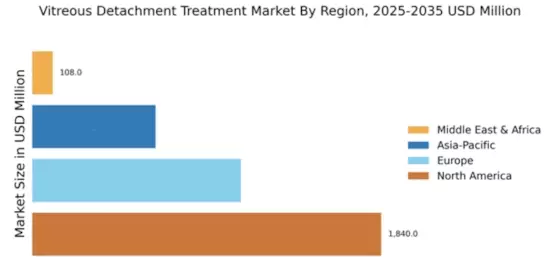
North America is poised to maintain its leadership in the Vitreous Detachment Treatment Market, holding a significant market share of $1850.0M in 2024. The region benefits from advanced healthcare infrastructure, high R&D investments, and a growing aging population, which drives demand for innovative treatment options. Regulatory support from agencies like the FDA further catalyzes market growth by expediting the approval of new therapies and technologies. The competitive landscape in North America is robust, featuring key players such as Alcon, Bausch Health, and Regeneron Pharmaceuticals. These companies are at the forefront of developing cutting-edge solutions for vitreous detachment, leveraging their strong distribution networks and established brand reputations. The U.S. remains the largest market, followed by Canada, as both countries invest heavily in ophthalmic research and development, ensuring a steady pipeline of new products.

Europe : Emerging Market with Growth Potential

Europe's Vitreous Detachment Treatment Market is projected to grow significantly, with a market size of $1100.0M. The region is characterized by increasing awareness of eye health and advancements in medical technology. Regulatory bodies like the European Medicines Agency (EMA) are actively promoting innovative treatments, which is expected to enhance patient access and treatment outcomes. The aging population in countries such as Germany and France is a key driver of demand for these treatments. Leading countries in Europe include Germany, France, and the UK, where major players like Carl Zeiss and Novartis are making substantial investments. The competitive landscape is marked by collaborations and partnerships aimed at enhancing product offerings. The presence of established healthcare systems facilitates the introduction of new therapies, making Europe a dynamic market for vitreous detachment treatments.

Asia-Pacific : Rapidly Growing Healthcare Sector

The Asia-Pacific region is witnessing rapid growth in the Vitreous Detachment Treatment Market, with a market size of $600.0M. Factors such as increasing healthcare expenditure, rising awareness of eye diseases, and a growing elderly population are driving demand for effective treatment options. Governments in countries like Japan and Australia are implementing policies to improve healthcare access, which is expected to further boost market growth in the coming years. Key players in the region include Hoya Corporation and Santen Pharmaceutical, who are focusing on expanding their product portfolios and enhancing distribution channels. Countries like Japan and China are leading the market, supported by a strong emphasis on research and development. The competitive landscape is evolving, with local companies emerging to meet the growing demand for vitreous detachment treatments, ensuring a diverse range of options for patients.

Middle East and Africa : Untapped Market Opportunities

The Middle East and Africa (MEA) region presents untapped opportunities in the Vitreous Detachment Treatment Market, with a market size of $148.03M. The region is characterized by increasing healthcare investments and a rising prevalence of eye disorders, which are driving demand for effective treatment solutions. Governments are focusing on improving healthcare infrastructure, which is expected to enhance patient access to advanced therapies in the coming years. Leading countries in the MEA region include South Africa and the UAE, where healthcare systems are evolving rapidly. The competitive landscape is marked by the entry of both local and international players, aiming to address the growing need for vitreous detachment treatments. Companies are increasingly investing in awareness campaigns to educate the population about eye health, which is crucial for market growth.

Key Players and Competitive Insights

The Vitreous Detachment Treatment Market is characterized by a dynamic competitive landscape, driven by advancements in technology, increasing prevalence of eye disorders, and a growing aging population. Key players such as Alcon (CH), Bausch Health (CA), and Regeneron Pharmaceuticals (US) are strategically positioned to leverage innovation and expand their market presence. Alcon (CH) focuses on enhancing its product portfolio through research and development, while Bausch Health (CA) emphasizes strategic partnerships to broaden its therapeutic offerings. Regeneron Pharmaceuticals (US) is known for its commitment to developing novel therapies, which collectively shapes a competitive environment that is increasingly focused on innovation and patient-centric solutions.

In terms of business tactics, companies are localizing manufacturing and optimizing supply chains to enhance efficiency and reduce costs. The market appears moderately fragmented, with several players vying for market share. The collective influence of these key players fosters a competitive structure that encourages continuous improvement and innovation, as companies strive to differentiate themselves in a crowded marketplace.

In November 2025, Alcon (CH) announced the launch of a new line of minimally invasive surgical instruments designed specifically for vitreous detachment procedures. This strategic move is likely to enhance their competitive edge by addressing the growing demand for less invasive treatment options, thereby improving patient outcomes and satisfaction. Such innovations may also position Alcon (CH) as a leader in the surgical segment of the market.

In October 2025, Bausch Health (CA) entered into a collaboration with a leading technology firm to develop AI-driven diagnostic tools for early detection of vitreous detachment. This partnership underscores Bausch Health's commitment to integrating cutting-edge technology into its treatment protocols, potentially revolutionizing the way vitreous detachment is diagnosed and managed. The implications of this collaboration could extend beyond immediate market share gains, influencing the overall standard of care in the field.

In September 2025, Regeneron Pharmaceuticals (US) received FDA approval for a new therapeutic agent aimed at treating complications associated with vitreous detachment. This approval not only signifies a major milestone for Regeneron (US) but also reflects the increasing regulatory support for innovative treatments in the ophthalmic sector. The introduction of this agent is expected to enhance treatment options available to healthcare providers, thereby improving patient outcomes and solidifying Regeneron's position in the market.

As of December 2025, current competitive trends indicate a strong emphasis on digitalization, sustainability, and the integration of AI technologies within the Vitreous Detachment Treatment Market. Strategic alliances are increasingly shaping the landscape, as companies recognize the value of collaboration in driving innovation and enhancing operational efficiencies. Looking ahead, competitive differentiation is likely to evolve from traditional price-based competition to a focus on technological advancements, innovative treatment modalities, and reliable supply chains, reflecting a broader shift towards value-based healthcare.

Key Companies in the Vitreous Detachment Treatment Market market include

Industry Developments

Recent developments in the Vitreous Detachment Treatment Market have seen significant advancements, particularly concerning major players such as Regeneron Pharmaceuticals, Johnson & Johnson, and Novartis, who are enhancing their product lines to address increasing demand. CooperSurgical has made strides in introducing innovative treatment solutions that cater to a broader patient demographic, while companies like TearTech and ThromboGenics have reported successful clinical trials, showcasing promising therapies for vitreous detachment.

Additionally, Bausch Health and Ellex Medical Lasers have been focusing on expanding their market presence through strategic partnerships and product launches. Current affairs indicate a notable growth trajectory for the market, driven by an aging population and rising incidences of ocular conditions. The valuation of companies such as Santen Pharmaceutical and Zeiss has witnessed substantial growth, reflecting increased investments in research and development.

Notably, there have been discussions surrounding mergers and acquisitions, particularly with Johnson & Johnson actively seeking opportunities to bolster its ophthalmic segment, aiming for greater market consolidation. These dynamics not only enhance competitive positioning but also contribute to the overall evolution of vitreous detachment treatment options available globally.

Future Outlook

Vitreous Detachment Treatment Market Future Outlook

The Vitreous Detachment Treatment Market is projected to grow at a 4.72% CAGR from 2024 to 2035, driven by technological advancements, increasing prevalence of eye disorders, and rising healthcare expenditure.

New opportunities lie in:

  • Development of minimally invasive surgical techniques for vitreous detachment.
  • Expansion of telemedicine platforms for remote patient monitoring and consultations.
  • Investment in AI-driven diagnostic tools to enhance treatment accuracy and efficiency.

By 2035, the market is expected to achieve substantial growth, driven by innovation and increased demand for effective treatments.

Market Segmentation

Vitreous Detachment Treatment Market Indication Outlook

  • Vitreous Detachment
  • Retinal Detachment
  • Macular Hole
  • Posterior Vitreous Detachment

Vitreous Detachment Treatment Market Technology Outlook

  • Traditional Techniques
  • Minimally Invasive Techniques
  • Advanced Imaging Techniques

Vitreous Detachment Treatment Market Treatment Type Outlook

  • Surgical Treatment
  • Pharmacological Treatment
  • Laser Treatment
  • Observation

Vitreous Detachment Treatment Market Healthcare Setting Outlook

  • Hospitals
  • Outpatient Clinics
  • Specialty Eye Care Centers

Vitreous Detachment Treatment Market Patient Demographics Outlook

  • Age Group
  • Gender
  • Health Status
  • Lifestyle Factors

Report Scope

MARKET SIZE 20243698.03(USD Million)
MARKET SIZE 20253872.65(USD Million)
MARKET SIZE 20356143.11(USD Million)
COMPOUND ANNUAL GROWTH RATE (CAGR)4.72% (2024 - 2035)
REPORT COVERAGERevenue Forecast, Competitive Landscape, Growth Factors, and Trends
BASE YEAR2024
Market Forecast Period2025 - 2035
Historical Data2019 - 2024
Market Forecast UnitsUSD Million
Key Companies ProfiledAlcon (CH), Bausch Health (CA), Carl Zeiss (DE), CooperVision (US), Hoya Corporation (JP), Novartis (CH), Regeneron Pharmaceuticals (US), Santen Pharmaceutical (JP), Synergetics USA (US)
Segments CoveredTreatment Type, Indication, Patient Demographics, Healthcare Setting, Technology
Key Market OpportunitiesAdvancements in minimally invasive surgical techniques enhance treatment options in the Vitreous Detachment Treatment Market.
Key Market DynamicsRising demand for minimally invasive procedures drives innovation in vitreous detachment treatment technologies and competitive strategies.
Countries CoveredNorth America, Europe, APAC, South America, MEA

Leave a Comment

FAQs

What is the projected growth of the Vitreous Detachment Treatment market?

The Vitreous Detachment Treatment market is the expected increase in total market value of 6.14 USD billion over a defined forecast period 2025–2035. It is driven by factors such as demand trends, technological advances, regulatory changes, and geographic expansion.

What is the size of the Vitreous Detachment Treatment market?

Vitreous Detachment Treatment market size was valued at approximately 3.7 billion USD in 2024. This figure will reach 6.14 billion USD covering all regions (America, Europe, Asia, MEA and ROW), focusing its segments / services / distribution channels till 2035.

What is the CAGR of the Vitreous Detachment Treatment market?

Vitreous Detachment Treatment market is expected to grow at a CAGR of 4.72% between 2025 and 2035.

How much will the Vitreous Detachment Treatment market be worth by 2035?

Vitreous Detachment Treatment market is expected to be worth of 6.14 billion USD, reflecting growth driven by usage, technology and global demands by the end of 2035.

How will the Vitreous Detachment Treatment market perform over the next 10 years?

Over the next 10 years the Vitreous Detachment Treatment market is expected to shift from usd billion 3.7 to 6.14 billion USD, led by adoption of advanced tech, demographic trends, regulatory approvals, with potential headwinds from 2025 to 2035.

Which treatment type is expected to dominate the Vitreous Detachment Treatment Market by 2035?

Surgery is projected to dominate the market, reaching a value of 2.25 billion USD by 2035.

What was the market size for North America in the Vitreous Detachment Treatment Market in 2024?

North America is valued at 1.25 billion USD in the market for the year 2024.

What will be the expected market size for the Laser Therapy segment by 2035?

The Laser Therapy segment is expected to reach a market size of 1.2 billion USD by 2035.

Which region is expected to experience significant growth in the Vitreous Detachment Treatment Market?

The APAC region is anticipated to grow significantly, increasing to 1.19 billion USD by 2035.

Who are the key players in the Vitreous Detachment Treatment Market?

Major players include Regeneron Pharmaceuticals, Johnson and Johnson, and Abbott.

Download Free Sample

Kindly complete the form below to receive a free sample of this Report

Compare Licence

×
Features License Type
Single User Multiuser License Enterprise User
Price $4,950 $5,950 $7,250
Maximum User Access Limit 1 User Upto 10 Users Unrestricted Access Throughout the Organization
Free Customization
Direct Access to Analyst
Deliverable Format
Platform Access
Discount on Next Purchase 10% 15% 15%
Printable Versions