Wood Based Battery Market
Wood Based Battery Market Summary
As per Market Research Future analysis, the Wood-Based Battery Market Size was estimated at 1.325 USD Billion in 2024. The Wood-Based Battery industry is projected to grow from 1.698 USD Billion in 2025 to 20.23 USD Billion by 2035, exhibiting a compound annual growth rate (CAGR) of 28.12% during the forecast period 2025 - 2035
Key Market Trends & Highlights
The Wood-Based Battery Market is poised for substantial growth driven by sustainability and technological advancements.
- The market is increasingly oriented towards sustainability, reflecting a broader environmental consciousness.
- Technological advancements are enhancing the performance and efficiency of wood-based batteries.
- Diverse applications across sectors, including electric vehicles and energy storage systems, are expanding market potential.
- Key drivers such as sustainability initiatives and rising energy storage needs are propelling growth, particularly in North America and the Asia-Pacific region.
Market Size & Forecast
| 2024 Market Size | 1.325 (USD Billion) |
| 2035 Market Size | 20.23 (USD Billion) |
| CAGR (2025 - 2035) | 28.12% |
Major Players
Stora Enso (FI), Sappi (ZA), Metsä Group (FI), UPM-Kymmene (FI), Valmet (FI), VTT Technical Research Centre of Finland (FI), Woodly (FI), Bioo (ES)
Wood Based Battery Market Trends
The Wood-Based Battery Market is currently experiencing a notable transformation, driven by the increasing demand for sustainable energy storage solutions. This market appears to be gaining traction as industries and consumers alike seek alternatives to conventional batteries, which often rely on finite resources. Wood-based batteries, utilizing renewable materials, suggest a promising avenue for reducing environmental impact while enhancing energy efficiency. The potential for these batteries to offer comparable performance to traditional options may further bolster their appeal in various applications, including electric vehicles and grid storage. Moreover, the ongoing advancements in technology and materials science indicate that the Wood-Based Battery Market could witness significant innovations in the near future. Research efforts are likely focused on improving the energy density and longevity of these batteries, which may enhance their competitiveness against established technologies. As awareness of climate change and sustainability continues to rise, the market for wood-based energy storage solutions seems poised for growth, potentially reshaping the landscape of energy storage solutions in the coming years.
Sustainability Focus
The Wood-Based Battery Market is increasingly characterized by a strong emphasis on sustainability. As consumers and industries prioritize eco-friendly solutions, the demand for renewable materials in energy storage is likely to rise. This trend suggests that manufacturers may invest more in developing wood-based technologies that align with environmental goals.
Technological Advancements
Ongoing research and development in the Wood-Based Battery Market indicate a trend towards significant technological advancements. Innovations in materials and battery design may enhance performance metrics such as energy density and charge cycles. This evolution could make wood-based batteries more competitive with traditional options.
Diverse Applications
The versatility of wood-based batteries appears to be expanding, with potential applications in various sectors. From electric vehicles to renewable energy storage systems, the adaptability of these batteries suggests a growing market presence. This trend may lead to increased collaboration between industries to explore new uses for wood-based energy storage.
Wood Based Battery Market Drivers
Regulatory Support
Regulatory frameworks are increasingly favoring the Wood-Based Battery Market as governments worldwide implement policies to promote renewable energy solutions. Incentives such as tax breaks and subsidies for sustainable technologies are encouraging manufacturers to invest in wood-based battery production. Recent data suggests that regions with supportive regulations have seen a 30% increase in the adoption of wood-based batteries. This regulatory support not only enhances market viability but also encourages innovation and competition among manufacturers. As policies continue to evolve, the Wood-Based Battery Market is poised for substantial growth, driven by favorable governmental initiatives.
Technological Innovations
Technological advancements play a pivotal role in the Wood-Based Battery Market. Innovations in materials science and battery design are enhancing the performance and efficiency of wood-based batteries. Recent developments indicate that these batteries can achieve energy densities comparable to conventional lithium-ion batteries, making them a viable alternative. The integration of nanotechnology and advanced manufacturing techniques is expected to reduce production costs and improve scalability. As research continues, the potential for higher energy storage capacities and faster charging times emerges, which could significantly impact the market landscape. This technological evolution is likely to attract attention from both consumers and manufacturers, fostering growth in the Wood-Based Battery Market.
Sustainability Initiatives
The Wood-Based Battery Market is experiencing a surge in demand driven by increasing sustainability initiatives. As environmental concerns escalate, industries are seeking eco-friendly alternatives to traditional batteries. Wood-based batteries, derived from renewable resources, present a compelling solution. The market is projected to grow at a compound annual growth rate of approximately 20% over the next five years, reflecting a shift towards sustainable energy storage solutions. Companies are investing in research and development to enhance the efficiency and performance of wood-based batteries, aligning with global sustainability goals. This trend is likely to attract investments and partnerships, further propelling the Wood-Based Battery Market.
Rising Energy Storage Needs
The growing demand for energy storage solutions is a significant driver for the Wood-Based Battery Market. With the increasing integration of renewable energy sources, such as solar and wind, the need for efficient energy storage systems has become paramount. Wood-based batteries offer a sustainable alternative for storing excess energy generated during peak production times. Market analysis indicates that the energy storage sector is expected to reach a valuation of over 200 billion dollars by 2030, with wood-based solutions capturing a notable share. This rising demand for energy storage is likely to propel the Wood-Based Battery Market forward, as stakeholders seek reliable and eco-friendly options.
Diverse Application Potential
The versatility of wood-based batteries is a compelling driver for the Wood-Based Battery Market. These batteries can be utilized across various sectors, including consumer electronics, electric vehicles, and grid storage solutions. The adaptability of wood-based batteries to different applications enhances their market appeal. Recent studies suggest that the automotive sector alone could account for a significant portion of the market, as manufacturers explore sustainable battery options for electric vehicles. This diverse application potential not only broadens the market scope but also encourages innovation and investment in the Wood-Based Battery Market, fostering a dynamic and competitive landscape.
Market Segment Insights
By Application: Electric Vehicles (Largest) vs. Energy Storage Systems (Fastest-Growing)
The Wood-Based Battery Market is predominantly driven by its application in electric vehicles, which currently represents the largest segment. This application benefits from the increasing demand for sustainable transportation solutions and the growing prevalence of electric vehicles (EVs) across the globe. In contrast, the energy storage systems segment is emerging as the fastest-growing area, capitalizing on the need for efficient energy solutions to complement renewable energy sources. As the market continues to evolve, both segments play crucial roles in shaping industry dynamics. Over recent years, the wood-based battery technology has seen substantial growth driven by innovations that enhance performance and sustainability. The rising focus on green technologies and renewable energy sources is propelling the demand for energy storage systems as customers seek reliable solutions for managing energy generated from intermittent sources. Consequently, the electric vehicles segment remains robust, accompanied by an upward trend in energy storage systems, indicating a comprehensive adaptation of wood-based technologies across various applications.
Electric Vehicles (Dominant) vs. Grid Stabilization (Emerging)
In the Wood-Based Battery Market, electric vehicles (EVs) hold a dominant position as the primary application, attracting significant attention due to the global shift towards sustainable transport solutions. These batteries are favored for their lightweight and efficient energy storage capabilities, aligning with the growing emphasis on reducing carbon footprints. On the other hand, grid stabilization presents itself as an emerging application, focusing on the critical need to maintain a balanced electricity supply and demand. As renewable energy sources become more mainstream, the demand for reliable energy management solutions gains momentum, positioning grid stabilization as a significant opportunity for wood-based battery technologies. While EVs primarily benefit from sustainability trends, grid stabilization emphasizes reliability and efficiency, catering to evolving energy needs.
By Type: Lithium-ion (Largest) vs. Sodium-ion (Fastest-Growing)
In the Wood-Based Battery Market, Lithium-ion batteries dominate the landscape, capturing the largest market share due to their widespread adoption in various applications, ranging from consumer electronics to electric vehicles. Their established technology and extensive infrastructure significantly contribute to their market leadership, positioning them as a reliable choice for many users. Following closely is the Sodium-ion segment, which, although smaller, is rapidly gaining traction and capturing interest due to the growing demand for sustainable and cost-effective energy storage solutions. As advancements in technology continue, the Sodium-ion segment is expected to show significant potential, appealing to environmentally conscious consumers and businesses alike.
Lithium-ion (Dominant) vs. Sodium-ion (Emerging)
Lithium-ion batteries possess well-established technology with a strong track record in performance, energy density, and cycle life, making them the preferred choice in various sectors, including renewable energy integration and electric mobility within the Wood-Based Battery Market. These batteries have become synonymous with reliability and efficiency, fostering a robust ecosystem for recycling and sustainability practices. On the other hand, Sodium-ion batteries are emerging as a formidable alternative, primarily due to their abundant material availability and lower production costs. These batteries are gaining momentum for applications requiring large-scale energy storage solutions, particularly as manufacturers prioritize greener alternatives. With ongoing research and development, Sodium-ion batteries are poised to carve out a significant niche in the market, driven by the push for sustainable energy solutions.
By Material Source: Sustainable Forestry (Largest) vs. Recycled Wood Products (Fastest-Growing)
In the Wood-Based Battery Market, the distribution of material sources reveals Sustainable Forestry as the leading segment, commanding the largest market share. This segment benefits from established supply chains and a steady demand for sustainably sourced materials. Following closely, Recycled Wood Products is emerging as a significant contender, capitalizing on the growing trend towards sustainability and circular economy principles, which drive its increasing market presence. The other segments, including Waste Biomass and Non-Timber Forest Products, also contribute to the overall diversity of material sources but play smaller roles in comparison. Growth trends in this segment are primarily driven by rising environmental awareness and regulatory incentives to utilize sustainable materials in battery production. The demand for batteries that minimize environmental impact is creating opportunities for innovations in sustainable wood sourcing techniques. Furthermore, the continuous development of efficient recycling technologies for wood products is enhancing the viability of Recycled Wood Products, making it a fast-growing segment. As manufacturers strive to meet consumer preferences for eco-friendly products, investments in these areas are expected to surge over the coming years.
Sustainable Forestry (Dominant) vs. Waste Biomass (Emerging)
Sustainable Forestry remains the dominant material source in the Wood-Based Battery Market due to its reliable supply and quality assurance. Its classification promotes responsible forest management practices that support biodiversity and carbon sequestration, appealing to eco-conscious consumers and regulators alike. On the other hand, Waste Biomass is positioned as an emerging material source with significant growth potential. It utilizes leftover organic materials that would otherwise be discarded, aligning with circular economy goals. This segment is gaining traction as manufacturers recognize its benefits in reducing waste while providing a low-cost resource for battery production. The unique sustainability attributes of both segments foster a complementary relationship, paving the way for innovative solutions in the market.
By End Use Industry: Automotive (Largest) vs. Consumer Electronics (Fastest-Growing)
In the Wood-Based Battery Market, the end use industry segment is primarily distributed among Automotive, Consumer Electronics, Renewable Energy, and Telecommunications. Currently, the Automotive sector holds the largest market share, driven by the growing demand for sustainable transportation solutions. Conversely, Consumer Electronics is emerging as a critical segment, reflecting the increasing adoption of eco-friendly batteries in gadgets such as smartphones and laptops.
Automotive (Dominant) vs. Consumer Electronics (Emerging)
The Automotive sector is characterized by its significant demand for high-capacity, lightweight batteries that offer sustainability and performance. As electric vehicles gain traction, wood-based batteries have begun to bridge the gap between effective energy storage and environmental considerations. On the other hand, the Consumer Electronics segment is rapidly evolving, with manufacturers prioritizing eco-friendly solutions in their product lines. This emerging sector is witnessing innovations aimed at enhancing battery efficiency while reducing carbon footprints, thus appealing to socially-conscious consumers.
Regional Insights
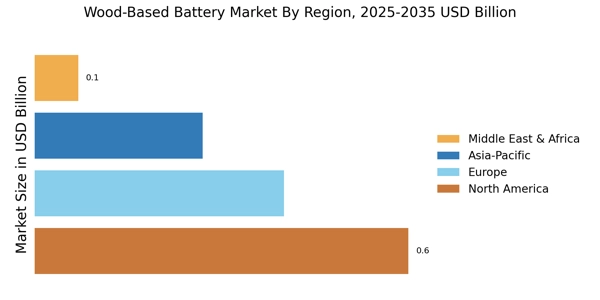
The Wood-Based Battery Market is experiencing robust growth across various regions, demonstrating a significant rise in demand for sustainable energy solutions. In 2023, the North American market was valued at 0.25 USD Billion, growing to 2.35 USD Billion by 2032, showcasing its majority holding in this sector. Europe follows closely, with a market size of 0.20 USD Billion in 2023, projected to reach 1.80 USD Billion in 2032, driven by stringent environmental regulations and innovation in renewable energy resources.
The APAC region, also significant, starts at 0.20 USD Billion in 2023 and is anticipated to increase to 2.50 USD Billion by 2032, led by advancements in battery technology and substantial investments in green energy.
Meanwhile, the South American market, although smaller, shows potential growth from 0.05 USD Billion in 2023 to 0.50 USD Billion in 2032, largely fueled by emerging market needs for renewable energy. The MEA region, valued at 0.11 USD Billion in 2023, is expected to grow to 0.85 USD Billion by 2032, indicating a growing emphasis on sustainable initiatives. Overall, the Wood-Based Battery Market segmentation reflects a strong trend toward eco-friendly energy solutions, supported by government policies and public awareness of environmental sustainability.
Key Players and Competitive Insights
Key Companies in the Wood Based Battery Market include
Industry Developments
Recent developments in the Wood-Based Battery Market highlight a growing interest in renewable energy solutions and sustainable materials. Companies such as Stora Enso and UPM Kymmene are at the forefront, exploring ways to leverage their biomass resources for battery production. Meanwhile, Mitsubishi Chemical and Nippon Steel are investing in research to enhance the efficiency of wood-based batteries, signaling a shift towards more eco-friendly energy storage solutions. Kawasaki Heavy Industries and Electrolyser are also actively collaborating to develop innovative technologies in this sector.
Notably, there have been discussions surrounding potential mergers and acquisitions that could reshape the competitive landscape, with companies like Green Energy Solutions and Burgo Group being mentioned as potential players in strategic partnerships. The market is experiencing robust growth, as indicated by increasing investments and technological advancements from major entities, such as Dow Chemical and Ceres Media, underlining the sector's strong potential to contribute to a sustainable energy future.
Furthermore, the expansion of this market is fostering new employment opportunities and driving regional economic growth, with companies like Toyota Tsusho and Lennox International enhancing their presence in environmentally friendly energy initiatives.
Future Outlook
Wood Based Battery Market Future Outlook
The Wood-Based Battery Market is projected to grow at a 28.12% CAGR from 2025 to 2035, driven by sustainability trends, technological advancements, and increasing demand for renewable energy storage solutions.
New opportunities lie in:
- Development of biodegradable battery components for eco-friendly branding. Partnerships with renewable energy firms for integrated storage solutions. Investment in R&D for enhancing battery efficiency and lifespan.
By 2035, the Wood-Based Battery Market is expected to achieve substantial growth, positioning itself as a leader in sustainable energy solutions.
Market Segmentation
Wood Based Battery Market Type Outlook
- Lithium-ion
- Sodium-ion
- Flow Batteries
- Supercapacitors
Wood Based Battery Market Application Outlook
- Electric Vehicles
- Energy Storage Systems
- Portable Electronics
- Grid Stabilization
Wood Based Battery Market Material Source Outlook
- Sustainable Forestry
- Recycled Wood Products
- Waste Biomass
- Non-Timber Forest Products
Wood Based Battery Market End Use Industry Outlook
- Automotive
- Consumer Electronics
- Renewable Energy
- Telecommunications
Report Scope
| MARKET SIZE 2024 | 1.325(USD Billion) |
| MARKET SIZE 2025 | 1.698(USD Billion) |
| MARKET SIZE 2035 | 20.23(USD Billion) |
| COMPOUND ANNUAL GROWTH RATE (CAGR) | 28.12% (2025 - 2035) |
| REPORT COVERAGE | Revenue Forecast, Competitive Landscape, Growth Factors, and Trends |
| BASE YEAR | 2024 |
| Market Forecast Period | 2025 - 2035 |
| Historical Data | 2019 - 2024 |
| Market Forecast Units | USD Billion |
| Key Companies Profiled | Stora Enso (FI), Sappi (ZA), Metsä Group (FI), UPM-Kymmene (FI), Valmet (FI), VTT Technical Research Centre of Finland (FI), Woodly (FI), Bioo (ES) |
| Segments Covered | Application, Type, Material Source, End Use Industry, Regional |
| Key Market Opportunities | Growing demand for sustainable energy storage solutions drives innovation in the Wood-Based Battery Market. |
| Key Market Dynamics | Rising demand for sustainable energy solutions drives innovation in wood-based battery technologies and applications. |
| Countries Covered | North America, Europe, APAC, South America, MEA |
FAQs
What is the projected market valuation of the Wood-Based Battery Market by 2035?
The Wood-Based Battery Market is projected to reach a valuation of 20.23 USD Billion by 2035.
What was the market valuation of the Wood-Based Battery Market in 2024?
In 2024, the Wood-Based Battery Market had a valuation of 1.325 USD Billion.
What is the expected CAGR for the Wood-Based Battery Market during the forecast period 2025 - 2035?
The expected CAGR for the Wood-Based Battery Market during the forecast period 2025 - 2035 is 28.12%.
Which application segment is expected to have the highest valuation in 2035?
The Electric Vehicles application segment is expected to reach a valuation of 6.5 USD Billion by 2035.
What are the key types of batteries in the Wood-Based Battery Market?
The key types of batteries include Lithium-ion, Sodium-ion, Flow Batteries, and Supercapacitors.
Which material source is projected to contribute the most to the market by 2035?
Sustainable Forestry is projected to contribute the most, with an expected valuation of 3.5 USD Billion by 2035.
What end-use industry is anticipated to drive significant growth in the Wood-Based Battery Market?
The Automotive industry is anticipated to drive significant growth, reaching a valuation of 6.5 USD Billion by 2035.
Who are the key players in the Wood-Based Battery Market?
Key players in the Wood-Based Battery Market include Stora Enso, Sappi, Metsä Group, and UPM-Kymmene.
What is the projected valuation for the Energy Storage Systems application by 2035?
The Energy Storage Systems application is projected to reach a valuation of 8.0 USD Billion by 2035.
How does the projected growth of the Wood-Based Battery Market compare to its 2024 valuation?
The market is expected to grow from 1.325 USD Billion in 2024 to 20.23 USD Billion by 2035, indicating substantial growth.
Kindly complete the form below to receive a free sample of this Report
Customer Stories
“This is really good guys. Excellent work on a tight deadline. I will continue to use you going forward and recommend you to others. Nice job”
“Thanks. It’s been a pleasure working with you, please use me as reference with any other Intel employees.”
“Thanks for sending the report it gives us a good global view of the Betaïne market.”
“Thank you, this will be very helpful for OQS.”
“We found the report very insightful! we found your research firm very helpful. I'm sending this email to secure our future business.”
“I am very pleased with how market segments have been defined in a relevant way for my purposes (such as "Portable Freezers & refrigerators" and "last-mile"). In general the report is well structured. Thanks very much for your efforts.”
“I have been reading the first document or the study, ,the Global HVAC and FP market report 2021 till 2026. Must say, good info! I have not gone in depth at all parts, but got a good indication of the data inside!”
“We got the report in time, we really thank you for your support in this process. I also thank to all of your team as they did a great job.”