下载免费样本
请填写以下表格以获取本报告的免费样本
射频滤波器市场规模、份额和研究报告:按类型(带通滤波器、低通滤波器、高通滤波器、陷波滤波器、多样性滤波器)、按材料(陶瓷、玻璃、硅、砷化镓、高分子)、按应用(消费电子、通信、汽车、航空航天、医疗设备)、按最终用途(商业、工业、住宅)和按地区(北美、欧洲、南美、亚太、中东和非洲) - 行业预测至2035年
根据市场研究未来的分析,射频滤波器市场规模在2024年估计为56.44亿美元。射频滤波器行业预计将从2025年的59.76亿美元增长到2035年的105.9亿美元,在2025年至2035年的预测期内,年均复合增长率(CAGR)为5.89%。
射频滤波器市场因技术进步和各个行业需求增加而有望实现显著增长。
| 2024市场规模 | 5.644(十亿美元) |
| 2035市场规模 | 10.59(十亿美元) |
| 年均增长率(2025 - 2035) | 5.89% |
射频滤波器市场目前正在经历动态演变,主要受到对先进通信技术需求增加的驱动。随着无线通信系统变得越来越复杂,对高性能射频滤波器的需求也在加剧。这些组件在确保信号完整性和最小化干扰方面发挥着至关重要的作用,这对于从移动设备到卫星通信等应用至关重要。市场似乎受到5G技术快速发展的影响,这需要开发更复杂的过滤解决方案以适应更高的频率和带宽。此外,电子设备日益小型化的趋势促使制造商创新,创造出不妥协性能的紧凑型射频滤波器。除了技术进步,射频滤波器市场还受到对物联网(IoT)设备日益普及的影响。随着越来越多的设备互联互通,对可靠和高效的射频滤波器的需求可能会增加。这一趋势表明,市场正在向能够在单一组件内处理多种功能的集成解决方案转变。此外,电子设计中对能源效率和可持续性的重视促使制造商探索新材料和设计,以提高性能同时减少环境影响。总体而言,射频滤波器市场正处于显著增长的前景中,受到这些反映通信技术不断演变的多方面趋势的推动。
5G网络的持续推广正在显著影响射频滤波器市场。随着对更高数据速率和更低延迟的需求增加,能够在更高频率下运行的先进过滤解决方案的需求变得至关重要。这一趋势表明,市场正在向能够有效应对5G技术带来的挑战的更复杂的滤波器设计转变。
物联网设备的普及正在重塑射频滤波器市场。由于这些设备需要可靠的通信,效率高的射频滤波器的需求可能会增长。这一趋势表明,市场正在向能够在紧凑设计中支持多种功能的集成过滤解决方案转变。
射频滤波器市场对能源效率的重视日益增强。制造商越来越多地探索创新材料和设计,不仅提高性能,还减少能耗。这一趋势反映了对电子设备设计可持续性的更广泛承诺。
随着智能城市概念的普及,射频滤波器市场正处于增长的有利位置。智能城市基础设施的发展需要部署先进的通信网络,这反过来又推动了对高效射频滤波器的需求。随着城市实施物联网设备和智能技术以提升城市生活,可靠的射频滤波解决方案的需求变得至关重要,以管理产生的大量数据。预计市场将受益于旨在促进智能城市项目的政府倡议,这可能导致对射频滤波器技术的投资增加。这一趋势表明射频滤波器市场的未来前景光明,因为利益相关者认识到强大滤波解决方案在支持智能城市生态系统的连接性和功能性方面的重要性。
射频滤波器市场受到消费电子行业扩展的显著影响。随着智能设备(包括智能手机、平板电脑和可穿戴设备)的普及,对高性能射频滤波器的需求正在上升。到2025年,消费电子部门预计将占射频滤波器市场的相当大份额,推动因素是对增强连接性和改善用户体验的需求。随着制造商努力将先进功能集成到其产品中,射频滤波器在确保最佳性能和可靠性方面的作用变得至关重要。这一趋势可能会推动对研发的投资,从而推出满足现代消费电子严格要求的创新射频滤波器技术。
由于射频滤波器在汽车应用中的日益集成,射频滤波器市场正在经历转型。随着车辆变得更加互联和自主,对可靠射频滤波解决方案的需求正在上升。预计汽车行业在射频滤波器的采用方面将经历约8%的年均增长率,推动因素是对增强通信系统(包括车对一切(V2X)技术)的需求。这些系统需要强大的射频滤波器,以确保无缝连接并最小化来自车辆内各种电子组件的干扰。因此,汽车制造商越来越多地与射频滤波器供应商合作,开发满足现代车辆特定需求的定制解决方案,从而推动射频滤波器市场的增长。
由于对无线通信技术的日益依赖,射频滤波器市场正在经历显著的需求激增。随着移动设备的普及,对高效射频滤波器的需求变得至关重要,以确保信号完整性并减少干扰。预计市场在未来五年将以约10%的年均增长率增长,推动因素是电信基础设施的扩展。这一增长进一步受到5G等先进技术的推动,这需要部署复杂的射频滤波解决方案以管理更高的频率和带宽。因此,制造商正专注于开发满足无线通信不断变化需求的创新射频滤波器设计,从而提升通信系统的整体性能。
射频滤波器市场受到射频滤波器设计中持续技术进步的显著影响。微型化和新材料的发展等创新正在使得更高效和紧凑的射频滤波器的创建成为可能。这些进步对于满足现代通信系统的需求至关重要,特别是在高频应用中。预计市场将向提供更高性能和更低插入损耗的更复杂滤波器设计转变。随着制造商在研发上投资以增强其产品供应,射频滤波器市场预计将扩展,推动因素是对能够支持通信网络日益复杂性的尖端解决方案的需求。
在射频滤波器市场中,带通滤波器占据最大的市场份额,由于其在允许特定频率范围通过的同时衰减该范围外的频率方面的高效性,广泛应用于各种应用中。低通滤波器和高通滤波器也代表了重要的细分市场,但带通滤波器仍然是终端用户的首选。然而,陷波滤波器由于其小众应用,占据市场的份额较小,而多样性滤波器随着对多频率操作能力需求的增加而获得关注。该细分市场的增长趋势受到无线通信技术日益普及和对高效过滤解决方案需求上升的推动。带通滤波器继续主导市场,主要应用于宽带系统,而多样性滤波器在电信行业迅速崛起。这一增长得益于技术的进步和对高性能射频设备日益增长的偏好。
带通滤波器(主导)与多样性滤波器(新兴)
带通滤波器的特点是能够过滤掉不需要的频率,同时允许指定的频率带通过。这使它们在通信应用中至关重要,因此在射频滤波器市场中占据主导地位。它们广泛应用于移动设备、基站和其他射频应用。相比之下,多样性滤波器因其在多个频率带上操作的创新能力而受到认可,增强了信号质量和可靠性。它们在信号干扰普遍的环境中特别有利,使其成为新兴无线应用中备受追捧的解决方案。随着对无缝通信需求的扩大,多样性滤波器预计将经历显著增长,标志着用户偏好向可适应的过滤技术的转变。
在射频滤波器市场中,材料细分展示了各种材料之间的多样分布。陶瓷滤波器占据了最大的市场份额,这主要归功于它们的坚固性和在各种频率下的一致性能,使其成为主流应用中的首选。紧随陶瓷之后,砷化镓滤波器在高频应用中证明了其竞争力,尤其是在低损耗和高效率至关重要的情况下。硅、玻璃和聚合物材料紧随其后,各自服务于由特定客户需求和技术进步驱动的细分应用。
陶瓷(主导)与砷化镓(新兴)
陶瓷射频滤波器因其耐用性、热稳定性和成本效益而受到认可,使其在从电信到消费电子的应用中占据主导地位。它们能够承受不同的环境条件,促成了它们在各个行业的广泛应用。另一方面,砷化镓滤波器作为一种快速增长的替代品正在崛起,特别是在移动和卫星通信中因其卓越的性能特征而受到青睐,包括更低的插入损耗和更高的带宽处理能力。向小型化的转变以及对尖端技术中高性能滤波器的需求推动了砷化镓解决方案的增长,使其在不断发展的射频滤波器领域中成为关键参与者。
在射频滤波器市场中,应用领域有着不同的关注点,电信行业领先,占据了大部分市场份额。由于对移动连接的持续需求以及5G等先进通信技术的推广,该行业至关重要,这推动了对复杂射频滤波器的需求。相反,消费电子领域正在快速增长,受益于智能手机、智能电视和物联网设备等设备中无线技术的日益普及,增强了它们的功能和用户体验。随着市场的发展,增长趋势表明射频滤波器在各种应用中的集成显著增加。电信的需求依然强劲,受到网络基础设施持续改善和移动数据消费的推动。此外,消费电子行业正成为射频滤波器采用的动态驱动因素,受到智能设备创新和无线解决方案日益受欢迎的推动。这表明在塑造射频滤波器市场未来的过程中,成熟和新兴应用领域之间存在着生动的互动。
电信:射频滤波器市场(主导)与消费电子:射频滤波器市场(新兴)
在射频滤波器市场中,电信应用作为一种主导力量,广泛应用于网络基础设施,包括基站和手机塔。该细分市场在很大程度上依赖射频滤波器来增强信号质量并减少干扰,以确保可靠的通信。电信行业的持续进步,尤其是5G技术的推广,要求使用高性能射频滤波器以应对日益增长的数据需求和更高的频率。相比之下,消费电子细分市场虽然仍在发展中,但展现出强劲的增长轨迹。随着设备变得更加智能和互联,对高效射频滤波器的需求正在加速,特别是在智能手机和其他个人设备中,空间有限。该细分市场反映了消费者对无缝连接和卓越设备性能的需求增加。
在射频滤波器市场中,最终用途细分市场的份额分布显示出明显的层次结构,商业部门占据了最大的份额。这一主导地位可以归因于射频滤波器在电信、消费电子和广播中的广泛应用。商业部门受到对增强连接性和高频通信系统持续需求的支持。另一方面,工业部门已成为射频滤波器市场中增长最快的细分市场。这一增长是由于在制造过程、自动化以及在工业环境中日益使用无线通信技术中对射频滤波器的采用增加。对智能技术和物联网应用的需求激增进一步推动了工业部门的扩展,为其未来增长提供了良好的前景。
商业(主导)与工业(新兴)
RF滤波器市场的商业领域以其在电信、媒体和消费电子等各个行业的广泛应用为特征。由于对可靠和有效的RF过滤解决方案的高需求,该领域主导市场,这些解决方案能够提高信号质量并减少干扰。相比之下,工业领域被视为一股新兴力量,随着各行业越来越多地将无线技术和自动化系统整合到其运营中而获得关注。随着物联网和智能制造趋势的兴起,工业领域正在迅速增长,因为公司寻求创新的RF解决方案来优化其流程并提高通信效率。

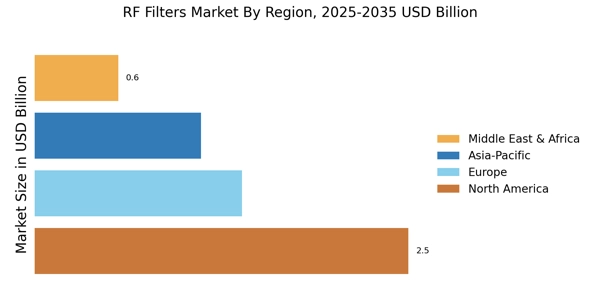
射频滤波器市场在2024年各区域细分市场表现出多样化的增长,总估值为53.3亿美元。北美预计将占据大部分市场,估值为15亿美元,到2035年将增长至32.5亿美元,突显该地区对先进通信系统和技术的强劲需求。欧洲在2024年的估值为12亿美元,预计到2035年将达到28亿美元,由于其对电信领域研发的重视,也发挥着重要作用。
亚太地区的估值为18亿美元,预计到2035年将增长至35亿美元,受到技术快速进步和消费电子生产增加的推动。
相比之下,南美在2024年的估值为4亿美元,预计将增长至8.5亿美元,反映出新兴市场趋势,尽管其规模仍较小。中东和非洲在2024年的估值为4.3亿美元,预计到2035年将上升至6亿美元,代表一个发展中的市场,随着各地区连接性改善,对射频滤波器的需求不断增长。每个地区对射频滤波器市场的收入贡献各具特色,北美和亚太地区显示出强劲的增长前景。
射频滤波器市场的特点是竞争激烈,主要受到技术快速进步和对高频通信系统需求增加的驱动。随着市场的发展,参与者不断创新,以增强其产品供应并满足电信、航空航天、汽车和消费电子等各个行业的多样化需求。竞争格局涉及利用其技术专长和广泛分销网络来维持市场份额的成熟公司,而新兴参与者则努力捕捉细分市场。随着组织旨在推出下一代滤波器解决方案以提高性能和降低成本,研发的重点也在加大。关于频谱管理的监管标准进一步影响竞争,因为公司必须确保其产品符合地区立法,同时满足客户对可靠性和效率的要求。Broadcom在射频滤波器市场中占据重要地位,利用其在射频通信技术方面的优势。该公司在市场上拥有显著的存在,支持其广泛的先进滤波器解决方案,适用于智能手机、无线网络和物联网设备等多种应用。Broadcom强大的研发能力使其能够不断创新,满足不断发展的市场需求。该公司的优势在于其广泛的高性能射频滤波器组合,特别是针对5G和Wi-Fi应用的滤波器,这在全球连接性扩展时至关重要。此外,Broadcom与领先的OEM和网络运营商建立了强大的关系,进一步巩固了其竞争优势。通过关注战略合作伙伴关系并保持对卓越制造的承诺,Broadcom在捕捉市场中出现的新机会方面处于良好位置。英飞凌科技是射频滤波器市场的另一主要参与者,以提供高质量和高效的射频解决方案而闻名。该公司提供一系列产品,包括低噪声放大器、功率放大器和RF开关,为其全面的产品组合做出了重要贡献。英飞凌在射频半导体技术领域的专注研发增强了其市场存在,支持各行业的多种高频应用。该公司还参与了战略并购,以扩大市场覆盖面并整合互补技术,确保其保持竞争力。英飞凌的优势包括为特定客户需求提供量身定制的解决方案的能力以及其全球供应链,这增强了可靠性和响应能力。这种对质量和创新的承诺使英飞凌在射频滤波器技术领域处于有利地位,因为它继续满足日益数字化世界的需求。






在过去几个月中,射频滤波器市场经历了许多变化,主要是由于对5G连接和物联网(IoT)等新技术的需求增加。Broadcom、村田制作所、高通和Qorvo是一些主要公司,它们一直在努力开发新想法,以提高滤波器的性能并改善移动、通信和汽车应用中的信号质量。高通在2023年8月收购了一家专注于5G的电信公司。
这将帮助该公司改善其移动设备的射频前端集成,并增强其在射频滤波器市场的地位。随后,在2023年9月,村田制作所将下一代射频滤波器添加到其汽车应用产品线中,以应对日益增长的连接车辆技术的使用。与此同时,Broadcom在2023年10月在体声波(BAW)滤波器技术方面取得了重大进展。这提高了5G智能手机和无线基础设施的频率选择性和性能。
在2023年11月,Qorvo发布了一系列专为高频段5G应用和物联网模块设计的低损耗射频滤波器。
德州仪器和NXP半导体虽然不是射频滤波器的主要制造商,但它们通过制造与连接设备中滤波器集成相关的射频信号链部件、电源管理IC和连接解决方案,仍然为生态系统提供支持。射频滤波器市场仍然竞争激烈,研发的大量投资推动着新想法。全球范围内向高速无线网络和智能电子设备的转变仍在增加对高性能过滤解决方案的需求。这对整个行业的技术和商业增长都是有利的。
预计射频滤波器市场将在2025年至2035年间以5.89%的年均增长率增长,推动因素包括电信技术的进步、物联网应用以及对无线通信的需求增加。
到2035年,射频滤波器市场预计将实现强劲增长,反映出不断变化的技术需求。
| 市场规模 2024 | 56.44(亿美元) |
| 市场规模 2025 | 59.76(亿美元) |
| 市场规模 2035 | 105.9(亿美元) |
| 年均复合增长率(CAGR) | 5.89%(2025 - 2035) |
| 报告覆盖范围 | 收入预测、竞争格局、增长因素和趋势 |
| 基准年 | 2024 |
| 市场预测期 | 2025 - 2035 |
| 历史数据 | 2019 - 2024 |
| 市场预测单位 | 亿美元 |
| 主要公司简介 | Qorvo(美国)、Broadcom(美国)、Skyworks Solutions(美国)、村田制作所(日本)、NXP半导体(荷兰)、德州仪器(美国)、模拟设备(美国)、英飞凌科技(德国)、意法半导体(法国) |
| 覆盖的细分市场 | 类型、材料、应用、最终用途、区域 |
| 主要市场机会 | 在5G和物联网应用中集成先进射频滤波器推动市场增长机会。 |
| 主要市场动态 | 技术进步推动对射频滤波器的需求,提高电信和消费电子产品的性能。 |
| 覆盖的国家 | 北美、欧洲、亚太、南美、中东和非洲 |
2024年RF滤波器市场的估值为56.44亿美元。
预计到2035年,RF滤波器市场将达到105.9亿美元。
在2025年至2035年的预测期内,RF滤波器市场的预期年均增长率为5.89%。
预计到2035年,带通滤波器细分市场将达到28亿美元。
低通滤波器的估值预计将从2024年的12亿美元增加到2035年的22亿美元。
在这些材料中,聚合物预计将从2024年的13亿美元增长到2035年的23亿美元。
电信应用细分市场预计将主导,从2024年的18亿美元增长到2035年的35亿美元。
住宅终端使用细分市场预计将从2024年的21.44亿美元增长到2035年的35.9亿美元。
RF滤波器市场的主要参与者包括Qorvo、Broadcom、Skyworks Solutions和村田制作所。
预计到2035年,缺口滤波器细分市场的估值将达到15亿美元。



请填写以下表格以获取本报告的免费样本

“This is really good guys. Excellent work on a tight deadline. I will continue to use you going forward and recommend you to others. Nice job”


“Thanks. It’s been a pleasure working with you, please use me as reference with any other Intel employees.”


“Thanks for sending the report it gives us a good global view of the Betaïne market.”


“Thank you, this will be very helpful for OQS.”


“We found the report very insightful! we found your research firm very helpful. I'm sending this email to secure our future business.”


“I am very pleased with how market segments have been defined in a relevant way for my purposes (such as "Portable Freezers & refrigerators" and "last-mile"). In general the report is well structured. Thanks very much for your efforts.”


“I have been reading the first document or the study, ,the Global HVAC and FP market report 2021 till 2026. Must say, good info! I have not gone in depth at all parts, but got a good indication of the data inside!”


“We got the report in time, we really thank you for your support in this process. I also thank to all of your team as they did a great job.”


“The Automotive 48V ECU Components Procurement Intelligence Study” was a complex project, but the Market Research Future (MRFR) team handled it with quality, agility, and customer-centricity. They delivered all requested data on time and within the agreed scope. The team, including Shubhendra Anand and Rahul Gotadki, was always readily available to clarify questions and swiftly implement necessary adjustments, driving the project to a successful conclusion within a very demanding timeframe.
I would also like to specifically commend Akshay Agarwal for his responsiveness and support at every stage—from our initial inquiry on May 6th through to final delivery on June 18th. His dedication made the entire process seamless.”


.webp?v=1787579623)
