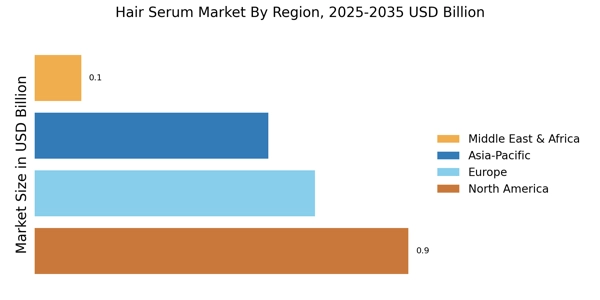
Global market valuation was derived through revenue mapping and consumption volume analysis. The methodology included:
Identification of 50+ key manufacturers and brands across North America, Europe, Asia-Pacific, Latin America, and Middle East & Africa
Product mapping across leave-in serums, wash-out serums, oil serums, and styling serum categories
Ingredient composition analysis across natural ingredients (botanical extracts, essential oils), synthetic ingredients (silicones, polymers), organic certified formulations, and vegan-certified products
Distribution channel analysis spanning e-commerce platforms (brand.com, Amazon, beauty retailers), supermarkets/hypermarkets, pharmacies/drugstores, and specialty beauty stores
Analysis of reported and modeled annual revenues specific to hair serum portfolios
Coverage of manufacturers representing 75-80% of global market share in 2024
Extrapolation using bottom-up (consumption volume × ASP by country/region) and top-down (manufacturer revenue validation) approaches to derive segment-specific valuations across type, hair type, ingredient, and distribution channel categories
Data Triangulation & Validation
Research findings were cross-validated through:
Regulatory Verification: Compliance checks against FDA 21 CFR regulations for cosmetics, EU Cosmetics Regulation (EC) No 1223/2009, ASEAN Cosmetics Directive, and China's Cosmetic Supervision and Administration Regulation (CSAR)
Industry Benchmarking: Comparison against established market research firms including Euromonitor, Grand View Research, and Allied Market Research hair care sector reports
Expert Validation: Review by independent cosmetic chemists and industry consultants to verify technical assumptions regarding formulation trends and ingredient efficacy claims
Financial Validation: Cross-referencing of company annual reports, SEC filings, and investor presentations for publicly traded entities (L'Oréal, Procter & Gamble, Unilever, Estée Lauder, Shiseido, Henkel, Coty, Revlon)
Limitations & Assumptions
Market sizing excludes professional salon-exclusive backbar products not available for retail purchase
Revenue figures represent manufacturer/brand wholesale values unless otherwise specified as retail sales
Organic and vegan segment definitions align with COSMOS, USDA Organic, and Leaping Bunny certification standards
E-commerce segment includes direct-to-consumer (DTC) brand websites, third-party marketplaces, and online beauty retailers
Regional classifications follow UN M49 standard geographic regions for statistical use