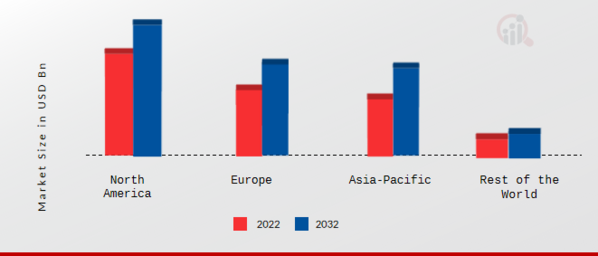
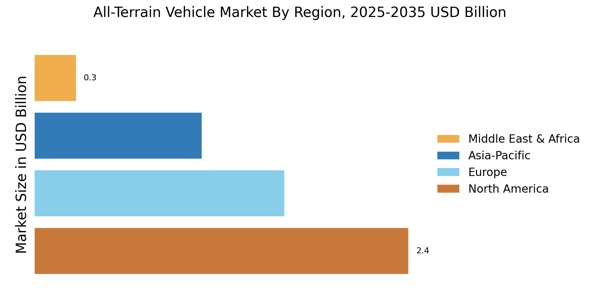
Expansion des canaux de distribution
Le marché des véhicules tout-terrain bénéficie de l'expansion des canaux de distribution, ce qui améliore l'accessibilité pour les consommateurs. L'essor des plateformes de commerce électronique et de la vente au détail en ligne a facilité l'exploration et l'achat de véhicules tout-terrain depuis le confort de leur domicile pour les acheteurs potentiels. De plus, les concessionnaires traditionnels s'adaptent en proposant des services en ligne et des salles d'exposition virtuelles. Les données du marché suggèrent que les ventes en ligne de véhicules tout-terrain ont augmenté de plus de 30 % au cours de l'année passée, indiquant un changement dans le comportement d'achat des consommateurs. Cette expansion élargit non seulement la portée du marché pour les fabricants, mais offre également aux consommateurs un plus large éventail d'options, stimulant finalement les ventes et favorisant la concurrence au sein de l'industrie.
Accent accru sur les caractéristiques de sécurité
Le marché des véhicules tout-terrain connaît un accent accru sur les caractéristiques de sécurité, qui devient un moteur critique des décisions d'achat des consommateurs. À mesure que la sensibilisation aux risques de sécurité associés à la conduite hors route augmente, les fabricants priorisent l'intégration de technologies de sécurité avancées. Des caractéristiques telles que les cages de retournement, les systèmes de freinage améliorés et le contrôle de la stabilité sont désormais standard dans de nombreux modèles. Les données du marché indiquent que les véhicules équipés de caractéristiques de sécurité avancées devraient connaître une augmentation de 20 % des ventes par rapport à ceux qui n'en sont pas dotés. Cette tendance reflète un changement sociétal plus large vers la priorité accordée à la sécurité dans les activités récréatives, influençant ainsi les préférences des consommateurs et stimulant la croissance du marché.
Avancées technologiques dans les véhicules tout-terrain
Le marché des véhicules tout-terrain connaît une montée en puissance des avancées technologiques, ce qui améliore considérablement les performances des véhicules et l'expérience utilisateur. Des innovations telles que des systèmes de suspension améliorés, des outils de navigation avancés et une efficacité moteur accrue deviennent courantes. Par exemple, l'intégration du GPS et de la connectivité smartphone permet aux pilotes d'explorer des zones reculées en toute confiance. De plus, l'introduction de matériaux légers contribue à une meilleure efficacité énergétique et à une maniabilité accrue. À mesure que ces technologies évoluent, elles sont susceptibles d'attirer une base de consommateurs plus large, y compris des utilisateurs récréatifs et des opérateurs professionnels. Les données du marché indiquent que la demande pour des véhicules tout-terrain technologiquement avancés devrait croître à un taux de croissance annuel composé d'environ 6 % au cours des cinq prochaines années, reflétant la préférence croissante des consommateurs pour des véhicules haute performance.
Demande croissante de véhicules tout-terrain électriques
Le marché des véhicules tout-terrain connaît un changement notable vers les véhicules tout-terrain électriques, motivé par des préoccupations environnementales et des avancées dans la technologie des batteries. Les consommateurs prennent de plus en plus conscience de l'impact écologique des véhicules alimentés par des combustibles fossiles, ce qui entraîne une préférence croissante pour les alternatives électriques. Les données du marché suggèrent que les ventes de véhicules tout-terrain électriques devraient augmenter d'environ 25 % par an au cours des prochaines années. Cette tendance est en outre soutenue par des incitations gouvernementales visant à promouvoir l'adoption des véhicules électriques. Alors que les fabricants investissent dans la recherche et le développement, la disponibilité de véhicules tout-terrain électriques avec des autonomies plus longues et des temps de charge plus rapides est susceptible de s'élargir, attirant à la fois les consommateurs soucieux de l'environnement et les passionnés de plein air.
Croissance de la popularité des activités récréatives en plein air
Le marché des véhicules tout-terrain bénéficie de la popularité croissante des activités récréatives en plein air. Alors que de plus en plus d'individus recherchent l'aventure et les loisirs dans la nature, la demande pour les véhicules tout-terrain est susceptible d'augmenter. Des activités telles que le hors-piste, le camping et la randonnée deviennent de plus en plus populaires parmi diverses démographies, y compris les familles et les jeunes adultes. Cette tendance est soutenue par des données de marché montrant que la participation aux activités récréatives en plein air a augmenté de plus de 15 % ces dernières années. Par conséquent, les fabricants réagissent en développant des véhicules tout-terrain polyvalents qui répondent à des besoins consommateurs divers. L'expansion des zones récréatives et des sentiers alimente encore cette croissance, alors que de plus en plus d'endroits deviennent accessibles aux passionnés de véhicules tout-terrain.