Research Methodology on Proximity Marketing Market
1. Introduction
The purpose of this research study is to analyze the Proximity Marketing Market. Proximity marketing is defined as the marketing strategy aiming at specific customers in a specific geographic area by using technologies such as radio-frequency identification (RFID), near-field communication (NFC) and Bluetooth. Proximity marketing helps retailers to optimize their marketing strategies and provide helpful insights that enable their businesses to make decisions and engage their customers efficiently and effectively. Pertinent information and data have been gathered to study and analyze the growth of the Proximity Marketing Market.
1.1 Background
Proximity marketing has seen tremendous development and evolution in recent years as it provides opportunities to reach customers more efficiently than ever before. It involves cost-effective methods and techniques which help to personalize the customer experience at the store level. The improved customer experience with the use of proximity marketing helps retailers to create loyalty among their customers and accurately measure their customer preferences.
The factors such as increasing smartphone adoption, the rise in the need for personalizing user experience, and the necessity of engaging customers in real-time are the major drivers of the Proximity Marketing Market. The increasing expenditure on advertisement and improved technology are some of the other factors that drive the growth of the Proximity Marketing Market. The retail sector has been highly reliant on traditional marketing methods for many years. Proximity marketing is transforming the retail industry as it provides more precision as well as better insight into customer preferences and habits.
1.2 Objectives
The primary objective of this study is to identify the factors that drive the growth of the Proximity Marketing Market. The secondary objective is to analyze the market dynamics such as trends, current industry estimates & forecasts, and competitive scenarios to provide an in-depth understanding of the market. Additionally, an overview of the macro- and micro-economic factors that impact the market is also provided.
1.3 Scope of the Study
The Proximity Marketing Market is segmented based on type, application, technology, and end-users. The type segment is divided into RFID, NFC and Bluetooth. The application segment includes customer engagement, promotional campaigns and location-based tracking. The technology segment is categorized as radio-frequency identification (RFID), near-field communication (NFC) and Bluetooth. Finally, the end-user segment comprises retail, hospitality, public sector, healthcare, manufacturing, logistics and others.
2. Research Methodology
This research study is conducted by utilizing both primary and secondary data sources. The research methodology helps to understand the Proximity Marketing Market and its various components.
2.1 Data Sources
Data is gathered from both primary and secondary sources. Primary data sources include primary research surveys with industry experts and key opinion leaders. Secondary data sources include publicly available data from relevant industry/government bodies, statistics from trade associations, magazines, and databases. The data collection process involves market sizing, market forecasting, market structure and market segmentation.
2.2 Secondary Data Source
The secondary data sources for this research study include databases of numerous industry bodies, trade journals, online journals such as Statista and Gartner, reports available from trade associations and other published literature.
These databases provide detailed information on industry trends, market size, market structure, and market drivers. The secondary data sources also provide information on the production of manufacturing units and market-related regulatory requirements.
3. Primary Data Source
The primary data sources for this research study include industry experts, opinion leaders, and key opinion leaders (KOLs). The primary data sources provide detailed information on the Proximity Marketing Market and the current trends.
The research methodology adopted by the primary data sources includes primary interviews, surveys, and focus group discussions. Primary research interviews are conducted with industry experts, opinion leaders and key opinion leaders (KOLs). The primary research interviews provide insights into the Proximity Marketing Market and the potential strategies that can be implemented by the players in the market. Surveys conducted with industry experts also provide insights into the Proximity Marketing Market and its components.
4. Market Research Process
The market research process for this research study starts with the identification of the research problem and the objectives of the research. The research objectives should meet the company’s strategic requirements. The research problem and its objectives are identified, the scope of the research is decided and the research methodology is designed to achieve the research objectives. The next steps involve data collection and data analysis. The data is collected from both primary and secondary data sources. The collected data is analyzed based on the research objectives, and the results are interpreted. The results are presented to the stakeholders after implementing the quality control procedures. The results are then validated and verified by the stakeholders so that the research results can be used to make informed decisions.
5. Market Research Model
The research model adopts both qualitative and quantitative approaches to analyze the Proximity Marketing Market. Qualitative and quantitative research methods have been used to generate insights into the market that include both the macro environment and the microenvironment. The qualitative research methods available are primary interviews, focus group discussions, and secondary research.
The quantitative research methods available are market segmentation, market forecasting, market share analysis, and market sizing. The research model is comprehensive in nature and covers all the key aspects of the Proximity Marketing Market.
6. Market Segmentation
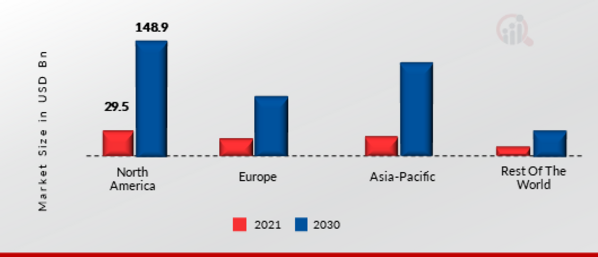
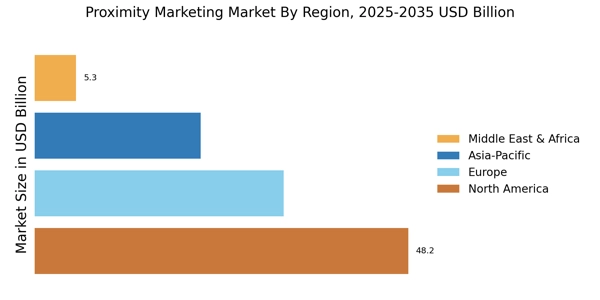
The Proximity Marketing Market is segmented based on type, application, technology, end-user, and region. The segmentation helps to analyze the market more effectively in terms of its different components.
The type segment is divided into RFID, NFC, and Bluetooth. The application segment includes customer engagement, promotional campaigns, location-based tracking, and others. The technology segment is categorized as radio-frequency identification (RFID), near-field communication (NFC) and Bluetooth. The end-user segment comprises retail, hospitality, public sector, healthcare, manufacturing, logistics and others. The geographical segmentation is done based on regions like Europe, North America, APAC, MEA and Latin America.