Research Methodology on School Management System Market
Executive Summary
This paper aims to provide a comprehensive research methodology and guide for conducting research on the global School Management System Market with a particular focus on the drivers and restraints in the market. The report looks into the primary and secondary drivers of the market and outlines the market data analysis methods that will be utilized.
The report provides an overview of the different market opportunities, and the type of data that needs to be collected, and discusses the primary segmentation based on geography, industry and application. Lastly, data sources and methods of assessing data availability and validity are discussed.
Introduction
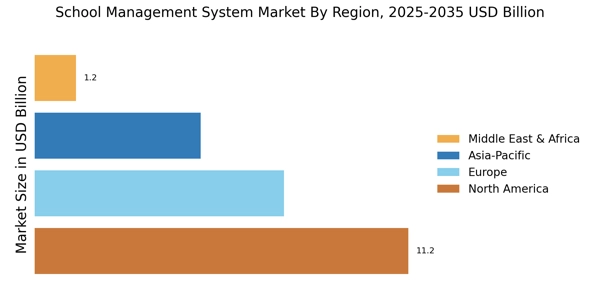
The Global School Management System (SMS) market is expected to skyrocket in the coming years as an increasing number of schools are turning towards SMS technology. The driving forces for this market expansion are attributed to its time-saving ability, automated process, seamless communication, cost-effectiveness and ability to kickstart the digitalization of schools. This growth is predicted to be mainly in the areas of North America and Europe. Market growth is also predicted to come from the increasing demand for cloud-based school management systems, as well as the growing prevalence of technologically savvy students and teachers.
Research Objectives
This study aims to provide research methodology and an analysis of the driving factors and impediments to the growth of the global School Management System Market. The objectives are to:
- Identify primary and secondary drivers of the global School Management System market.
- Establish the data analysis methods that will be used.
- Analyze the market opportunities and the market segmentation based on geography, industry, and application.
- Determine the data availability and data validity.
Research Methodology
Overview
The research methodology utilized in this paper will be descriptive and comparative. The approach will adopt both qualitative and quantitative research methods for collecting and analyzing data. The research will incorporate both primary and secondary sources of data.
Primary vs. Secondary Data Sources
For this research, primary and secondary sources of data will be utilized. Primary data will include data collected from surveys and interviews, as well as through observation. Secondary data sources consist of published material such as reports and articles published in journals or magazines.
Data Collection
Data is collected through both online and offline sources. Online sources may include online surveys, polls, discussion forums and websites. Offline sources may include interviews and focus groups conducted with experts and industry personnel, as well as interviews with students and teachers.
Data Analysis
Data analysis includes both quantitative and qualitative methods. Quantitative methods such as descriptive, comparative and correlation analyses are used to measure the market’s size and growth. Qualitative methods such as content analysis and grounded theory are used to analyze the data collected in the interviews and focus groups.
Market Segmentation
The Global School Management System Market will be segmented based on geography, industry, and application. Geographic segmentation is based on regions, such as North America, Europe, Asia-Pacific, Latin America, and the Middle East and Africa. Industry segmentation will focus on educational institutions and organizations such as schools, colleges and universities. Application segmentation will focus on areas such as attendance management, course and curriculum management, financial management, student information management, timetable management, and others.
Data Source and Validity
Data sources include primary and secondary sources. Primary sources include surveys, focus groups, and interviews. Secondary sources include published material from journals, magazines, newspapers, and books.
To ensure the validity of the data collected, the research will use triangulation of sources, i.e. using multiple sources to verify the accuracy of the collected data. Furthermore, the data will be cross-checked by industry experts to ensure that the proper data is collected.
Conclusion
This paper provides an overview of the research methodology and data analysis methods that will be used to study the global School Management System market. The report looks into the primary and secondary drivers of the market and outlines the market data analysis methods that will be utilized.
The market segmentation based on geography, industry and application has also been discussed. Furthermore, data sources and methods of assessing data availability and validity have also been outlined. This research will provide an in-depth analysis of the market opportunities and motivators of the School Management System market, as well as its restraints.